

FMCSA Revoked ELDs and the October 6 Replacement Deadline
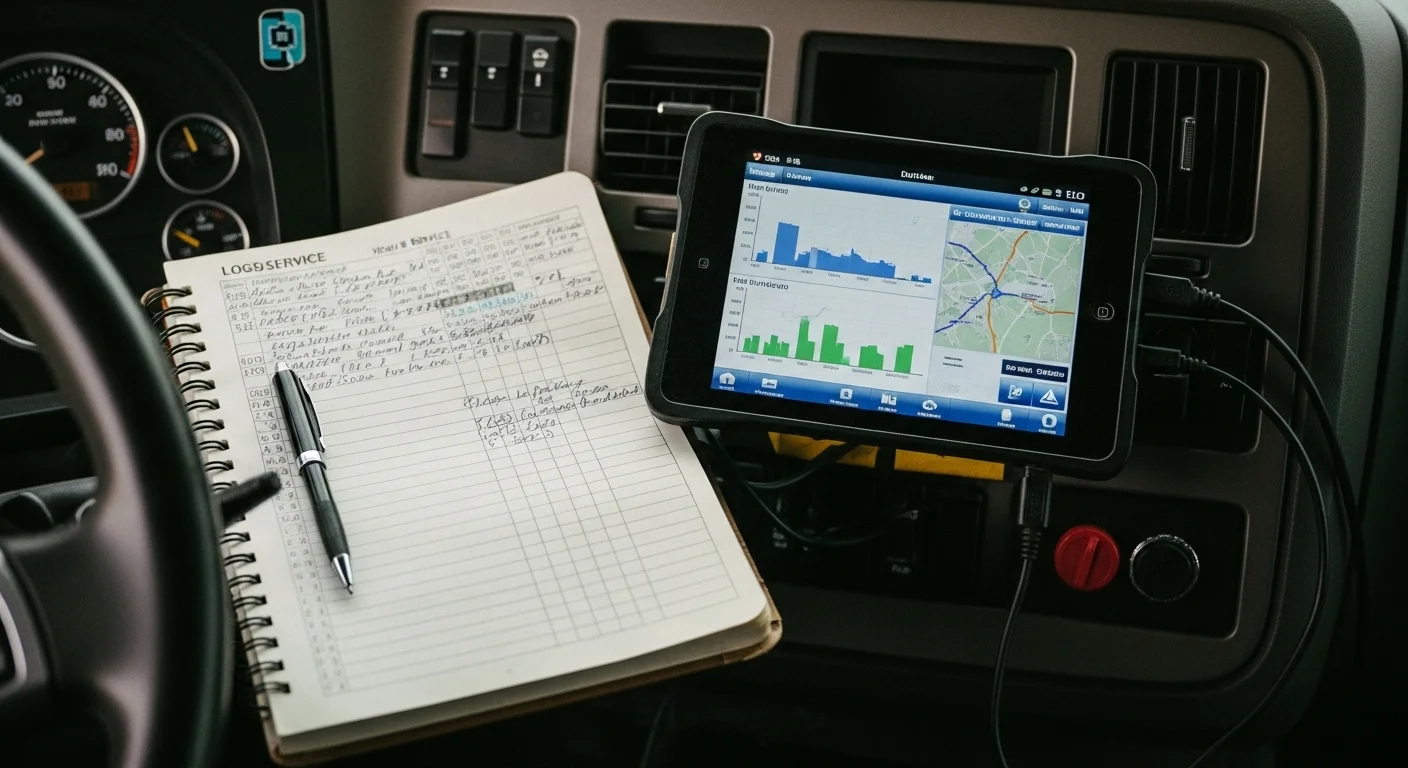
Five electronic logging devices lost their FMCSA registration on August 6, 2026, and fleets using any of them must have a registered replacement in use before October 6, 2026, according to the FMCSA announcement. The work runs in a set order: find every affected truck, move each driver to a valid backup log, save the old records, and install and test a registered device before the deadline.
Five Revoked Logging Devices
FMCSA removed MOONLIGHT ELD, HGRS ELD, HIGHEST ELD, TRUCKFORD ELD, and Sparkle ELD from its registered list on August 6, 2026. The agency said the providers failed to meet the minimum requirements in Appendix A to Subpart B of 49 CFR Part 395, the standards for how an ELD records, stores, and transfers data.
FMCSA did not publish which requirement each device failed. A provider may correct its problems and return to the registered list, and until that happens, the current FMCSA lists control over any vendor statement. The FMCSA revoked-device list is the official place to check a device.
A truck-by-truck check is more reliable than a vendor invoice, because fleets move units between trucks and keep spares on the shelf. The check covers the name shown on each working device and the truck where it is installed, including leased trucks and owner-operators running under the carrier’s authority, since the carrier stays responsible for the ELD rule when those drivers must use an ELD.
October 6 Replacement Deadline
During the change period, FMCSA has asked enforcement officers to accept valid paper logs or logging software. A registered replacement must be in use before October 6, 2026. After that date, a revoked device is treated like no ELD at all, and a driver may be cited and placed out of service. The replacement generally follows five steps:
- Confirm the August 6 notice and the five device names.
- Match every installed device to the FMCSA registered and revoked lists.
- Move affected drivers to paper logs or valid logging software.
- Export the old duty records and keep a separate backup copy.
- Install a registered replacement and test it before October 6.
The final test after installation confirms that the driver can log in, change duty status, show the record to an officer, and transfer the file.
Device Status Checks
ELD status can change after a fleet buys a device. FMCSA guidance makes carriers responsible for checking both the registered list and the revoked list. Revocations are not rare: FreightWaves reported in March 2026 that FMCSA had removed more than two dozen devices since the start of that year.
Status checks work best with a named owner, such as a safety manager who checks both lists on a schedule and saves a dated copy of the result. A simple device list recording the truck number, device name, model number, install date, and last status check gives the team one starting point when FMCSA posts a new notice.
A new notice also has to reach the teams that carry out the switch on the same day. Dispatch needs to know which trucks may run, safety needs to train drivers on the backup log and the new device, and maintenance needs time to install and test the new units. Drivers need one short plan covering which log to use, where blank pages are kept, and whom to call if the backup fails.
Records During a Device Transition
A device change does not end the duty to keep hours-of-service records, and drivers who must keep records of duty status still need a valid record each day. Carriers must keep ELD records of duty status and supporting documents for six months, along with a separate backup copy for the same six months, according to FMCSA records guidance. A separate September 2026 decision kept the ELD rule in place for drivers who wanted paper logs; the ELD exemptions that remain are limited.
The old data belongs in an export made before the device is removed, with the export date, the person who made it, and the file name noted. Opening a few files and counting the dates in the export catches a missing day while the device and vendor account still work. Paper or software logs from the change period and vendor emails about the export go in the same folder.
Drivers also need the required papers in the truck: operating instructions, data-transfer steps, malfunction steps, and blank graph-grid pages. Access to driver records should be limited and the files kept in secure storage that another trained manager can reach.
ELD Records After a Truck Crash
ELD data shows a driver’s hours, duty status, and location, facts that often carry weight after a serious truck crash. A revoked device can lead lawyers to ask how the fleet checked the device and saved its data: when the fleet learned of the notice, when it stopped using the device, who saved the data, and when the new ELD was tested. Those records are requested through truck accident discovery.
The revocation alone does not show that a driver’s old records are false. FMCSA’s notice concerns the device’s registration and makes no finding about any one carrier’s files.
ELD files are one part of the record. Trucks may also hold engine data, camera files, dispatch messages, and telematics, covered in truck black box data, and the wider safety rules are explained in the FMCSR overview. A change folder that keeps the FMCSA notice, the device list, the original data export, the backup logs, the new-device invoice, and the test record in date order, with the original files unedited, gives the clearest account of the switch.
Were the Truck’s Logs Kept on a Revoked Device?
When a carrier runs a revoked ELD or switches devices partway through the year, gaps and edits in the hours of service record can follow, and those gaps can reveal more than the logs themselves. Sam Aguiar Injury Lawyers asks for the original data export, backup logs, and engine data together through a dedicated trucking team. Our fee never goes up if your case goes to litigation. A free case review is how your case gets started.
Frequently Asked Questions
1Which ELDs did FMCSA revoke on August 6, 2026?+
2What is the deadline to replace a revoked ELD?+
3What happens if a carrier keeps using a revoked device after October 6?+
4Will drivers be cited before the October 6 deadline?+
5How can a carrier check whether its ELD is still registered?+
6Can a revoked ELD provider return to the registered list?+
7How long must ELD records be kept during a device transition?+
8Is this the first time FMCSA has revoked ELDs in 2026?+
Latest Articles
Kentucky Diminished Value Claims
Kentucky drivers may pursue a repaired vehicle’s leftover market loss from the at-fault driver as part of a.
FMCSA English Proficiency Rule and OOS Enforcement
FMCSA English Proficiency Rule Sam Aguiar Injury Lawyers August 11, 2026 7 minute read On This Page.

New Jersey Amazon DSP Antitrust Lawsuit
New Jersey Amazon DSP Antitrust Lawsuit Sam Aguiar Injury Lawyers August 11, 2026 7 minute read On This Page.