

Black Box Evidence
Truck Accident Black Box Data?
Key Takeaways
- A truck’s “black box” is a combination of onboard systems, primarily the ECM, EDR, and ELD, each recording a different category of vehicle and driver data.
- Spoliation, the destruction or alteration of evidence a party had a duty to preserve, is a recurring risk because a truck can keep operating and overwriting data after a crash.
- When a court finds a party intended to deprive the other side of lost electronic data, Federal Rule of Civil Procedure 37(e) lets it instruct the jury to presume the data was unfavorable to that party.
Black Box Data in Truck Crash Cases
Most modern commercial trucks carry three data recording systems, the Electronic Control Module (ECM), the Event Data Recorder (EDR), and the Electronic Logging Device (ELD), that together record what the truck and driver were doing before, during, and after a crash. In trucking evidence cases, this data is often the most decisive single piece of evidence: more objective than witness testimony or police reports, harder to manipulate than paper logs, and precise to the seconds before impact. The page on FMS data in truck accident investigations covers how fleet management system data supports the same investigations.
Once the truck returns to service, some of this data is overwritten. Under 49 CFR § 395.8, carriers must retain ELD records for only six months, so preservation must begin the same day as the crash.
What Is a Truck’s “Black Box”?
In trucking, “black box” refers to a combination of onboard systems that record vehicle and driver data, with three primary components.
- 1
Electronic Control Module (ECM)
The ECM is the truck’s main onboard computer, the brain of the powertrain. It continuously records engine performance data, including vehicle speed, engine RPM, throttle position, brake application, gear selection, and cruise control status. ECMs were originally designed to optimize engine performance, and aviation black boxes were designed for crash investigation. The data an ECM captures still often proves or disproves negligent driving.
- 2
Event Data Recorder (EDR)
An EDR is a dedicated device designed to capture data around trigger events, typically a hard deceleration or air bag deployment. NHTSA’s EDR rule (49 CFR Part 563) sets a standardized data set, including pre-crash vehicle speed, service brake status, and driver seat belt status, for EDR-equipped vehicles with a gross vehicle weight rating of 8,500 pounds or less. Heavy trucks fall outside that rule, so the data a truck’s EDR records depends on the equipment. On commercial trucks, the EDR and ECM often work together, with the EDR capturing a precise window of data leading up to and through the crash.
- 3
Electronic Logging Device (ELD)
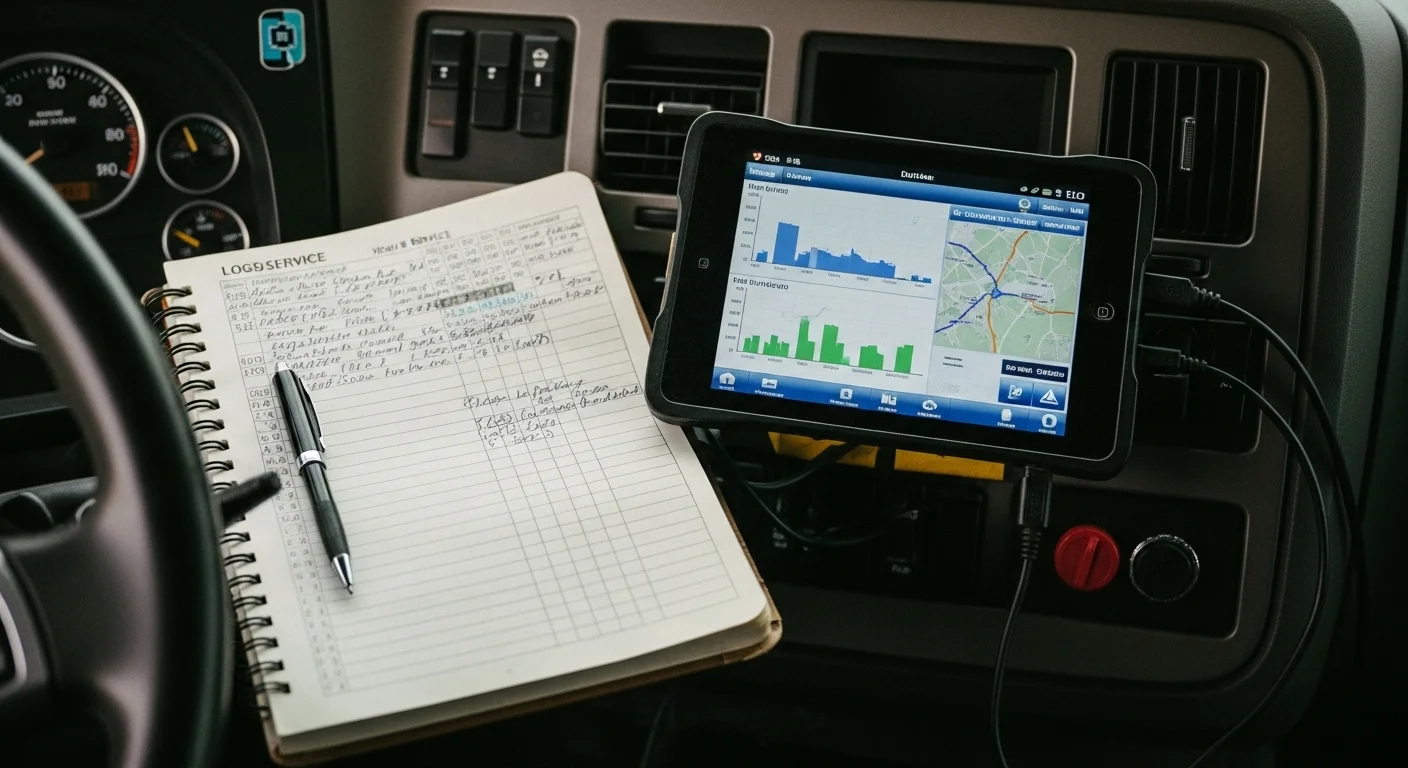
ELDs are required for most interstate commercial drivers under the FMCSA’s ELD rule at 49 CFR Part 395, Subpart B. The ELD records driver behavior, while the ECM and EDR record vehicle dynamics: it automatically logs driving time, on-duty status changes, rest periods, and engine connection data. ELD records are the primary source of evidence for hours-of-service violations, showing when a driver was behind the wheel beyond the legal limit.
Spoliation and Evidence Preservation
Spoliation is the destruction or alteration of evidence that a party knew, or should have known, would be relevant to litigation. It is one of the most common and most serious issues in trucking cases.
When a truck returns to service after a crash, the ECM continues to record new data. Depending on the system’s storage capacity, that new data can overwrite older records, including the crash data. A carrier that allows records to be deleted or overwritten before litigation is filed commits spoliation, and it can face serious court sanctions.
Court Remedies for Destroyed Evidence
In federal court, Federal Rule of Civil Procedure 37(e) governs lost electronically stored information such as ECM, EDR, and ELD data. When a party failed to take reasonable steps to preserve it and it cannot be restored, the court can order measures to cure the prejudice. Only on finding that the party intended to deprive the other side of the information can the court presume the information was unfavorable, instruct the jury to presume so, or enter a default judgment.
Black Box Evidence Preservation Steps
Black box evidence is secured through five preservation steps.
- 1
Preservation Demands
A formal preservation letter sent early in a case, by certified mail and email, creates a documented duty to preserve that the carrier cannot later claim it did not know about. The demand goes to the motor carrier, its insurer, the broker, any black-box vendor, and any maintenance entities, and it covers the ECM, EDR, ELD, dash camera system, fleet management system data, driver qualification file, and all relevant corporate records.
- 2
ECM and EDR Download
The demand calls for a complete download of the ECM and EDR data by a qualified professional before the truck is repaired, returned to service, or otherwise altered. It specifies the make, model, and VIN so there is no ambiguity about which vehicle is covered.
- 3
ELD and HOS Records
A subpoena for the complete ELD records covers the 7 days preceding the crash, including the day of the crash. Records across those days can show whether a driver was accumulating hours in a way that increased fatigue risk, and HOS patterns across multiple days are often more telling than a single day’s record. The page on hours-of-service violations covers what those patterns show.
- 4
Court Order If Needed
When a carrier fails to respond to preservation demands, a motion for a court order can compel production and preservation. Delay by the carrier after receiving a preservation letter strengthens the spoliation argument.
- 5
Qualified Professional Download and Analysis
ECM and EDR data must be downloaded with the correct proprietary tools for the specific truck’s make, model, and year, and interpreted by a qualified accident reconstruction professional who understands commercial vehicle dynamics. Sam Aguiar Injury Lawyers works with experienced reconstruction professionals who testify in Kentucky and federal courts regularly.
A motor carrier’s defense team can download ECM data on the day of the crash and know what that data says. The injured person needs access to the same information, interpreted by professionals who work for them.
What a Full ELD Production Includes
A full ELD production in a truck crash lawsuit is the complete dataset, which reaches past the summary logs a carrier hands over and includes six categories of records.
- Original, unedited Record of Duty Status (RODS) data for the 30 days before the crash, in its original form before any edits.
- The full edit history: every change made to every record, with timestamps and the user ID of whoever made it.
- Unassigned driving time records: all driving time the system logged with no driver signed in.
- Diagnostic and malfunction event logs, including power compliance and positioning malfunctions.
- The active driver list: every account assigned to the subject vehicle in the 30 days before the crash.
- Supporting documents under 49 CFR § 395.11, such as fuel receipts, toll records, bills of lading, weigh tickets, and payroll records. Cross-referencing these against the ELD data exposes gaps and contradictions.
ELD records can be overwritten, deleted during routine maintenance, or lost in a server migration.
ELD Falsification Methods
Carriers and drivers falsify ELD records through six documented methods.
- 1
Ghost Driver or Fictitious Co-Driver Accounts
The carrier creates fake or former-driver accounts in the ELD system. When a driver hits an hours-of-service limit, the carrier logs him in under the ghost account to give him a fresh driving window, and the real driver’s records show no violation.
- 2
Unassigned Driving Time Manipulation
An ELD must treat a truck as in motion at a speed threshold no higher than 5 miles per hour under the FMCSA ELD technical specifications, and it records driving with no driver logged in under an “Unidentified Driver” account. Under 49 CFR § 395.32, the carrier must review those records and either annotate why the time is unassigned or assign it to the right driver. Logging out before driving past a limit makes the excess hours look unassigned instead of like a violation.
- 3
Carrier-Directed Back-Office Edits
An edit a driver makes to his own records shows up as an annotated edit an inspector can see. Edits that back-office personnel make on behalf of drivers have, in some cases, not appeared as edits at all. After investigating a fatigue crash involving Triton Logistics, which created fictitious driver accounts in its ELD system, the NTSB recommended that FMCSA require ELD providers to create and produce an audit log that includes the date, time, and editor of each change.
- 4
Personal Conveyance Abuse
Personal conveyance mode lets a driver move a truck without it counting as on-duty driving time, on the theory that the driver is using the vehicle for personal reasons. Logging off-duty miles as personal conveyance while running loads is a documented falsification method, and inspectors look for it when mileage patterns do not match routing records.
- 5
Fake ELD Malfunction Claims
Under 49 CFR § 395.34, a driver who reports an ELD malfunction must reconstruct the record of duty status for the current 24-hour period and the previous 7 consecutive days on paper and keep manual logs until the device is fixed, and the carrier must act to correct the malfunction within 8 days of discovery. A false malfunction claim moves a driver onto hand-written logs, which are easier to falsify than ELD records.
- 6
Non-Certified or Revoked ELDs
FMCSA removes devices that fail the minimum requirements of Appendix A to Subpart B of Part 395 from its registered ELD list and places them on a revoked devices list. A carrier still using a revoked device after FMCSA’s replacement deadline is treated as operating without an ELD.
Punitive Damages for Carrier-Directed Falsification
Carrier-directed ELD falsification supports a claim for punitive damages, which can increase the value of a case. Evidence that a carrier directed its drivers to falsify ELD records raises the legal stakes far beyond the underlying hours-of-service violation. Carrier-directed falsification is deliberate deception: it builds a fatigued workforce and puts those drivers on the highway, and that level of conscious indifference to safety is what supports the punitive damages claim.
Need Black Box Data From a Truck Crash?
A truck’s ECM and EDR data can be overwritten once the truck returns to service, and carriers must keep ELD records for only six months, so a preservation demand is what puts the carrier on notice to keep them. After an accident, the insurance company doesn’t waste time. Neither should you.
Sam Aguiar Injury Lawyers handles truck crash cases under the Bigger Share Guarantee®. Clients always walk away with more money than the firm after medical bills, liens, and case expenses are paid. If the client’s share would ever be less than the legal fee, the firm cuts its fee. $0 Out-Of-Pocket Forever. Get a free case review of the black box evidence in your case at 502-888-8888.
Why Clients Choose Sam Aguiar
Ready to Take Action on Your Case?
After a serious injury, medical bills pile up while the insurance company looks for ways to pay you less. Most law firms take their cut first and leave you with whatever is left. Sam Aguiar Injury Lawyers does things differently. With our exclusive Bigger Share Guarantee®, you always get more. Every client gets a dedicated three-person team: an attorney, a case manager, and a legal assistant. We never raise our fee rate if we have to go to court, and you pay $0 Out-Of-Pocket Forever.
Frequently Asked Questions
1What is the difference between a truck’s ECM and EDR?+
The ECM is the truck’s main onboard computer and continuously records engine and powertrain performance. The EDR is a dedicated device designed to capture data around trigger events such as a hard brake or sudden deceleration.
2What does an Electronic Logging Device record?+
An ELD records a commercial driver’s hours of service, including driving time, on-duty status changes, and rest periods. ELDs are required for most interstate commercial drivers under the FMCSA’s ELD rule at 49 CFR Part 395, which makes them the primary source for confirming whether a driver stayed within legal driving-hour limits.
3What happens if a trucking company destroys or loses black box data?+
In federal court, Federal Rule of Civil Procedure 37(e) lets a judge order measures to cure the prejudice from lost electronic data. If the carrier intended to deprive the other side of the data, the court can presume it was unfavorable, instruct the jury to presume so, or enter a default judgment.
4Why does black box data need to be preserved quickly after a truck crash?+
A truck can return to service and keep operating after a crash, and depending on the system, continued operation can overwrite the data that recorded the moments before and during the crash.
5Can black box data show whether a truck driver was speeding or braking hard?+
Yes. ECM and EDR data can show vehicle speed, throttle position, and braking activity in the seconds before a crash, which is often central to determining what caused it.