

Truck Crash Evidence
Trucking Accident Evidence
 ★★★★★
Over 1,000 Five-Star Reviews
•
Available 24/7. $0 Out-Of-Pocket Forever.
★★★★★
Over 1,000 Five-Star Reviews
•
Available 24/7. $0 Out-Of-Pocket Forever.
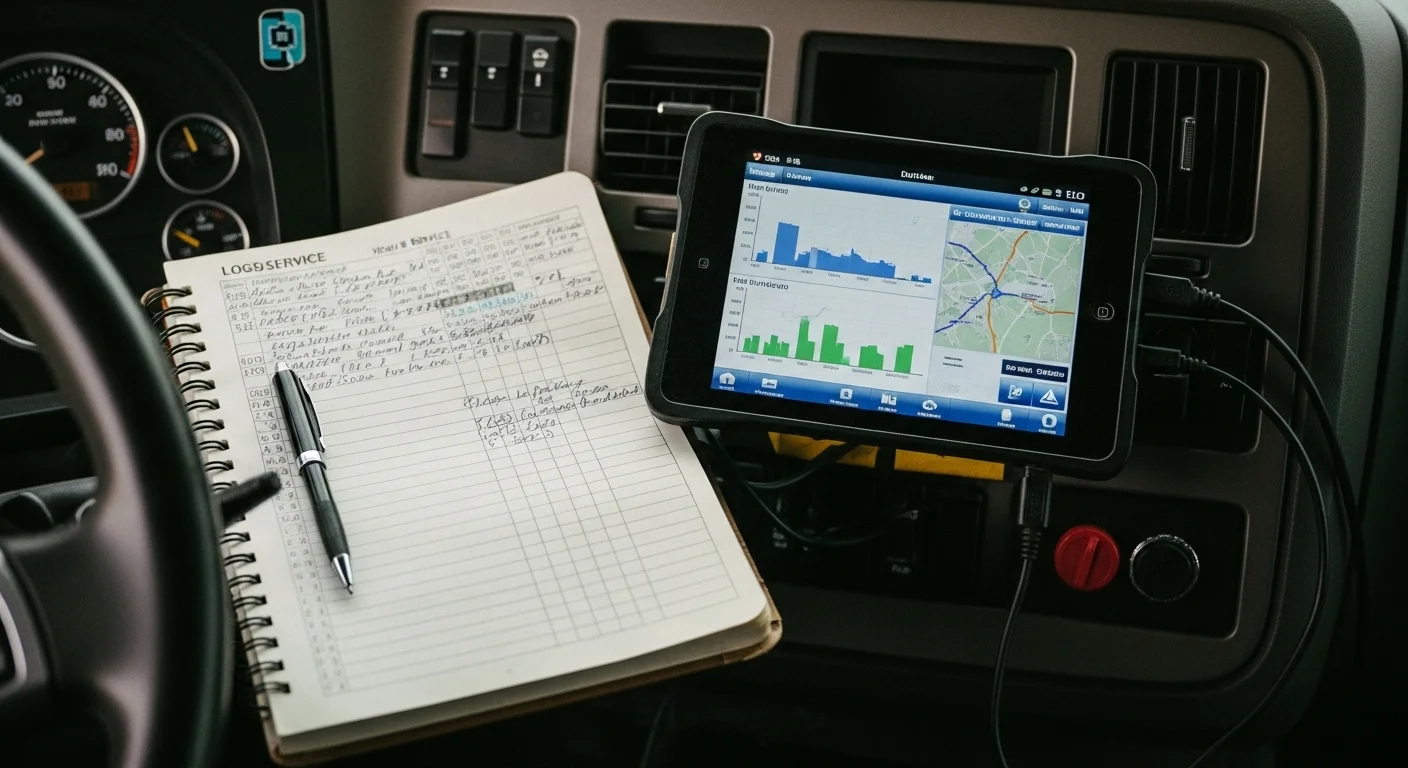
Record Retention Rules
Federal hours-of-service rules require motor carriers to retain records of duty status and supporting documents for at least six months. Other truck accident records, including vehicle data, inspection files, maintenance records, and carrier safety information, are governed by different requirements or by system settings. Because some of these records are subject to limited retention periods, the records relevant to a specific crash are best identified early, and which records apply depends on the facts of the truck accident.
Evidence Atlas and Retention Clock
Choose a record to see its own clock. An accident date is not the start date for every record.

Retention Rules
Motor-carrier DVIR and associated certifications
Three months from preparation of the report (49 CFR § 396.11(a)(4)). Ask for the report date. Do not substitute an accident date.
Intermodal defect report documentation
Three months from submission to the provider or agent (49 CFR § 396.11(b)(4)). This clock is separate from the motor-carrier DVIR clock.
RODS and required supporting documents
At least six months from receipt by the carrier (49 CFR § 395.8(k)(1)). The clock uses the receipt date, which can be later than the activity date.
Roadside inspection report
Twelve months from the inspection date (49 CFR § 396.9(d)(3)). Separate from a DVIR and from a periodic inspection report.
Periodic inspection report
Fourteen months from the report date (49 CFR § 396.21(b)). Report retention is not the same thing as the 12-month inspection cycle.
Maintenance records
Retain required records for one year and for six months after the vehicle leaves carrier control, within the section’s scope (49 CFR § 396.3(b)–(c)). Both conditions are shown. This guide does not recommend a destruction date.
Accident register
Three years after each qualifying accident (49 CFR § 390.15(b)). For this record, the accident date is the anchor.
Driver qualification file
Employment plus three years, subject to listed item-specific removals (49 CFR § 391.51(c)–(d)). A continuing employment example does not produce a deletion date.
Specified DQ items eligible for earlier removal
Listed annual-review, medical, variance, and verification records may be removed three years after execution (49 CFR § 391.51(d)). Map the eligible item. Do not apply this removal rule to the whole file.
Examiner-held examination records
At least three years from the examination date (49 CFR § 391.43(i)). The medical examiner is a different custodian from the carrier.
Specified drug and alcohol records
At least five years for the listed categories, including alcohol results at or above 0.02, verified drug positives, refusals, and specified program records (49 CFR § 382.401(b)(1)). Do not shorten this category to “all positive tests.” An automated end date stays off until legal review approves the anchor.
Collection-process records
At least two years, except the calibration documentation the rule addresses separately (49 CFR § 382.401(b)(2)). The category has to be selected. An automated end date stays off pending review.
Negative, canceled, and low-alcohol results
At least one year for the specified records, including alcohol below 0.02 (49 CFR § 382.401(b)(3)). Keep the alcohol threshold categories distinct. An automated end date stays off pending review.
Testing education and training records
While the individual performs the relevant functions and for two years afterward (49 CFR § 382.401(b)(4)). A function-end event would be needed. An automated end date stays off pending review.
ECM, telematics, and camera outputs
No universal retention period is established for this whole category. Device policy, other duties, custody, and preservation need a separate review. Unknown is not zero days.
Trucking Evidence Categories
A truck accident case can draw on eight categories of records.
- 1
Black Box Data
Black box data is part of a broader review of vehicle operation records after a crash.
- 2
Hours of Service Records
Records of duty status document duty status and driving time under the federal hours-of-service rules.
- 3
Camera Footage
In-cab, forward-facing, roadway, and nearby third-party video can show the circumstances of a crash.
- 4
Driver Phone Records
Federal mobile-device rules prohibit commercial motor vehicle drivers from using a hand-held mobile telephone while driving, and bar motor carriers from allowing or requiring it. Phone records become relevant when the cause of a crash is disputed.
- 5
Vehicle Maintenance Records
Federal inspection rules govern driver vehicle inspection reports. Maintenance and inspection records provide context about the vehicle involved in a crash.
- 6
Driver Qualification Files
Federal driver qualification rules identify the records motor carriers must maintain for their drivers.
- 7
Cargo Securement Records
Load documentation, securement records, and inspection information become relevant when cargo movement is part of the crash evidence.
- 8
Carrier Safety Records
The FMCSA Safety Measurement System provides public carrier safety data, including roadside inspection and crash information.
Fleet Telematics Data Map
Select a system to see its possible records and the questions used to locate them.
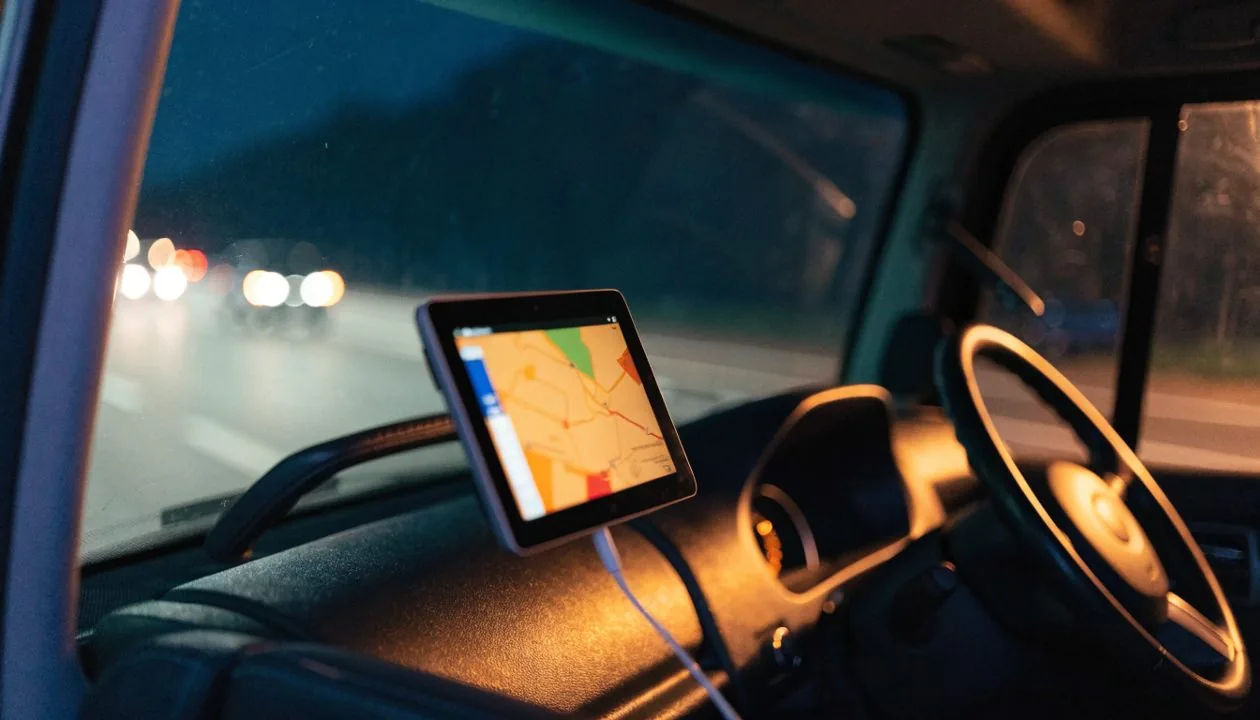
Systems and Questions
GPS / telematics
Vehicle hardware. Shared record id: telematics_export.
- Was a unit installed and active?
- Does it store locally, remotely, or both?
- What identifies the device and the account?
- Ask for the device identifier, configuration, and export format before assuming a copy exists.
ELD
Driver interface. Shared record id: rods.
- Which account, device, or assignment connects the record to the driver?
- Where is the original file, and where are copies?
- Duty-status retention is record-specific. It does not transfer to camera or GPS data.
Dispatch / TMS
Carrier platform. Shared record id: dispatch.
- Who administers the account?
- What exports or settings exist?
- A planned arrival is not the same record as actual movement.
Fleet messages
Carrier platform. Shared record id: fleet_messages.
- Which device or login was assigned?
- Are messages copied to a vendor?
- Some fleet-management communications can be HOS supporting documents. That does not make every data stream a required HOS record.
Outward camera
Vehicle hardware. Shared record id: outward_camera.
- Was it installed and powered?
- What identifies the camera?
- Presence does not establish recording, coverage, audio, or a usable file.
Inward camera
Vehicle hardware. Shared record id: inward_camera.
- Was an inward lens installed and active?
- Is audio a separate setting?
- Do not treat a camera node as proof that footage exists.
ADAS event system
Vehicle hardware. Shared record id: adas.
- Was the feature enabled on this vehicle?
- Where are events stored?
- An alert is not a reconstruction of speed or fault.
Maintenance diagnostics
Vehicle hardware. Shared record id: diagnostics.
- Who ran the diagnostic, and which tool?
- Does the tool keep a remote copy?
- A fault code needs the system definition before anyone treats it as a defect finding.
Tire-pressure monitoring
Vehicle hardware. Shared record id: tpms.
- Were sensors installed on the relevant axle?
- Are alerts stored or only displayed?
- A missing alert is not a measurement of the tire at the time of an accident.
Fuel cards
Third-party records. Shared record id: fuel.
- Who controls the source account?
- What request process applies?
- Posting time and transaction time can differ. Neither one is automatically a duty status.
Route / geofence records
Carrier platform. Shared record id: geofence.
- Was geofencing configured for this trip?
- Who can export the history?
- A geofence event still needs a check of which vehicle and clock produced it.
OEM portal
Vendor / OEM platform. Shared record id: oem_portal.
- Is information copied remotely?
- What agreement, account, or retention setting applies?
- A vendor node does not mean the vendor owns or can release every record.
Third-party logistics portal
Third-party records. Shared record id: tpl_portal.
- Who controls the source?
- What lawful request or access process is needed?
- Portal access is not evidence that the carrier’s own systems contain the same file.
Unknown or disabled equipment does not create sample data. Vendor access is not ownership of every record. An ELD duty-status period does not transfer to camera or GPS data.
Need Your Truck Crash Records Reviewed?
Hours-of-service records must be kept for at least six months, driver qualification files and inspection reports follow their own rules, and camera footage can be overwritten, so the first step after a truck crash is knowing which records exist for your case. A free case review with Sam Aguiar Injury Lawyers starts there.
Every case is backed by the Bigger Share Guarantee®. Clients always walk away with more money than the firm after medical bills, liens, and case expenses are paid. If the client’s share would ever be less than the legal fee, the firm cuts its fee. Dedicated three-person team: a top-rated attorney, an experienced case manager, and a skilled legal assistant. Request a free case review to have your truck crash records reviewed.
Key Takeaways
Which Truck Records Could Shape Your Case?
ELD logs, telematics feeds, dashcam video and dispatch messages each run on their own retention clock, and none of it is kept forever. Sam Aguiar Injury Lawyers puts a dedicated trucking team on truck cases, and that team knows where each of those records is kept. Most cases qualify in under 10 minutes, and the review costs you nothing. Call today for a free case review.
Frequently Asked Questions
1What is a black box in a semi-truck and what data does it hold?+
A semi-truck’s black box is its electronic control or event data system. The information it stores depends on the vehicle and device, and that vehicle-operation data is reviewed alongside physical evidence, maintenance files, and other records.
2How long does a trucking company have to keep driver records?+
Federal rules set different retention periods by record type. Hours-of-service records and supporting documents must be retained for at least six months, while driver qualification files and inspection reports fall under their own separate rules.
3What happens if trucking evidence is missing?+
The effect of missing evidence depends on the specific record, the facts of the case, and the applicable law, so identifying what records should exist is an early step in a trucking case.
4Can carrier safety data be relevant to a truck accident case?+
Yes. The FMCSA Safety Measurement System provides public carrier safety data, including roadside inspection and crash information. Whether a particular record applies depends on the evidence and legal issues in the case.
5What camera footage can be used in a truck accident case?+
In-cab, forward-facing, roadway, and nearby third-party video can all show the circumstances of a crash, depending on what was recorded and preserved before it was overwritten.