
Steps After an Amazon Driver Accident
An Amazon delivery crash creates unique challenges that a regular car accident doesn’t. From identifying the driver’s employer to preserving Amazon’s internal data, here’s what to do — and what to demand — in the critical hours and days after the collision.
If you were hit by an Amazon delivery vehicle, your first priority is safety and documentation. But unlike a typical car wreck, you also need to determine whether the driver works for a DSP, drives for Amazon Flex, or is a rare direct Amazon employee — because that answer dictates which insurance policy covers your injuries and who you can hold responsible. Amazon’s internal data, including delivery route logs, in-van camera footage, and driver safety scores, can be deleted within days if you don’t send a formal preservation demand.
Immediate Steps at the Scene
-
Move to safety and call 911
Under KRS 189.580, Kentucky drivers involved in a crash with injuries must remain at the scene and notify law enforcement. A police report is essential documentation for any insurance claim.
-
Identify the driver and the vehicle
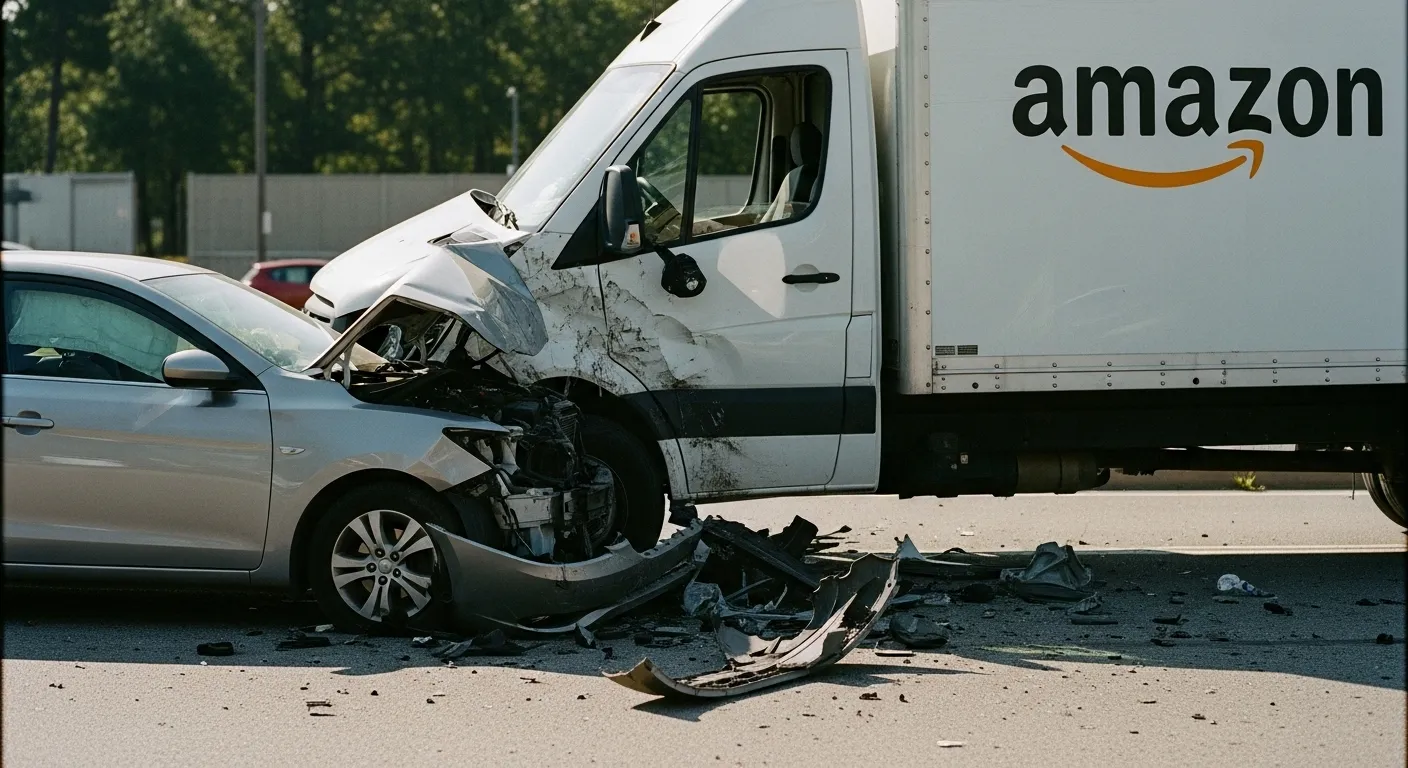
Get the driver’s name, phone number, and driver’s license information. Photograph the vehicle from multiple angles — including the license plate, any Amazon branding, and the company name on the door. If the vehicle is a branded Amazon van, note whether it has a DSP company name on the side. If the driver is using a personal vehicle, it’s likely an Amazon Flex delivery.
-
Ask the driver who they work for
This is the single most important question at the scene. Ask: “Do you work for Amazon directly, or for a delivery company?” Get the name of the DSP company if applicable. This determines which insurance policy covers the crash and who has legal responsibility.
-
Document everything
Photograph the crash scene, vehicle damage, skid marks, traffic signals, weather conditions, and any visible injuries. Get names and contact information from witnesses. Note the time, location, and any Amazon packages visible in or around the vehicle.
-
Get medical attention immediately
Even if you feel fine at the scene, see a doctor the same day. Injuries from vehicle crashes — including whiplash, concussions, and internal injuries — often don’t produce symptoms for hours or days. A medical record tied to the crash date is critical evidence.
Critical Steps in the Days After the Crash
Send a Preservation Demand to Amazon and the DSP
Amazon’s delivery vehicles are equipped with AI-powered cameras (Netradyne Driveri systems) that record driver behavior and road conditions. Amazon also maintains delivery route data, driver safety scores from its “Mentor” app, and GPS logs. This data can be overwritten or deleted within days. A formal preservation demand — sent by an attorney to both Amazon and the DSP — creates a legal obligation to preserve all relevant evidence.
File Your PIP Claim Under Kentucky’s No-Fault Law
Under KRS 304.39, your own auto insurance pays up to $10,000 in Personal Injury Protection (PIP) benefits for medical bills and lost wages, regardless of who caused the crash. File this claim promptly with your own insurer.
Do Not Give a Recorded Statement to Amazon’s Insurer
Amazon’s insurance carrier (or the DSP’s insurer) will likely contact you quickly. They may ask for a recorded statement or offer a fast settlement. Both are designed to lock in a low-value claim before you understand the full extent of your injuries. Consult an attorney before providing any statements or signing any documents.
Identify All Potential Insurance Policies
An Amazon crash can involve multiple layers of insurance:
- The DSP’s commercial auto policy — $1,000,000 minimum
- Amazon’s own commercial coverage — Available if Amazon is established as a co-employer or principal
- The driver’s personal auto policy — For Flex drivers using personal vehicles
- Your own PIP and UM/UIM coverage — Under Kentucky’s no-fault and uninsured motorist laws
Why Timing Matters in Amazon Cases
Amazon’s in-van camera footage, delivery route data, and driver safety records are stored on Amazon’s servers — not on the vehicle. Without a preservation demand, this data can be automatically deleted as part of Amazon’s routine data-retention schedule. Once that evidence is gone, proving what the driver was doing at the moment of the crash becomes significantly harder. Acting within the first 48–72 hours is critical.
Kentucky-Specific Insurance Rules That Apply
Kentucky’s insurance framework creates both protections and complications in Amazon delivery cases:
- No-fault PIP benefits — Your own insurer pays up to $10,000 under KRS 304.39, regardless of fault
- Tort threshold — Once your medical bills exceed $1,000, you suffer a broken bone, or your injuries are permanent, you can step outside no-fault and pursue a full claim
- Pure comparative fault — Kentucky allows recovery even if you were partially at fault, reduced by your percentage of responsibility
- Two-year statute of limitations — You generally have two years from the date of the accident to file a personal injury lawsuit
- Uninsured/underinsured motorist coverage — If the at-fault driver’s policy is insufficient, your own UM/UIM coverage under KRS 304.39-320 can fill the gap
If your crash happened in the Lexington area, our Lexington auto accident team handles Amazon delivery cases in Fayette County courts. For rideshare accidents involving Uber or Lyft, similar multi-layered insurance issues apply. We also handle UPS delivery vehicle cases, Turo rental car crashes, and traditional rental car accidents.
Every Amazon case starts with one question: Who was behind the wheel, and who do they actually work for? That answer shapes everything — which insurance policy pays, which defendant you can name, and how much compensation is available. At Sam Aguiar Injury Lawyers, our dedicated commercial vehicle team knows how to trace the chain of responsibility from the driver to the DSP to Amazon itself.
Frequently Asked Questions
Should I report the Amazon delivery accident to Amazon directly?
You can report it through Amazon’s customer service, but do not rely on Amazon to investigate on your behalf. Amazon’s priority is protecting itself, not compensating you. The most important step is having an attorney send a formal preservation demand to Amazon and the DSP to ensure critical evidence — like in-van camera footage and delivery route data — is not deleted.
What if the Amazon driver fled the scene or wouldn’t give me their information?
If the driver left the scene, the police report becomes your most important document. Note the vehicle description, license plate, and any Amazon branding. Amazon-branded vehicles can be traced through Amazon’s fleet records. Your own uninsured motorist coverage may also apply if the driver cannot be identified.
How quickly does Amazon delete in-van camera footage?
Amazon’s Netradyne Driveri camera systems record continuously, but footage is typically stored on Amazon’s cloud servers for a limited time. Without a preservation demand, relevant footage can be overwritten or purged within days to weeks. Sending a legal preservation letter within 48–72 hours of the crash is strongly recommended.
Can I still get compensation if I was partially at fault for the accident?
Yes. Kentucky follows a pure comparative fault system. Your compensation is reduced by your percentage of responsibility, but you can still recover damages even if you were partially at fault. Insurance adjusters often try to inflate your fault share — thorough documentation from the scene is your best defense.
Start Your Free Case Review
Fill out the form below and our team will reach out to discuss your options.