

DOT Out-of-Service Violations List
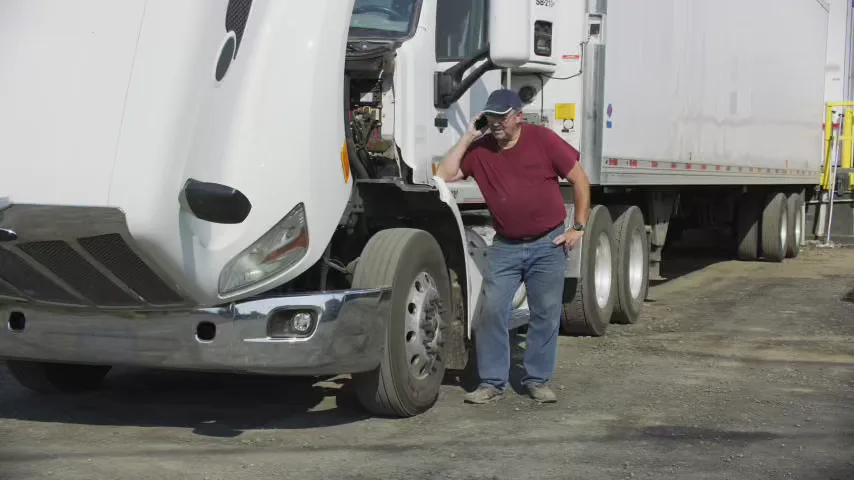
Commercial trucks are inspected at roadside checkpoints, weigh stations, and carrier terminals across the country, and when an inspector finds a defect serious enough to create an immediate danger, the inspection becomes an out-of-service order. That order is a government inspector’s written, contemporaneous finding that a truck or driver was unsafe, and it can become evidence in a truck accident case.
DOT Out-of-Service Orders
An out-of-service order takes a commercial vehicle or driver off the road until the problem is fixed. For vehicles, 49 CFR 396.9 requires authorized personnel to declare and mark out of service any motor vehicle that, by reason of its mechanical condition or loading, would likely cause an accident or a breakdown.
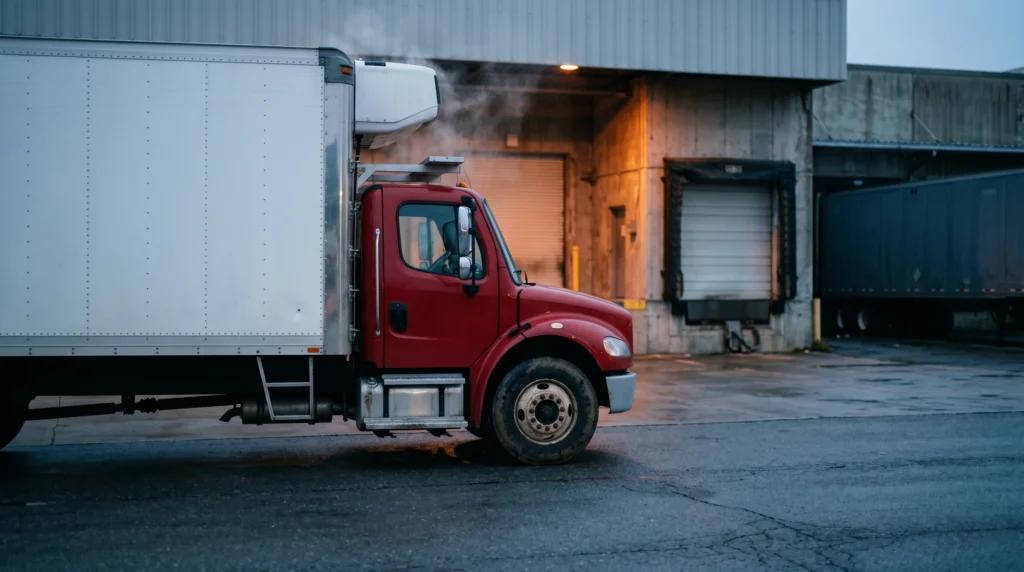
Drivers are sidelined the same way. Under 49 CFR 395.13, a driver who has driven past the federal hours of service limits, or has no current record of duty status, is ordered out of service, and no carrier may require or permit that driver to operate a commercial motor vehicle until the driver can lawfully do so again. The fines that follow are covered in hours of service violation consequences.
Inspectors apply the North American Standard Out-of-Service Criteria, published by the Commercial Vehicle Safety Alliance (CVSA). In Kentucky, 601 KAR 1:005, Section 5, makes those criteria the standard for Kentucky State Police inspectors and makes operating in violation of an out-of-service order a separate violation of the regulation.
Federal law defines an out-of-service order in 49 CFR 390.5 as a declaration by an authorized enforcement officer that a driver, a commercial motor vehicle, or a motor carrier operation is out of service under 49 CFR 386.72, 392.5, 392.9a, 395.13, or 396.9, a compatible state law, or the North American Standard Out-of-Service Criteria. Each of those regulations sets its own trigger and its own length of time off the road.
| Regulation | What Triggers the Order | What Comes Off the Road |
|---|---|---|
| Regulation49 CFR 396.9 | What Triggers the OrderMechanical condition or loading that would likely cause an accident or a breakdown | What Comes Off the RoadThe vehicle, until every repair on the out-of-service notice is completed |
| Regulation49 CFR 395.13 | What Triggers the OrderDriving past the hours of service limits, or no record of duty status current for the day and the prior 7 days | What Comes Off the RoadThe driver, until the driver may lawfully drive again |
| Regulation49 CFR 392.5 | What Triggers the OrderAlcohol use within 4 hours before duty, or any detected alcohol while on duty | What Comes Off the RoadThe driver, for 24 hours |
| Regulation49 CFR 392.9a | What Triggers the OrderOperating without the required operating authority, or beyond its scope | What Comes Off the RoadThe motor carrier |
| Regulation49 CFR 386.72 | What Triggers the OrderA violation, or combination of violations, that poses an imminent hazard to safety | What Comes Off the RoadA vehicle, a driver, or all or part of a carrier’s operations |
Source: 49 CFR 390.5 (definition of out-of-service order) and the sections listed
Common Out-of-Service Violations
Out-of-service violations fall into two categories: defects on the vehicle and problems with the driver. Both end the trip on the spot, and both leave a record. After each International Roadcheck, the CVSA publishes the five most-cited violations in each category.
Vehicle Violations
In the 2026 International Roadcheck results, brake systems were the most-cited vehicle out-of-service violation in North America, followed by tires. The CVSA lists 20% defective brakes as its own category.
| Violation Category | Violations | Share of Vehicle Violations |
|---|---|---|
| Violation CategoryBrake Systems | Violations3,379 | Share of Vehicle Violations24.3% |
| Violation CategoryTires | Violations2,914 | Share of Vehicle Violations20.9% |
| Violation Category20% Defective Brakes | Violations2,072 | Share of Vehicle Violations14.9% |
| Violation CategoryCargo Securement | Violations1,724 | Share of Vehicle Violations12.4% |
| Violation CategoryLights | Violations1,659 | Share of Vehicle Violations11.9% |
Source: CVSA, 2026 International Roadcheck Results, top five vehicle out-of-service violations in North America
Driver Violations
Drivers are placed out of service for problems with their qualifications and their logs. A missing medical card topped the 2026 driver list, hours of service violations came second, and the English proficiency requirement came fourth. False records of duty status, the problem covered in ELD falsification in truck accident cases, ranked fifth.
| Violation Category | Violations | Share of Driver Violations |
|---|---|---|
| Violation CategoryNo Medical Card | Violations1,072 | Share of Driver Violations27.0% |
| Violation CategoryHours of Service | Violations929 | Share of Driver Violations23.4% |
| Violation CategoryNo Commercial Driver’s License | Violations620 | Share of Driver Violations15.6% |
| Violation CategoryEnglish Proficiency | Violations361 | Share of Driver Violations9.1% |
| Violation CategoryFalse Records of Duty Status | Violations266 | Share of Driver Violations6.7% |
Source: CVSA, 2026 International Roadcheck Results, top five driver out-of-service violations in North America
54,575
Commercial vehicle inspections during the three-day 2026 International Roadcheck
10,350
Commercial vehicles placed out of service, 19% of all inspections
3,184
Drivers placed out of service, a 5.8% driver out-of-service rate
Source: Commercial Vehicle Safety Alliance, 2026 International Roadcheck Results.
FMCSA Tracking of Repeat Violators
The federal government tracks carrier safety over time through Compliance, Safety, Accountability, the FMCSA’s safety compliance and enforcement program. The Safety Measurement System (SMS) uses roadside inspection and accident data from the last two years and organizes it into seven Behavior Analysis and Safety Improvement Categories. A violation that resulted in an out-of-service order receives an additional severity weight of 2 under the SMS Methodology, so a company whose trucks keep failing inspections builds a time-stamped record of its own maintenance and supervision failures.
The inspection history is easier to see than the scores. The FMCSA’s SAFER Company Snapshot is a free electronic record of a carrier’s identification, size, and safety record, including its safety rating, a roadside out-of-service inspection summary, and accident information. Property carriers’ SMS percentiles are no longer shown on FMCSA’s public website under the Fixing America’s Surface Transportation Act of 2015, and a property carrier logs in to see its own results. Reading an FMCSA SMS report explains how those scores are laid out.
Out-of-Service Record Duration
An out-of-service violation counts against a carrier in the SMS for 24 months. A violation recorded in the past six months receives a time weight of 3, one recorded between six and twelve months ago receives a 2, and an older one within the 24 months receives a 1. Safety events older than 24 months are no longer used to assess a carrier’s safety posture.
The paper record runs on its own clock. Under 49 CFR 396.9(d)(3), the carrier has 15 days after a roadside inspection to certify that every listed violation was corrected, and it must keep a copy of the inspection report for 12 months.
Out-of-Service Violations as Negligence Evidence
An out-of-service order supplies a government inspector’s written finding that the truck or driver was unsafe, which is the kind of record a Kentucky truck accident case builds on. The strongest version is an accident involving a truck or driver under an active out-of-service order, because 49 CFR 396.9 prohibits a carrier from requiring or permitting anyone to operate a vehicle marked out of service until it is repaired.
Penalties for Ignoring an Out-of-Service Order
Federal law attaches penalties to operating under an out-of-service order. Under the civil penalty schedule in Appendix B to 49 CFR Part 386, a CDL holder convicted of violating an out-of-service order faces a civil penalty of not less than $3,961 for a first conviction, and an employer that knowingly allows a driver to operate during the order faces a penalty of not less than $7,155 or more than $39,615. A conviction also takes the driver’s license. Under Table 4 to 49 CFR 383.51, a first conviction for violating a driver or vehicle out-of-service order while hauling nonhazardous materials disqualifies the driver from operating a commercial motor vehicle for no less than 180 days or more than 1 year, and a second conviction within 10 years brings no less than 2 years or more than 5 years.
For the injured person, the violation can support more than an ordinary negligence case: Kentucky’s punitive damages statute, KRS 411.184, permits punitive damages where clear and convincing evidence shows the defendant acted with oppression, fraud, or malice.
Driver Vehicle Inspection Reports
Under 49 CFR 396.11, a driver must prepare a written inspection report at the end of each day’s work, and the carrier must certify that any listed defect was repaired, or that repair was unnecessary, before the vehicle runs again. A defect noted on one driver vehicle inspection report and left unaddressed on the next builds a documented timeline of what the carrier knew and when.
Records of Out-of-Service Violations
Out-of-service evidence sits in specific documents, each held by someone with no reason to volunteer it:
- The SAFER Company Snapshot.
- Roadside inspection reports listing every violation found.
- Driver vehicle inspection reports required by 49 CFR 396.11, with the carrier’s repair certifications.
- Carrier maintenance files required by 49 CFR 396.3, showing what the company knew about each vehicle and when.
The retention windows are short. A carrier must keep driver vehicle inspection reports and repair certifications for three months under 49 CFR 396.11, its copy of each roadside inspection report for 12 months under 49 CFR 396.9, and maintenance records for 1 year, plus 6 months after the vehicle leaves the carrier’s control, where the vehicle is housed or maintained. A written preservation demand to the carrier and its insurer puts them on notice that those inspection reports, maintenance files, and electronic logging data are relevant. Discovery in a Kentucky truck accident case covers how those records are requested.
Should the Truck Have Been Off the Road?
An out-of-service order is an inspector’s written finding that a truck or its driver was unsafe, and a carrier that put either one back on the road left a record behind. Sam Aguiar Injury Lawyers has a dedicated trucking team that requests the inspection reports, maintenance files and driver logs and reads them for every repeat violation. With our Bigger Share Guarantee®, you always get more. Start your free case review today.
Frequently Asked Questions
1What Does Out of Service Mean for a Commercial Truck?+
2What Are the Federal Out-of-Service Violations?+
3What Are the Most Common DOT Out-of-Service Violations?+
4Can an Out-of-Service Violation Be Used as Evidence in a Truck Accident Case?+
5How Long Does an Out-of-Service Violation Stay on Record?+
6What Happens if a Driver Violates an Out-of-Service Order?+
7How Can a Trucking Company’s Out-of-Service History Be Found?+
8Are Punitive Damages Available When a Carrier Ignored an Out-of-Service Order?+
9How Often Are Trucks Placed Out of Service?+
Latest Articles
Kentucky Diminished Value Claims
Kentucky drivers may pursue a repaired vehicle’s leftover market loss from the at-fault driver as part of a.
FMCSA Revoked ELDs: Fleet Compliance and Enforcement Deadlines
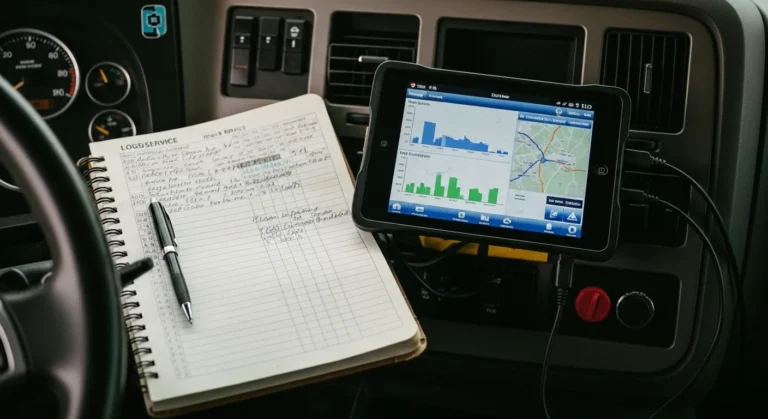
FMCSA removed five electronic logging devices from the registered list on August 6, 2026, and set an October.
FMCSA English Proficiency Rule and OOS Enforcement
FMCSA English Proficiency Rule Sam Aguiar Injury Lawyers August 11, 2026 7 minute read On This Page.