
Kentucky Personal Injury Claims , Part 2: The Insurance System and Your Rights
Kentucky’s auto insurance system is built around specific statutes that determine when you can sue, what you.
Kentucky Personal Injury Claims Series:
- Part 1: Introduction to Personal Injury Claims in Kentucky
- Part 2: The Insurance System and Your Rights (this page)
- Part 3: Building Your Case
- Part 4: Damages and Compensation
- Part 5: The Settlement and Trial Process
Kentucky’s personal injury system is largely driven by auto insurance law. Before pursuing a claim against the at-fault driver, most Kentucky accident victims must first deal with their own insurer under the state’s choice no-fault framework. The rules around KRS 304.39-060‘s tort threshold, the statute of limitations under KRS 413.140, and Kentucky’s pure comparative fault rule under KRS 411.182 shape every aspect of how your claim proceeds , and how insurance companies respond to it.
Kentucky’s Choice No-Fault Auto Insurance System
Kentucky is one of a small number of states that gives drivers a choice about how their auto insurance works. Under KRS 304.39-060, most drivers keep the state’s default “choice no-fault” framework. Here’s what that means in practice:
Step 1: PIP Benefits Pay First
Personal Injury Protection (PIP) coverage is mandatory in Kentucky. Your own insurer pays up to $10,000 for medical expenses and a portion of lost wages , regardless of who caused the crash. PIP is meant to provide immediate coverage while fault is being determined. Under KRS 304.39-020, every Kentucky auto policy must include at least $10,000 in PIP coverage.
Step 2: Meeting the Tort Threshold Unlocks Full Compensation
To step outside the no-fault system and pursue a claim against the at-fault driver for pain and suffering and all other damages, your injuries must meet the tort threshold under KRS 304.39-060(2)(b). You meet the threshold when any one of these conditions is true:
Kentucky’s Tort Threshold , KRS 304.39-060(2)(b)
- Medical expenses (or their reasonable equivalent value) exceed $1,000
- A bone fracture of any kind
- Permanent injury or permanent disfigurement
- Death
Once any one of these conditions is met, the full range of damages , including pain and suffering, loss of enjoyment of life, and long-term impairment , is available. Most injury cases involving a hospital visit clear the $1,000 threshold within the first treatment episode.
Tort Election , Rejecting No-Fault
Drivers who file a written rejection of the no-fault system with their insurer retain full tort rights from the first dollar. There is no threshold to clear. However, they also cannot collect PIP from their own policy (unless they add it back under KRS 304.39-140(5)). The Kentucky Department of Insurance maintains records of tort election filings.
How Insurance Companies Respond to Kentucky PI Claims
The at-fault driver’s insurer has one goal: pay out as little as possible. Understanding the system they operate in helps you see what they’re doing before it costs you money. The most common approaches are:
Recording Your Statement Early
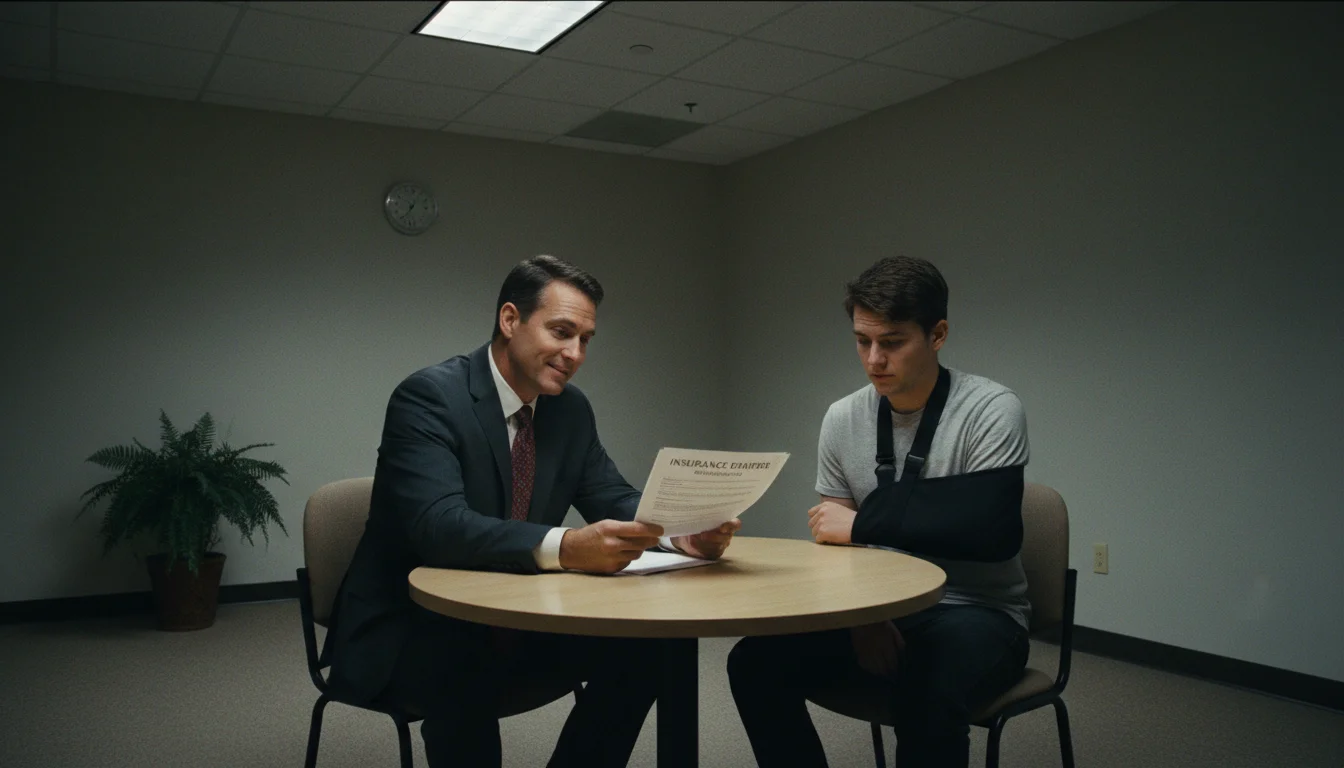
The first call from an adjuster is almost always a request for a recorded statement. You are not required to give one to the other driver’s insurer. Early statements capture your words before you know the full extent of your injuries, before you’ve reviewed the police report, and before you’ve talked to anyone who can explain your rights. They are used to lock in a version of events favorable to the insurer. Read the full breakdown of the adjuster’s playbook.
Low Initial Reserve and Low Initial Offer
The insurer sets a reserve on your claim , an internal estimate of its total expected cost. The reserve determines the adjuster’s settlement authority. A claim opened with a low reserve based on limited initial information generates a low initial offer. Submitting strong evidence early , medical records, wage documentation, specialist reports , forces the reserve upward and forces the settlement authority with it. Learn more about how insurance reserves affect your settlement.
Payment Delays as Leverage
Deliberate payment delays are a core tactic. Financial pressure accumulates. The statute of limitations clock ticks. At some point, an inadequate offer looks like relief. Kentucky’s Unfair Claims Settlement Practices Act (KRS 304.12-230) requires specific timelines and conduct from insurers , violations constitute bad faith.
UIM Notice Requirements
If the at-fault driver’s policy limits are insufficient to cover your damages, you may need to make a claim against your own underinsured motorist (UIM) coverage. Kentucky requires you to notify your UIM insurer before settling with the at-fault driver’s insurer or risk losing your UIM claim. If you are approaching a settlement with the at-fault insurer and suspect the limits won’t be enough, consult an attorney before signing the release. Learn more about uninsured and underinsured motorist coverage in Kentucky.
Our Bigger Share Guarantee® means you always take home more. No increased litigation fees contingency that never increases. $0 Out-Of-Pocket Forever. With 40+ Seven-Figure Results Since 2020 and Forbes Best-In-State recognition, our team knows how to maximize every Kentucky PI claim.
Frequently Asked Questions
What is the tort threshold in Kentucky, and does my crash meet it?
The tort threshold under KRS 304.39-060(2)(b) allows you to pursue a claim against the at-fault driver for all damages , including pain and suffering , when: medical expenses exceed $1,000, you have a bone fracture, you have a permanent injury or disfigurement, or death resulted. Most crashes involving any emergency room visit, imaging, or specialist care easily exceed $1,000 in medical expenses. If you have any doubt, an attorney can evaluate your specific situation.
Can I still recover money if I was partly at fault?
Yes. Kentucky’s pure comparative fault rule under KRS 411.182 reduces your damages by your fault percentage , but there is no cutoff point. Even if you are 50% or 75% at fault, you can still recover the remaining percentage of your damages. Insurance companies aggressively try to assign you a higher fault percentage than the evidence supports , which is one of the most important reasons to have documented evidence and legal representation.
How does the UIM notice requirement work?
Before settling with the at-fault driver’s insurer for their policy limits, Kentucky requires you to notify your own UIM insurer of the pending settlement. Your UIM insurer has the right to either consent to the settlement or substitute the at-fault driver’s policy limits (paying you the same amount) and then subrogate against the at-fault driver. Failing to provide this notice can waive your UIM claim. If you’re approaching a policy-limits settlement, contact your UIM insurer and consult an attorney before signing anything.
What if the at-fault driver had the minimum insurance coverage?
Kentucky’s minimum liability requirement is $25,000 per person / $50,000 per occurrence / $25,000 property damage. If the at-fault driver carries only minimum limits and your damages exceed $25,000, you may need to pursue your own UIM coverage, or , in rare cases where the at-fault driver has significant assets , pursue collection beyond the policy limits. Our team assesses all available coverage sources, including potential stacking of UM/UIM policies under KRS 304.39-320, from the start of every case.