Traffic Light and Intersection Accident Lawyers
Intersection crashes are the most contested car accident cases — both drivers claim the light was in their favor. The evidence that resolves those disputes is technical, time-sensitive, and routinely overlooked by insurance adjusters.
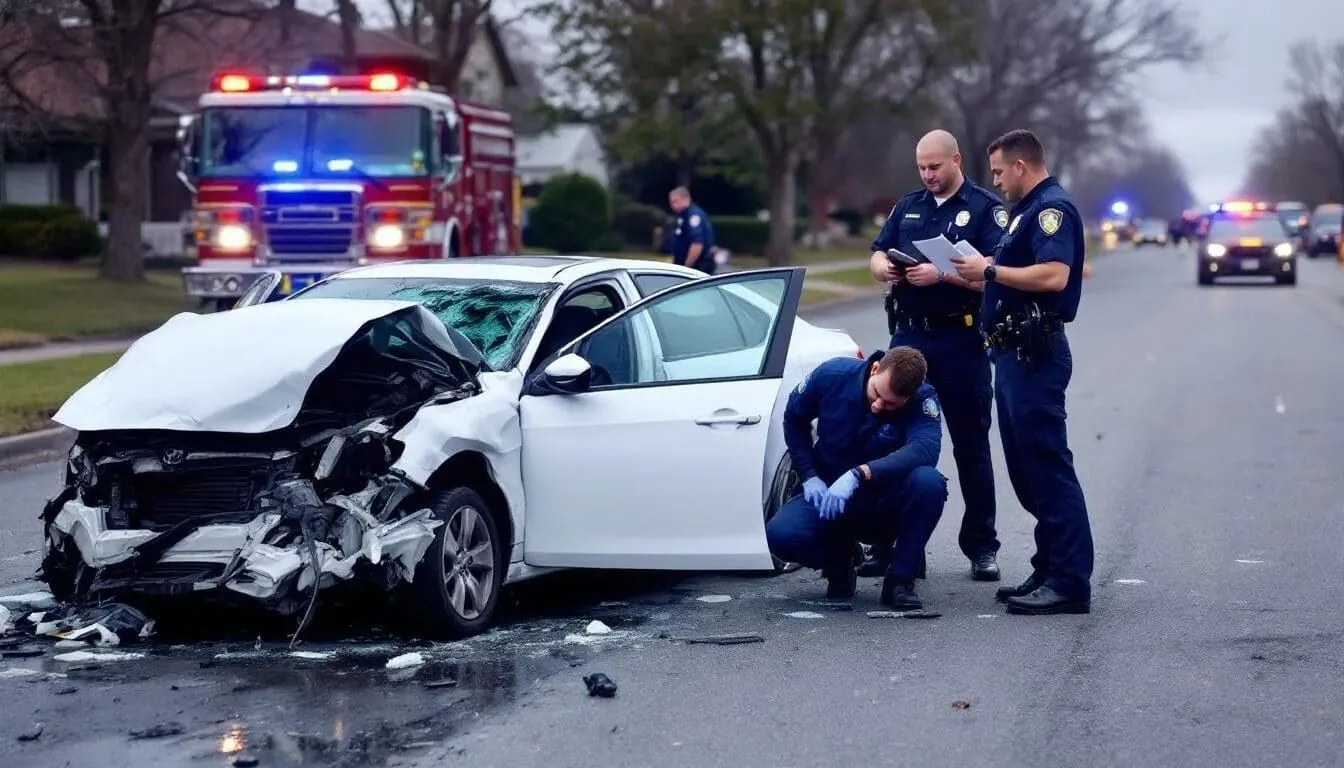
Intersections with traffic signals are the most dangerous locations on any road network. NHTSA data shows that intersection-related crashes account for nearly 40% of all reported crashes in the United States — and IIHS data on red-light running shows that approximately 1,000 people die in red-light running crashes every year. These crashes are characterized by high severity — T-bones, pedestrian impacts, and multi-vehicle pile-ins — because an intersection gives drivers almost no time to react when another driver enters against a red light. The critical question in nearly every intersection crash case is who had the legal right of way, and that question is answered with evidence, not just eyewitness accounts.
Why Intersection Crashes Are Hard to Prove — and How We Prove Them
Every intersection crash produces the same dispute: both drivers claim the light was in their favor. One driver says the other ran the red. The other says it was still yellow. Without technical evidence, it comes down to a credibility contest — which is exactly where insurance companies want these cases to land. A contested liability case gives them leverage to undervalue or deny your claim. Our team’s approach is different: we build the technical case from the evidence before that dispute is even raised.
(NHTSA)
(IIHS)
(IIHS 2021 data)
Common Causes of Traffic Light Crashes
- Running red lights — Intentional or inattentional. Distracted drivers often miss the signal transition entirely and enter the intersection on full red with no awareness of the light change.
- Running yellow lights at excessive speed — A driver who accelerates through a stale yellow rather than stopping creates a crash when cross-traffic lawfully enters on green.
- Signal malfunctions — A traffic signal that displays conflicting phases, fails to cycle properly, or has a burned-out light creates hazards that drivers cannot address. When signal malfunction contributes to a crash, the municipality maintaining the signal may bear liability.
- Blocked or obscured signals — Tree branches, signage, construction equipment, or vehicle placement that blocks a traffic signal’s sightlines creates a contested signal-visibility issue.
- Distracted driving — Distracted driving at intersections produces some of the most severe crashes because a distracted driver doesn’t brake before the intersection and enters it at full speed.
- Tailgating through intersections — A driver who follows too closely into an intersection may be forced through a red light when the lead vehicle’s brake lights don’t provide enough warning distance.
The Evidence That Resolves Red-Light Disputes
When both drivers claim the light was in their favor, the following evidence typically resolves the dispute:
Signal Timing Logs
KYTC and Louisville Metro maintain signal timing logs for every controlled intersection. These records document the exact cycle timing — how long each phase runs, when the light changed on the day of the crash, and whether any malfunction was logged. Signal timing data can confirm whether the light was red, green, or yellow at the moment of entry for each approach. This is often the single most important piece of non-video evidence in a red-light dispute case.
Event Data Recorder (EDR) / Black Box
Every modern vehicle contains an EDR that records speed, throttle position, braking, and seatbelt status in the 5–10 seconds before a crash. In a red-light dispute, the EDR shows whether the at-fault driver applied the brakes at any point before the intersection — or whether they entered at constant speed, as if unaware of the signal. This data is extracted by certified specialists and is admissible as direct evidence of driver behavior.
Traffic Camera and Surveillance Footage
Louisville Metro and KYTC operate traffic cameras at many signalized intersections. Adjacent businesses — gas stations, banks, fast food restaurants — routinely have security cameras with sightlines to the intersection. Dashcam footage from uninvolved vehicles stopped at the light is often the clearest possible evidence. Our team sends preservation requests to all identified camera sources immediately after being retained — video is routinely deleted on 30-day cycles.
Cell Phone Records
When distraction is suspected as the cause of a red-light violation, cell records obtained through litigation discovery show call logs, text message timestamps, and data usage at the time of the crash. Modern forensic analysis can identify whether the phone was in active use at the moment of impact.
The Investigation Process — Start to Finish
Our team’s intersection crash investigation follows a structured process:
- Scene documentation — Roadway evidence, signal positions, sightlines, skid marks, and physical debris patterns are documented before the scene is cleaned.
- Vehicle examination — EDR extraction, vehicle damage profile analysis (establishes approach angles, speeds, and point of impact), and airbag deployment data review.
- Witness contact — Passengers, pedestrians, and other drivers at the light are contacted within 24–48 hours while accounts are fresh.
- Signal records request — Formal records request to KYTC and Louisville Metro for the signal timing log on the date of the crash.
- Camera preservation — Written preservation requests to all identified camera sources.
- Cell phone records — If distraction is suspected, preservation letters to the at-fault driver’s carrier are sent during the investigation phase.
- 3D accident reconstruction — When crash speed or sequence is genuinely contested, a professional reconstructionist creates a simulation model that establishes the physics of the collision sequence.
When Signal Malfunction Creates Government Liability
A malfunctioning traffic signal is a government maintenance failure. Under Kentucky law, government entities can bear liability for negligently maintained infrastructure, subject to governmental immunity limitations under KRS 44.070. When a crash was caused or contributed to by a signal that malfunctioned, displayed a conflicting phase, or had a burned-out indicator light that the maintaining agency had notice of and failed to repair, that agency is a potential defendant in your case.
Signal malfunction claims require prompt investigation — malfunction logs are maintained by KYTC and Louisville Metro, and maintenance records can show whether the problem was reported before your crash. Our team evaluates signal malfunction as a potential liability factor in every intersection crash case.
The at-fault driver’s insurance company will call this a “he said/she said” case. It’s not — not when the signal timing logs show when the light changed, the EDR shows the driver never braked, the camera footage shows the point of entry, and the cell records show the phone was in use. Our team builds the technical case that removes the dispute entirely.
How Sam Aguiar Injury Lawyers Handles Intersection Crash Cases
Intersection cases are won or lost on evidence collected in the first 48–72 hours after the crash. Video disappears. Memories change. Witnesses move on. Signal timing logs don’t get preserved unless someone asks for them. Our team moves immediately after being retained — every evidence source is identified and secured before the investigation window closes.
Every client gets a dedicated team of three: a top-rated attorney, a highly experienced case manager, and a dedicated legal assistant. We handle PIP claims, property damage, full liability investigation, and all negotiation and litigation — so you can focus on recovery while your team builds the case that gets you the most.
With our Bigger Share Guarantee®, you always take home a larger share of your settlement. No increased litigation fees contingency fee that never increases. $0 Out-Of-Pocket Forever.
Frequently Asked Questions
Both drivers say the light was in their favor — how is this resolved?
With technical evidence, not just eyewitness credibility contests. Signal timing logs from KYTC or Louisville Metro document when the light changed. EDR data from both vehicles shows speed and braking in the seconds before impact. Camera footage — traffic, business, or dashcam — can show the signal phase directly. In most cases, one or more of these evidence sources definitively resolves the dispute without relying on driver statements alone.
Can the city or government be sued if a traffic light malfunction caused my crash?
Potentially. Government entities in Kentucky can face liability for failing to maintain infrastructure, including traffic signals, subject to governmental immunity limitations under KRS 44.070. Claims require evidence that the agency had notice of the malfunction and failed to repair it. Signal maintenance records and malfunction logs are key evidence in these cases.
How long does traffic camera footage typically survive before being deleted?
Traffic camera footage retention policies vary, but 30 days is typical for many systems. Business security cameras may overwrite footage even faster — within 7–14 days. This is why our team sends preservation letters immediately after being retained. Even if our retention comes after some footage has been deleted, we may be able to recover backup copies or establish that the failure to preserve violated a legal hold obligation.
What is a 3D accident reconstruction and when is it used?
A 3D accident reconstruction is a professional engineering analysis that uses physical evidence — skid marks, vehicle damage profiles, road geometry, EDR data, and momentum calculations — to reconstruct the sequence of events leading to a crash. The result is a digital simulation model that can be used at trial or in mediation to show exactly how the crash happened, including the approach speeds and angles of each vehicle. It’s most useful in high-speed crashes or complex multi-vehicle situations where the sequence of events is genuinely contested.
Start Your Case Review Today
Tell us what happened. Our team will reach out quickly — no appointments needed.