

Rear-End Collision Lawyers
Kentucky Rear-End Accident Cases
 ★★★★★
Over 1,000 Five-Star Reviews
•
Available 24/7. $0 Out-Of-Pocket Forever.
★★★★★
Over 1,000 Five-Star Reviews
•
Available 24/7. $0 Out-Of-Pocket Forever.
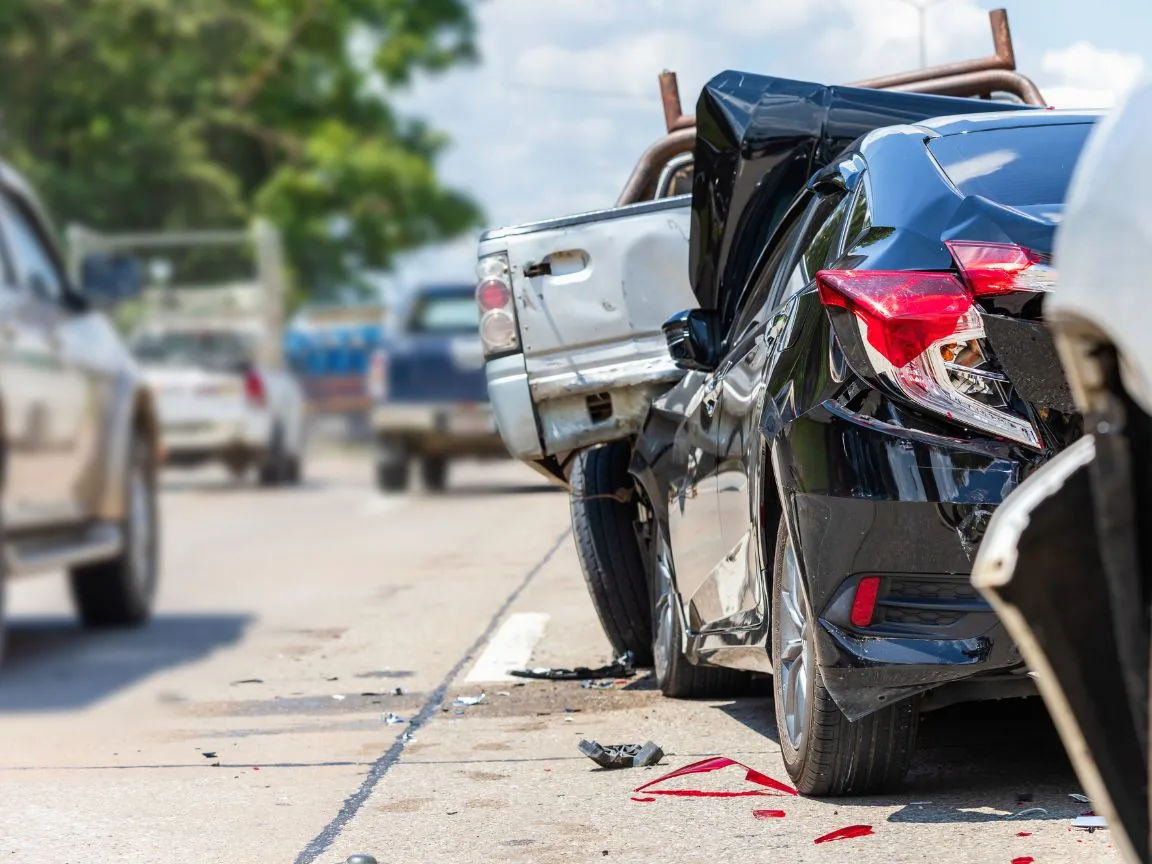
Rear-End Crash Statistics
Rear-end crashes were the most common type of police-reported crash in the United States in 2021, 29.0% of all crashes and 7.5% of fatal crashes. In Kentucky, rear-end collisions were about 16% of two-vehicle collisions in 2024 and about 9% of fatal two-vehicle collisions.
Insurers treat these cases lightly despite how often they happen. Adjusters routinely point to low vehicle damage to contest injury severity. Biomechanics does not support that argument, and a strong rear-end case rests on the medical and evidentiary record that disproves it.
Common Causes of Rear-End Crashes
- 1
Distracted Driving
Distracted driving causes rear-end crashes when a driver looking at a phone, adjusting the radio, or reaching into the back seat takes their eyes off the road at the moment traffic ahead slows or stops. Cell phone records can show phone use at the moment of impact.
- 2
Tailgating
Following distance sets how much time a driver has to react and brake. Under KRS 189.340(9)(a), a driver may not follow another vehicle more closely than is reasonable and prudent, having regard for speed, traffic, and the condition of the highway. Under KRS 446.070, a person injured by the violation of a statute may recover damages from the offender. At 65 miles per hour, a vehicle covers about 95 feet every second. The same rule applies when the vehicle ahead brakes for a deer.
- 3
Speeding
Speed amplifies every other contributing factor. A driver traveling 10 miles per hour over the limit needs much more stopping distance, and the energy a vehicle carries into a crash rises with the square of its speed.
- 4
Inclement Weather
Rain, ice, and fog reduce visibility and road traction. KRS 189.390(2) bars driving at a greater speed than is reasonable and prudent for the traffic and the condition and use of the highway, and KRS 189.340(9)(a) ties following distance to the same conditions.
- 5
Vehicle Maintenance Failures
Worn brake pads, defective brake lines, or poorly maintained tires can keep a driver from stopping in time even when they try. When a mechanical failure contributed to the crash, the driver and any party responsible for the vehicle’s upkeep, such as an employer, fleet operator, or repair shop, may bear liability.
Neck and Spine Forces in a Rear-End Impact
A rear-end impact moves the body differently from most other crash types. The seat pushes the occupant’s torso forward while the head lags for a moment, then whips forward. This cervical extension-flexion sequence takes fractions of a second and stresses the discs, ligaments, and muscles of the neck and upper spine in ways that initial X-rays do not always show.
Low-speed crashes still cause injuries. The injury probability model for rear-end crashes, built from 2010 to 2015 crash investigation data, puts the chance of at least a minor injury at about 18% at a 5 mph change in velocity (delta V) and about 22% at 8 mph. Insurers still use low-damage photos to challenge these cases.
Rear-End Crash Injuries
Symptoms do not always appear immediately, and some of the most serious rear-end injuries develop over days or weeks.
- Whiplash and cervical strain bring neck pain, stiffness, reduced range of motion, and headaches that can become chronic if disc damage is involved.
- Herniated discs can result from the compression and flexion-extension motion of the crash, causing radiating nerve pain, numbness, and weakness.
- Traumatic brain injury, including concussion, can occur when the head strikes the headrest, steering wheel, or window, or from the inertial forces of rapid deceleration alone.
- Spinal cord injury can result from high-speed impacts or crashes involving larger vehicles, with lasting neurological consequences.
- Post-traumatic stress after a rear-end crash can be part of a damages case.
- Soft tissue tears in the rotator cuff, labrum, and ligaments of the shoulder and knee can result from bracing on impact.
Speed and Vehicle Size as Injury Factors
A rear-end crash on a Kentucky interstate at 60 to 70 miles per hour generates far more force than a low-speed crash in a parking lot or at a stoplight, raising the likelihood of traumatic brain injury, spinal fracture, and multi-system trauma. High-speed crashes also frequently involve secondary impacts, such as being pushed into the vehicle ahead or into a barrier, which compound the initial injury and complicate the medical picture.
Vehicle size changes the injury profile too. A sedan struck by a full-size pickup or SUV absorbs disproportionate force because of the height and weight mismatch, which often pushes impact energy higher into the occupant’s torso and head instead of through the rear bumper structure. Commercial trucks and delivery vans carry even greater mass, so a rear-end crash involving a commercial vehicle tends to produce more severe injuries than a crash between two passenger vehicles at a similar speed.
Liability in Kentucky Rear-End Crashes
The driver who struck from behind is usually the liable driver, because KRS 189.340(9)(a) bars following another vehicle more closely than is reasonable and prudent for the speed, traffic, and road.
A full investigation still accounts for the details insurers routinely raise: whether the lead vehicle’s brake lights worked, whether the stop was connected to visible traffic conditions ahead, and whether a vehicle stopped in a travel lane after a mechanical failure had its hazard lights on. Many rear-end crashes happen in stop-and-go traffic or at red lights, where the lead vehicle was already stopped or slowing predictably and the following driver simply was not paying attention. Insurers sometimes still argue sudden or unpredictable braking, so dashcam footage and traffic signal timing records carry particular weight in stopped-traffic cases.
Kentucky’s No-Fault PIP System
Under KRS 304.39-030, a person injured in a Kentucky motor vehicle accident has a right to basic reparation benefits (PIP) regardless of fault, unless they rejected the no-fault tort limitation. KRS 304.39-020 caps those benefits at $10,000 per person per accident for economic loss such as medical expense and work loss. Under KRS 304.39-060, a case against the at-fault driver for pain and suffering requires medical expenses above $1,000 or an injury such as a fracture, permanent injury, or permanent disfigurement.
Early Settlement Offers
Insurance companies routinely make quick offers on rear-end cases before the full extent of the injuries is known, particularly for spinal injuries that worsen over time. An injury settlement release is permanent. Once signed, the case is closed forever, and there are no do-overs.
Chain-Reaction Rear-End Crashes
A rear-end crash involving three or more vehicles can spread liability across several drivers. On Kentucky interstates, particularly the I-65/I-64/I-71 corridor through Louisville, one rear-end crash can set off a multi-vehicle pileup.
The driver who started the chain by striking the vehicle ahead is usually the primary target of a case. A driver further back who was following too closely and struck an already-stopped vehicle can bear independent responsibility for that additional impact. Tracing each impact in sequence identifies every liable party and every available insurance policy, and photographs, dashcam footage, and the police report’s description of where the vehicles came to rest show which impact caused which injury.
Evidence in a Rear-End Case
The evidence assembled usually decides the gap between full compensation and a lowball offer on a rear-end case.
- The police crash report records the official at-fault determination, road conditions, vehicle positions, and driver statements at the scene.
- The at-fault driver’s Event Data Recorder records pre-crash data such as speed, braking, and throttle. A preservation demand has to go out immediately, before the data is overwritten or the car is repaired or sold for salvage.
- Subpoenaed cell phone carrier records confirm whether the driver was using a phone at the moment of the crash, supporting a negligence case.
- Dashcam and traffic camera footage from nearby vehicles and fixed cameras captures the crash sequence, and it can be overwritten without a preservation demand.
- MRI films documenting disc herniations, objective testing showing nerve deficits, and treating-physician opinions connecting the injuries to the crash form the foundation of the damages case.
- When insurers argue that low damage means no injury, a biomechanical expert can explain how the forces in the crash caused the specific injuries sustained.
Treating Physician Records and Case Value
A consistent, well-documented treatment history with the same treating physician or physical therapy practice carries more weight with an insurer than scattered visits to different urgent care clinics. Objective findings, such as positive orthopedic tests, imaging showing disc changes, and documented range-of-motion limits, connect the complaint of pain to evidence a claims adjuster or a jury can evaluate independently. Insurers look for any inconsistency in reported symptoms across visits to argue the injury is less serious than claimed. Complete medical records, wage records, and photographs support or undermine every other factor in Kentucky car accident compensation.
How Sam Aguiar Injury Lawyers Handles Rear-End Cases
Rear-end crashes produce some of the most contested cases in personal injury law because insurance companies count on injured people accepting far less than a full recovery. Sam Aguiar Injury Lawyers coordinates with treating physicians and builds the medical and economic record behind the full value of the case. A rear-end accident can involve both a PIP claim and a bodily injury liability claim.
Every rear-end case carries the same terms:
- Dedicated three-person team: a top-rated attorney, an experienced case manager, and a skilled legal assistant.
- Bigger Share Guarantee®: Clients always walk away with more money than the firm after medical bills, liens, and case expenses are paid. If the client’s share would ever be less than the legal fee, the firm cuts its fee.
- Flat contingency fee that never increases if your case goes to trial.
- $0 Out-Of-Pocket Forever.
After a rear-end crash, the at-fault driver’s event data and nearby camera footage can be overwritten, and neck or back symptoms can surface days later. After an accident, the insurance company doesn’t waste time. Neither should you. Get a free case review for your rear-end crash.
Key Takeaways
Whiplash Symptoms Showing Up Days Later?
Getting struck from behind can snap your head back and forth in a fraction of a second, and neck or spine injuries from that motion often show up days later. Sam Aguiar Injury Lawyers connects your treating physician records to the forces of the impact so the insurer has to reckon with the real injury. You pay $0 Out-Of-Pocket Forever, and the flat contingency fee never increases, even if your case goes to trial. Call today for a free case review.
Frequently Asked Questions
1Is the driver who rear-ended me automatically at fault?+
Not automatically, though the following driver is usually at fault because Kentucky law bars following more closely than is reasonable and prudent. An abrupt, unforeseeable stop by the front vehicle or brake lights that did not work can shift some responsibility.
2What if my injuries didn’t appear until days after the crash?+
Symptoms of whiplash, disc herniations, and concussions can appear days after a rear-end crash, and a delay does not undermine a case on its own. The case depends on getting evaluated promptly once symptoms appear and connecting that evaluation to the crash in the medical record.
3Can I still recover if my car had little visible damage?+
Yes. Vehicle damage does not measure occupant injury. The rear-end injury model puts the chance of at least a minor injury at about 18% at a 5 mph change in velocity, and biomechanical evidence and treating-physician records counter the low-damage argument.
4How does Kentucky’s no-fault PIP system affect my rear-end case?+
PIP, called basic reparation benefits in KRS 304.39-020, pays up to $10,000 per person for economic loss such as medical expense and work loss regardless of fault. Under KRS 304.39-060, a pain and suffering case against the at-fault driver requires medical expenses above $1,000 or a qualifying injury such as a fracture or permanent injury.
5Can a low-speed rear-end crash cause injury?+
Yes. The insurer argument that it cannot, often called the minor impact soft tissue defense, assumes bumper appearance equals occupant force. Injury probability curves use delta V, the change in velocity during the crash, as the measure of severity, and they show injury risk at low velocity changes.
6What evidence disappears fastest after a rear-end crash?+
Dashcam and traffic camera footage can be overwritten, and Event Data Recorder information can be lost once a damaged car is repaired or sold for salvage. A preservation demand sent immediately after the crash is often the only way to secure this evidence.