

Trucking Company Tactics
How Trucking Companies Protect Themselves After a Crash
 ★★★★★
Over 1,000 Five-Star Reviews
•
Available 24/7. $0 Out-Of-Pocket Forever.
★★★★★
Over 1,000 Five-Star Reviews
•
Available 24/7. $0 Out-Of-Pocket Forever.
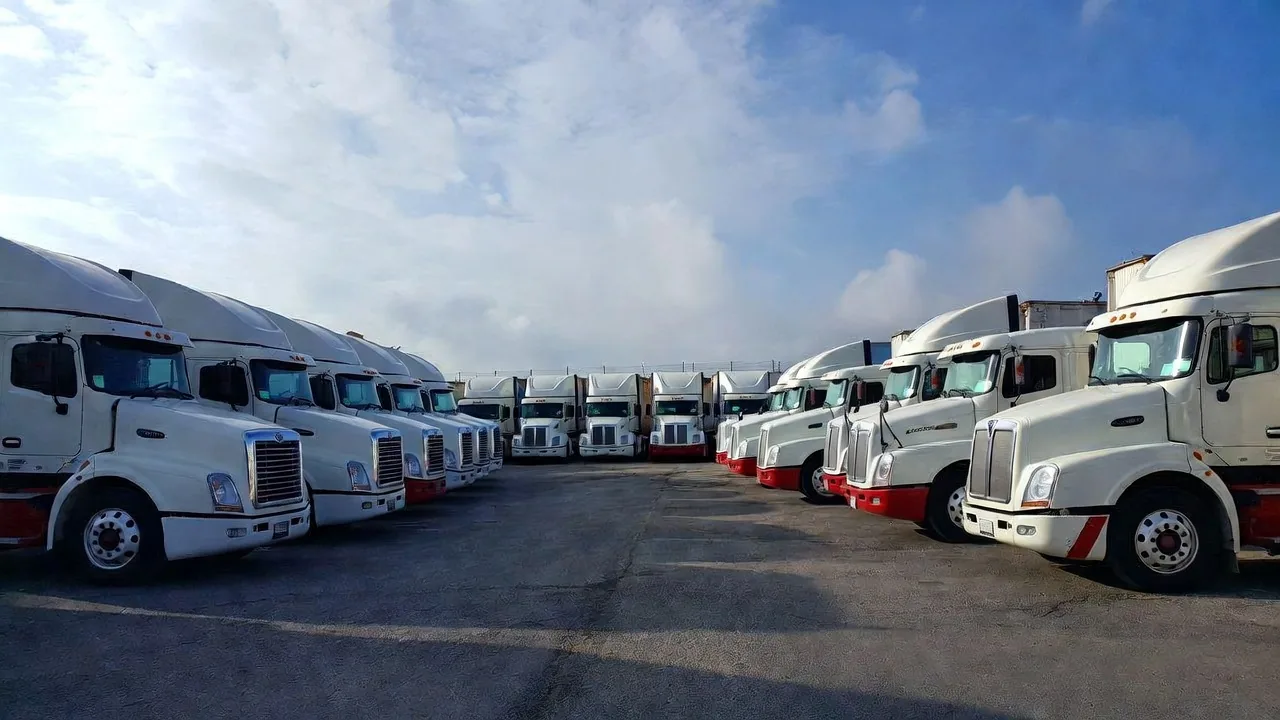
Carrier Response After a Truck Crash
Trucking companies and their insurers begin protecting themselves within hours of a crash. They deploy rapid response teams, contact witnesses, download electronic data, and coordinate with defense attorneys before most injured people leave the hospital, in a coordinated response designed to reduce the amount they pay.
A typical car accident case involves two drivers, two insurance policies, and a police report. A truck crash gives exposure to the trucking company, its insurer, the driver, the broker, and possibly a maintenance company, and every one of them wants to limit what it owes.
According to NHTSA, an estimated 536,424 large trucks were involved in police-reported crashes in 2022, and 5,936 people were killed in crashes involving large trucks. The Federal Motor Carrier Safety Administration (FMCSA) compiles national large truck crash data in its Large Truck and Bus Crash Facts series. In Kentucky, the Kentucky Transportation Cabinet’s 2022 Kentucky Traffic Collision Facts report counts 9,437 collisions involving trucks with a registered weight of 10,000 pounds or more.
Rapid Response Teams
Large carriers and their insurers maintain rapid response teams of adjusters, investigators, and defense consultants whose job is to reach the crash scene before evidence disappears. Its goals include:
- Photographing the crash scene, skid marks, debris, and vehicle positions
- Interviewing the truck driver before law enforcement or your attorney can
- Talking to bystanders and witnesses
- Inspecting the truck for mechanical issues (or the absence of them)
- Downloading data from the truck’s electronic control module (ECM) and electronic logging device (ELD)
The team works for the carrier, none of this information is shared with you voluntarily, and everything it collects feeds the defense strategy. Most injured people do not contact an attorney for days or weeks, and critical evidence is collected, shaped, or lost in that gap.
Truck Driver Statements
A rapid response team interviews the truck driver and records a statement before the driver speaks with police investigators and before a deposition is even a possibility. The driver’s initial account often becomes the foundation of the defense. If the driver admits fatigue, distraction, or a mechanical problem in that first conversation, the defense team knows about it and can manage it. If the statement favors the carrier, it becomes a centerpiece of the case.
Federal regulations under 49 CFR Part 390 require motor carriers to keep records of accidents and investigations, yet nothing in federal law requires the carrier to share its internal investigation notes with you. Carriers typically case those documents as attorney-client privileged or work product, which makes them harder to obtain through discovery.
Electronic Data Downloads
Modern commercial trucks carry electronic systems that record data before, during, and after a crash, and the carrier that downloads this data first holds an advantage.
- 1
Electronic Control Module (ECM)
The ECM records hard braking events, speed at impact, throttle position, cruise control status, and engine RPM, which makes it the truck’s “black box.” ECM data can be overwritten unless it is deliberately preserved, and a carrier that does not preserve it may lose data that would have revealed the driver was speeding or failed to brake.
- 2
Electronic Logging Device (ELD)
Since the FMCSA ELD mandate took full effect in December 2019, most commercial motor vehicles must use certified ELDs to record hours of service (HOS). ELD data shows when the driver was on duty, driving, in the sleeper berth, or off duty. The FMCSA allows drivers to make annotations and corrections to their logs, which creates opportunities to alter the record after a crash.
- 3
What ELD Records Can Reveal
ELD records show whether the driver violated HOS limits. A driver who has been behind the wheel for 13 hours when federal rules cap driving at 11 hours was breaking the law. ELD data may show the driver exceeded the 11-hour driving limit, skipped the mandatory 30-minute break, or violated the 14-hour on-duty window, and it can reveal patterns of chronic violations that suggest the carrier tolerated or encouraged drivers to push past legal limits.
Evidence Destruction and Spoliation
Some carriers, particularly smaller or less reputable operations, destroy evidence that would damage their position after a crash. Common forms of evidence destruction include:
- Repairing or scrapping the truck before an independent inspection
- Allowing ECM data to overwrite by not preserving it
- Discarding driver qualification files, drug test records, or maintenance logs
- Editing or deleting dashcam footage
- Failing to preserve dispatch communications and GPS records
In federal court, Federal Rule of Civil Procedure 37(e) governs lost electronically stored information such as ECM, ELD, and dashcam data. When a party failed to take reasonable steps to preserve it, the court can order measures to cure the prejudice, and only on finding that the party intended to deprive the other side of the information can it presume the information was unfavorable, instruct the jury to presume so, or enter a default judgment.
A spoliation letter (also called a preservation demand or litigation hold notice) sent to the carrier immediately after a crash puts the company on formal notice that evidence must be preserved. Without this letter, the carrier can argue it followed its normal retention schedule and had no obligation to keep the evidence longer.
Drug and Alcohol Testing Manipulation
Federal regulations under 49 CFR Part 382 require commercial motor vehicle drivers to undergo post-accident drug and alcohol testing under specific conditions. The alcohol test must happen within 2 hours (and no later than 8 hours), and the drug test within 32 hours.
Some carriers delay or fail to administer these tests. If a driver was under the influence at the time of the crash but is not tested within the federal window, the positive result is never documented. Carriers may also:
- Send the driver to a company-preferred testing facility instead of the nearest certified lab
- Fail to document pre-employment drug screening deficiencies in the driver qualification file
- Ignore previous positive results or violations listed in the FMCSA Drug and Alcohol Clearinghouse
The Clearinghouse, active since January 2020, is a federal database that tracks drug and alcohol violations for commercial drivers. Carriers must query the Clearinghouse before hiring a driver and annually thereafter, and a carrier that hires a driver with an unresolved violation may be liable for negligent hiring.
Defense Attorney Involvement
In trucking cases, the defense attorney is often involved soon after a crash, well before any lawsuit is filed.
Carriers and their insurers retain trucking defense firms on standing agreements. When a serious crash occurs, the defense attorney may:
- Direct the rapid response team on what to collect
- Prepare the truck driver for any statements to police or investigators
- Engage an accident reconstruction firm to develop a defense narrative
- File motions to limit discovery if a lawsuit is anticipated
- Begin evaluating whether the “empty chair” defense (blaming an absent third party) is viable
By shaping the narrative from the start, the defense controls which facts get emphasized and which get buried.
Chameleon Carriers
A chameleon carrier is a trucking company with a bad safety record or a catastrophic crash that shuts down its operations, dissolves the corporate entity, and reopens under a new name, new DOT number, and new MC authority. The FMCSA calls these “chameleon carriers.”
A chameleon carrier leaves injured people with no company to sue, no insurance to claim against, and no responsible party on paper, while the same trucks, drivers, and safety problems continue under a different name. The FMCSA has taken enforcement action against chameleon carriers. In Kentucky, courts pierce the corporate veil when the owners dominate a company so completely that it has no separate existence and treating it as separate would sanction a fraud or promote injustice, as the Kentucky Supreme Court held in Inter-Tel Technologies, Inc. v. Linn Station Properties, LLC, 360 S.W.3d 152 (Ky. 2012). Catching these carriers requires aggressive investigation early in the case.
Insurance Company Tactics in Truck Crash Cases
49 CFR Part 387 sets minimum public liability coverage of $750,000 for for-hire carriers hauling nonhazardous property, $1,000,000 for oil and many hazardous materials, and $5,000,000 for certain bulk hazardous materials. When cases threaten those policy limits, insurers deploy every tool they have.
- 1
Recorded Statements
The insurer will ask you for a recorded statement, and you are under no legal obligation to provide one. Anything you say in a recorded statement can be used to minimize your case. Phrases like “I’m doing okay” or “I think I’m fine” can be taken out of context weeks later to argue your injuries are not as serious as claimed. Decline the recorded statement and refer the insurer to your lawyer. The recorded statement page lists the full steps for declining.
- 2
Medical Record Requests
Insurers often request broad medical authorizations that open your entire medical history, beyond the records related to the crash. They search for pre-existing conditions they can use to argue your injuries were not caused by the truck crash.
- 3
Low Early Settlement Offers
A common tactic is offering a quick settlement before you understand the full extent of your injuries. Traumatic injuries from truck crashes, including traumatic brain injuries, spinal cord damage, and internal organ injuries, may not fully manifest for weeks or months. An injury settlement release is permanent. Once signed, the claim is closed forever. Insurance companies push quick checks before the full cost of medical care is known because there are no do-overs.
- 4
Surveillance
In high-value trucking cases, insurers hire private investigators to conduct surveillance. They monitor social media accounts, film daily activities, and look for anything that contradicts your injury cases. A photograph of you carrying groceries can be used to argue you are not as injured as you say.
Federal Motor Carrier Safety Regulations
Truck crash cases add a second layer of law to the rules that govern car accident cases: federal motor carrier safety regulations. Codified in Title 49 of the Code of Federal Regulations, these regulations set minimum safety standards for commercial motor vehicles and their operators. When a carrier or driver violates one and a crash results, the violation is evidence of negligence and of the carrier’s failure to meet the minimum standard of care. The main areas are:
- Part 395
Hours of Service
Driving limits, breaks, and duty-cycle requirements for covered drivers.
- Part 391
Driver Qualifications
Licensing, medical qualification, road testing, and qualification files.
- Part 396
Inspection and Maintenance
Systematic inspection, repair, maintenance, and required inspection reports.
- Part 382
Drug and Alcohol Testing
Pre-employment, random, post-accident, reasonable-suspicion, and return-to-duty testing.
- Part 393
Cargo Securement
Tiedowns, working load limits, blocking, and bracing.
Federal motor carrier rules apply across state lines, while negligence standards, damages rules, insurance requirements, and filing deadlines can vary by crash location. The governing state law is identified separately from the federal records and safety duties involved in the investigation.
Liability Beyond the Truck Driver
Liability for a truck crash can reach the motor carrier, the freight broker, the shipper, the cargo loader, the maintenance vendor, or a parts manufacturer, depending on the load, the contract chain, and the condition of the equipment. Each party can control different records and different insurance limits, so a case that stops with the driver can miss the dispatch chain, maintenance history, load documents, and hiring failures that show how the crash happened. The parties to investigate include:
- The driver and the carrier operating under the DOT authority
- The broker or logistics company that selected the carrier
- The shipper or cargo loader when weight or securement contributed to the crash
- The maintenance company or manufacturer when brakes, tires, steering, or coupling equipment failed
What to Do If You Were Hit by a Commercial Truck
Four steps protect a truck crash case while you focus on medical care.
- Decline the insurer’s recorded statement and its broad medical authorizations unless your lawyer is involved.
- Preserve your own evidence: photographs of the scene, your injuries, the vehicles, and any road conditions; names and contact information for witnesses; and the truck driver’s name, CDL number, carrier name, and DOT number (all on the truck cab door).
- Get medical treatment documented from the first day. Gaps in treatment give the insurer ammunition to argue your injuries are not serious.
- Contact an attorney immediately so spoliation letters go out before evidence disappears.
How Sam Aguiar Injury Lawyers Counters Carrier Tactics
The trucking accident team at Sam Aguiar Injury Lawyers answers each carrier tactic with its own evidence work, identifies every responsible party, and pursues cases against each one.
- 1
Spoliation Letters
Preservation demands to the carrier, its insurer, the broker, and any maintenance companies put everyone on notice that ECM data, ELD logs, dashcam footage, dispatch records, driver qualification files, drug test results, and GPS data must be preserved.
- 2
Independent Accident Reconstruction
Accident reconstruction professionals retained by the firm inspect the scene, analyze the vehicle damage, and calculate speeds, angles, and stopping distances from physical evidence and electronic data. They use tools like 3D laser scanning and drone photography to capture the scene precisely and rebuild how the crash happened.
- 3
FMCSA Compliance Audits
A compliance audit pulls the carrier’s full safety record from the FMCSA’s SAFER database, including inspection results, crash history, and safety ratings, and checks the carrier’s CSA scores across all seven BASICs (Behavioral Analysis and Safety Improvement Categories) for patterns of unsafe driving, HOS violations, vehicle maintenance failures, and controlled substance violations. The page on hours of service violations covers how those violations contribute to crashes.
- 4
Clearinghouse and Driver Qualification Review
A subpoena for the driver’s full qualification file covers CDL history, medical examiner certificates, previous employer records, and Clearinghouse query results. A carrier that failed to check the Clearinghouse or hired a driver with unresolved violations has created evidence of negligent hiring.
- 5
DOT Camera Footage
Sam Aguiar Injury Lawyers has direct real-time access to six-month rolling archives of Kentucky Department of Transportation and TRIMARC traffic camera footage. These cameras record traffic conditions on major corridors like I-65, I-64, I-71, and I-75, and the footage can show the truck’s position, speed relative to traffic, lane changes, and the moments before and after the crash.
- Dedicated three-person team: a top-rated attorney, an experienced case manager, and a skilled legal assistant.
- Flat contingency fee that never increases if your case goes to trial.
- $0 Out-Of-Pocket Forever.
Every truck case at Sam Aguiar Injury Lawyers carries the Bigger Share Guarantee®. Clients always walk away with more money than the firm after medical bills, liens, and case expenses are paid. If the client’s share would ever be less than the legal fee, the firm cuts its fee.
If a trucking company or its insurer has already called you, decline the recorded statement and have the carrier’s records requested before they are lost. You focus on getting better. We handle everything else. Ask for a free case review of the carrier’s conduct.
Key Takeaways
Who Is Working for You While the Carrier Protects Itself?
Rapid response teams, recorded driver statements and early data downloads all start working for the trucking company within hours of a wreck. At Sam Aguiar Injury Lawyers, a dedicated trucking team works your side of the file, from FMCSA records to every company behind the truck. You pay $0 Out-Of-Pocket Forever, so the cost of that work never lands on you. Call today for a free case review.
Frequently Asked Questions
1What does a trucking company’s rapid response team do after a crash?+
A rapid response team of adjusters, investigators, and defense consultants works for the carrier. These teams photograph the scene, interview the driver, download electronic data, and begin building the carrier’s defense before most injured people have left the hospital.
2What is a spoliation letter?+
A spoliation letter (also called a preservation demand or litigation hold notice) is a formal written notice to the trucking company, its insurer, and related parties requiring them to preserve all evidence related to the crash, including ECM data, ELD logs, dashcam footage, dispatch records, driver files, and maintenance logs.
3Do I have to give a recorded statement to the trucking company’s insurer?+
No. You are under no legal obligation to provide a recorded statement to the other party’s insurer. Anything you say can be taken out of context and used to reduce your case, so your attorney should handle all communication with the insurer.
4What is the FMCSA Drug and Alcohol Clearinghouse?+
The FMCSA Drug and Alcohol Clearinghouse is a federal database that tracks commercial driver drug and alcohol violations. Carriers must query the Clearinghouse before hiring a driver and annually thereafter, and a carrier that hires a driver with an unresolved violation may be liable for negligent hiring.
5What is a chameleon carrier?+
A chameleon carrier is a trucking company that shuts down after a serious crash or enforcement action and reopens under a new name, new DOT number, and new authority, with the same trucks, drivers, and safety problems. The FMCSA tracks and investigates chameleon carriers, and courts can pierce the corporate veil to hold the same owners accountable.
6What electronic data is stored on a commercial truck?+
Commercial trucks record data through electronic control modules (ECM), electronic logging devices (ELD), GPS systems, dashcams, and telematics platforms. This data can show speed, braking patterns, hours of service compliance, location history, and engine diagnostics. If not preserved, ECM data can be overwritten.
7Does Sam Aguiar Injury Lawyers charge upfront for truck accident cases?+
No. Sam Aguiar Injury Lawyers handles every truck accident case on a contingency basis with $0 Out-Of-Pocket Forever, and the firm covers all investigation, reconstruction, and litigation costs. If the firm does not recover compensation for you, you owe nothing. The flat contingency fee never increases if your case goes to trial, and under the Bigger Share Guarantee®, clients always walk away with more money than the firm after medical bills, liens, and case expenses are paid.