

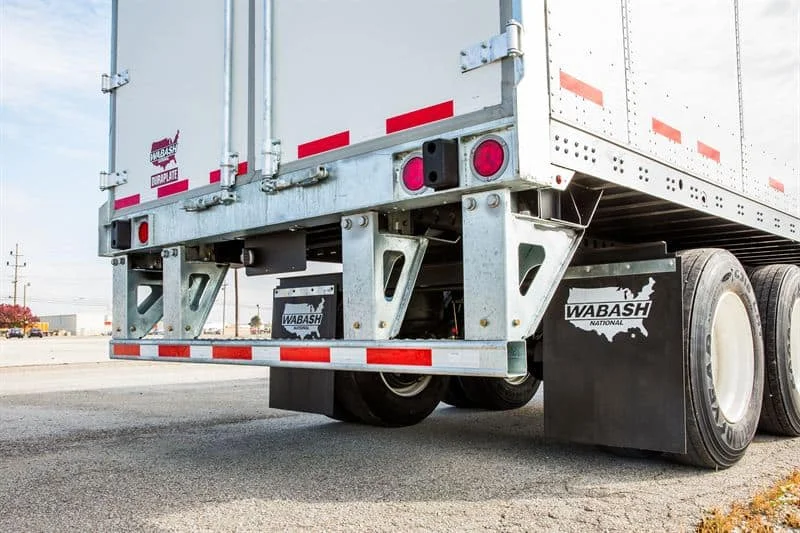
Underride Accidents
Underride crashes happen when a car slides underneath a truck trailer, bypassing every safety system in the vehicle. These collisions are among the most deadly on the road — and they’re preventable.
Underride crashes are among the most violent and deadly types of truck accidents. They occur when a passenger vehicle slides underneath a truck trailer — bypassing the car’s safety systems entirely. In 2021, IIHS reported 488 passenger vehicle occupant fatalities in crashes involving the side of a tractor-trailer alone. Federal regulations on underride protection remain dangerously inadequate, and occupants of smaller vehicles pay the price.
What Is an Underride Crash?
An underride crash happens when a passenger car, pickup, or SUV collides with a truck or trailer and slides underneath it. Because the trailer bed sits higher than a car’s hood and windshield, the smaller vehicle’s crumple zones, airbags, and seatbelt systems are rendered useless. The roof of the car is often sheared off or crushed inward, causing catastrophic head, neck, and chest injuries — or instant death.
There are two primary types of underride collisions:
Rear Underride
Rear underride occurs when a vehicle strikes the back of a truck trailer. This is the more commonly recognized type and has been subject to federal regulation since 1953. Current NHTSA regulations require rear underride guards on trailers, but the standard — last updated in 2022 — has been criticized by the Insurance Institute for Highway Safety (IIHS) as insufficient. IIHS has stated that “NHTSA’s updated rule does not go far enough to be meaningful” and that most newly manufactured guards already met the new standard before it was adopted.
Side Underride
Side underride happens when a vehicle strikes the side of a truck trailer — typically at an intersection, during a lane change, or when a truck makes a wide turn. There are currently no federal regulations requiring side underride guards. According to a 2024 NHTSA report to Congress, the agency estimates approximately 89 fatalities annually from side underride crashes within the scope of potential regulation — but IIHS research suggests the true number is far higher, estimating that side guards could prevent 159 to 217 deaths per year.
(IIHS Research)
(Annals of Advances in Automotive Medicine)
Why Underride Guards Are Inadequate
The history of underride regulation in the United States is a story of industry resistance and regulatory delay. Federal rear-guard standards were first adopted in 1953, strengthened slightly in 1998, and updated again in 2022 — but safety researchers have consistently found them insufficient.
The IIHS TOUGHGUARD program tests rear underride guards in three crash configurations and awards recognition to guards that prevent underride in all scenarios. Several major trailer manufacturers now build guards that exceed the federal standard — proving that stronger protection is both technically feasible and commercially viable.
Side underride protection remains the bigger gap. Despite decades of research showing that side guards can prevent fatalities at impact speeds up to 40 mph, NHTSA has not required them. A 2024 NHTSA cost-benefit analysis estimated that side guards would save 17 lives per year — but IIHS research found this estimate to be “dramatically” low, arguing the true benefit is more than 10 times higher.
Injuries in Underride Crashes
The injuries from underride collisions are among the most severe in all of motor vehicle crash types. Because the trailer bypasses the vehicle’s safety systems, occupants sustain injuries including:
- Traumatic brain injuries — The roof intrusion common in underride crashes causes direct head impacts
- Spinal cord injuries — Compression and shearing forces on the spine often result in paralysis
- Decapitation and partial decapitation — The leading edge of the trailer can shear through the windshield at occupant head height
- Crush injuries to the chest and abdomen — The collapsing roof compresses occupants against the dashboard and steering column
- Amputations — The violent intrusion of the trailer into the vehicle cabin can sever limbs
Survivors of underride crashes often face lifetime catastrophic injuries requiring ongoing medical care, adaptive equipment, and full-time personal assistance.
Liability in Underride Crash Cases
Underride crash claims can target multiple liable parties:
- The truck driver — For actions contributing to the crash (running a red light, making an unsafe lane change, driving without proper lights at night)
- The motor carrier — For failing to equip trailers with adequate underride protection, or for operational decisions that created the crash conditions
- The trailer manufacturer — If the underride guard was defectively designed, manufactured below applicable standards, or known to fail in foreseeable crash types
- The guard manufacturer — If the underride guard itself was defective or failed to perform as designed
In cases where the trucking company or manufacturer knew their underride protection was inadequate and failed to act, Kentucky courts may award punitive damages on top of compensatory damages.
Our Approach to Underride Cases
Underride cases require a different level of investigation. At Sam Aguiar Injury Lawyers, we work with crash reconstruction professionals and engineers who can analyze the guard’s performance, the impact dynamics, and whether better protection would have prevented or reduced injuries. Our dedicated trucking team has the knowledge and resources to hold carriers and manufacturers accountable.
The bottom line: Underride crashes are preventable — the technology exists to dramatically reduce deaths and injuries. Until federal regulations catch up, it falls to attorneys to hold trucking companies and manufacturers accountable. At Sam Aguiar Injury Lawyers, our Bigger Share Guarantee® means you always get more. Call 502-888-8888 today.
Frequently Asked Questions
Are trucks required to have underride guards?
Federal regulations require rear underride guards on most trailers and semitrailers, but the current standard has been widely criticized as too weak. There are no federal requirements for side underride guards, despite research showing they could prevent hundreds of fatalities per year. Some trailer manufacturers voluntarily install stronger guards that exceed federal minimums.
Can I sue the trailer manufacturer after an underride crash?
Yes. If the underride guard was defectively designed, improperly manufactured, or failed to meet applicable standards, the trailer manufacturer can be held liable. In cases where the manufacturer knew their guard was inadequate and failed to improve it, punitive damages may also be available.
How common are underride crashes?
Underride crashes are significantly underreported in federal crash databases. Research published in the Annals of Advances in Automotive Medicine found that side underride fatalities are underreported by a factor of 3.1 in FARS data. IIHS reported 488 passenger vehicle occupant deaths in side-impact crashes with tractor-trailers in 2021 alone — and that figure doesn’t account for all underride incidents.
Real Clients. Real Success.
“I hope I don’t get injured in a car accident again, but if I do, I will call these guys every single time!”
Start Your Free Case Review
Fill out the form below and our team will reach out to discuss your options.