
How an NTSB Investigation Works After an Aviation Accident
The NTSB investigates aviation accidents to find the probable cause and prevent the next one; its findings are safety determinations, and federal law keeps its reports out of civil damages cases.
What the NTSB Investigates and Why
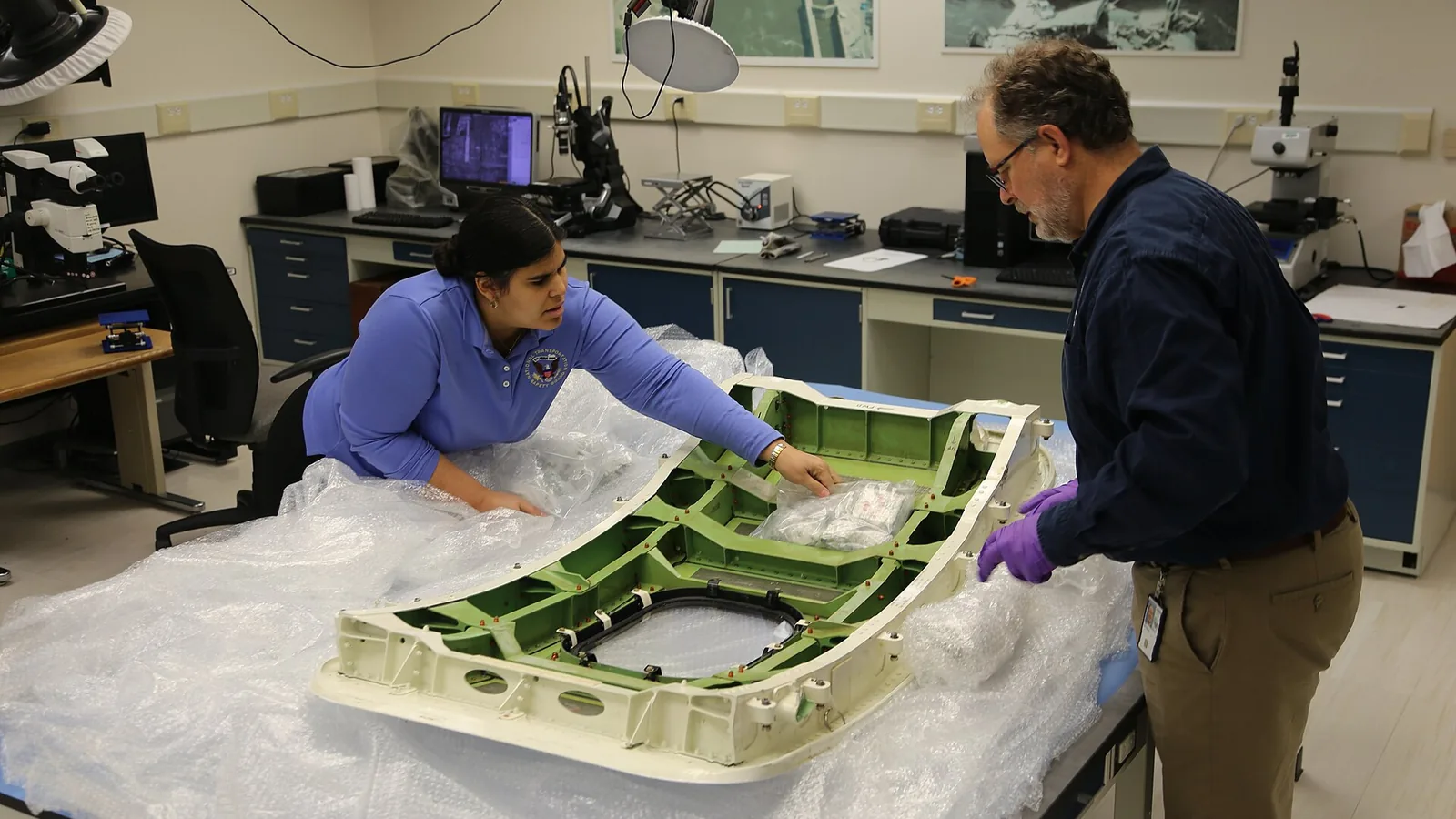
Under 49 U.S.C. 1131(a), the National Transportation Safety Board (NTSB) investigates civil aircraft accidents in the United States and establishes their facts, circumstances, and probable cause. The purpose is prevention. NTSB investigations are fact-finding proceedings with no adverse parties. By regulation, they do not determine the rights, liabilities, or blame of any person or entity.
The NTSB also cannot regulate or enforce. It has no authority to require implementation of its recommendations and does not regulate or oversee safety practices in the industry; those responsibilities belong to the Department of Transportation and agencies such as the FAA, which share aviation safety oversight with operators and manufacturers. When the NTSB sends a recommendation to the Secretary of Transportation, the Secretary must respond in writing within 90 days and may adopt the recommendation in whole, adopt part of it, or refuse it.
Accidents, Incidents, and Immediate Notification
The NTSB’s Part 830 regulations define the terms that start the process. An aircraft accident is an occurrence associated with the operation of an aircraft, between the time anyone boards with the intention of flight and the time all have disembarked, in which a person suffers death or serious injury or the aircraft receives substantial damage. An incident is any other occurrence associated with operation that affects or could affect the safety of operations.
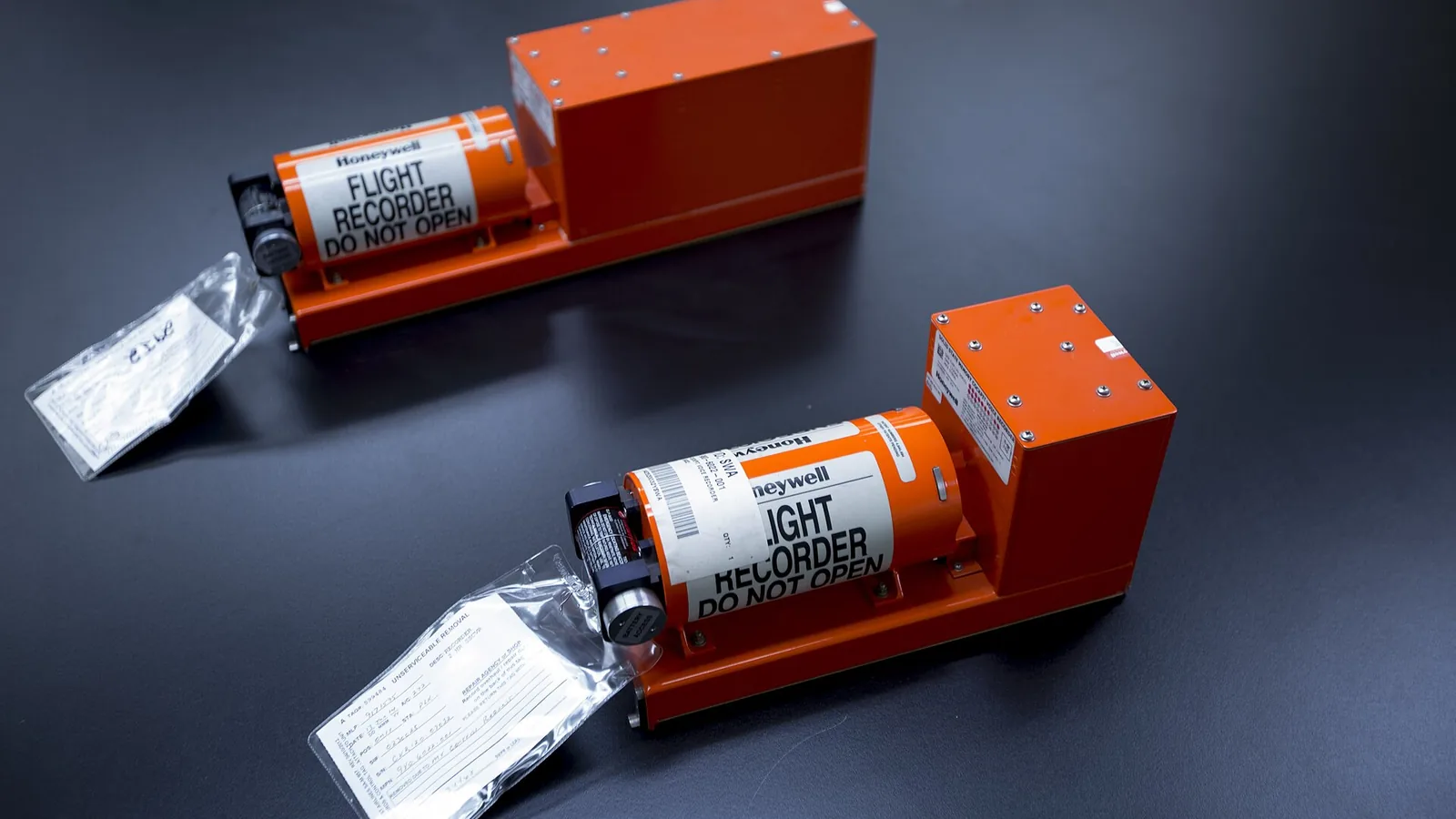
The operator must immediately notify the nearest NTSB office of an accident and of listed serious incidents, such as an in-flight fire or a flight control system malfunction. Until the NTSB takes custody or grants a release, the operator must preserve the wreckage, cargo, and records, including the recording mediums of flight data and cockpit voice recorders, and may not move wreckage except to remove injured or trapped people, protect the wreckage from further damage, or protect the public.
How the Party System Works
The NTSB brings technical knowledge into an investigation through a party system. The investigator-in-charge may designate as parties the persons, government agencies, and organizations whose employees, functions, activities, or products were involved in the accident and that can supply suitably qualified technical personnel (49 CFR 831.11(a)). Apart from the FAA, no entity has a right to be a party. The FAA may take part in an aviation investigation, but the NTSB alone determines probable cause.
Parties work under the NTSB’s direction. The NTSB may revoke or suspend party status if a party withholds information or acts in a way that is prejudicial or disruptive to the investigation. The rules also limit who may represent a party: a representative may not occupy a legal position or be a person who also represents claimants or insurance companies, and a violation can cost the party its status (49 CFR 831.11(b)).
Information moves in one direction. A party must promptly give the NTSB the investigative information it obtains, and it may not release that information before the NTSB’s public release except as 49 CFR 831.13 allows. Any other release, including to an organization that is not a party, requires the investigator-in-charge’s approval. After fact gathering, a party may submit written proposed findings, a proposed probable cause, and proposed safety recommendations (49 CFR 831.14).
Investigation Classes and the Go Team
The NTSB investigates all civil aviation accidents and select incidents, but it does not send investigators to the scene of every one. It assigns each event a class that sets the depth of the investigation. Class 1 is reserved for very significant accidents, generally involving transport category aircraft and commercial operations, and usually means a large team at the scene and a final comprehensive report that Board members may deliberate at a public meeting. Class 4 investigations are limited in scope, generally conducted remotely, and produce a final report within six months. Classes 2 and 3 fall between them, and a classification can change as safety issues emerge. Privately flown aircraft are included, and the article on private plane accident cases covers how these rules apply to them.
The team that travels to an accident site is called the go team. An NTSB investigator or investigative team travels to the accident site, and fact gathering continues away from the scene through flight logs, maintenance records, and interviews. The investigator-in-charge organizes and controls the field phase of the investigation and, like other NTSB investigators, may subpoena evidence and witnesses, administer oaths, and take possession of wreckage and records (49 CFR 831.9).
From Notification to Final Report
Every NTSB investigation follows the same general process, although the phases overlap and the scope depends on the accident. The figure shows the order of the main steps and documents.
- Notification and decision to investigateThe operator notifies the nearest NTSB office immediately. The NTSB assesses the facts and decides how large a response to make.
- On-scene fact gatheringA go team may travel to the site. The investigator-in-charge designates parties, and the operator preserves wreckage and records. The NTSB does not determine cause at the scene.
- Preliminary reportTwo weeks to a month after the accident (NTSB pages differ)A synopsis of the factual information collected on scene, with no analysis and no probable cause.
- Public docketFactual information, such as interview transcripts, laboratory reports, and group factual reports, is opened to the public during the investigation or at its end.
- Investigative hearing (optional)The Board may hold a public fact-finding hearing. Parties may question witnesses and then submit proposed findings.
- Final reportGenerally within 12 to 24 monthsA modal office director or the Board adopts a report with the facts, the probable cause, and any safety recommendations.
- After the reportParties and others with a direct interest may petition for reconsideration. The Board never officially closes an investigation.
Sources: The Investigative Process; Information for Survivors and Families; Media Resources; 49 CFR 830.5; 49 CFR 831.11; 49 CFR 845.31; 49 CFR 845.30; 49 CFR 845.32; 49 CFR 845.33.
The NTSB’s own pages describe the timing in slightly different terms. The agency tries to complete an investigation within 12 to 24 months, while a page for families places the final report at approximately 18 to 24 months after the accident and a media page estimates it could take one to two years. If a report is not complete within two years, federal law requires the NTSB to explain why to the House and Senate committees and to report progress every 90 days until it is done.
The Preliminary Report and Public Docket
The NTSB preliminary report is a synopsis of the factual information collected during the on-scene phase. It contains no analysis and no finding of probable cause, and because it covers only part of the evidence to be gathered, it is not a basis for conclusions about cause. The NTSB’s pages place its release within two weeks of the accident in one place and roughly a month in another.
The NTSB also opens a public docket. The docket holds the relevant factual information collected during an investigation, which the media office describes as including interview transcripts, laboratory reports, and other documents. In a major investigation, the group chairmen’s factual reports are factual accident reports. Proposed findings, petitions for reconsideration, and the Board’s rulings on them are added to the docket (49 CFR 845.31), and the docket is available to any person.
Recordings from a cockpit voice recorder follow separate rules. The NTSB may not publicly disclose the audio, and it releases a transcript at the public hearing or, if there is no hearing, when a majority of the other factual reports are placed in the docket (49 U.S.C. 1114(c)).
Hearings, Findings, and Recommendations
The Board may order an investigative hearing in the public interest. A hearing is a fact-finding proceeding with no adverse parties (49 CFR 845.2), it is normally open to the public, and a verbatim transcript is taken. After the hearing, a party may submit proposed findings, a proposed probable cause, and proposed safety recommendations, which become part of the public docket.
The final report sets out the relevant facts, conditions, and circumstances of the accident, the probable cause, and any safety recommendations. The NTSB uses its findings to determine probable cause and to issue recommendations meant to prevent or lessen the effects of a similar accident (49 CFR 831.4(a)). Depending on the investigation, the report is approved by a modal office director or adopted at a public Board meeting. For less serious accidents the NTSB issues a brief, which includes the probable cause and relevant facts but no recommendations.
Recommendations are not limited to the final report. The NTSB can issue recommendations at any time during an investigation, including urgent ones, and sends them to the organization best able to address the safety issue.
A Current Example: UPS Flight 2976
The NTSB’s investigation of UPS Flight 2976, the cargo airplane accident at Louisville Muhammad Ali International Airport on November 4, 2025, shows the document sequence in practice. The investigation carries number DCA26MA024, and it is classified as a Class 1 investigation. The NTSB traveled to the site on November 5, 2025, and invited parties that included the FAA, UPS, Boeing, GE Aerospace, Collins Aerospace, and two labor unions, the Independent Pilots Association and the Teamsters Airline Division.
The investigation page links a preliminary report and a January 14, 2026 investigative update. The NTSB held a two-day investigative hearing in Washington on May 19–20, 2026, after announcing the hearing on April 16, 2026. At the time of writing, the investigation is listed as ongoing and no final report is posted, so no probable cause has been published.
Petitions to Reconsider Probable Cause
A party or another person with a direct interest in an investigation may petition the NTSB to reconsider or modify its findings and probable cause. A petition must be in writing, addressed to the NTSB Chairman, and based on new evidence or a showing that the findings are erroneous. The Board will not consider a petition that repeats proposed findings or positions already advanced (49 CFR 845.32).
The Board never officially closes an investigation. If it finds new and pertinent evidence relevant and probative, the evidence is added to the public docket. A probable cause finding is therefore the NTSB’s current conclusion, one the agency can revisit.
NTSB Reports in Civil Court
A civil lawsuit for damages cannot use the NTSB’s accident report. 49 U.S.C. 1154(b) provides that no part of a report of the Board, related to an accident or an investigation of an accident, may be admitted into evidence or used in a civil action for damages resulting from a matter mentioned in the report. The statute covers the Board’s conclusions, including the probable cause.
The NTSB’s regulation separates two kinds of reports. A Board accident report contains the Board’s determinations, including probable cause, and may not be used. A factual accident report contains the results of the investigator’s investigation, and no statute bars its admission in litigation. In Chiron Corp. v. National Transportation Safety Board, 198 F.3d 935 (D.C. Cir. 1999), the D.C. Circuit described the same line: investigators’ factual reports are not reports of the Board, while probable cause determinations are not admissible in a civil suit.
What an NTSB finding is
- A determination of probable cause, made to prevent a similar accident
- Reached in a fact-finding proceeding with no adverse parties
- Not an inquiry into anyone’s rights, liabilities, or blame
- Paired with safety recommendations that the NTSB cannot require anyone to implement
What a civil damages case can use
- No part of a Board report, including probable cause, may be admitted or used
- Investigators’ factual reports are not barred by statute
- NTSB employees may testify to facts only, by deposition or written answers
- Expert witnesses must come from sources other than the NTSB
Sources: 49 CFR 831.4; 49 U.S.C. 1154(b); 49 CFR 835.2; 49 CFR 835.3; 49 CFR 835.5; Congressional Research Service Report R44587.
NTSB employees are limited to factual testimony. They give no expert or opinion testimony, and litigants must find expert witnesses elsewhere. Testimony is given by deposition or written interrogatories, not in court, and the General Counsel generally will not approve a deposition for a civil case until the factual accident report is issued, with limited exceptions such as completed group factual reports in major investigations.
A probable cause finding is therefore a safety determination, not a finding of legal fault. Courts, not the NTSB, decide who is legally responsible for an aviation accident, and the evidence they weigh is gathered through discovery in an aviation accident lawsuit: the wreckage, maintenance and operating records, recorder data, witness accounts, and the opinions of expert witnesses retained by the parties. The NTSB investigation supplies facts and a safety conclusion, and the civil case answers a different question on its own record.
Aviation Accident Case Review
Sam Aguiar Injury Lawyers reviews aviation accident cases for injured people and families, including cases that follow an NTSB investigation. A review can cover what the NTSB’s public record contains and what other evidence a case may require. You pay $0 out-of-pocket forever. Start your free case review today.
Frequently Asked Questions
Can anyone read the NTSB’s investigation files?
Largely yes. The public docket is available to any person and holds the factual information gathered in an investigation, and reports can be searched in the NTSB’s Case Analysis and Reporting Online database. Cockpit voice recorder audio is the main exception: federal law bars the NTSB from releasing it.
Who investigates an aviation accident that happens in another country?
The country where the accident occurred is responsible for the investigation under Annex 13 to the Convention on International Civil Aviation. The NTSB participates as the accredited representative when the aircraft is of U.S. registry, manufacture, or operator, or when the United States is the state of design or manufacture of the aircraft or its parts.
What happens if investigators suspect a criminal act?
When the Attorney General, after consulting the NTSB Chairman, determines that an accident may have been caused by an intentional criminal act and notifies the Board, the NTSB must relinquish investigative priority to the FBI, though it may continue its own investigation. The NTSB does not investigate criminal activity.
Latest Articles
Flight Data Recorders and Cockpit Voice Recorders in Aviation Accidents
What flight data and cockpit voice recorders capture and who controls the recordings.
How Aviation Accident Lawsuits Work
How a civil case after an aviation accident moves through the courts.
Aviation Safety Oversight: Who Is Responsible for What
Who holds operational control, who certifies aircraft, and who investigates.