

How Aviation Accident Lawsuits Work
A civil case after an aviation accident proceeds alongside the federal investigation, in a state or federal court whose jurisdiction and governing law vary with the facts of the accident.
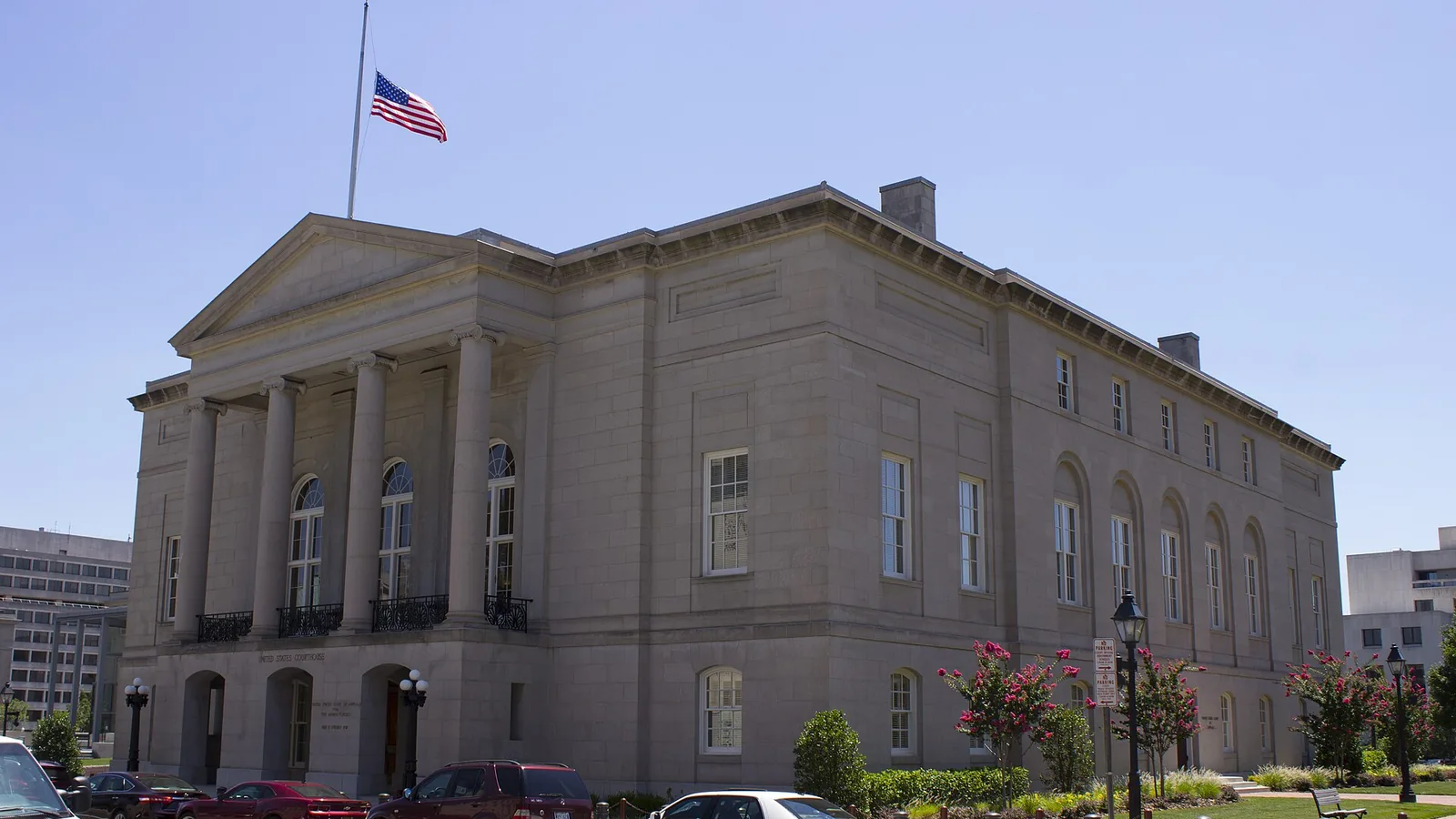
The Sequence at a Glance
An aviation accident lawsuit is a civil case in state or federal court in which injured people, or the personal representative of someone who died, seek money damages from the people and companies they allege are responsible. A civil action begins when a complaint is filed with a court. The lawsuit runs separately from the NTSB investigation of the same accident, and the two follow different rules about evidence.
No two cases follow the same path. Procedures, available legal theories, and applicable law depend on the facts of the accident and on the jurisdiction. The figure shows the general order of events.
- Evidence is preservedThe aircraft operator preserves the wreckage and records until the NTSB takes custody. The NTSB releases them when it has no further need for them.
- Complaint is filedA civil action begins when a complaint is filed with a court, state or federal, that has jurisdiction.
- Court is determinedDiversity jurisdiction, federal question jurisdiction, or multiparty jurisdiction can place the case in federal court, and a defendant sued in state court may seek removal.
- Related cases are consolidatedRelated federal cases in different districts can be transferred to one district for pretrial proceedings.
- Governing standard is decidedThe court decides whether federal aviation law displaces state law on the standard of care for the conduct at issue.
- DiscoveryThe parties exchange information, subject to the special limits on cockpit voice recorder recordings and transcripts.
- Expert testimony is testedIn federal court, the party offering an expert witness must show the court that the testimony meets Federal Rule of Evidence 702.
- Settlement, mediation, or trialThe case can be resolved by agreement, with or without a mediator, or tried.
Sources: 49 CFR 830.10; Federal Rule of Civil Procedure 3; 28 U.S.C. 1332; 28 U.S.C. 1407; 49 U.S.C. 1154; Federal Rule of Evidence 702; 28 U.S.C. 651.
Evidence and the NTSB Investigation
The aircraft operator is responsible for preserving the wreckage, cargo, mail, and all records of the aircraft’s operation and maintenance until the NTSB takes custody. The operator must also keep its internal records, reports, and memoranda about the accident until the NTSB authorizes otherwise. Once wreckage and records are in NTSB custody, only people authorized by the NTSB investigator in charge may reach them, and the NTSB releases them when it determines it has no further need for them.
The NTSB chooses the parties that take part in its investigation, and a party representative may not be a person who also represents claimants or insurance companies. Lawyers and others who represent claimants are therefore excluded from serving as party representatives.
Federal law also limits what carries over from the investigation. Under federal law, no part of a Board report related to an accident or its investigation may be admitted into evidence or used in a civil action for damages resulting from a matter mentioned in the report. NTSB regulations treat factual accident reports differently, and no statute bars their admission. An investigative finding is not a legal determination of liability, a distinction developed in how NTSB investigations work.
Parties and Government Defendants
Operators, manufacturers, maintenance providers, and others can each be named as defendants. The question of who can be liable after an aviation accident, and on what grounds, depends on the facts. Lawsuits over privately flown aircraft raise their own questions about insurance and NTSB records, covered in private plane accident cases.
When the allegation is that a federal employee’s negligence contributed to the accident, the Federal Tort Claims Act governs. District courts have exclusive jurisdiction of civil actions against the United States for money damages for injury or death caused by the negligent or wrongful act or omission of a government employee acting within the scope of employment, where a private person would be liable under the law of the place where the act or omission occurred. The claim must first be presented to the federal agency involved, and suit can follow the agency’s final written denial or six months with no final decision (28 U.S.C. 2675(a)).
State Court or Federal Court
The first jurisdiction question is whether a federal court can hear the case at all. The usual basis is diversity: federal district courts have jurisdiction over civil actions between citizens of different states when the amount in controversy exceeds $75,000. A corporation is a citizen of every state where it is incorporated and of the state where it has its principal place of business, and the legal representative of a decedent’s estate is treated as a citizen of the decedent’s state.
A defendant sued in state court may be able to move the case to federal court, but only if a federal court could have heard it originally. A case removable solely on diversity cannot be removed if a properly joined and served defendant is a citizen of the state where the action was brought. Federal courts also hear cases arising under federal law, but a federal defense such as preemption does not by itself make a state-law case removable, with a narrow exception when Congress has completely preempted a field of state law, as the Supreme Court held in Caterpillar Inc. v. Williams, 482 U.S. 386 (1987).
For the largest accidents, Congress created a separate basis. Under the Multiparty, Multiforum Trial Jurisdiction Act, 28 U.S.C. 1369, district courts have original jurisdiction of a civil action involving minimal diversity that arises from a single accident in which at least 75 natural persons died at a discrete location, if the accident or the defendants are tied to more than one state in one of three ways the statute lists. The court must abstain in some cases where most plaintiffs and the primary defendants are citizens of one state whose law will govern the case, and a defendant sued in state court may remove an action that falls within the statute.
Cases arising from international flights may be governed by the Montreal Convention instead of the rules described here.
Consolidation of Related Cases
When related lawsuits are pending in different federal districts, 28 U.S.C. 1407 lets the Judicial Panel on Multidistrict Litigation transfer them to one district for coordinated or consolidated pretrial proceedings if they share common questions of fact and transfer serves the convenience of parties and witnesses and promotes the efficient conduct of the cases. Each transferred case must be sent back to its original district at or before the end of pretrial proceedings unless it has already ended, and the Supreme Court has held that the transferee court may not assign itself the case for trial, in Lexecon Inc. v. Milberg Weiss Bershad Hynes & Lerach, 523 U.S. 26 (1998).
Federal Preemption and the Standard of Care
A standard of care is the measure of what a defendant had to do to act with due care. Federal preemption asks whether federal aviation law displaces state law as the source of that standard. Courts have not answered the question the same way for every kind of case, and the answer can change with the conduct at issue.
In Abdullah v. American Airlines, Inc., 181 F.3d 363 (3d Cir. 1999), a case about a flight crew’s failure to warn passengers of severe turbulence, the Third Circuit found implied federal preemption of the entire field of aviation safety standards of care. It concluded that a general federal standard of care arises from 14 CFR 91.13(a), which prohibits operating an aircraft in a careless or reckless manner so as to endanger life or property, and that state and territorial damage remedies still exist for violations of that standard.
The same court later limited the reach of that holding. In Sikkelee v. Precision Airmotive Corp., 822 F.3d 680 (3d Cir. 2016), it held that the field preempted in Abdullah does not include aircraft design and manufacture, so a products liability case may proceed on a state standard of care, subject to conflict preemption. The opinion also reviews how other circuits have treated the question. In the same litigation, Sikkelee v. Precision Airmotive Corp., 907 F.3d 701 (3d Cir. 2018), held that the district court erred in finding conflict preemption because the engine manufacturer had not produced clear evidence that the FAA would not have allowed it to change the engine’s design.
The decisions show a pattern but not a single national rule. In the Third Circuit, flight operations and aircraft design and manufacture have been treated differently, and other courts have reached their own results. Which court hears the case therefore affects which standard of care governs.
Wrongful Death, Survival, and the High Seas
A wrongful death action exists because legislatures created it. The traditional common-law rule was that no civil action lay for an injury that resulted in death, Lord Campbell’s Act in England began replacing the rule in 1846, and by 1970 every state had enacted a wrongful death statute. Survival statutes work differently: they let a cause of action the decedent held pass to the personal representative of the estate. Both come from state law, so who may sue, who may recover, and what may be recovered differ from state to state.
The Death on the High Seas Act, 46 U.S.C. 30301 et seq., applies to some deaths on the high seas. A personal representative may bring a civil action in admiralty when a death is caused by a wrongful act, neglect, or default on the high seas beyond 3 nautical miles from the shore of the United States. For commercial aviation accidents, the Act does not apply within 12 nautical miles of shore. The Act does not affect state law regulating the right to recover for death.
Discovery and Recorder Limits
Discovery is the stage at which the parties obtain information from each other and from outsiders. In federal court it reaches nonprivileged information that is relevant and proportional to the needs of the case.
Cockpit voice recorder material, described in how flight recorders work, has special limits. A party may not use discovery to obtain a cockpit voice recorder recording, or any part of a transcript the NTSB has not made public, except as 49 U.S.C. 1154(a) allows. A court may allow discovery of that material only after reviewing it privately and deciding that what is already public does not give the party “sufficient information for the party to receive a fair trial.” If it does, the court must issue a protective order limiting use of the material to the proceeding.
Expert Witnesses and Rule 702
Aviation cases involve technical questions, and each side can call expert witnesses. Depending on the facts, that can mean experts in accident reconstruction, metallurgy, human factors, or aircraft maintenance. In Sikkelee v. Precision Airmotive Corp., experts for the plaintiff and for the engine manufacturer disagreed about whether the carburetor caused the engine to fail, and the Third Circuit held that genuine disputes of material fact existed on causation.
In federal court, Federal Rule of Evidence 702 sets the test. A qualified expert may testify if the party offering the testimony demonstrates to the court that it is more likely than not that the testimony will help the trier of fact, is based on sufficient facts or data, is the product of reliable principles and methods, and reflects a reliable application of those principles and methods to the facts of the case. The rule was amended effective December 1, 2023 to clarify that this burden rests on the party offering the testimony. A case in state court follows that state’s rules of evidence.
Damages and Insurance
What can be recovered depends on the governing law. Federal statutes sort damages into categories: the Death on the High Seas Act limits recovery to pecuniary loss, and for commercial aviation accidents beyond 12 nautical miles from shore it adds nonpecuniary damages for loss of care, comfort, and companionship but not punitive damages. State wrongful death and survival statutes and the Montreal Convention set their own rules for the cases they govern.
A U.S. direct air carrier may not engage in air transportation unless it has aircraft accident liability insurance coverage that meets federal requirements, provided by an insurance policy or a self-insurance plan. That rule applies to direct air carriers, so it does not describe the coverage held by manufacturers, repair stations, or other defendants.
Settlement, Mediation, and Trial
A case can end by agreement at any stage. Federal law requires each district court to authorize alternative dispute resolution by local rule, including processes such as mediation, early neutral evaluation, and minitrial, in which a neutral third party assists in resolving the issues. A case that is not resolved proceeds to trial. When related federal cases have been consolidated for pretrial proceedings, those that remain unresolved return to their original districts for trial.
Because the court, the governing law, and the recoverable damages each depend on where the accident occurred, who was involved, and who is sued, the same accident can produce cases in different courts under different law.
Questions About an Aviation Accident Case
Sam Aguiar Injury Lawyers reviews aviation accident cases for injured people and families. Questions about a specific accident, including which court and which law may apply, can be sent to the firm for review. You pay $0 out-of-pocket forever. Start your free case review today.
Frequently Asked Questions
Who can file a wrongful death lawsuit after an aviation accident?
It depends on the governing law. Under the Death on the High Seas Act, the personal representative of the decedent brings the action for the exclusive benefit of the decedent’s spouse, parent, child, or dependent relative. State wrongful death statutes set their own rules about who sues and who recovers.
Is there a jury when the federal government is a defendant?
Generally not. An action against the United States under the Federal Tort Claims Act is tried without a jury, with an exception that applies to certain tax actions.
Can the other side inspect the wreckage while the NTSB has it?
Only persons authorized by the NTSB investigator in charge may be permitted access to wreckage and records in the NTSB’s custody, and the NTSB releases them when it has no further need for them.
Latest Articles
Who Can Be Liable After an Aviation Accident
Which carriers, manufacturers, repair stations, and agencies can be responsible.
How an NTSB Investigation Works After an Aviation Accident
How the NTSB investigates, which reports it publishes, and what courts can use.
Montreal Convention Liability on International Flights
When the treaty governs injury or death on an international flight.