

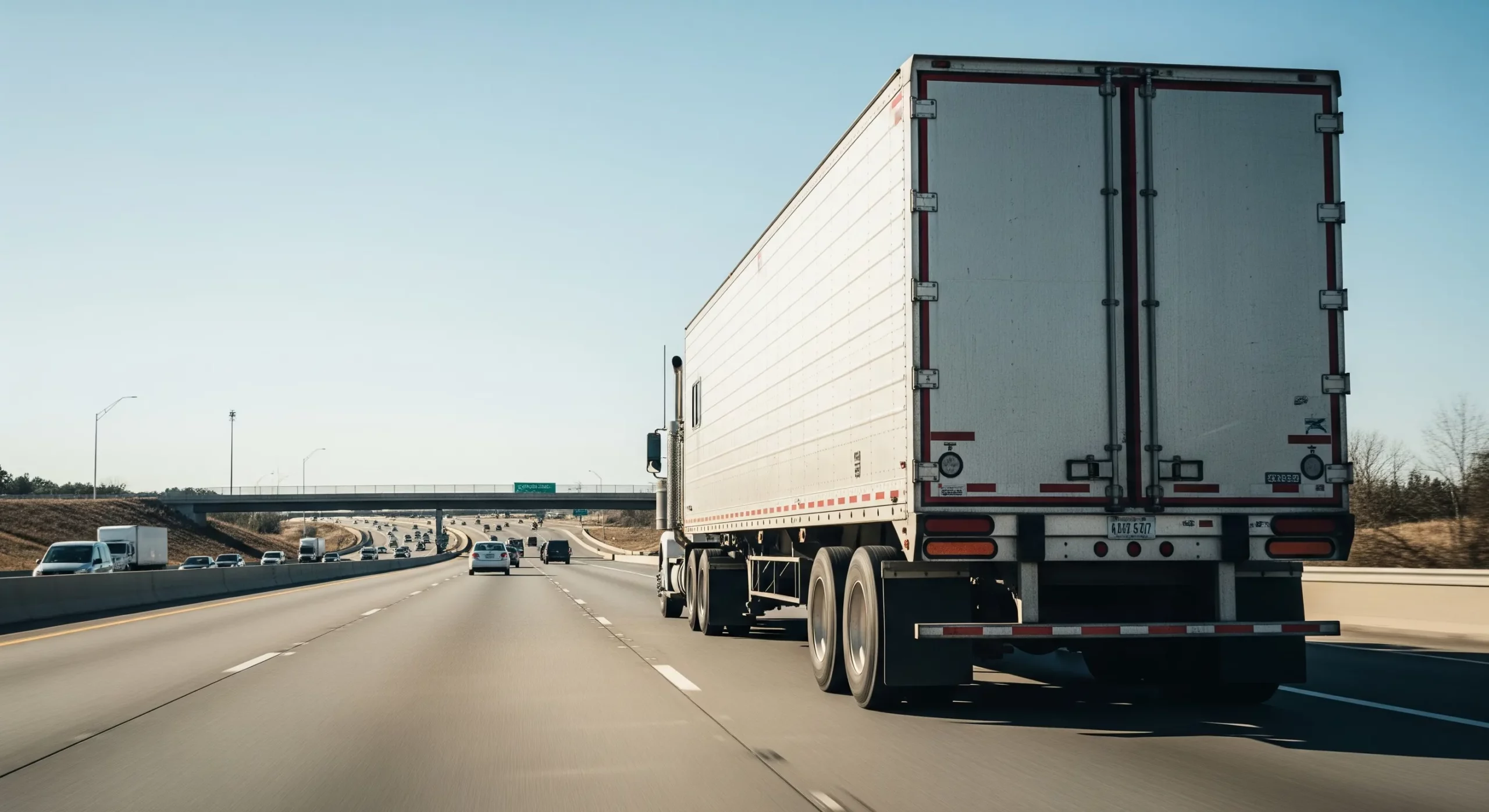
Weather-Related Truck Accidents in Kentucky
Bad weather doesn’t excuse a truck driver’s choice to keep rolling — or a carrier’s decision to dispatch into dangerous conditions. When negligence hides behind rain and ice, we find it.
Adverse weather is a factor in a significant share of large truck crashes — but weather itself rarely determines who is legally responsible. Under 49 CFR 392.14, commercial truck drivers are required by federal law to exercise “extreme caution” in hazardous conditions — including snow, ice, rain, fog, and dust. When conditions become severe enough that the risk cannot be mitigated, the driver must stop driving. A carrier that pressures a driver to keep moving through dangerous weather — or dispatches a truck without checking road conditions — cannot shift blame onto the weather itself. That’s human decision-making, and it carries legal consequences.
How Weather Increases Truck Crash Risk in Kentucky
Kentucky experiences a range of hazardous weather conditions throughout the year. Louisville winters bring cold rain, ice, and occasional snow from December through March. Fog can reduce visibility to near zero along river corridors and the I-65 corridor through the Knobs region. Summer thunderstorms create sudden heavy rain and high crosswinds on open highway stretches. Each of these conditions amplifies the inherent risks that come with operating an 80,000-pound vehicle.
(FMCSA vehicle dynamics)
(FHWA Road Weather)
(FHWA Road Weather Management)
(FHWA Road Weather Management)
The Federal Highway Administration’s Road Weather Management Program data shows that wet pavement accounts for 70% of weather-related crashes, while rain is involved in 46% of weather-related traffic fatalities. For large trucks, the risks multiply: a loaded semi on wet pavement takes far longer to stop than the same truck on dry road, and the consequences of a loss of control are catastrophic for everyone around it.
Federal Law: What Truck Drivers Must Do in Bad Weather
Federal regulations are explicit. 49 CFR 392.14 — titled “Hazardous conditions; extreme caution” — requires commercial vehicle drivers to:
- Reduce speed when hazardous conditions exist
- Increase following distance to account for longer stopping distances
- Use headlights, fog lights, and hazard signals as required by conditions
- Discontinue operation entirely when conditions are so hazardous that continuing poses unreasonable risk to the driver and others on the road
That last point is critical. Federal law does not allow a truck driver to argue, “I kept driving because dispatch told me to.” Drivers have both the right and the obligation to park the truck when conditions demand it. When they don’t — and a carrier’s pressure to make a delivery is behind that decision — the carrier shares in the liability for what follows.
Signs of Truck Driver Negligence in Weather-Related Crashes
Weather-related truck crashes typically involve one or more of the following failures:
- No reduction in speed for road conditions (evidenced by ECM/black box data)
- Inadequate tires — worn tread, improper type for conditions, underinflation
- No headlights or fog lights in low-visibility conditions
- Following too closely at highway speed in rain or snow
- Distracted driving — phone use during hazardous conditions
- Dispatch communications showing pressure to maintain schedule despite weather
- Failure to check weather or road condition reports before departure
The “Act of God” Defense — and Why It Rarely Applies
When a trucking company’s lawyers want to avoid liability for a weather-related crash, they often raise the “Act of God” defense. The theory is simple: if the crash was caused entirely by an unforeseeable natural event — a flash flood, a sudden tornado, ice that formed in minutes — then no human negligence contributed and no one is legally at fault.
In practice, this defense almost never applies to truck crashes in Kentucky. Here’s why: the weather conditions that cause most truck crashes — rain, ice, fog, snow — are predictable, foreseeable, and the subject of explicit federal regulations. A driver who knew or should have known that road conditions were dangerous and chose to keep driving cannot claim an Act of God. A dispatcher who sent a truck into an ice storm is making a human choice. The “Act of God” doctrine applies only where the natural event was truly unforeseeable and unavoidable — not to everyday weather-related risk management decisions that federal law already addresses.
Carrier Dispatch Decisions Create Independent Liability
One of the most important — and most overlooked — aspects of weather-related truck crash cases is dispatcher liability. Trucking evidence regularly includes dispatch messages showing that drivers reported dangerous conditions to their carrier and were told to keep moving. Fleet management system logs, satellite communications, and cell records all preserve this evidence. When a carrier’s dispatch decision directly contributed to a crash, that carrier faces independent liability beyond the driver’s own conduct.
What Evidence Matters Most in Weather-Related Truck Cases
The same evidence categories that matter in any truck crash case are especially important here, because the defense will try to attribute causation to weather rather than human negligence:
- ECM/black box data — Shows the truck’s speed and braking in the period before impact. If the driver never reduced speed despite the conditions, that data contradicts any weather-only defense.
- ELD records — Demonstrates where the truck was, when it was moving, and whether the driver made any stops in response to deteriorating conditions.
- Fleet management system data — Dispatch messages and carrier communications that show whether the driver was pressured to continue despite warnings.
- Weather records — National Weather Service data and KYTC road condition reports pinpoint exactly what conditions were at the time and location of the crash.
- Tire inspection records — Prior maintenance records and Driver Vehicle Inspection Reports (DVIRs) showing whether the truck’s tires were adequate for the conditions.
- Witness statements — Other drivers who saw the truck before the crash can describe speed, lane behavior, and whether lights were on.
Don’t let insurance companies use weather to shrink your claim. When a trucking insurer tells you that “weather caused the accident,” they’re often looking to pay a fraction of what the case is worth. Our team builds the full picture — driver behavior, carrier decisions, equipment condition, and federal compliance — so the weather argument doesn’t stick.
Sam Aguiar Injury Lawyers: Dedicated Trucking Team
Weather-related truck cases require a different investigation strategy than standard car crashes. You need people who understand federal motor carrier regulations, know how to read black box data and dispatch logs, and can counter the insurance defense before it takes root. Our dedicated trucking and commercial vehicle team handles exactly these cases across Kentucky.
Every client gets a dedicated team of three: a top-rated attorney, a highly experienced case manager, and a dedicated legal assistant. From the moment you call, evidence preservation begins. We send spoliation letters within 24–48 hours, secure dispatch records, and build the case that the carrier and driver’s decisions — not the weather — caused your injuries.
With our Bigger Share Guarantee®, you always take home a larger share of your settlement. No increased litigation fees contingency fee that never increases — even if your case goes to trial. $0 Out-Of-Pocket Forever.
Frequently Asked Questions
Can a truck driver be held responsible if bad weather caused the accident?
Yes, in most cases. Federal law (49 CFR 392.14) requires truck drivers to reduce speed and stop operating when conditions are too hazardous to continue safely. If a driver kept moving in rain, ice, fog, or snow — rather than slowing down or pulling over — that’s a federal regulatory violation, not an act of nature. The weather may be a factor, but the driver’s choice to remain on the road is the critical legal question.
Can the trucking company also be responsible for a weather-related crash?
Absolutely. Carriers can be liable for dispatching trucks into dangerous weather conditions, pressuring drivers to maintain schedules despite road hazards, and failing to ensure trucks are equipped with tires appropriate for weather conditions. Dispatch records and fleet management system data often reveal exactly what the carrier knew and when.
What is the “Act of God” defense and when does it apply?
The Act of God defense applies only to truly unforeseeable natural events — a sudden tornado, a flash flood that appeared without warning — where no reasonable precaution could have prevented the crash. It does not apply to routine bad weather like rain, ice, and fog, because those conditions are foreseeable and federal law already requires drivers to respond to them. In practice, this defense almost never prevails in truck accident cases in Kentucky.
What federal law governs truck drivers’ obligations in bad weather?
49 CFR 392.14 requires commercial vehicle drivers to exercise “extreme caution” in hazardous conditions, reduce speed, and discontinue operation when conditions pose an unreasonable risk. This regulation applies to all commercial motor vehicles operating in interstate commerce and sets a clear legal standard for driver conduct in adverse weather.
What evidence is most important in a weather-related truck accident case?
The most critical evidence includes: ECM/black box data (showing the truck’s speed at the time of the crash), ELD records (showing the driver’s movement history), dispatch communications (showing any carrier pressure to continue), weather and road condition records from the National Weather Service and KYTC, tire inspection and maintenance records, and witness statements from other drivers. All of this evidence must be preserved quickly — some overwrites within 30 days.
Start Your Case Review Today
Tell us what happened. Our team will reach out quickly — no appointments needed.