Person receiving medical care for facial injuries after a kentucky car accident

Facial Injuries From a Kentucky Car Accident
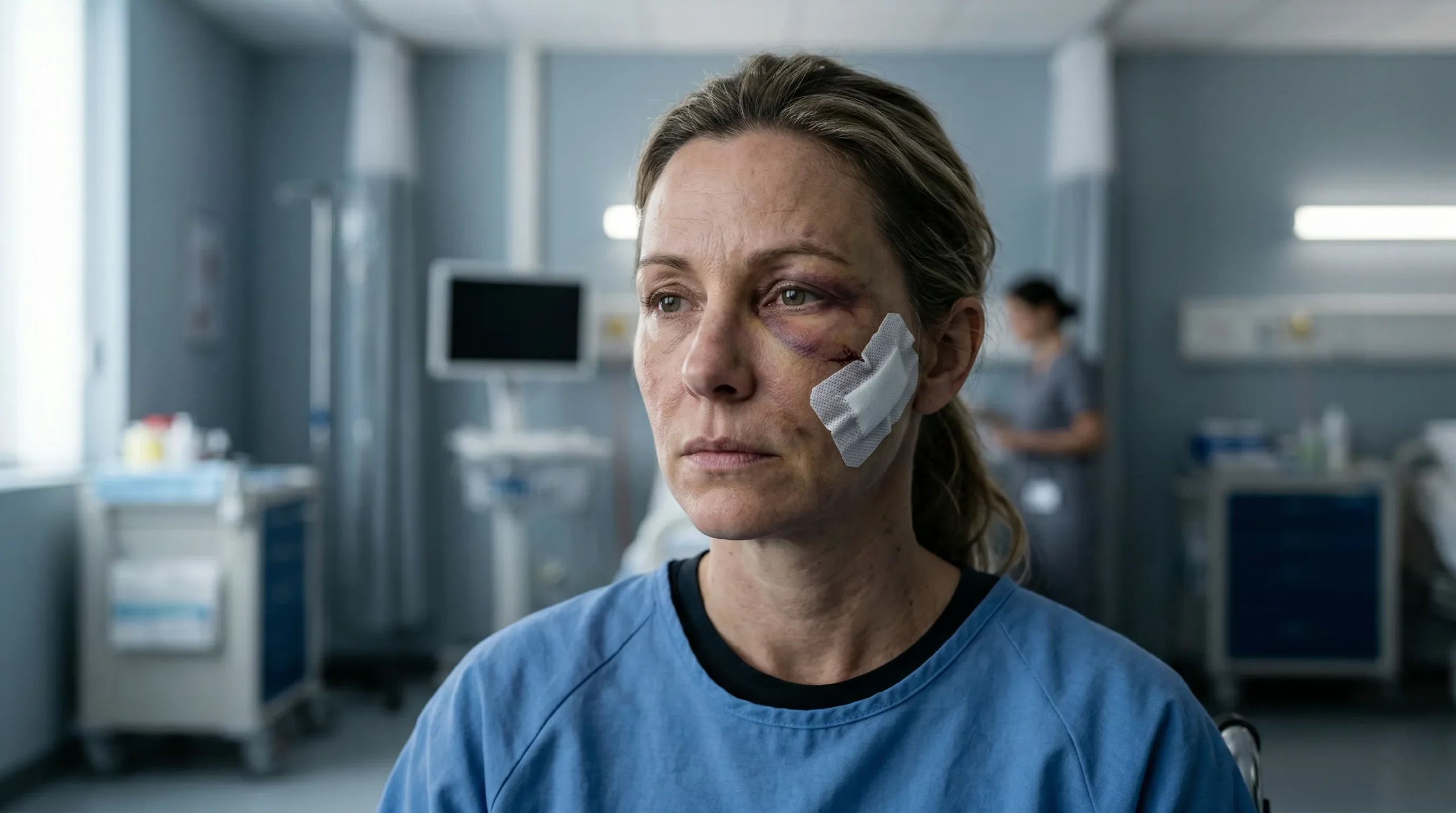
Orbital fractures, broken jaws, and facial scarring are among the most visible and emotionally difficult.

Forbes Best-In-State Top Lawyer
Super Lawyers 2017–2026
1,000+ Five-Star Reviews — 4.9/5
$0 Out-Of-Pocket Forever
On This Page

Facial injuries from a Kentucky car accident range from orbital blowout fractures and Le Fort midface fractures to mandible fractures, dental injuries from airbag deployment, and TMJ damage. According to research published in Craniomaxillofacial Trauma and Reconstruction, road traffic accidents produce fractures at multiple facial sites simultaneously in 65% of cases, making crash-related facial fractures substantially more complex than single-site injuries. Full recovery from surgical repair and scar maturation can take twelve to eighteen months, and revision surgery is often necessary before a patient reaches maximum medical improvement. At Sam Aguiar Injury Lawyers, we document facial disfigurement, dental records, and surgical outcomes to build a complete picture of what these injuries cost our clients, including the impact on their spouse and marriage under Kentucky’s loss of consortium law.

The Facial Injuries Kentucky Car Accidents Cause

The face absorbs impact from steering wheels, dashboards, windshields, and deploying airbags. Unlike a broken arm or knee injury hidden under clothing, facial injuries change how the world sees you and how you see yourself. The injuries are not subtle, and they do not resolve on their own.

Orbital Fractures

The thin bones surrounding the eye socket fracture when sudden pressure transmits through the orbital walls. Research in International Ophthalmology found that orbital bone fractures represent the most common eye-region injury in motor vehicle accidents. Untreated, an orbital floor fracture can cause a sunken eye appearance (enophthalmos), double vision from entrapped muscle, and permanent numbness in the cheek.

Le Fort Midface Fractures

Named after French surgeon René Le Fort, these are classified fractures of the midface. Type I separates the hard palate from the upper face. Type II is a pyramidal fracture through the nasal bridge and orbital floors. Type III is craniofacial dissociation, separating the entire midface from the skull base. According to StatPearls, motor vehicle accidents cause approximately 50% of all Le Fort fractures.

Mandible and Maxilla Fractures

The lower jaw (mandible) and upper jaw (maxilla) are among the most commonly fractured facial bones in car accidents. National inpatient data shows mandibular fractures account for 23% of all road traffic accident facial fractures. These injuries affect chewing, speaking, and the alignment of the bite, requiring surgical fixation and sometimes titanium plates or screws.

Dental and TMJ Injuries

Airbags deploy at speeds exceeding 150 mph. That force is sufficient to crack, chip, or completely avulse teeth on contact. A car crash can also damage the temporomandibular joint (TMJ), causing chronic jaw pain, difficulty chewing, and locking. Research in the Journal of Chiropractic Medicine found approximately one-third of whiplash victims develop TMJ symptoms within one year after a crash.

Facial Lacerations and Scarring

Glass, metal, and airbag fabric cause deep lacerations that often require layered surgical closure. Facial scars located near the eyes, nose, or lips are difficult to revise completely. Even after skilled surgical repair, scar maturation takes twelve to eighteen months, and many patients require laser therapy, dermabrasion, or revision surgery before the scar reaches its final appearance.

Nasal Fractures

The nasal bones are among the most frequently fractured structures in frontal crashes. Beyond cosmetic impact, a displaced nasal fracture can cause persistent airway obstruction and require rhinoplasty or septoplasty months after the initial injury once swelling fully resolves. According to Annals of Advances in Automotive Medicine, nasal fractures are the most common isolated facial fracture in frontal motor vehicle crashes.

People notice. That is the part that never fully goes away. You walk into a grocery store and you feel the glances. You sit at a parent-teacher conference and someone stares for a half-second too long. A child at the park asks their mother, loudly, what happened to your face. You used to move through the world without thinking about any of that. You used to just be a person. Now your appearance is the first thing people register about you, and that changes every social interaction you have for the rest of your life.

Getting the Right dedicated team for a Facial Injury

Facial injuries require different dedicated team depending on the injury type. Seeing a general practitioner or emergency physician alone is not enough for fractures, scarring, or TMJ damage. The right dedicated team both improves your outcome and produces the documentation your claim requires.

Oral and Maxillofacial Surgeon (OMFS) for Fractures

An oral and maxillofacial surgeon holds both a medical degree (MD) and a dental degree (DDS or DMD). This dual training makes them the primary dedicated team for complex facial fractures including Le Fort fractures, mandible fractures, orbital repairs, and zygoma reconstruction. For crash victims, look for board-certified OMFS physicians with high-volume trauma center experience. University of Louisville Health and UK HealthCare both have OMFS departments equipped to handle multi-site crash-related facial fractures.

Facial Plastic Surgeon for Scarring and Revision

After bone fractures have been stabilized, visible facial scarring is often the lasting reminder of the crash. A facial plastic surgeon with reconstruction experience, not a general dermatologist, produces the most consistent results for periorbital, nasal, and perioral scars. Revision surgery is typically not performed until scar maturation is complete, which means many patients do not undergo their final revision until twelve to eighteen months after the crash, long after insurance companies want to close the claim.

TMJ dedicated team for Jaw Joint Damage

TMJ injuries documented by MRI or CT require a dedicated TMJ dedicated team, not a general dentist. An oral medicine physician or an OMFS with specific TMJ training can document disc displacement, joint degeneration, and functional limitations that become critical to the value of a claim. Per the Journal of Chiropractic Medicine, early treatment with bite splints can prevent TMJ conditions from worsening into permanent jaw dysfunction. A delay in seeking dedicated team care is exactly the kind of treatment gap that insurance adjusters use to dispute claims.

TMJ makes the simplest things painful. Eating a meal with your family. Biting into an apple. Chewing the steak you used to grill on weekends. The jaw locks mid-bite. The clicking sound makes people look at you across the table. Headaches start in the jaw and radiate up through the ear and behind the eye. You start cutting everything into smaller pieces. You start avoiding hard foods. You start skipping meals because the pain is not worth it. This is not a minor inconvenience. It is a daily reminder of what the crash took from you.

What Recovery From Facial Injuries Really Looks Like

Insurance companies often pressure crash victims to settle before their facial injuries have fully declared themselves. Facial fracture repair, scar maturation, and TMJ treatment operate on timelines that extend well beyond what adjusters want to acknowledge.

Facial Injuries: What Recovery Can Look Like

Based on published medical literature. Individual recovery varies. This represents a documented challenging recovery course.

Days 1–7 Acute Stabilization

Airway management, CT imaging, edema control. Definitive surgical repair typically delayed 5–10 days for swelling to subside per ATLS protocols.

Week 1–3 OMFS Surgical Repair

Open reduction and internal fixation with titanium plates. Le Fort Type III cases average 37-day hospitalization per published outcomes data.

Weeks 4–12 Soft Tissue Healing

Swelling resolves, sutures out, diet restrictions continue. TMJ symptoms may emerge or worsen during this period.

Months 3–12 Scar Maturation

The critical vulnerability window. Per scar maturation research, tissue is still fragile and prone to widening and discoloration through month 18.

12–18 Months Revision Surgery Assessment

Final scar assessment. Many patients require laser resurfacing, dermabrasion, or surgical scar revision once maturation is complete.

18+ Months Permanent Changes

Residual changes to facial symmetry, numbness in cheek or lip from nerve damage, and visible scarring that does not fully resolve are the permanent legacy of a serious facial fracture.

Sources: StatPearls Le Fort Fractures, Journal of Emergencies, Trauma, and Shock, Scar Maturation Research

Your spouse sees a different face. Not just in the first weeks, when the bruising and swelling are fresh. A year later, when the scars have matured into something permanent. When the plates under the skin are still there. When the light catches your face a certain way and the person across from you, the one who has known you for twelve years, looks at you for just a moment with something like sadness. Not because they love you any less. But because they remember the face they married. Facial disfigurement changes a marriage in ways that no medical chart captures.

Loss of Consortium: What Facial Disfigurement Does to a Marriage

Permanent facial disfigurement is one of the most recognized bases for a spousal loss of consortium claim in Kentucky. Under Kentucky law, a spouse may bring a separate legal claim when a crash injury fundamentally alters the marital relationship, including companionship, intimacy, and the ordinary enjoyment of life together. Facial injuries affect intimacy and social interaction in ways that few other injuries do. The change is visible every day, in every interaction.

Under KRS 413.140, the spousal consortium claim carries its own one-year statute of limitations, separate from the injured person’s claim. This deadline is easy to miss. It runs from the date of injury, not from when the couple first recognizes the impact on their relationship. If the consortium claim is not filed within one year, it is permanently barred.

For a full explanation of how consortium claims work in Kentucky, including child consortium claims and the difference between spousal and derivative loss of consortium, see our companion article on loss of consortium in Kentucky. Understanding this claim is critical in any facial disfigurement case.

Related Injuries and Resources

Facial fractures frequently accompany head trauma and psychological injury. Many crash victims with serious facial injuries also experience PTSD symptoms from the trauma of the crash and its visible aftermath. See our pages on concussion injuries, traumatic brain injury, and PTSD after a car accident for more on co-occurring conditions. For a complete overview of all crash injuries, visit the car accident injuries hub.

For a full breakdown of damages available in a Kentucky injury case, including economic and non-economic losses, see our page on types of damages in a Kentucky injury case.

How We Document Facial Injuries for the Insurance Adjuster

Insurance adjusters handling facial injury claims often try to settle before scar maturation is complete, before revision surgery has been performed, and before TMJ damage has been fully documented. An early settlement offer may look acceptable on day 30. At month 18, when the patient is scheduling their second revision surgery, that number rarely holds up.

What Kentucky Juries Actually Award for Facial Injury Cases

The Kentucky Trial Court Review tracks 28 years of jury verdict data across Kentucky. For facial injury cases involving permanent disfigurement, jury awards consistently exceed what insurance companies offer in pre-litigation settlement. Insurance adjusters use proprietary formulas that consistently undervalue visible, permanent injuries. Kentucky jury data tells a different story. At Sam Aguiar Injury Lawyers, we use Kentucky Trial Court Review verdict data when building your demand to make sure the number reflects what a Kentucky jury would actually award for a case like yours, not what an insurance algorithm says you deserve.

Sample: Pre-Litigation Demand Correspondence

This is a simplified example of the type of correspondence we send to insurance adjusters for facial injury claims. Actual demands include full medical documentation, billing summaries, imaging reports, and supporting exhibits.

Re: [Client Name] / Claim No. [XXXXX] / Date of Loss: [XX/XX/XXXX]

Dear [Adjuster Name],

Please find enclosed our demand for resolution of the above-referenced claim.

Liability: The at-fault driver ran a red light at the intersection of [Street], Louisville, Kentucky, striking our client’s vehicle on the driver’s side door. The collision deployed the driver’s side curtain airbag with direct force to the client’s face.

Injuries and Treatment: Our client sustained an orbital blowout fracture of the left orbital floor with muscle entrapment, confirmed on CT imaging performed at University of Louisville Hospital on [date]. She also sustained mandible fracture with malocclusion, dental fractures to teeth #8 and #9, and full-thickness lacerations to the periorbital and perioral regions. Surgical repair was performed by Dr. [Name], MD/DDS, OMFS, on [date], involving open reduction internal fixation of the orbital floor with titanium mesh and mandibular plate fixation. She remains in active treatment for TMJ injury with disc displacement confirmed on MRI dated [date].

Medical Documentation: Enclosed find orbital CT imaging report, surgical operative reports, anesthesia records, dental records documenting fracture and treatment, TMJ MRI report, and itemized billing summary.

Lost Wages: Our client, employed as a licensed practical nurse at [employer] in Jefferson County, was unable to return to work for 11 weeks due to facial swelling, dietary restriction, and post-operative limitations. See enclosed employer verification and earnings documentation.

Impact: Our client has visible periorbital and perioral scarring that is not yet fully matured. Her treating facial plastic surgeon anticipates a revision procedure at 14 months post-injury. She experiences chronic jaw pain affecting her ability to eat a full diet and perform oral care. She has avoided social functions and reports significant self-consciousness in her nursing role. Her treating psychologist has documented post-traumatic stress symptoms directly attributable to the visible nature of her injuries.

Demand: Based on documented injuries, surgical outcomes, ongoing TMJ treatment, pending scar revision, documented disfigurement, impact on daily life and occupation, and Kentucky Trial Court Review jury verdict data for comparable facial injury cases in Jefferson County, we demand the policy limits for resolution of this claim.

We request your response within 30 days. Should your insurer fail to make an adequate offer, we are prepared to file suit and will pursue all available damages, including bad faith penalties under KRS 304.12-230.

Respectfully,
Sam Aguiar Injury Lawyers

Note: This is a representative sample. Every demand we send is customized to the specific facts, medical evidence, and applicable insurance coverage in your case.

Get More. Get It Faster. Get It With Sam Aguiar.

Facial injuries are among the most personal and most permanent outcomes of a car crash. Insurance companies minimize what they can’t see. They tend to do even worse with what they can see, offering settlements before revision surgery, before scar maturation, and before the full picture of your losses is clear.

With our Bigger Share Guarantee®, you always walk away with more than the lawyer after all bills, liens, and costs. Named Forbes Best-In-State Top Personal Injury Lawyer 2025. Over 1,000 five-star reviews at 4.9/5. $0 out-of-pocket forever.

Call us: Louisville (502) 888-8888 | Lexington (502) 888-8888

Frequently Asked Questions

What facial fractures are most common in Kentucky car accidents?

According to research in Craniomaxillofacial Trauma and Reconstruction, the most common fracture types in road traffic accident patients are mandibular fractures (23%), orbital fractures (14%), and frontal bone fractures (14%). Car accident patients are 50% more likely to sustain multiple facial fractures compared to non-crash patients, which complicates both treatment and recovery.

What is an orbital blowout fracture from a car accident?

An orbital blowout fracture occurs when sudden pressure to the eye socket causes the thin bones of the orbital floor or medial wall to fracture inward. According to the National Institutes of Health, orbital bone fractures are among the most common eye-region injuries in motor vehicle accidents. Treatment ranges from observation to surgical repair with titanium mesh, depending on muscle entrapment and enophthalmos (sunken eye appearance).

What is a Le Fort fracture and how does a car crash cause one?

Le Fort fractures are classified midface fractures first described by French surgeon René Le Fort. Type I separates the hard palate from the upper face; Type II is a pyramidal fracture through the nasal bridge and orbital floors; Type III is craniofacial dissociation separating the entire midface from the skull base. According to StatPearls, motor vehicle accidents cause approximately 50% of all Le Fort fractures, with higher crash speeds producing higher-grade patterns.

Can a car accident cause TMJ (temporomandibular joint) injury?

Yes. Research in the Journal of Chiropractic Medicine found that approximately one-third of whiplash victims develop TMJ symptoms within one year of a crash. The rapid head motion in a rear-end collision strains the temporomandibular joint and surrounding ligaments. TMJ injuries can cause chronic jaw pain, difficulty chewing, clicking sounds, earaches, and headaches that persist long after the crash.

What dental injuries can airbag deployment cause?

Airbags deploy at speeds exceeding 150 mph. That force is sufficient to crack, chip, loosen, or completely displace teeth on contact. Dental injuries from airbag deployment include tooth fractures reaching the nerve, avulsed (knocked-out) teeth, and damage to dental implants, crowns, or veneers. These injuries require emergency dental evaluation and are compensable damages in a Kentucky car accident claim.

How long does recovery from facial fracture surgery take?

Recovery from facial fracture surgery involving open reduction and internal fixation spans multiple phases. Initial surgical repair requires one to four weeks of hospitalization depending on complexity. Soft tissue swelling resolves over six to twelve weeks. According to scar maturation research, full scar maturation takes twelve to eighteen months, and many patients require one or more revision procedures before reaching maximum medical improvement.

What is a loss of consortium claim for facial disfigurement in Kentucky?

Under Kentucky law, a spouse may bring a separate loss of consortium claim when permanent facial disfigurement fundamentally changes the marital relationship. Under KRS 413.140, the spousal consortium claim has a one-year statute of limitations, separate from the two-year personal injury deadline. This claim must be filed in time or it is permanently barred. See our full guide at loss of consortium in Kentucky.

What type of doctor treats facial fractures from a car accident?

An oral and maxillofacial surgeon (OMFS) with a dual degree (MD/DDS or MD/DMD) is the primary dedicated team for complex facial fractures including Le Fort fractures, mandible fractures, and orbital repairs. For visible facial scarring, a facial plastic surgeon with reconstruction experience produces better aesthetic outcomes. TMJ injuries require a dedicated TMJ dedicated team, not a general dentist, especially when joint damage is confirmed on MRI or CT.