

TRIMARC Cameras in Louisville and Crash Footage
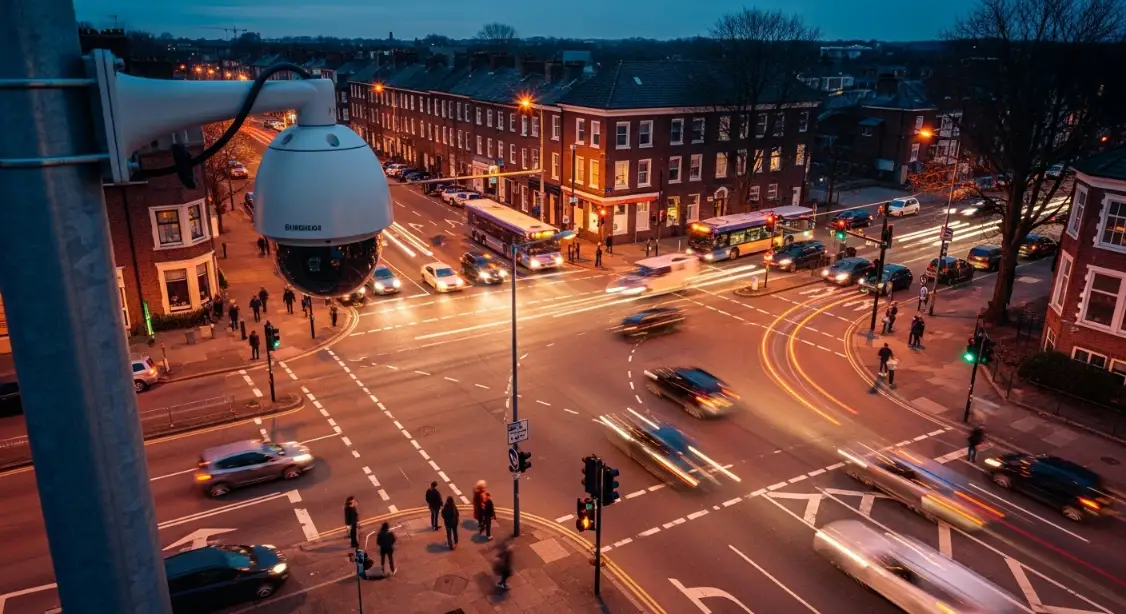
TRIMARC cameras watch the interstates around Louisville, but whether a recording of a specific crash exists depends on the camera system and how long its operator keeps the footage. Sam Aguiar Injury Lawyers investigates available camera footage after a Louisville crash, and the rules below come from the Kentucky Transportation Cabinet’s own materials, the state retention schedules, and a 2025 Kentucky Attorney General decision on releasing crash video.
TRIMARC System and Operator
TRIMARC stands for Traffic Response and Incident Management Assisting the River Cities, and it is a project of the Kentucky Transportation Cabinet that operates a Traffic Operations Center in Louisville around the clock, every day of the year. A Kentucky Transportation Cabinet release describes the network as an integrated system of sensors, cameras, dynamic message signs, highway advisory radio, and computers monitoring more than 60 miles of interstate traffic across the greater Louisville and Southern Indiana area.
The cameras monitor I-64, I-65, I-71, I-264, I-265, and connected corridors in real time. The Traffic Operations Center watches traffic in the Louisville Metro area and the Northern Kentucky area south of Cincinnati, and the incidents it tracks include crashes, disabled motorists, and roadwork, according to the regional intelligent-transportation inventory for the system. The camera locations themselves are cataloged as a Louisville Metro Government open dataset, which is one way the public can see where the interstate cameras sit.
That coverage geography is why people often ask whether a TRIMARC camera saw a crash on I-64, I-65, I-71, or the Watterson and Gene Snyder expressways. The answer depends on what those cameras record and how long any footage survives.
Camera Snapshots and Recorded Video
TRIMARC’s public camera feeds are snapshot stills. The system delivers information through dynamic message signs and camera snapshot views on the TRIMARC website, alongside the Notify Every Truck program, social media, and Freeway Service Patrols that run during weekday rush-hour periods.
Because those public feeds refresh on an interval and are not a continuously archived recording, saved video of a specific crash may not exist on the TRIMARC system itself. The Cabinet materials describe snapshot views, and whether TRIMARC retains recorded video, and for how long, is not stated in those sources.
That uncertainty is a reason to act early. If a snapshot happened to capture the moments around a crash, or if the incident triggered a Freeway Service Patrol response logged by the Traffic Operations Center, an early written request can preserve whatever exists before a short retention window closes.
Other camera sources often carry more weight than the interstate feeds. A crash may have been captured by a nearby business security camera, a doorbell or dashboard camera, a traffic-signal camera operated by a local government, or a police in-car or body-worn camera, and each of those is governed by different access rules and different retention deadlines. The first step is identifying each camera and who controls it.
Kentucky Incident Detection and Data Sharing
The public reaches Kentucky’s traffic cameras through the GoKY portal, which replaced the older CARS and 511 systems and folds in Waze crowd-sourced reports, according to the regional record for GoKY.
Behind that portal is a large data operation. Kentucky joined the Waze Connected Citizen Partnership in September 2014, and its Big Data System compares Waze event reports against vehicle-probe speed data every two minutes to flag incidents, processing 15 to 20 million records per day from 14 data sources, according to a Federal Highway Administration case study.
That system is built for fast response. The same case study explains that it gives traffic-management centers earlier incident awareness and shares a single incident view with response agencies such as Kentucky State Police and Kentucky Emergency Management. That shared view is useful for dispatch, but it does not mean a permanent video file of any given crash is being archived for later download.
Open Records Requests for Crash Video
The Kentucky Open Records Act is the path to video held by a public agency. Under KRS 61.872, all public records are open for inspection by any resident of the Commonwealth, subject to statutory exceptions, and a public agency must decide within five business days whether to comply and notify the requester in writing.
The same statute recognizes that some records take time to locate. If a requested record is in active use, in storage, or otherwise unavailable, the custodian must set a time for inspection that does not exceed five days, unless it provides a detailed explanation for any further delay.
Those short timelines cut in two directions. They give a requester a fast answer, and they also mean a request has to be specific and prompt, because a public agency will not hold or search for a recording that its own retention schedule has already sent to destruction.
Crash and Police Video Exemptions
Several exemptions routinely block crash and police video even when it exists. Under KRS 61.878, law-enforcement records compiled while detecting or investigating violations may be withheld where disclosure could harm a prospective enforcement action, and records made confidential by another statute are also exempt from release.
Body-worn camera footage adds its own privacy limits. Under KRS 61.168, an agency may withhold body-camera recordings that show the interior of a private residence, the interior of a medical facility, minors, deceased individuals, or the serious injury or death of a public safety officer, even though such footage is otherwise governed by the Open Records Act.
DUI and Traffic-Stop Recordings
A 2025 Attorney General decision shows how these rules play out after a fatal crash. In 25-ORD-070, a requester sought all video from the investigation of a fatal driving-under-the-influence crash, including body-worn and dash-camera footage, and the Attorney General held Kentucky State Police did not violate the Open Records Act by withholding the field-sobriety and refusal video.
The decision explains that visual and audible recordings of vehicle pursuits, traffic stops, and field sobriety tests are made confidential by state statute, and that the unauthorized release of such footage can constitute official misconduct in the first degree. Kentucky State Police released a single in-car video of the arrested suspect while withholding the confidential field-sobriety footage, and the decision notes that crash-reconstruction video is generally produced at a later date by reconstruction personnel, not by the arresting officer at the scene.
A blanket request for everything can be lawfully denied. A carefully framed request for the specific, releasable recording, backed by the reasoning in that opinion, has a better chance of success.
Video Retention Deadlines
Public video is not kept indefinitely, and the schedules are short. Under the Kentucky State Police records retention schedule, mobile-device recordings that capture a collision or a citation are kept until one year after the incident and then destroyed, while non-evidence test recordings are kept only 30 days before destruction.
The same state schedule keeps civilian traffic-collision reports for two years after the report is completed. For local agencies, a Kentucky body-worn camera retention schedule keeps non-evidentiary recordings for 30 days, requires retaining footage that captures “the actual happening of an accident” for 26 months, and keeps evidentiary recordings until all related legal activity is complete.
Which category a given clip falls into can depend on whether someone asked the agency to preserve it in time. Because an ordinary clip can be gone within weeks, a prompt, written preservation demand to every agency and private business that might hold footage is the practical safeguard.
Non-Camera Traffic System Records
Cameras are one part of the network, and the other tools can feed a crash investigation. The regional inventory for TRIMARC lists dynamic message signs, the Notify Every Truck program, social media alerts, and Freeway Service Patrols that operate during weekday rush-hour periods as the ways the system pushes information to drivers and clears incidents.
Those Freeway Service Patrols and message signs generate their own operational records of when an incident was detected and cleared, which can establish a timeline even when no usable video exists. Because that activity flows through the Kentucky Transportation Cabinet, the records it creates are public records reachable through the Open Records Act like any other agency record.
Other Camera Systems Near a Crash
Kentucky’s incident-detection network draws on more than agency cameras. The Federal Highway Administration case study describes how the state fuses camera views with Waze reports and vehicle-probe speed data, which reflects how many independent data sources can touch a single crash location. Several camera systems beyond TRIMARC may have recorded a crash:
- TRIMARC highway cameras cover 60+ miles of Louisville interstate and are the primary source for crashes on I-64, I-65, I-71, I-264, and I-265.
- Traffic signal and red-light cameras, managed by Louisville Metro and local municipalities, cover major intersections and can capture T-bone and turning collisions off the interstate. Those public recordings are reached through the same Open Records Act request process that governs other agency records.
- Business surveillance cameras at gas stations, restaurants, strip malls, and warehouses along crash corridors often point at nearby roads. These private recordings are not subject to the Open Records Act at all, so they must be requested from the business directly and preserved before the owner’s system overwrites them.
For crashes involving commercial vehicles, additional footage sources include onboard event cameras (such as DriveCam or Lytx systems), driver-facing inward cameras, and electronic logging device (ELD) data. A truck accident investigation also reviews DOT out-of-service violations that may indicate a pattern of negligence, and the overview of how the firm obtains accident footage covers other video sources.
Liability Disputes and Video Evidence
Insurance adjusters are trained to dispute liability. Without objective evidence, “he said, she said” disputes drag cases out and reduce settlement offers, and a clear camera recording removes that ambiguity.
Research commissioned by the Federal Motor Carrier Safety Administration found that the odds of a safety-critical event, such as a crash, near-crash, or unintentional lane deviation, are six times greater for commercial drivers who dial a hand-held mobile phone while driving, according to the FMCSA mobile phone rule fact sheet. Video showing a driver on a phone at the moment of impact puts that risk in front of a jury.
Ready to Take Action on Your Injury Claim?
After a serious injury, medical bills pile up while the insurance company looks for ways to pay you less. Most law firms take their cut first and leave you with whatever is left. Sam Aguiar Injury Lawyers does things differently. With our exclusive Bigger Share Guarantee®, you always get more. Every client gets a dedicated three-person team: an attorney, a case manager, and a legal assistant. We never raise our fee rate if we have to go to court, and you pay $0 Out-Of-Pocket Forever.
Frequently Asked Questions
1What is TRIMARC?+
2How do I know if a camera was near my crash location?+
3How is this footage requested legally?+
4Can police video of a DUI crash be withheld?+
5Does this kind of footage matter in truck accident cases too?+
6How quickly does this camera footage need to be requested?+
Latest Articles
Kentucky Diminished Value Claims
Kentucky drivers may pursue a repaired vehicle’s leftover market loss from the at-fault driver as part of a.
FMCSA Revoked ELDs: Fleet Compliance and Enforcement Deadlines
FMCSA removed five electronic logging devices from the registered list on August 6, 2026, and set an October.

FMCSA English Proficiency Rule and OOS Enforcement
FMCSA English Proficiency Rule Sam Aguiar Injury Lawyers August 11, 2026 7 minute read On This Page.