

What to Do After a Motorcycle Crash in Kentucky
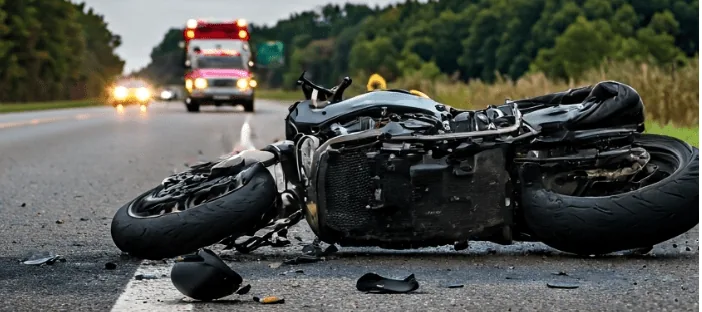
Motorcycle crashes can cause severe injuries. NHTSA’s 2024 data puts motorcyclists at almost 27 times more likely than passenger-car occupants to die per vehicle mile traveled. After a crash, immediate safety, medical assessment, evidence preservation, and careful insurance review all shape what follows.
Motorcycle Crash Fatality Data
NHTSA reported 6,228 motorcyclist deaths nationally in 2024. That national figure does not establish Kentucky’s crash rate or who caused a particular collision. Road conditions, visibility, vehicle movements, and witness evidence must be examined in the individual crash.
A driver turning left across a motorcycle’s path can create a serious collision risk. Whether a driver failed to yield, and whether another person also contributed, depends on the evidence. Kentucky’s comparative-fault law allocates responsibility and does not automatically assign a fixed share to either driver.
Steps After a Motorcycle Crash
Six Steps Protect a Rider’s Health and Evidence After a Crash
Actions at the scene and in the first days after a Kentucky motorcycle crash
Prioritize safety and call 911. Follow the dispatcher’s and law enforcement’s instructions. Avoid unnecessary movement if a head, neck, or spine injury is possible, though immediate danger may require moving to safety. Helmet removal and spinal precautions belong to trained responders unless emergency instructions require otherwise; American Red Cross first-aid guidance explains precautions for suspected head, neck, and spinal injuries. KRS 189.635 governs Kentucky crash reports, including operator reporting duties when a qualifying crash is not investigated by law enforcement, so a copy of the report and any incident number should be kept.
Photograph everything before anything moves. Wide shots of the full scene, close-ups of both vehicles, the road surface, skid marks, debris, and any traffic signs or signals all belong in the record, along with the other driver’s license plate, insurance card, and license and the badge numbers of responding officers.
Collect witness contact information. Independent witnesses, people with no connection to either driver, carry enormous weight with insurers and juries, so names and phone numbers should be collected before they leave the scene.
Get a prompt medical assessment. Serious injuries can have delayed symptoms, and severe or worsening symptoms call for emergency care. An accurate account of the crash and symptoms to the clinician supports treatment, and the medical record documents what was reported and found.
Decline to talk with the other driver’s insurance company. A rider is not required to give a recorded statement to the at-fault driver’s insurer, and those statements are used to minimize the claim. The crash can be reported to the rider’s own insurer, with an attorney contacted before speaking to anyone else.
Preserve damaged gear. The helmet, jacket, gloves, and boots are physical evidence of the severity of the impact and should not be discarded, repaired, or replaced before an attorney can document them.
Early Adjuster Contact
At-fault insurers often contact riders within hours, before they have seen a doctor or talked to anyone, seeking a recorded statement or a quick settlement offer while the rider is still in shock. Early settlements almost always undervalue claims, so no offer or statement should be accepted before the full extent of the injuries is known.
Kentucky Insurance Coverage for Motorcycle Crashes
Motorcycle PIP coverage is optional in Kentucky. KRS 304.39-040 requires motorcycle insurers to make basic and added reparation benefits, UM, and UIM options available for purchase. An operator or passenger generally cannot collect basic reparation benefits for a motorcycle injury unless that coverage was purchased for the motorcycle or by the injured individual.
The motorcycle policy and any other potentially applicable coverage need review. Optional PIP, MedPay, health insurance, a liability claim, or UM and UIM benefits may apply, depending on what was purchased and the facts. These sources have different requirements and limits, and no single payment sequence fits every motorcycle crash.
Disputed Lane Maneuvers
A disputed lane maneuver requires evidence: photographs, video, witness accounts, and the crash report. An insurer’s assertion that a rider was lane splitting does not itself establish fault. The applicable traffic rules and each person’s contribution must be evaluated under Kentucky law.
Kentucky Helmet Law
Kentucky does not require every adult rider to wear a helmet. KRS 189.285(3) requires protective headgear for riders and passengers under 21, motorcycle permit holders who are operating, and operators licensed for less than one year. Whether helmet evidence affects a particular injury claim depends on the facts, the medical evidence, and the applicable law.
Common Motorcycle Crash Injuries
Motorcycle crash injuries are frequently severe and long-lasting, because riders have no metal cage, no airbags, and no crumple zones. The injuries most commonly seen in these cases include:
- Road rash from friction with pavement, which can cause permanent scarring and nerve damage even through gear
- Traumatic brain injury, including concussions in helmeted riders from the force of impact
- Spinal cord injuries, including fractures and disc injuries from impact or ejection
- Broken bones, most often wrists, arms, collarbones, and legs as riders brace for impact
- Internal organ damage from handlebar impact or ground contact
- Psychological injuries, including PTSD and anxiety after severe motorcycle crashes
These injuries often require months or years of treatment. A damages calculation has to document the full scope of future medical costs, lost earning capacity, and pain and suffering, beyond the immediate emergency room bill, which is why medical professionals who can testify to long-term impact carry weight early in a case.
Evidence in a Motorcycle Crash Claim
Motorcycle crash cases require evidence beyond the police report, including:
- Traffic and business surveillance footage, whose retention period depends on the system and operator
- Cell phone records of the at-fault driver if distracted driving is suspected
- Crash reconstruction analysis for disputed liability situations
- Medical records linking injuries to the crash mechanics
- Wage loss documentation and future earning capacity analysis
- Prompt preservation requests and any court relief needed to protect relevant evidence
The overview of Kentucky motorcycle accident claims covers coverage issues, helmet law, and comparative fault. When a crash happens on one of Louisville’s most dangerous roads, the location itself can carry weight, because some corridors have documented hazard patterns that bear on liability beyond driver error.
Ready to Take Action on Your Injury Claim?
After a serious injury, medical bills pile up while the insurance company looks for ways to pay you less. Most law firms take their cut first and leave you with whatever is left. Sam Aguiar Injury Lawyers does things differently. With our exclusive Bigger Share Guarantee®, you always get more. Every client gets a dedicated three-person team: an attorney, a case manager, and a legal assistant. We never raise our fee rate if we have to go to court, and you pay $0 Out-Of-Pocket Forever.
Frequently Asked Questions
1Does Kentucky’s no-fault PIP coverage apply to motorcycle crashes?+
2What if the at-fault driver says I was lane splitting?+
3Do I have to wear a helmet in Kentucky?+
4How long do I have to file a motorcycle injury lawsuit in Kentucky?+
5What if I wasn’t wearing a helmet at the time of the crash?+
Latest Articles
Kentucky Diminished Value Claims
Kentucky drivers may pursue a repaired vehicle’s leftover market loss from the at-fault driver as part of a.
FMCSA Revoked ELDs: Fleet Compliance and Enforcement Deadlines
FMCSA removed five electronic logging devices from the registered list on August 6, 2026, and set an October.

FMCSA English Proficiency Rule and OOS Enforcement
FMCSA English Proficiency Rule Sam Aguiar Injury Lawyers August 11, 2026 7 minute read On This Page.