

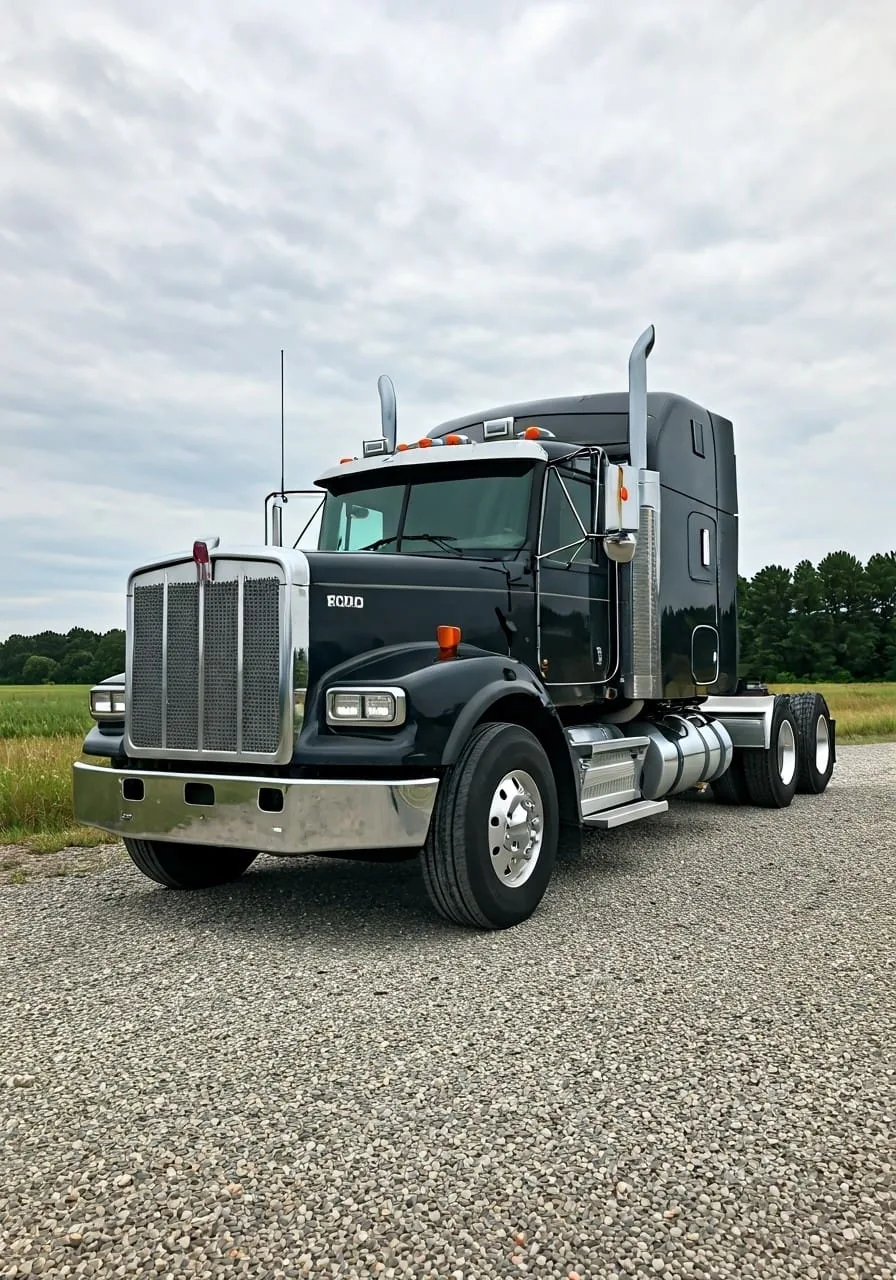
Bobtail Truck Accident Lawyers
A semi without its trailer handles nothing like a loaded truck — and the insurance coverage is just as unpredictable. Our dedicated trucking team knows how to untangle both.
A bobtail truck is a semi-tractor operating without a trailer — typically seen when a driver is returning to a terminal, repositioning between loads, or taking the rig in for service. According to the FMCSA’s large truck crash data, bobtail trucks account for approximately 5% of all large truck crashes, causing thousands of injuries annually. Despite being lighter, bobtails are actually more dangerous in many conditions: weight concentrates on the front axle, rear traction is dramatically reduced, and stopping distances increase significantly. Insurance coverage for bobtail crashes is notoriously complicated — with gaps between policies that insurers exploit aggressively.
Why Bobtail Trucks Are More Dangerous Than You’d Expect
Most people assume a semi without a trailer would be safer — less weight, no cargo risk. The physics tell a different story.
A loaded 80,000-pound semi distributes its weight across 18 wheels and a long wheelbase. When the trailer is removed, the weight drops to roughly 25,000–35,000 pounds and concentrates on the front axle and two rear drive axles. The rear axles — now carrying very little weight — lose traction dramatically. Here’s what that means on the road:
- Reduced rear traction — the drive axles can spin out on wet, icy, or loose surfaces with minimal provocation
- Extended stopping distances — with little weight over the rear axle, ABS brakes have less to work with
- Jackknife risk — in sudden braking, the cab can pivot sideways even without the leverage of a trailer
- Crosswind instability — with no trailer mass to stabilize the rear, strong winds can push the cab laterally
- Uneven brake pull — brake systems calibrated for loaded operation may apply unevenly when running empty
Kentucky weather compounds these risks. Rain on I-65, black ice on I-64, or loose gravel on rural roads creates conditions where a bobtail driver with improper brake adjustment can lose control with little warning.
(KSP Collision Facts)
When Bobtail Operation Happens — and Who’s Liable
Understanding the operational context of bobtail operation matters because it directly shapes who is responsible for the crash and which insurance applies.
The Three Most Common Bobtail Scenarios
- Returning to terminal after delivery — Driver drops the trailer at the destination and drives the tractor back. Whether the carrier’s policy covers this trip depends on the lease agreement.
- Repositioning to pick up a new load — Driver moves the tractor to pick up a loaded trailer. May or may not constitute “for-hire” commercial operation depending on dispatch records.
- Personal use or maintenance runs — Driver takes the tractor for personal reasons or to a repair facility. Most carrier policies explicitly exclude this; the driver’s personal bobtail insurance — if any — is the only coverage.
Liability typically falls on one or more of these parties:
- The truck driver — for negligent operation, speeding, fatigue, or impairment
- The carrier — for dispatch practices, maintenance failures, improper brake adjustment, or negligent oversight
- A third-party maintenance contractor — if the mechanical failure traces to a specific repair
- A parts manufacturer — if a defective component contributed
The Insurance Gap Problem — and How Carriers Exploit It
This is where bobtail cases get complicated — and where injured victims frequently lose money without representation that understands trucking insurance.
Bobtail Insurance vs. Non-Trucking Liability — What’s the Difference?
These two terms are often used interchangeably but they’re not the same. Bobtail insurance covers the tractor without a trailer in any context. Non-trucking liability (NTL) covers the tractor only for personal use outside the carrier’s authority. If the driver was on a trip related to the carrier’s business — even without a trailer — the NTL policy may not apply.
Most carrier commercial auto policies include exclusions for bobtail operation, on the theory that once the trailer is dropped, the driver is no longer operating “for hire.” Carriers use this exclusion aggressively to deny coverage even when the driver was clearly returning from a delivery on their behalf.
What Our Team Investigates in Bobtail Cases
- The full lease agreement between the driver and carrier
- GPS and ELD records showing the driver’s exact location and purpose at the time of the crash
- Dispatch records establishing whether the trip was work-related or personal
- The carrier’s FMCSA-filed MCS-90 endorsement and financial responsibility filings
- All applicable insurance policies — primary commercial, bobtail/NTL, and any umbrella layers
- Maintenance records for the specific tractor involved
How We Handle Bobtail Truck Accident Cases
Every client at Sam Aguiar Injury Lawyers gets a dedicated team of three: a top-rated attorney, a highly experienced case manager, and a dedicated legal assistant. From the first call, your team moves immediately to protect your case:
-
Send preservation demands immediately
Written demands to the carrier, driver, broker, and FMS platform to secure ELD logs, GPS data, dashcam footage, maintenance records, and lease documents before they’re overwritten.
-
Determine the correct insurance landscape
Identify every applicable policy, every exclusion clause, and every avenue for coverage — including the MCS-90 endorsement that insurers don’t volunteer.
-
Build the negligence case against all liable parties
Driver, carrier, and any maintenance contractor — we pursue the full scope of liability, not just the most obvious defendant.
-
Take it to trial if necessary
With 40+ Seven-Figure Results Since 2020, insurance companies know we’re prepared to go all the way. See our truck crash aftermath page for what to expect.
With our exclusive Bigger Share Guarantee®, you always get more. $0 Out-Of-Pocket Forever. Get back to living your best life while we do the rest.
Frequently Asked Questions
What exactly is a bobtail truck?
A bobtail truck is a semi-tractor operating without a trailer attached. The name comes from the shortened appearance compared to a full tractor-trailer combination. Bobtailing happens most often when a driver is returning to a terminal after delivering a load, repositioning to pick up a new trailer, or taking the truck for maintenance.
Why are bobtail trucks more dangerous than loaded semis?
Without a trailer, the truck’s weight concentrates on the front axle and two rear drive axles, leaving the rear with very little downward force. This reduces rear-axle traction dramatically. The truck takes longer to stop, is more susceptible to jackknifing during hard braking, and can drift unpredictably in crosswinds or on slick surfaces. Brakes calibrated for heavy loads may pull unevenly when running empty.
Who pays if a bobtail truck hits me?
It depends on several factors — whether the driver was operating under the carrier’s authority at the time, the specific terms of any lease agreement, and which insurance policies are in force. Carriers frequently argue their policy doesn’t cover bobtail operation, while the driver’s bobtail insurer argues the carrier should pay first. Our team investigates the full insurance picture and holds all responsible parties accountable.
Does the carrier’s insurance cover bobtail operation?
Not always. Many commercial trucking policies include exclusions for bobtail operation outside of active cargo hauls. However, if the driver was returning from a delivery or repositioning on the carrier’s behalf, those exclusions may not hold up. The carrier’s FMCSA-required MCS-90 endorsement provides a baseline of protection regardless of policy technicalities.
What evidence matters most in a bobtail accident case?
The most critical evidence includes: ELD and GPS records showing the driver’s route, hours, and purpose at the time of the crash; lease agreements between the driver and carrier; maintenance records for the tractor’s brakes and tires; dashcam footage; and all applicable insurance policies. Acting quickly to preserve this evidence is essential — many records overwrite within days.
Start Your Case Review
Fill out the form and our team will reach out to discuss your situation.