

Driverless Car Accident Cases
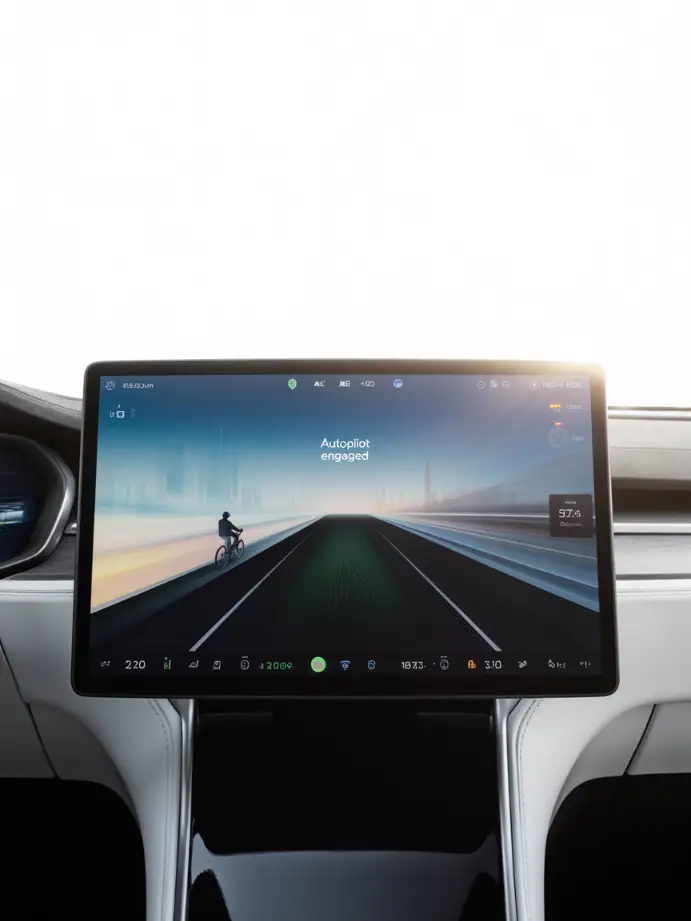
Driverless Vehicle Laws and Regulations
For a century, American vehicle safety standards assumed a person was operating the car. Steering wheels, pedals, mirrors, and warning systems all exist because a human needs them. That assumption is now being unwound. Jonathan Morrison, administrator of the National Highway Traffic Safety Administration, put the logic plainly in a July 2026 interview: “If you’re developing a vehicle that is designed never to be driven by a human operator, it doesn’t make any sense to require manual controls.”
There is a coherent argument there. A vehicle with no driver’s seat does not benefit from a steering wheel. But the brake pedal change applies only to vehicles designed to operate exclusively without a human driver, leaving existing rules unchanged for every other car on the road. That is the practical reality for the next decade of American driving: purpose-built driverless vehicles sharing interstates and city streets with ordinary cars driven by ordinary people. Two very different classes of vehicle, built to two different rulebooks, in the same lanes.
The commercial pressure behind this is significant. The industry is racing toward robotaxi deployment, including Tesla’s Cybercab, a two-seat vehicle built without a steering wheel or foot pedals, alongside Amazon’s Zoox and Alphabet’s Waymo. When the economics favor rapid deployment and the rules are being relaxed at the same time, the gap between what the technology can do and what the law requires of it tends to widen before it narrows.
Who Pays After a Driverless Car Accident
In an ordinary collision, the path is familiar. One driver made a mistake, that driver’s insurance company evaluates the case, and the dispute is usually about degree and dollars. Remove the driver and the structure changes. There may be no negligent operator at all. Instead the question becomes whether the vehicle’s software, sensors, or design performed as they should have, and that points toward the manufacturer, the software developer, the fleet operator, and their commercial insurers rather than a neighbor’s personal auto policy.
That shift has real consequences for an injured person. Corporate defendants carry far larger policies, but they also bring in-house counsel, retained engineering consultants, and control over the single most important category of evidence: the vehicle’s own data. A modern automated vehicle records what its cameras saw, what its software concluded, and what it did in response. That record is the case. It is also held by the company being blamed.
Most states apportion responsibility among the parties at fault, so a driverless car accident can also involve a human driver whose conduct contributed, a road condition, or a maintenance failure by whoever services the fleet. More potential defendants is not automatically better for an injured person. It means more parties pointing at each other, longer timelines, and more places for a case to stall. The approach that applies to liability when an autonomous truck causes a crash applies here too: identify every responsible party early, and move on the data before it becomes convenient for someone to lose it.
Tesla Full Self-Driving Case Evidence
Tesla settled a lawsuit over a fatal crash involving its Full Self-Driving system, with the settlement reported on July 1, 2026. Terms were not disclosed. In 2023, a 71-year-old woman stepped out of her vehicle on an Arizona highway to direct traffic around cars that had already crashed in blinding sun glare. A Tesla Model Y operating on the company’s Full Self-Driving system struck her at high speed. Her death was the first known pedestrian fatality linked to that automation technology.
The regulatory record behind that case is the instructive part. Federal investigators opened a defect investigation in 2024 and escalated it to an engineering analysis, raising concerns that the system could fail to detect or warn the driver in degraded visibility such as sun glare, dust, or fog. In the crashes they reviewed, the system “did not detect common roadway conditions that impaired camera visibility” until immediately before a crash, and in each of those crashes it “lost track of or never detected a lead vehicle in its path.”
This describes the sort of failure an injured person would otherwise have no way to prove. Nobody standing at the roadside can tell you whether a camera-based system registered a degraded visual state. That fact lives in engineering data and in a federal investigative file. It surfaced because a regulator had the authority to demand answers and a family pursued a case. Absent both, the crash would have looked like an unavoidable accident.
It is also worth noting what a quiet settlement accomplishes. A resolution without disclosed terms ends the matter for the family, and it also keeps the underlying record from being tested in open court. That is a rational choice for everyone involved, and it is one reason the public picture of automated-vehicle safety builds slowly.
Driverless Technology Restraints
Detection problems are not limited to weather and glare. On the same day as the steering wheel comments, federal regulators told automated-driving companies they must address their vehicles’ interference with emergency vehicles. Anyone who has pulled over for an ambulance understands why this matters. Recognizing flashing lights, sirens, and an officer waving traffic through an intersection requires reading a scene, not just detecting an object.
These edge cases matter disproportionately in injury cases because they are where serious crashes happen. Routine highway driving in clear conditions is the easy part. Sun glare at rush hour, a stopped vehicle in a lane, a first responder on foot, an unusual work zone: these are the moments that produce catastrophic injuries, and they are precisely the moments the federal record suggests these systems have struggled with.
Current State of Cities Piloting Driverless Taxis
Purpose-built robotaxis are still concentrated in a handful of metro areas. Automated driving features are not. Millions of vehicles on the road today run partial automation systems that steer, brake, and accelerate under certain conditions, and crashes involving those systems raise the same evidentiary questions on a smaller scale. If you were hit by a vehicle operating under any form of automation, the case is not simply about what the other driver did. It is about what the system did, what it saw, and what it failed to see.
Three practical points follow. First, the vehicle data is time-sensitive and it is not in your possession. Preserving it requires prompt, formal steps directed at the right corporate parties. Second, the insurance picture is layered. A commercial fleet or manufacturer may carry coverage far beyond a personal policy, but reaching it means proving a product or software failure, not just careless driving. Third, the other side’s early framing will often be that the human nearby was at fault, because that is the cheapest explanation available. The federal findings above are a reminder that the cheapest explanation is not always the accurate one.
None of this changes the basics of protecting a case. Get medical care and stay consistent with it. Keep your own record of what happened. Understand that the first offer reflects the insurer’s view of its exposure, not the full picture of your injury. Those fundamentals matter more, not less, when the vehicle that hit you was making its own decisions. They are the same fundamentals that shape how insurance adjusters determine fault in a conventional collision, and they interact with how claims-valuation software weighs your representation.
Hit by a Driverless or Automated Vehicle?
Sam Aguiar Injury Lawyers handles motor vehicle crashes, including cases involving commercial fleets and vehicle technology, and we build files to withstand the other side’s engineering and data defenses. With our Bigger Share Guarantee®, you always get more, and every case runs on $0 Out-Of-Pocket Forever. Real Clients. Real Results. You focus on getting better. We handle everything else.
Frequently Asked Questions
1Are driverless cars legal?+
2Who is responsible if a car with no driver hits me?+
3What evidence would be key in a driverless car accident?+
4Do driverless car systems struggle in bad visibility?+
5What about self-driving cars and emergency vehicles?+
6Does my own auto insurance still apply?+
7Should I settle quickly if a company offers money fast?+
Latest Articles
Court Blocks Federal Demand for 17 Million CDLIS Driver Records
A federal judge in Virginia has blocked a federal demand for the Commercial Driver’s License Information System records of about 17 million commercial license holders.
Kentucky Phantom Vehicle Accidents and the Physical Contact Requirement
A phantom vehicle causes an accident and leaves without being identified, sometimes without ever touching the injured driver’s car.

Deer Collisions in Kentucky Fall Under Comprehensive Coverage
Deer collision insurance in Kentucky is comprehensive coverage, not collision coverage.