

Kentucky Phantom Vehicle Accidents and the Physical Contact Requirement
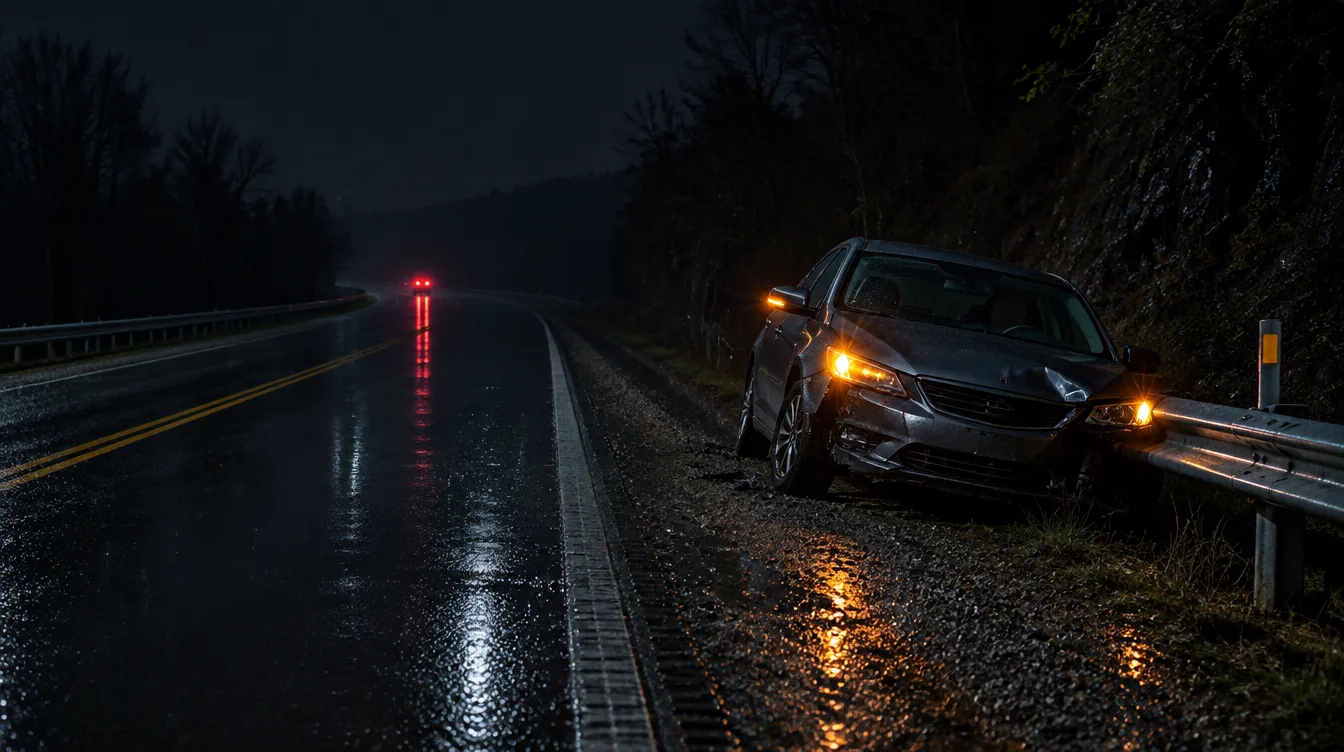
A phantom vehicle causes an accident and leaves without being identified, sometimes without ever touching the injured driver’s car. In a Kentucky phantom vehicle accident, the driver’s own uninsured motorist coverage responds only if the policy’s hit-and-run clause is met. The Kentucky Supreme Court has enforced that clause’s requirement of actual, direct, physical contact between the hit-and-run vehicle itself and the insured’s vehicle.
Hit-and-Run Coverage Under Kentucky Law
Kentucky requires insurers to offer uninsured motorist coverage, and a named insured can reject it in writing under KRS 304.20-020. In Burton v. Farm Bureau Insurance Co., 116 S.W.3d 475 (Ky. 2003), the Kentucky Supreme Court held that the statute does not require coverage for a hit-and-run vehicle and that insurers add it by contract, with conditions of their own.
Because the coverage is contractual, the policy’s hit-and-run definition decides whether an unidentified vehicle qualifies.
When more than one policy carries uninsured motorist coverage, stacking rules decide whether the limits combine. If the driver is later identified, the case is no longer a phantom vehicle case and can proceed against that driver.
Physical Contact Requirement
In Masler v. State Farm Mutual Automobile Insurance Co., 894 S.W.2d 633 (Ky. 1995), a rock from a passing unidentified truck came through the driver’s windshield and injured him, and the parties agreed the truck itself never touched his car. The court held there was no coverage, because the clause required the hit-and-run vehicle itself to strike the insured or the insured’s vehicle.
The court’s stated reason is fraud prevention. The physical contact requirement protects insurers from claims in which the insured’s own negligence is blamed on an unidentified vehicle that left the scene.
In Burton, the driver swerved to avoid an unidentified red car and went into a ditch, with no contact between the vehicles. An independent eyewitness corroborated the account, and the court still enforced the requirement, reasoning that a contract provision is either against public policy or it is not, whatever the facts of a particular case.
A later decision addressed a different fact pattern. In Dowell v. Safe Auto Insurance Co., 208 S.W.3d 872 (Ky. 2006), an unidentified vehicle rear-ended the driver, so contact was not in doubt. The court held that the policy’s definition of an uninsured motor vehicle, which reached a vehicle to which no liability policy applied, covered the unidentified driver. The court distinguished Burton because that case involved express hit-and-run coverage and was decided on the lack of physical contact.
Chain-Reaction Contact
Contact can be indirect when the unidentified vehicle sets a chain reaction in motion. In Shelter Mutual Insurance Co. v. Arnold, 169 S.W.3d 855 (Ky. 2005), an unidentified vehicle struck another car and propelled it into the insured’s car. The court held that this indirect hit satisfied the policy’s hit requirement, even though the unidentified vehicle never touched the insured’s car.
In State Farm Mutual Automobile Insurance Co. v. Baldwin, 373 S.W.3d 424 (Ky. 2012), the court held that the requirement is met in two situations. The unidentified vehicle or an integral part of it touches the insured’s vehicle, or the unidentified vehicle exerts force on an intermediate object that then hits the insured’s vehicle. A tarpaulin and a piece of ice that came off unidentified vehicles were not integral parts of them, so neither accident qualified.
Evidence of Contact
Because the policy question is contact, the strongest evidence shows the point of contact: paint transfer and the damage pattern on the insured’s vehicle, debris at the scene, and video from the road. Consumer dashcams write over their own footage, and business and traffic camera systems can also record over old video on a short cycle, so video is the first record to locate.
Where an intermediate vehicle was involved, the sequence is the evidence: the unidentified vehicle must have struck that vehicle, which then struck the insured’s car. Where no vehicle touched the insured’s car, the policy’s hit-and-run definition is the document that decides whether coverage exists, because Kentucky treats that coverage as a contract term.
| Citation | Authority | Area |
|---|---|---|
| CitationKRS 304.20-020 | Authority Uninsured Vehicle Coverage Requires uninsured motorist coverage to be offered, with written rejection by the named insured. | AreaStatute |
| CitationBurton | Authority 116 S.W.3d 475 (Ky. 2003) Hit-and-run coverage is contractual. The contact condition was enforced despite an eyewitness. | AreaCoverage |
| CitationMasler | Authority 894 S.W.2d 633 (Ky. 1995) A rock thrown from a passing truck is not contact by the truck itself. | AreaContact |
| CitationArnold | Authority 169 S.W.3d 855 (Ky. 2005) A chain-reaction hit through an intermediate vehicle satisfies the hit requirement. | AreaContact |
| CitationBaldwin | Authority 373 S.W.3d 424 (Ky. 2012) Contact by the vehicle, an integral part, or force through an intermediate object. A tarpaulin and ice did not qualify. | AreaContact |
| CitationDowell | Authority 208 S.W.3d 872 (Ky. 2006) The policy covered an unidentified driver who rear-ended the insured. Contact was undisputed. | AreaCoverage |
Sources opened and read 2026-10-09: KRS 304.20-020 (id=45815); the five Kentucky Supreme Court opinions above, read in full text.
Phantom Vehicle Case Review
Phantom vehicle cases depend on evidence of contact and on the exact language of the policy. A free case review from Sam Aguiar Injury Lawyers starts with the policy’s hit-and-run definition and the records from the scene.
Frequently Asked Questions
Does uninsured motorist coverage apply to a phantom vehicle in Kentucky?
Is a witness enough to prove a phantom vehicle accident in Kentucky?
Does a chain-reaction accident count as physical contact?
Does debris from another vehicle count as physical contact?
Latest Articles
Dashcam Evidence in a Kentucky Car Accident Case
Is dashcam evidence admissible after a Kentucky car accident? Courts accept video once it is authenticated, but unsaved clips can be overwritten fast.
Car Accident Footage Sources and Preservation
Where crash footage comes from, how fast it disappears, how preservation letters and open records requests work, and what courts do when it is destroyed.
Stacking Uninsured And Underinsured Coverage In Kentucky
Stacking UM/UIM coverage can double or triple the money available for your injury case in Kentucky. Call (502) 888-8888.