Kentucky’s Hands-Free Driving Law: What Drivers Need to Know
On This Page
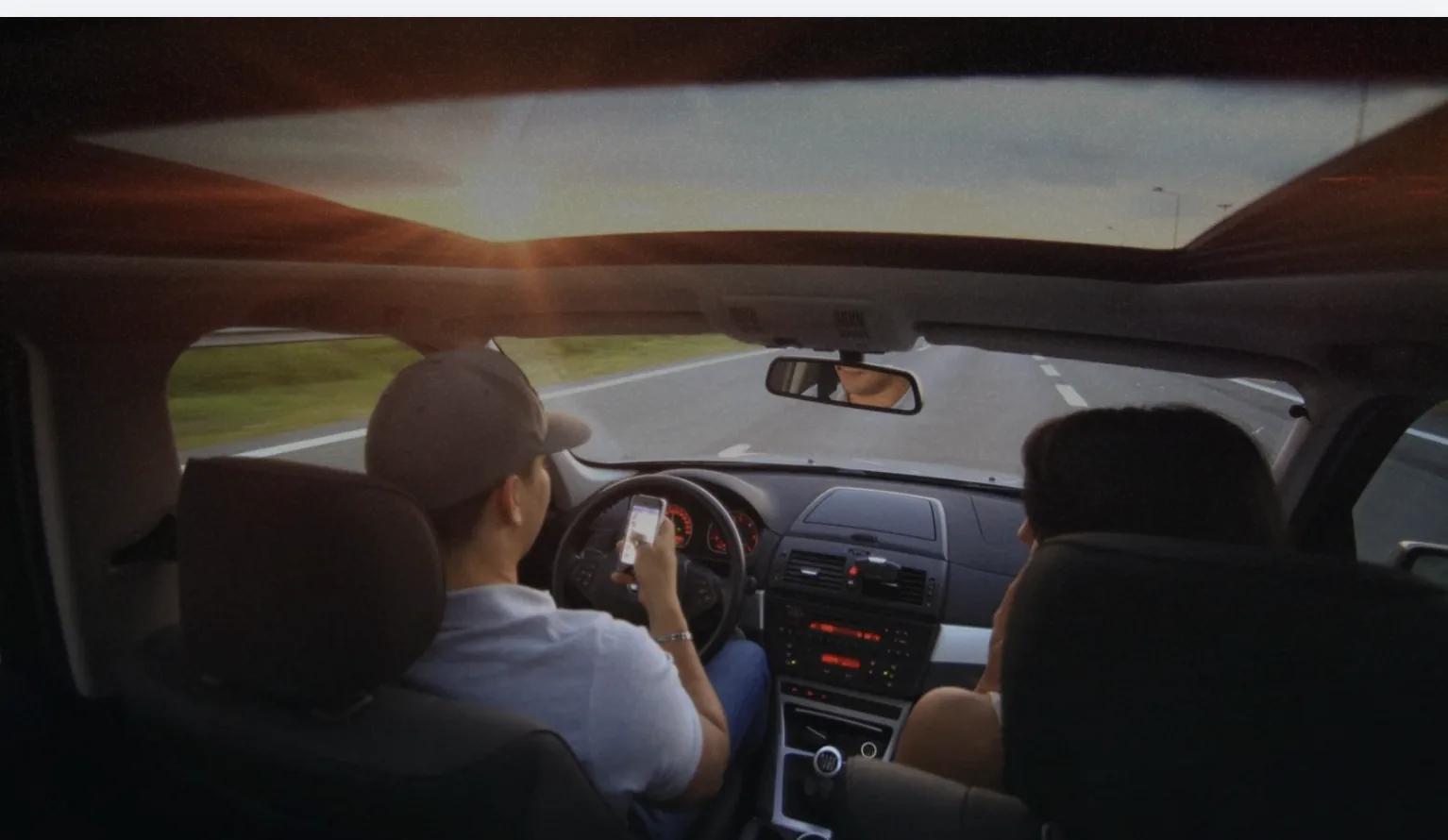
As of May 2026, Kentucky does not have a comprehensive hands-free driving law. The state bans texting while driving under KRS 189.292, but handheld phone calls and other handheld device use remain legal for adult drivers. Senate Bill 28, the “Phone-Down Kentucky Act,” passed the Kentucky Senate 31–7 in January 2026 and was referred to the House Transportation Committee on March 9, 2026, where it stalled before the 2026 Regular Session ended in April. The bill did not become law. Drivers remain liable for distracted driving under existing statutes, and evidence of phone use is a significant factor in crash injury claims.
Kentucky’s Current Texting Ban
Kentucky has banned texting while driving since 2010. KRS 189.292, enacted through House Bill 415 and amended in 2011, makes it illegal for any driver to write, send, or read a text-based communication on a personal communication device while the vehicle is in motion. The prohibition covers text messages, instant messages, and email. Holding a phone to your ear for a voice call, however, remains legal for drivers over 18.
A separate statute, KRS 189.294, applies a stricter standard to drivers under age 18: no personal communication device use of any kind, including calls and GPS. Penalties under the adult texting ban carry a $25 fine for a first offense and $50 for each subsequent offense, plus three points on the driver’s record, according to the Kentucky Legislative Research Commission.
The texting statute includes specific exceptions: using a GPS feature, operating a navigation system built into the vehicle, entering a phone number to make a call, use by emergency vehicle operators on duty, and texting to report a crash or summon medical help. Outside of those carve-outs, any manual text-based interaction with a device while the vehicle is moving is a violation.
By the Numbers
Kentucky’s Texting Penalty vs. a Comprehensive Ban
Under the current texting ban, a first offense carries a $25 fine and three license points. Senate Bill 28, which died in the 2026 session, proposed raising the fine to $100 per violation while eliminating license points. Thirty-three states, D.C., Puerto Rico, Guam, and two U.S. territories have already enacted full handheld phone bans for all drivers, according to the Governors Highway Safety Association.
The Phone-Down Kentucky Act: SB 28
The most recent attempt to upgrade Kentucky’s distracted driving law was Senate Bill 28, formally titled the “Phone-Down Kentucky Act.” Sponsored by Senator Jimmy Higdon (R-Lebanon), chair of the Senate Transportation Committee, SB 28 cleared the Senate Transportation Committee unanimously on January 14, 2026, then passed the full Senate 31–7 on January 20, 2026, according to the Kentucky Legislative Research Commission bill record.
The bill was received in the House on January 21, 2026, and referred to the House Transportation Committee on March 9, 2026. That was its final recorded action. The 2026 Regular Session ended in mid-April without the House acting on the bill. SB 28 did not pass and does not become law in the 2026 session. If legislators want to revive it, the bill would need to be refiled in 2027.
Had SB 28 become law, it would have replaced KRS 189.292’s text-only restriction with a broader rule: no driver could hold a mobile electronic device in the hand while the vehicle is in motion, regardless of what they were doing on it. That means scrolling, video calls, holding the phone to the ear during a call, or simply gripping the device would all become violations, not just typing a text. The bill preserved exceptions for hands-free GPS use, emergency calls, two-way radios, and device use while lawfully parked or stopped.
Status Update
Where SB 28 Stands as of May 2026
SB 28 died in the Kentucky House Transportation Committee when the 2026 Regular Session ended without a floor vote. The bill’s last recorded action was a committee referral on March 9, 2026. Kentucky’s texting-only ban under KRS 189.292 remains the current law. Track future legislation on the Legislative Research Commission website.
What “Hands-Free” Actually Means
The phrase “hands-free driving” refers to operating a vehicle without holding or physically manipulating a mobile device. Researchers and safety agencies identify three distinct types of distraction, and handheld phone use triggers all three simultaneously, according to the National Highway Traffic Safety Administration:
- Visual distraction: Eyes move off the road. Reading or typing a text takes your eyes off the road for about five seconds on average. At 55 mph, that is the length of an entire football field driven with no visual input.
- Manual distraction: Hands leave the wheel. Holding a phone, dialing, or scrolling removes at least one hand from vehicle control.
- Cognitive distraction: Mental focus shifts away from driving. Even a voice call occupies working memory in ways that impair hazard recognition and reaction time.
Hands-free technology, such as Bluetooth calling through a vehicle’s built-in system, eliminates the visual and manual components but does not eliminate cognitive distraction entirely. The research consensus is that hands-free reduces risk compared to handheld, but the safest option remains completing calls before moving the vehicle.
Under any future Kentucky hands-free law modeled on SB 28, a driver could still talk using a Bluetooth earpiece or vehicle system, get turn-by-turn navigation through a mounted device, use voice commands to send messages, and make emergency calls. What would change is the ability to hold the device itself, scroll a feed, or manually dial while moving.
Distracted Driving in Kentucky: The Numbers
The gap in Kentucky’s law has real consequences on the road. According to the Kentucky Transportation Cabinet’s 2024 Collision Facts Report, cell phone use was recorded as a contributing factor in 925 collisions in Kentucky in 2024, including 6 fatal crashes. Driver inattention, a broader category that includes all forms of distraction, was a factor in 42,363 collisions and 123 fatal crashes statewide that same year.
Those numbers almost certainly undercount the actual problem. Officers can record cell phone involvement only when they witness it directly or when evidence is gathered at the scene. Many distracted-driving crashes are logged simply as “inattention” without a specific sub-cause identified.
National Picture
3,208 People Killed Nationally in Distracted Driving Crashes in 2024
According to the National Highway Traffic Safety Administration, distracted driving claimed 3,208 lives and injured an estimated 315,167 people across the U.S. in 2024. Eight percent of all fatal crashes and an estimated 13 percent of all injury crashes involved a distracted driver. Cellphone use specifically was identified in 404 fatal crashes, resulting in 437 deaths, per the NHTSA Distracted Driving in 2024 report.
Kentucky recorded 707 total traffic fatalities in 2024, a 5 percent decrease from the prior year, according to the KYTC Collision Facts 2024 report. Even with that improvement, the continued absence of a comprehensive handheld ban keeps Kentucky outside the mainstream of state law, with 33 states already prohibiting all handheld cellphone use by all drivers, per the Governors Highway Safety Association.
“Sam Aguiar’s team was absolutely incredible. They kept me informed every step of the way and got me a result I never expected. I cannot recommend them enough.”
Jeremy P.
If a Distracted Driver Hit You
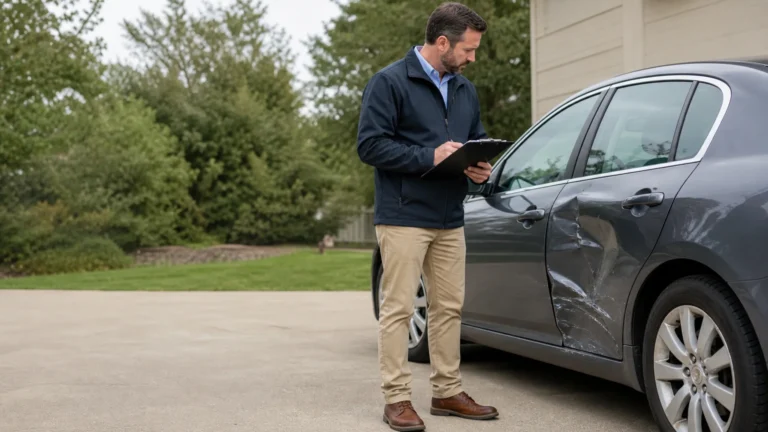
Kentucky’s current law may be limited, but that does not mean a driver who chose to scroll Instagram or hold a phone to their ear while moving gets a pass in civil court. Distracted driving is negligence regardless of whether a statute specifically bans the precise behavior involved. A driver owes a duty of ordinary care to everyone sharing the road, and choosing to divide their attention between a screen and traffic is a breach of that duty.
When a crash involves potential phone use, evidence moves fast. Here is what matters for a claim:
- Phone records: Carrier records showing call logs, text timestamps, or data activity at the time of the crash can establish that the driver was actively using their device. These records are obtained through the civil discovery process or a formal legal hold letter sent promptly after a crash.
- Police report notation: If the responding officer observed or suspected phone use and noted it in the report, that document becomes part of the evidentiary record for your claim.
- Witness accounts: Bystanders or other drivers who saw the at-fault driver holding a phone are valuable. Get names and contact information at the scene whenever possible.
- Dashcam or surveillance footage: Intersection cameras, business security systems, and dashcam footage from nearby vehicles may capture the driver’s behavior in the seconds before impact.
- Vehicle data: Newer vehicles capture speed, braking, and steering data through event data recorders (EDRs). That data can corroborate or contradict the other driver’s account of the crash.
Insurance companies evaluate distracted driving claims closely. An adjuster who can point to a gap in Kentucky’s handheld ban may try to argue the at-fault driver was not breaking any law, which is a common tactic to minimize liability. The correct response is that the civil standard of care is independent of whether a criminal statute was violated. Proving negligence does not require a broken statute.
At Sam Aguiar Injury Lawyers, our team goes to work immediately to preserve this evidence. We represent people injured by distracted drivers across Kentucky, and we know how quickly critical phone and surveillance records can disappear. The earlier a legal hold is placed on that evidence, the stronger your position.
Frequently Asked Questions
Is Kentucky a hands-free state in 2026?
No. As of May 2026, Kentucky does not have a comprehensive hands-free driving law. The state bans texting while driving under KRS 189.292, but adult drivers may legally hold a phone to their ear for voice calls. Senate Bill 28, which would have changed that, passed the Senate but stalled in the House Transportation Committee before the 2026 session ended.
What does Kentucky’s current texting law actually prohibit?
Under KRS 189.292, it is illegal for any driver to write, send, or read text-based messages on a personal communication device while the vehicle is in motion. The ban covers texts, instant messages, and email, but does not cover handheld calls or other non-text device use for adult drivers. A first offense carries a $25 fine and three license points.
What was Kentucky Senate Bill 28 and why did it fail?
Senate Bill 28, called the Phone-Down Kentucky Act, would have prohibited holding any mobile electronic device while operating a vehicle. Sponsored by Sen. Jimmy Higdon, it passed the Senate 31–7 in January 2026 and was sent to the House Transportation Committee on March 9, 2026. The 2026 Regular Session ended in April without the House voting on the bill, according to the Legislative Research Commission.
Can a driver be held liable for a crash if Kentucky allows handheld calls?
Yes. Civil liability for distracted driving does not depend on a statute being violated. Drivers have a duty of care to others on the road under Kentucky common law. Choosing to hold a phone while driving can constitute negligence, and phone records, witness testimony, and crash evidence can establish that distraction caused the crash regardless of whether it was technically prohibited by statute.
How do you prove a driver was on their phone during a crash?
Evidence of phone use includes carrier records showing call logs and data activity at the time of impact, police report notations, bystander witness accounts, dashcam or surveillance footage, and event data recorder (EDR) output from the vehicle. A prompt legal hold on phone records is essential because some carriers purge data within weeks. The NHTSA notes that cellphone involvement is often underreported in crash records.
How many people are killed by distracted drivers in the U.S. each year?
According to NHTSA’s Distracted Driving in 2024 report, 3,208 people were killed and an estimated 315,167 were injured in distraction-affected crashes in 2024. Cellphone use specifically contributed to 437 deaths that year. Eight percent of all fatal crashes in the U.S. involved a distracted driver.
Are teen drivers in Kentucky subject to stricter phone rules than adults?
Yes. Under KRS 189.294, drivers under 18 are prohibited from using any personal communication device while driving, including calls, GPS, and any form of texting. The adult texting ban under KRS 189.292 restricts only text-based communication, leaving a significant gap for handheld voice calls that the teen ban does not share.
Get More. Get It Faster.
Get It With Sam Aguiar.
- ✓Bigger Share Guarantee On Every Case
- ✓$0 Out-Of-Pocket Forever
- ✓No Fee Increase If Your Case Goes To Litigation
- ✓Dedicated Three-Person Case Team
- ✓Forbes Best-In-State Recognition
- ✓1,000+ Five-Star Google Reviews