

Fayette County · Central KY
Lexington Rideshare Accident Lawyers
 ★★★★★
Over 1,000 Five-Star Reviews
•
Available 24/7. $0 Out-Of-Pocket Forever.
★★★★★
Over 1,000 Five-Star Reviews
•
Available 24/7. $0 Out-Of-Pocket Forever.

Lexington Rideshare Accident Cases
A crash in an Uber or Lyft around UK campus, Rupp Arena, or Hamburg Pavilion is still a Lexington auto case. The difference is the app log. Whether the driver was off the app, waiting for a request, or carrying a passenger decides which policy pays first.
Sam Aguiar Injury Lawyers handles Lexington rideshare cases from the first call to the final recovery. You focus on getting better. We handle everything else.
Every client gets a three-person case team: an attorney, a case manager, and a legal assistant. Lower caseloads mean your case gets attention instead of sitting in a queue. The firm was founded on October 1, 2010, and serves Lexington and all of Kentucky.
A rideshare case usually starts with a free case review. The firm asks what happened, where it happened, what the app showed, and what injuries came from it. Most cases can be qualified in under 10 minutes, and there is no cost to find out whether the firm can take your case.
- $0 out-of-pocket forever on Lexington rideshare cases
- Most cases qualified in under 10 minutes
- Dedicated three-person case team on every file
- Available 24/7. Hablamos español
- Led in Lexington by Managing Partner Jon Hollan
The coverage tiers in a Kentucky rideshare accident are the same statewide. What a Lexington case adds is local evidence: the app log, the trip record, and camera footage from Fayette County corridors.
Kentucky Auto Coverage That Still Applies
After a Lexington Uber or Lyft crash, the app layer is not the only policy in play. Kentucky auto coverage still sits underneath. The firm reviews every source before a settlement is accepted.
Liability Coverage
Liability coverage pays for injuries and damage caused by the driver who caused the accident. Kentucky requires minimum limits of $25,000 for one person’s injuries, $50,000 for all injuries in one accident, and $25,000 for property damage under KRS 304.39-110. When the rideshare app is off, this is often the first layer.
Uninsured Motorist (UM)
Uninsured motorist coverage (“UM”) protects a person injured by a driver without liability insurance. Kentucky requires insurers to offer it, and a named insured may reject it only in writing under KRS 304.20-020.
Underinsured Motorist (UIM)
Underinsured motorist coverage (“UIM”) applies when the driver who caused the accident has insurance, but the limits are not enough to cover the injuries. Before settling with the at-fault driver’s insurance company, a person pursuing UIM coverage must give written notice to each UIM insurer. The insurer has 30 days to consent or preserve its right to pursue the at-fault driver under KRS 304.39-320.
Stacking UM and UIM
Kentucky courts treat UM and UIM coverages as personal protection bought for the insured. The coverage can follow the insured person, not just the vehicle listed on the policy. That is why UM and UIM stacking in Kentucky can matter after a rideshare crash.
Kentucky sets the minimum for a rideshare company’s pre-trip acceptance liability policy at $50,000 for one person, $100,000 for one incident, and $25,000 for property damage. Once a driver accepts a request, Uber and Lyft each state a higher figure, shown in their sections below. In a Lexington case, the work is proving which period applied on the corridor where the crash happened.
Coverage In Short
- App status at impact decides which corporate layer, if any, is primary.
- Kentucky minimum liability still applies when the app is off: $25k / $50k / $25k under KRS 304.39-110.
- UM must be offered; rejection only in writing (KRS 304.20-020).
- UIM Coots notice: 30-day window under KRS 304.39-320.
- Personal auto, the app layer, and the other driver’s policy can stack in one crash.
Common Lexington Rideshare Case Types
App-Off Crashes
If the driver was not logged in, Uber or Lyft has no coverage duty. The file runs like any other private-vehicle crash on New Circle Road, Nicholasville Road, or a campus side street. Personal liability and UM or UIM carry the case.
Waiting For A Request
Once the driver is logged in and waiting, a contingent corporate layer applies. The app log is the evidence. Late-night waiting around UK campus, Rupp Arena, and Hamburg Pavilion is where these files cluster in Lexington.
Passenger On Board
During an active ride, the company’s commercial policy is the primary layer for third-party injuries. Riders, other motorists, and pedestrians all sit in this period. The trip record has to be preserved before it rolls off the driver’s history.
UK Campus And Event Surges
Rideshare volume spikes when classes let out, when Rupp Arena empties, and when Hamburg Pavilion shops close. Those surges produce the same Fayette cases as any other night, with denser pickup traffic and more stacked policies in one intersection.
Other Motorists Hit By A Rideshare Vehicle
A person who was not in the Uber or Lyft still has a case when a logged-in driver causes the crash. The app status still controls which corporate layer answers. The injured motorist’s own UM or UIM can sit behind that layer.
Stacked-Policy Files
Personal auto, the app’s corporate coverage, and the other driver’s policy can all sit in the same crash. The order is not a negotiation with the first adjuster. It follows the app status at impact, then Kentucky stacking rules.
Damages In A Lexington Rideshare Case
A Lexington rideshare case can recover several categories of damages under Kentucky law. Economic damages cover medical bills, future medical expenses, and lost wages. Non-economic damages cover pain, suffering, emotional distress, and loss of enjoyment of life. Property damage covers vehicle repair or replacement and diminished value.
Kentucky is a choice no-fault state. Basic PIP (basic reparation benefits) pays up to $10,000 for medical expenses, lost wages, and similar out-of-pocket costs regardless of fault.
The case is built on evidence: the app log, medical records, wage records, and bills. A rider or driver who settles early, before the full cost of an injury is known, can leave money on the table.
Why Lexington Chooses Sam Aguiar
With our Bigger Share Guarantee®, you always get more. After medical bills, liens, and costs are paid, you walk away with more money than the lawyer. If your share would be less, the firm cuts its fee.
The evidence is on the record. The firm holds 1,000+ Five-Star Google reviews and a 5/5 rating in Lexington. Sam Aguiar Injury Lawyers has produced 50+ seven- and eight-figure results. Sam Aguiar is one of only two attorneys in Kentucky named to Forbes Best-In-State for personal injury. The firm is a Courier Journal Community Choice selection for Best Personal Injury Lawyer, and Sam has been selected to Super Lawyers for 2023–2027, following Rising Stars selections in 2015 and 2017–2022.
Rideshare Accidents We Handle
Sam Aguiar Injury Lawyers handles Uber and Lyft crashes in Lexington and Fayette County for riders, drivers, and other motorists hit by a logged-in vehicle.
App-off private-vehicle crashes. Waiting-for-request crashes around campus and downtown. Passenger-on-board crashes on I-75, I-64, New Circle Road, and Man o’ War Boulevard. Event-surge pickups at Rupp Arena and Hamburg Pavilion. Uninsured or underinsured files stacked on top of the app layer.
Every one of these starts as a Lexington car accident. App status at impact decides which insurance sits on top.
Where Lexington Rideshare Traffic Peaks
Uber and Lyft volume in Lexington concentrates where people leave events and campus, then merge onto the same corridors that already carry I-75 and I-64 traffic. UK campus, downtown venues, Rupp Arena, and Hamburg Pavilion are the late-night and after-event spikes. Those pickups dump onto New Circle Road, Nicholasville Road, and the interstate ramps within minutes.
Interstate 75 and Interstate 64 still matter in these files. A driver heading to a pickup in Hamburg or dropping a rider near campus uses the same interchanges that compress during rush hour. Lane-change crashes and high-speed rear-end impacts on those ramps are rideshare cases when the app was on, and ordinary auto cases when it was not. The log is what sorts them.
On the surface arterials, Nicholasville Road mixes Fayette Mall traffic with student pickups. Richmond Road and Harrodsburg Road feed the same waiting-period files. The Lexington team treats those streets as evidence: camera coverage, storefront video, and the trip pin, not as a generic statewide rideshare narrative.
Uber Coverage in Lexington
Three periods decide Lexington Uber files, and each sets a different level of Kentucky Uber accident coverage. This office proves which period applied on a Fayette corridor.
App Off
If the driver was not logged in, Uber has no coverage duty and the case runs like any other private-vehicle crash. That is common after a drop-off near campus or downtown, when the driver switches the app off and keeps rolling on New Circle Road.
Waiting For A Request
Once the driver is logged in and waiting, Uber’s liability layer is limited to $50,000 per person and $100,000 per accident for injuries, plus $25,000 for property damage. The app log is what proves this period. Waiting around UK campus, Rupp Arena, and Hamburg Pavilion is where Lexington volume spikes at night and after events.
Passenger On Board
From the moment the driver accepts a request until the ride ends, Uber maintains at least $1,000,000 in coverage for injuries to riders and third parties when the driver is at fault. Riders, other motorists, and pedestrians all sit here. The trip record and GPS pin have to be requested before they age out of the driver’s history.
Personal auto, Uber corporate coverage, and the other driver’s policy can all sit in the same crash. App status at impact decides the order. The app log, the trip record, and nearby camera footage are the first evidence to request.
Lyft Coverage in Lexington
Lyft uses the same three-period structure on Lexington streets, and Kentucky Lyft accident coverage drops to lower limits while the driver waits for a request. This office proves the period with the Lyft log and local evidence.
App Off
If the driver was not logged in, Lyft has no coverage duty and the case runs like any other private-vehicle crash. Personal liability and UM or UIM remain.
Waiting For A Request
Once the driver is in the app with no ride accepted, Lyft’s liability layer is limited to $50,000 per person and $100,000 per accident for bodily injury, plus $25,000 per accident for property damage. The app log is what proves this period. The same campus, Rupp, and Hamburg waiting spots that produce Uber files produce Lyft files on the same nights.
Passenger On Board
From ride acceptance through the ride, Lyft maintains at least $1,000,000 in third-party auto liability coverage in most markets. The trip record, not the first adjuster call, is what sets that period.
Stacked policies work the same way as Uber: personal auto, Lyft corporate coverage, and the other driver’s policy can share one crash. App status decides the order.
Lexington Traffic-Camera Evidence
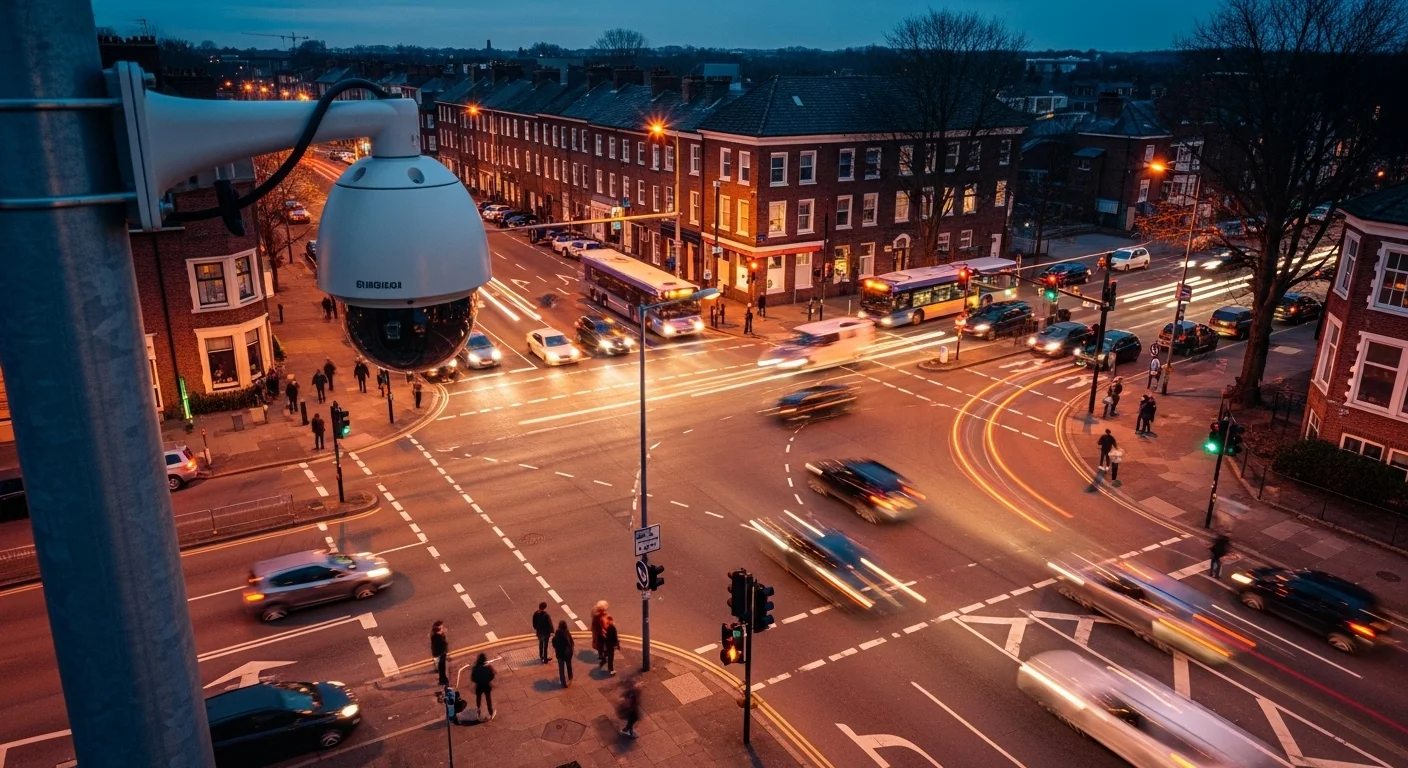
Most fault disputes come down to documentation, and Lexington is one of the better-documented cities in Kentucky. Traffic cameras watch I-75, I-64, New Circle Road, and other major corridors. The firm pulls recordings through statewide DOT and TRIMARC camera databases with archives that reach back about six months.
Roadway evidence disappears fast. Skid marks wash away, signal timing gets recalibrated, and commercial cameras overwrite within days. On-scene photography, vehicle inspections before a body shop starts work, and storefront video from nearby businesses have to be secured before the first adjuster call is over. In rideshare files, the app log belongs on that list.
How A Lexington Rideshare Case Moves
Learning the situation. The three-person case team starts with how the collision changed the client’s life, job, and family, then pulls the app status at impact.
Taking control of the insurance company. Every carrier, including the app’s insurer, goes on formal notice. Adjuster calls, letters, and recorded-statement requests come to the Lexington team, not to the injured person.
Focusing on recovery. Treatment stays with the treating doctors. The legal team tracks records so the crash is documented as the cause of the limitations and the ongoing care.
Building the case. The app log, trip pin, camera footage, treatment records, and wage documents go to the insurer early so the reserve is set against the real file.
Getting the result. The job is every dollar owed under the Bigger Share Guarantee®.
Insurance Adjusters in Fayette County
The first adjuster call usually comes within days. The friendly tone, the recorded statement, and the early check are the same playbook used statewide. Once this office is on the file, those calls stop reaching the injured person. App-status disputes, pre-existing-condition arguments, and low first offers are answered from the Lexington file, not from a recorded statement given in the first week.
Led by Lexington Managing Partner Jon Hollan, the Central Kentucky rideshare team handles scene photographs, vehicle inspections, and meetings with clients who cannot drive after surgery in Lexington.
Serving Lexington and Fayette County
The firm is part of Lexington. The Lexington team serves all of Fayette County, Central Kentucky, and the rest of the state. The team is available 24/7. Hablamos español.
After an accident, the insurance company does not waste time. Neither should you.
Hurt in a Lexington Uber or Lyft Crash?
Hiring the wrong lawyer can impact the rest of your life. At Sam Aguiar Injury Lawyers, we focus on delivering life-changing results. As one of only two attorneys in Kentucky named to the Forbes Best-In-State Top Personal Injury Lawyers list, Sam Aguiar and our legal team have built a reputation on real, verifiable outcomes. With over 1,000 five-star reviews and a 5/5 rating in Lexington, our clients will tell you that we do exactly what we say we will. We do not make you wait or jump through administrative hoops. It usually takes less than 10 minutes for us to qualify your case. With our exclusive Bigger Share Guarantee®, you always leave with more money than we do, even after every medical bill, lien, and case cost is paid. If your share ends up less than ours, we cut our fee. We also never raise our fee percentage, even if your case goes to trial. And you pay $0 out-of-pocket forever. Get more. Get it faster. Get it with Sam Aguiar. Call today for a free case review.
Frequently Asked Questions
1What coverage applies if a Lexington Uber or Lyft driver was waiting for a request?
Waiting is its own app-status period, and the app log is what proves it. Coverage from the app carries lower limits during that period than during a ride. This office uses the log, the trip record, and Lexington corridor evidence to show which period applied at impact.
2What if the driver had the app off when the crash happened?
If the driver was not logged in, Uber or Lyft has no coverage duty and the file runs like any other private-vehicle crash. Personal liability, UM or UIM, and the other driver’s policy are the layers that remain.
3Where do Lexington rideshare crashes cluster?
Volume spikes around UK campus, Rupp Arena, downtown venues, and Hamburg Pavilion, especially late nights and after events. Those pickups also sit on camera-covered routes: I-75, I-64, and New Circle Road.
4Can more than one policy pay after a Lexington Uber or Lyft crash?
Yes. Personal auto, the app’s corporate layer, and the other driver’s policy can all sit in the same crash. App status at impact decides the order. The Lexington team preserves the log before the company overwrites it.
5How do you get traffic-camera footage of a Lexington rideshare crash?
Often through statewide DOT and TRIMARC databases with archives that reach back about six months, plus storefront video before it is erased. Cameras cover I-75, I-64, New Circle Road, and other major Lexington corridors.
6Do I pay anything upfront to hire the Lexington rideshare team?
No. Sam Aguiar Injury Lawyers works on a contingency basis. Clients pay $0 out-of-pocket forever, and the fee never increases, even if the case goes to trial.