

Burn Injury Lawyers
Suffered a Burn in a Kentucky Accident?
 ★★★★★
Over 1,000 Five-Star Reviews
•
Available 24/7. $0 Out-Of-Pocket Forever.
★★★★★
Over 1,000 Five-Star Reviews
•
Available 24/7. $0 Out-Of-Pocket Forever.
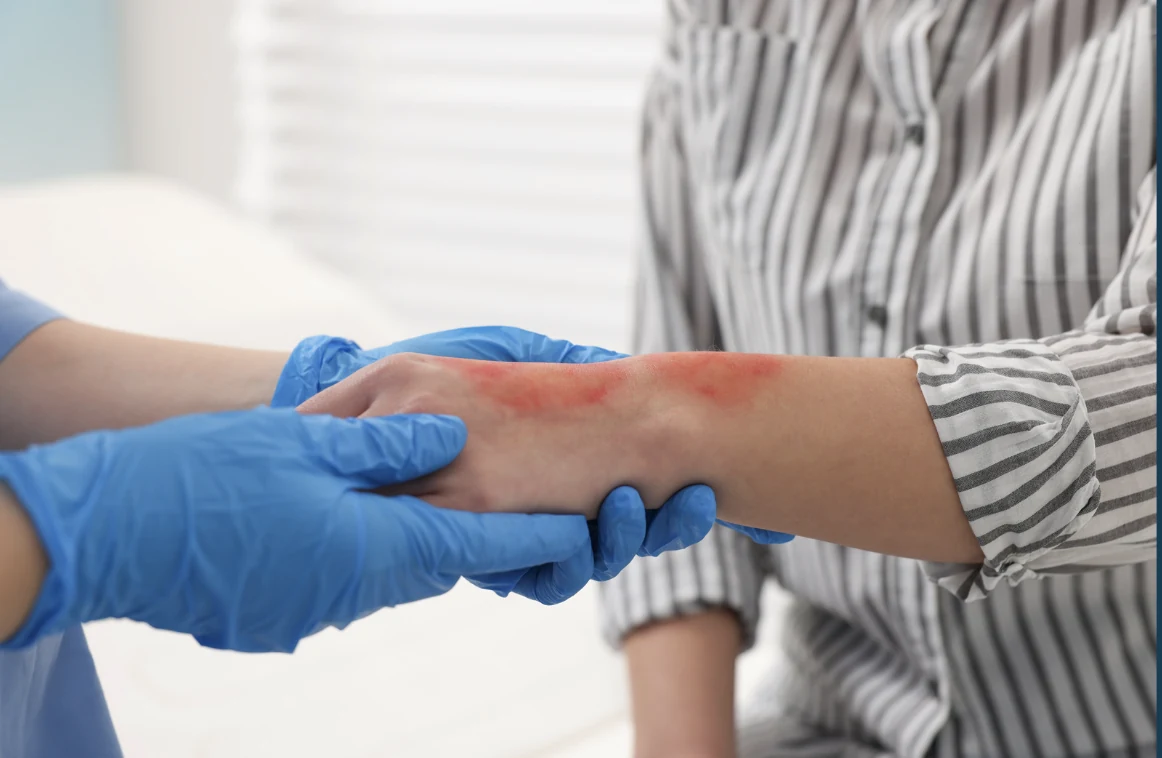
Kentucky Burn Injury Cases
A burn injury case seeks payment from the driver, company, or manufacturer whose conduct caused a vehicle fire or a fuel fire. Sam Aguiar Injury Lawyers handles burn injury cases that come out of motor vehicle accidents: fires after a car accident or a truck accident, fuel ignition, tanker truck fires, and fires traced to a defective vehicle component.
You’ve been through enough. Let us handle this. While you recover, the firm handles the case against the insurance company for every dollar you are owed, from offices in Louisville and Lexington. A burn can change how a person looks, moves, and works, so the case is built around the full course of treatment and not only the first bills.
In 2021, the United States recorded 398,000 fire or burn-related injuries, along with 252,000 injuries related to hot objects or substances.
Vehicle Fires After an Accident
Burning vehicles can quickly trap occupants, and mechanical and electrical issues, along with accidents, are common causes of vehicle fires. Of an estimated 211,500 vehicle fires in 2024, 43.8 percent were unintentional, 22.3 percent stayed undetermined after investigation, and 18.5 percent came from a failure of equipment or a heat source, with unknown causes apportioned among those figures.
The cause decides who pays. A fire that follows an accident caused by a negligent driver points to that driver and the driver’s insurance company. A fire that starts without an accident, or spreads in a way the impact does not explain, can point to maintenance or to a vehicle component. The vehicle, the fire department report, and the scene records show which.
Types and Severity of Burn Injuries
A vehicle accident can burn a person in more than one way at once. The depth of each burn drives treatment and the value of the case as much as its size does.
Burn Injuries From Vehicle Accidents
Burns commonly occur by direct or indirect contact with heat, electric current, radiation, or chemical agents, and car accidents are a known common cause. Beyond the friction, airbag, and electrical burns a collision can leave, three other kinds of burn come up in vehicle accident cases.
Severity and Classification
Burns fall into three levels by depth. Superficial burns, formerly called first-degree, affect only the outer layer of skin. Partial-thickness burns, formerly second-degree, affect the outer and underlying layers. Full-thickness burns, formerly third-degree, affect the deep layers of skin. A person can have more than one type of burn at a time. The partial-thickness group divides into superficial and deep, and each looks different:
| Classification | Appearance |
|---|---|
| Superficial (formerly first-degree) | Dry, red, easily blanching, sometimes painful. Not counted in total body surface area. |
| Superficial Partial Thickness (formerly second-degree) | Moist, red, blanching, blisters, very painful. |
| Deep Partial Thickness (formerly second-degree) | Drier, more pale, less blanching, less pain. |
| Full Thickness (formerly third-degree) | Dry, leathery texture, variable color (white, brown, black), loss of pin prick sensation. |
Pain does not show how deep a burn is. The amount of pain is unrelated to the level of burn, and the most serious burns can be painless.
Size counts as much as depth. Clinicians estimate the extent of a burn as a percentage of total body surface area.
Burn Center Care and Recovery
Where a burn is treated and how long recovery lasts depend on the burn’s depth, size, and location.
Major Burns and Burn Center Care
Burns are classed as minor or major. A major burn includes any third-degree burn, a second-degree burn more than 2 to 3 inches wide, and a second-degree burn on the hands, feet, face, groin, buttocks, or over a major joint. Major burns need urgent medical care, which can help prevent scarring, disability, and deformity, and that children under age 5 and adults over age 55 have a higher chance of complications and death from severe burns because their skin tends to be thinner.
A treating team should consult a burn center for any of these injuries:
- Full-thickness burns
- Partial-thickness burns of 10 percent or more of total body surface area
- Deep partial-thickness or full-thickness burns involving the face, hands, genitalia, feet, perineum, or any joint
- All patients with suspected inhalation injury
- All chemical injuries
- Patients with burns and concomitant traumatic injuries
The association writes that the guidelines support clinical teams and are not intended for self-assessment. In a vehicle accident the burn often arrives with other car accident injuries, so the emergency department, burn center, and other treating providers’ records all belong in the case.
Treatment and Recovery
The outcome depends on the type, extent, and location of the burn, on whether internal organs are affected, and on whether other trauma occurred. Burns can leave permanent scars, and burned skin can stay more sensitive to temperature and light than normal skin. Severe burns across a joint can cause contractures, which leave the joint with decreased movement and reduced function, and airway burns can leave less breathing capacity and permanent lung damage.
Care for a serious burn can include airway and breathing support, intravenous fluids, medicines for pain relief and to prevent infection, and tetanus immunization when it is not up to date. Burns are among the reasons for a skin graft, an operation that takes healthy skin from a donor site and attaches it to the area that needs it. Scarring is among the risks of that surgery.
Future surgery, therapy, and long-term care have to be priced before a case resolves, and the firm has immediate access to life care planners and economists for that work. A gap in treatment gives the insurance company an argument, so consistent follow-up care protects the case.
Tanker Truck Fire Burns
A tanker that hauls fuel or another hazardous material adds federal rules that an ordinary vehicle fire does not have. In tanker truck accident cases, three of those rules matter most after a burn:
- 49 CFR 177.817 requires the driver and the carrier to keep the shipping paper readily available to authorities in the event of an accident.
- 49 CFR 172.504 requires placards on each side and each end of a bulk package or transport vehicle carrying hazardous material, except where the regulations provide otherwise.
- 49 CFR 171.15 requires the person in physical possession of the hazardous material to notify the National Response Center by telephone, as soon as practical and no later than 12 hours after the incident, when a person receives an injury requiring admittance to a hospital as a direct result of the hazardous material.
49 CFR 387.9 sets the minimum public liability coverage a motor carrier must carry, and the minimum rises with the cargo. A for-hire interstate carrier hauling nonhazardous property in a vehicle rated at 10,001 pounds or more must carry $750,000. Oil, hazardous waste, and hazardous materials that no higher entry covers require $1,000,000. Hazardous substances hauled in bulk in cargo tanks, portable tanks, or hopper-type vehicles require $5,000,000, for for-hire and private carriers alike. Those amounts are minimums, and the policy declarations show the actual limits.
Responsible Parties and Evidence
Who pays for a burn depends on what caused the fire, and the proof of that cause starts disappearing the day of the accident.
Vehicle Fire Liability
The driver or company whose negligence caused the accident is usually the first responsible party, and the burn is one part of the harm that case recovers. In Pathways, Inc. v. Hammons, 113 S.W.3d 85 (Ky. 2003), the Kentucky Supreme Court wrote that a negligence case requires proof that the defendant owed the plaintiff a duty of care, that the defendant breached the standard by which that duty is measured, and consequent injury. The court explained that consequent injury has two parts: actual injury or harm to the plaintiff, and legal causation between the defendant’s breach and the plaintiff’s injury.
A commercial driver’s employer, a trucking company, or a shipper can share responsibility when the fire follows a truck accident, and each has its own insurance and defense team. When the evidence points to a defective vehicle component instead of a driver, the manufacturer or parts supplier can be a responsible party too. A recall search by VIN or license plate shows whether a specific vehicle needs to be repaired as part of a recall.
If the accident happened while you were working, workers’ compensation may apply. Under KRS 342.700(1), when someone other than the employer is legally liable, the injured employee may seek compensation, proceed by civil action against that person, or do both, but cannot collect from both.
Burn Injury Evidence
Fire destroys evidence, and what survives the first days often decides the case.
Insurance Offers and Recoverable Damages
Insurers dispute burn cases by arguing about how the fire started, and Kentucky sets no cap on the damages a burn case can recover.
Insurance Company Tactics
Defendants and their insurance companies investigate the cause of a fire to move responsibility elsewhere. The records above are what answer that argument.
An early settlement offer may arrive before the full cost of treatment is known. In Humana, Inc. v. Blose, the Kentucky Supreme Court explains that a valid release can bar further recovery from parties it covers. KRS 411.182(4) says releasing one liable person does not automatically discharge other liable people.
Sam Aguiar Injury Lawyers advises against giving any recorded statement to an insurance company without representation, since early, unrepresented answers are often used later to argue against the case.
Recoverable Damages
Section 54 of the Kentucky Constitution says the General Assembly has no power to limit the amount recovered for injuries to a person, so Kentucky sets no cap on burn injury damages. A burn injury case can recover:
- Medical expenses, including emergency care, hospitalization, burn center stays, surgeries, wound care, medications, rehabilitation, and the future medical care the evidence supports
- Lost wages for time missed during hospitalization and recovery, documented through pay and tax records
- Reduced earning capacity when burns permanently affect the ability to work in a previous occupation or at all
- Pain and suffering from the burns and their treatment
- Permanent disfigurement and scarring
- Emotional distress, including anxiety, depression, and strain on close relationships
- Loss of enjoyment of life
- Vehicle repair or replacement when the burn happened in a vehicle accident
Punitive damages are a separate matter. Under KRS 411.184(2), a plaintiff recovers them only by proving, by clear and convincing evidence, that the defendant acted toward the plaintiff with oppression, fraud, or malice. The statute defines malice to include conduct carried out with a flagrant indifference to the rights of the plaintiff and with a subjective awareness that it will result in human death or bodily harm.
Sam Aguiar Injury Lawyers for Burn Injury Cases
Every burn injury client at Sam Aguiar Injury Lawyers works with a dedicated three-person team: a top-rated attorney, an experienced case manager, and a skilled legal assistant. When a case needs more, the firm has immediate access to top investigators, top reconstructionists, life care planners, economists, and medical experts.
Bigger Share Guarantee®: clients always walk away with more money than the firm after medical bills, liens, and case expenses are paid. If the client’s share would ever be less than the legal fee, the firm cuts its fee. The fee is flat and never increases if your case goes to trial, and you pay $0 Out-Of-Pocket Forever. Most cases qualify in under 10 minutes.
You focus on getting better. We handle everything else. Ask for a free case review after a burn in a vehicle accident.
Key Takeaways
Burned in a Vehicle Fire or Fuel Fire?
A burn keeps changing after the hospital stay, through scarring, follow-up treatment, and time away from work, and those future costs belong in your case with the bills you already have. The vehicle and the fire reports are the first evidence to secure. A dedicated three-person case team deals with the insurance company, and most cases qualify in under 10 minutes. With our Bigger Share Guarantee®, you always get more. Call today for a free case review.
Frequently Asked Questions
1What Is the Difference Between a Second-Degree and Third-Degree Burn?+
They are now called partial-thickness and full-thickness burns. A partial-thickness burn, formerly second-degree, affects the outer and underlying layers of skin and causes pain, redness, swelling, and blistering. A full-thickness burn, formerly third-degree, affects the deep layers of skin and causes white or blackened skin that may be numb.
2Do You Handle Burns From Tanker Truck Fires?+
Yes. A tanker fire is handled with the firm’s tanker truck accident cases. When the tank holds hazardous materials, federal rules on shipping papers, placards, and incident notice apply, and the carrier’s minimum public liability coverage under 49 CFR 387.9 rises with the cargo.
3What Does Recovery From a Serious Burn Typically Involve?+
It depends on the type, extent, and location of the burn. Care can include airway and breathing support, intravenous fluids, medicines for pain and infection, and sometimes a skin graft. Burns can leave permanent scars, and severe burns across a joint can leave decreased movement and reduced function.
4Who Can Be Held Responsible for a Burn Injury in a Vehicle Accident?+
Responsibility follows the cause of the accident and the fire. It can fall on the driver whose negligence caused the accident, the driver’s employer or the trucking company, a shipper in a hazardous materials case, or the maker of a defective vehicle component when the evidence points there. The vehicle, the fire department report, and the scene records show which.
5What Must Be Proven in a Kentucky Burn Injury Case?+
In Pathways, Inc. v. Hammons, the Kentucky Supreme Court wrote that a negligence case requires proof that the defendant owed the plaintiff a duty of care, that the defendant breached the standard by which that duty is measured, and consequent injury. Consequent injury means actual injury or harm to the plaintiff and legal causation between the breach and the injury.
6Does Kentucky Cap Damages in a Burn Injury Case?+
No. Section 54 of the Kentucky Constitution says the General Assembly has no power to limit the amount recovered for injuries to a person. The value depends on the documented medical expenses, lost wages, pain and suffering, and any permanent scarring or disfigurement.
7Can a Burn Injury Case Include Future Medical Costs?+
Yes. When the evidence supports ongoing treatment, follow-up surgery, therapy, or long-term care, the case can include those projected costs alongside past medical expenses. The firm has immediate access to life care planners and economists who project the future cost of care.
8What if I Was Burned in an Accident While Working?+
Workers’ compensation may apply. Under KRS 342.700(1), when someone other than the employer is legally liable, the injured employee may seek compensation, proceed by civil action against that person, or do both, but cannot collect from both.