

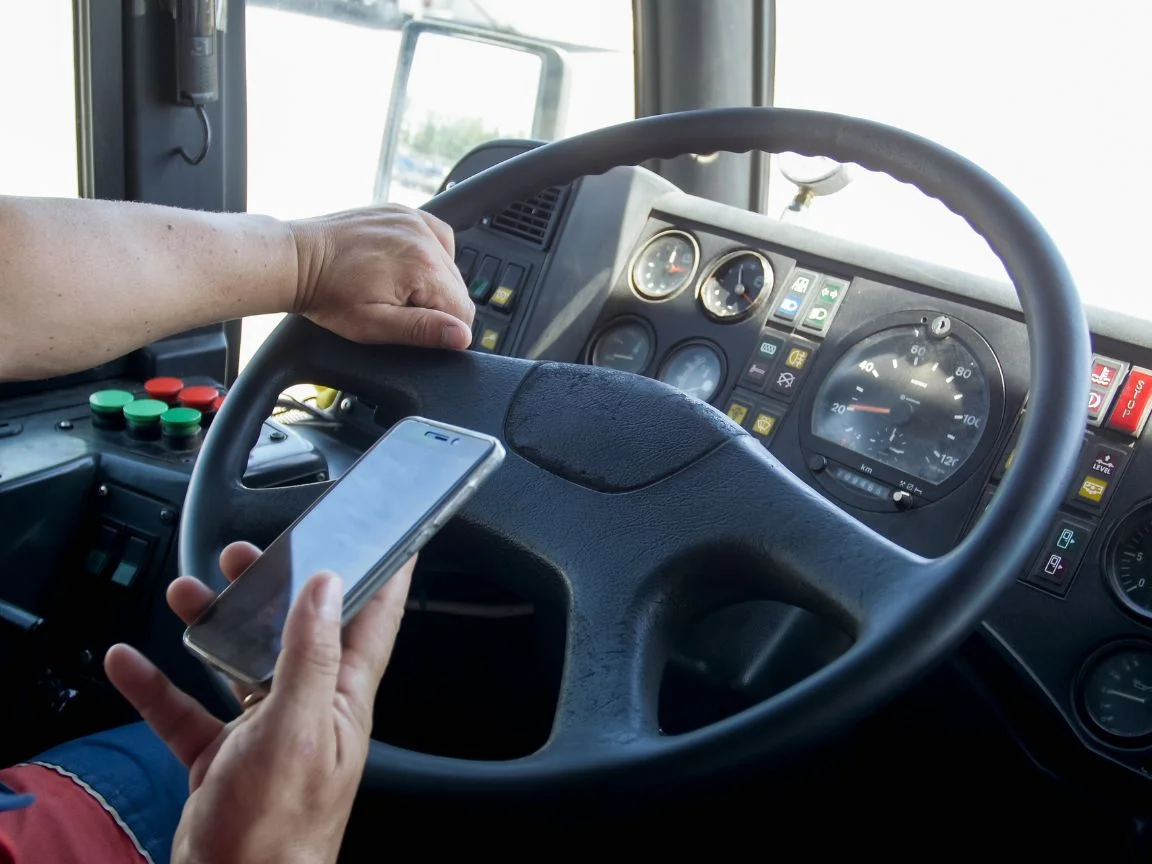
Distracted Driving Accidents in Kentucky
Distracted driving kills more than 3,000 Americans every year. When a driver chose their phone over the road and hit you, Kentucky law holds them accountable — and so do we.
In 2023, NHTSA reported 3,275 people killed in distraction-affected crashes — roughly 8% of all traffic fatalities that year. Cellphone use was a factor in 12% of those fatal distracted crashes, resulting in 397 deaths attributable directly to phone use. In Kentucky, distracted driving contributed to 39,555 crashes in 2021 with 134 fatalities. When a driver violated KRS 189.292 and caused your crash, that statutory violation is direct evidence of negligence. Sam Aguiar Injury Lawyers builds distracted driving cases around hard evidence — phone records, traffic cam footage, witness accounts — not just the driver’s word.
What Kentucky Law Says About Distracted Driving
Kentucky passed its texting-while-driving ban in 2010. KRS 189.292 prohibits all drivers from using a personal communications device to write, send, or read text messages while operating a motor vehicle on a public roadway. The statute does allow use for GPS navigation and to dial a phone number — but all other manual phone use while driving is illegal.
For drivers under 18, KRS 189.294 goes further: it bans all use of a personal communication device while driving — talking, texting, browsing, everything. There are no exceptions for teens beyond emergencies.
Negligence Per Se — When Breaking the Law Means Automatic Liability
Under Kentucky’s negligence per se doctrine, when a driver violates a statute designed to protect others from harm — like KRS 189.292 — that violation establishes negligence as a matter of law. You don’t have to prove the driver was unreasonably careless. The illegal act itself is the proof. Penalties under KRS 189.292 include a $25 fine for first offenses and $50 for subsequent violations, plus 3 points on the driver’s license — but in a civil injury case, the negligence per se finding is what drives accountability.
The Three Types of Distraction
Not all distracted driving involves a phone. NHTSA defines three distinct distraction categories:
- Visual distraction — Taking your eyes off the road (reading a text, checking GPS, looking at a crash scene)
- Manual distraction — Taking your hands off the wheel (eating, adjusting the radio, reaching for a dropped item)
- Cognitive distraction — Taking your mind off driving (hands-free phone calls, intense conversations, daydreaming)
Texting combines all three simultaneously — which is why research from the Virginia Tech Transportation Institute found that texting raises crash risk by 23 times compared to undistracted driving. Even hands-free phone use produces cognitive distraction that slows reaction time by an average of 0.5 seconds — enough at highway speeds to travel the length of a football field without full awareness.
(NHTSA 2023)
(NHTSA 2023)
(Kentucky State Police)
(Virginia Tech Transportation Institute)
How We Prove Distracted Driving in Your Case
The hardest part of a distracted driving case is often establishing that the driver was actually distracted — because most drivers won’t admit it. We build the proof through multiple evidence channels:
- Phone records and subpoenas — Call logs, text message timestamps, app activity, and data usage records obtained through formal legal discovery. Even deleted messages can be recovered from carrier logs or Cellebrite forensic extraction.
- Cell tower data — Carrier records can confirm a phone was in active use at the time and location of the crash.
- Traffic and dashcam footage — Louisville’s urban core has significant camera coverage. We move quickly to preserve footage before it’s overwritten.
- Witness statements — Bystanders who saw the driver looking down at a device before impact. These accounts are secured early before memories fade.
- Accident reconstruction — Skid marks, impact angles, and vehicle data recorder (EDR) outputs often show no braking before impact — consistent with a driver who never looked up.
- Social media activity — Posts, check-ins, or photo uploads timestamped at the time of the crash can place the driver on their phone.
Louisville ranks 5th in the United States for fatal distracted driving crashes — a sobering statistic for one of Kentucky’s largest urban centers. If you or a family member was hurt in a Louisville car accident where a distracted driver was involved, time matters. Evidence is time-sensitive. Phone records require legal process to preserve and obtain.
Damages in a Distracted Driving Crash
The damages recoverable in a distracted driving crash are the same as any serious motor vehicle collision — but the driver’s deliberate choice to use a phone can open the door to additional accountability:
- Medical bills — past and future treatment costs
- Lost wages and reduced earning capacity
- Pain and suffering, PTSD, loss of enjoyment of life
- Long-term damages for permanent injury
- Punitive damages — when the driver’s phone use reflects conscious disregard for the safety of others, Kentucky courts can award punitive damages under KRS 411.184. Kentucky has no cap on punitive damages.
For rear-end crashes where distraction is the cause, see our rear-end collision page. For T-bone crashes at intersections where a distracted driver ran a light, see our traffic light accident page.
Frequently Asked Questions
Is texting while driving illegal in Kentucky?
Yes. KRS 189.292 prohibits all drivers from writing, sending, or reading text messages while operating a motor vehicle on a public road. First offense: $25 fine. Subsequent offenses: $50 fine plus 3 points on your license. Drivers under 18 face a complete ban on all personal communication device use while driving under KRS 189.294, with no exceptions beyond emergencies.
How do you get someone’s phone records after a crash?
Phone records are obtained through formal discovery — subpoenas to the driver’s wireless carrier requesting call logs, text message timestamps, app usage, and data records for the period surrounding the crash. Carriers typically retain these records for 18–24 months. Forensic extraction tools like Cellebrite can also recover data from the physical device. Acting quickly is critical — some records are purged on rolling windows.
Can I get punitive damages if the driver was texting?
Potentially, yes. Kentucky allows punitive damages under KRS 411.184 when a defendant acted with oppression, fraud, or malice — or with conscious disregard for the rights and safety of others. A driver who knowingly uses a phone while driving at highway speeds, causing a serious crash, may meet that standard. Punitive damages require proof by clear and convincing evidence. We evaluate punitive potential on every distracted driving case.
What if the driver claims they were using their phone for GPS, not texting?
KRS 189.292 does allow GPS use — but carrier and app data can reveal the truth. If the driver was in a text conversation, on social media, or browsing while claiming GPS use, phone forensics will show the actual app activity and data transfers timestamped at the moment of the crash. It is difficult to fabricate what the phone was actually doing when examined forensically.
What is the statute of limitations for a distracted driving crash in Kentucky?
Two years from the date of the crash under KRS 304.39-230. Wrongful death: one year from the date of death. Evidence preservation is time-sensitive even before the legal deadline — phone carrier records are purged, surveillance footage is overwritten, and witnesses’ memories fade. Contact us as soon as possible after the crash.
What Our Clients Say
Start Your Case Review
Tell us what happened. Our team will reach out within minutes.