

Jefferson County · Louisville Metro
Louisville Motorcycle Accident Lawyers
 ★★★★★
Over 1,000 Five-Star Reviews
•
Available 24/7. $0 Out-Of-Pocket Forever.
★★★★★
Over 1,000 Five-Star Reviews
•
Available 24/7. $0 Out-Of-Pocket Forever.
Our Louisville Motorcycle Accident Team
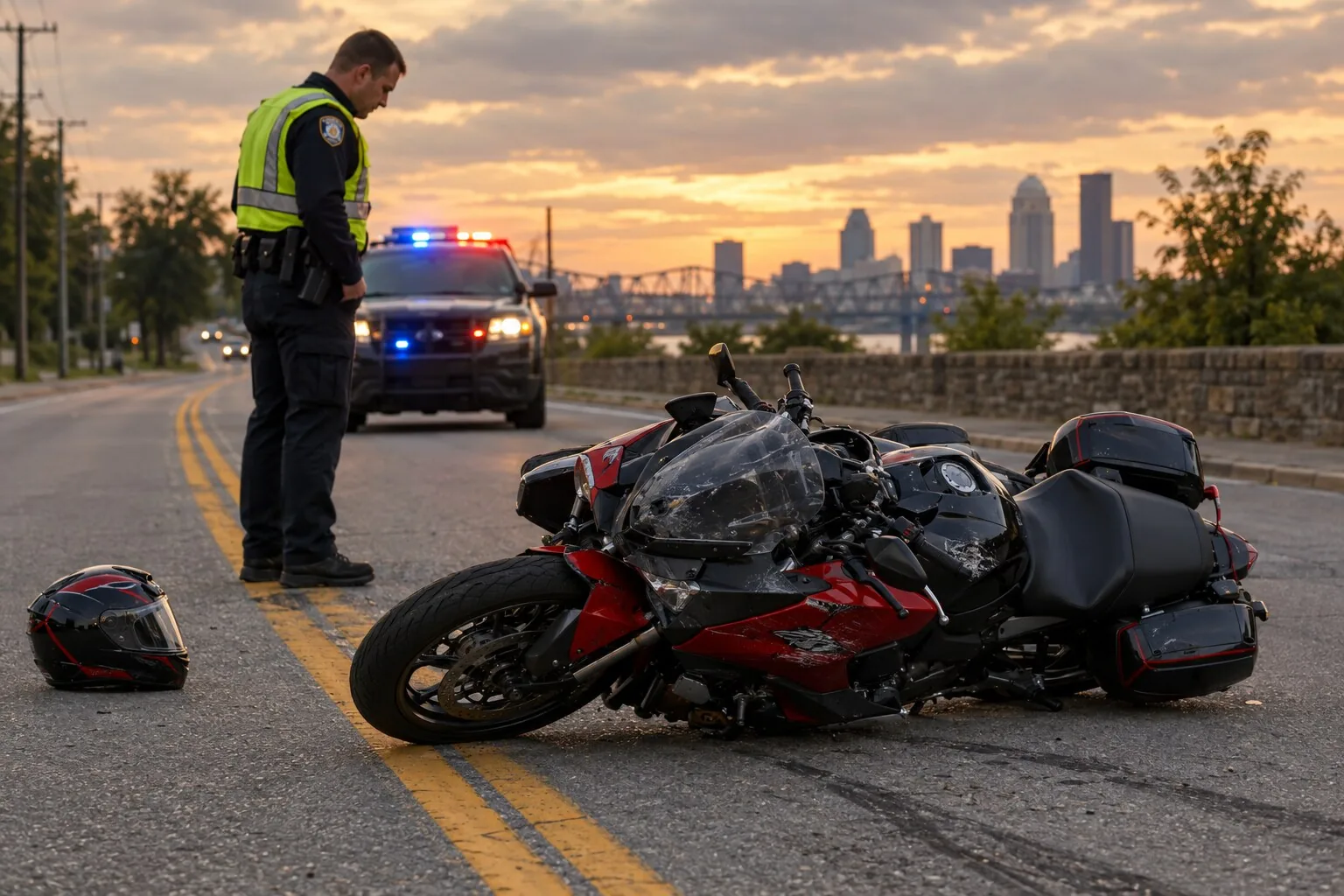
A motorcycle accident can change your life in seconds. A rider has no roof, doors, or airbags between the body and the road, so being hit by a car or truck can mean broken bones, road rash, a head injury, weeks away from work, and a bike that is not worth repairing. A Louisville motorcycle accident lawyer handles what comes next for you.
You don’t have to do this alone. When a motorcycle accident turns your life upside down, we’re here to pick you up. At Sam Aguiar Injury Lawyers, every case gets a dedicated three-person team: a top-rated attorney, an experienced case manager, and a skilled legal assistant. Your case is covered by our Bigger Share Guarantee®, you pay $0 out-of-pocket forever, and most cases qualify in under 10 minutes through a free case review.
Our Louisville office handles motorcycle cases across Jefferson County. Kentucky’s helmet law and statewide motorcycle accident data are on our Kentucky motorcycle accident attorneys page.
Insurer Assumptions About Riders
After a motorcycle accident, the other driver’s adjuster may start from the idea that the rider was speeding or hard to see. The Kentucky State Police 2024 Traffic Collision Facts report lists failure to yield the right of way as a contributing factor in 24 of the 99 fatal collisions involving motorcycles in Kentucky in 2024. The case answers that assumption with evidence of what each driver did.
The adjuster may also ask for a recorded statement or offer to settle before your treatment is finished. An injury settlement release is permanent. Once signed, the case is closed forever. When we represent you, those calls and requests go to your legal team instead of to you. The firm’s page on insurance recorded statements covers how adjusters use them.
Jefferson County Accident Numbers
Jefferson County had 25,417 traffic collisions in 2024, more than any other Kentucky county. Those collisions killed 113 people and injured 6,183.
Motorcyclists were 19% of traffic fatalities and suspected serious injuries on Jefferson County surface streets in 2024. That count excludes interstates, expressways, and parking lots.
Louisville Metro’s High Injury Network shows where those outcomes concentrate: 5% of the county’s non-interstate road miles carry 55% of its non-interstate fatal and suspected serious injury crashes, and the Kentucky Transportation Cabinet owns 85% of the network’s miles. The city ranks 53 corridors, with Broadway first, and its High Injury Network map data includes stretches of Dixie Highway, Preston Highway, Bardstown Road, and Shelbyville Road. On a state-owned corridor, the Kentucky Transportation Cabinet is the agency that keeps the road’s records.
Why Drivers Hit Motorcyclists in Kentucky
Motorcycles were less than 1 percent of the vehicles in Kentucky crashes in 2024 but 9 percent of the vehicles in fatal crashes. That year, 1,665 motorcycle crashes killed 104 people and injured 1,235.
The same few errors show up in crash reports again and again. In fatal motorcycle crashes, officers cited failure to yield the right of way in 24 percent, a vehicle not under proper control in 29 percent, and inattention in 19 percent. Failure to yield is the classic left-turn crash: a driver turns across the rider’s lane at an intersection or driveway and says afterward that the motorcycle came out of nowhere. Louisville corridors with frequent driveways and turn lanes, including stretches of Dixie Highway, Preston Highway, and Bardstown Road on the city’s High Injury Network, give drivers many chances to make that turn.
A driver who says he never saw the motorcycle is describing the failure to look, not excusing it. Sam Aguiar Injury Lawyers rebuilds sight lines with scene photographs, vehicle data, and camera footage to show what that driver could have seen.
Motorcycle Hit-and-Run Crashes in Louisville
Kentucky recorded 12,744 hit-and-run crashes in 2024, which killed 27 people and injured 1,290, and 41 percent of them happened on city streets. A rider knocked down by a driver who keeps going still has a case.
The first job is finding the driver. The LMPD crash report, witness statements, paint transfer and broken parts left at the scene, and footage from traffic, business, bus, and doorbell cameras can identify the vehicle. The second job is coverage. When the driver is never found, the rider’s own uninsured motorist coverage is usually the first place Sam Aguiar Injury Lawyers looks for payment, along with any other household policy that may apply.
Louisville Camera Footage
The Kentucky Transportation Cabinet’s Kentucky Freight Plan describes TRIMARC as the largest traffic operations center in the state. From its Louisville center, TRIMARC monitors traffic in the Louisville Metro area and uses cameras and message signs to detect and clear incidents on the interstates.
Sam Aguiar Injury Lawyers has access to DOT and TRIMARC traffic camera archives that reach back six months. The firm’s page on searching the DOT camera database explains how a recording is located by camera and time. A recording older than six months is outside that archive.
Video of an accident on a surface street can come from business cameras, doorbell cameras, and dashcams. Those recordings belong to their owners, so the request has to reach them before the owner deletes the file.
Kentucky Traffic Rules
Four Kentucky statutes set the duties for the driver moves that put a car or truck into a motorcycle’s path:
| Rule | What It Requires | Accident It Covers |
|---|---|---|
| KRS 189.330(9) | A driver turning left at an intersection, or into an alley, private road, or driveway, yields to any vehicle coming from the opposite direction that is in the intersection or close enough to be an immediate hazard. | A car turning left across an oncoming motorcycle |
| KRS 189.330(10) | A driver entering or crossing a roadway from a place other than another roadway yields to all vehicles approaching on that roadway. | A car pulling out of a business driveway |
| KRS 189.340(7)(a) | On a road marked with three or more lanes in one direction, a driver stays within a single lane and changes lanes only after making sure the move is safe. | A lane change into a rider |
| KRS 189.340(9)(a) | A driver may not follow another vehicle more closely than is reasonable and prudent for the speed, the traffic, and the condition of the road. | A rear-end impact |
Proving a violation takes evidence of where the motorcycle was when the driver began the turn or lane change, the gap the driver had, and any camera or witness that recorded it.
Nighttime Motorcycle Accidents
After dark, Kentucky’s lighting statutes apply too. KRS 189.030 requires headlamps from one-half hour after sunset to one-half hour before sunrise, and at other times when visibility is that low. KRS 189.040 requires every motorcycle to carry one or two headlamps, and it requires a driver approaching an oncoming vehicle within 500 feet to use a beam that does not project glare into the other driver’s eyes.
In a night accident, the time of the accident against sunset, the condition of each vehicle’s lights, the street lighting at the scene, and any camera footage show whether each driver could see and be seen.
Motorcycle Injury Records
The medical record shows what the accident did to you. A clear record runs in order: the ambulance and emergency room, imaging, specialist referrals, surgery, therapy, work restrictions, and future-care recommendations. A break in treatment is easier to explain when the reason is written down.
A head injury from a motorcycle accident is covered on our Louisville traumatic brain injury lawyer page. The firm’s pages on spinal cord injuries, burn injuries, knee injuries, and severe motorcycle accident injuries describe those injuries in more detail.
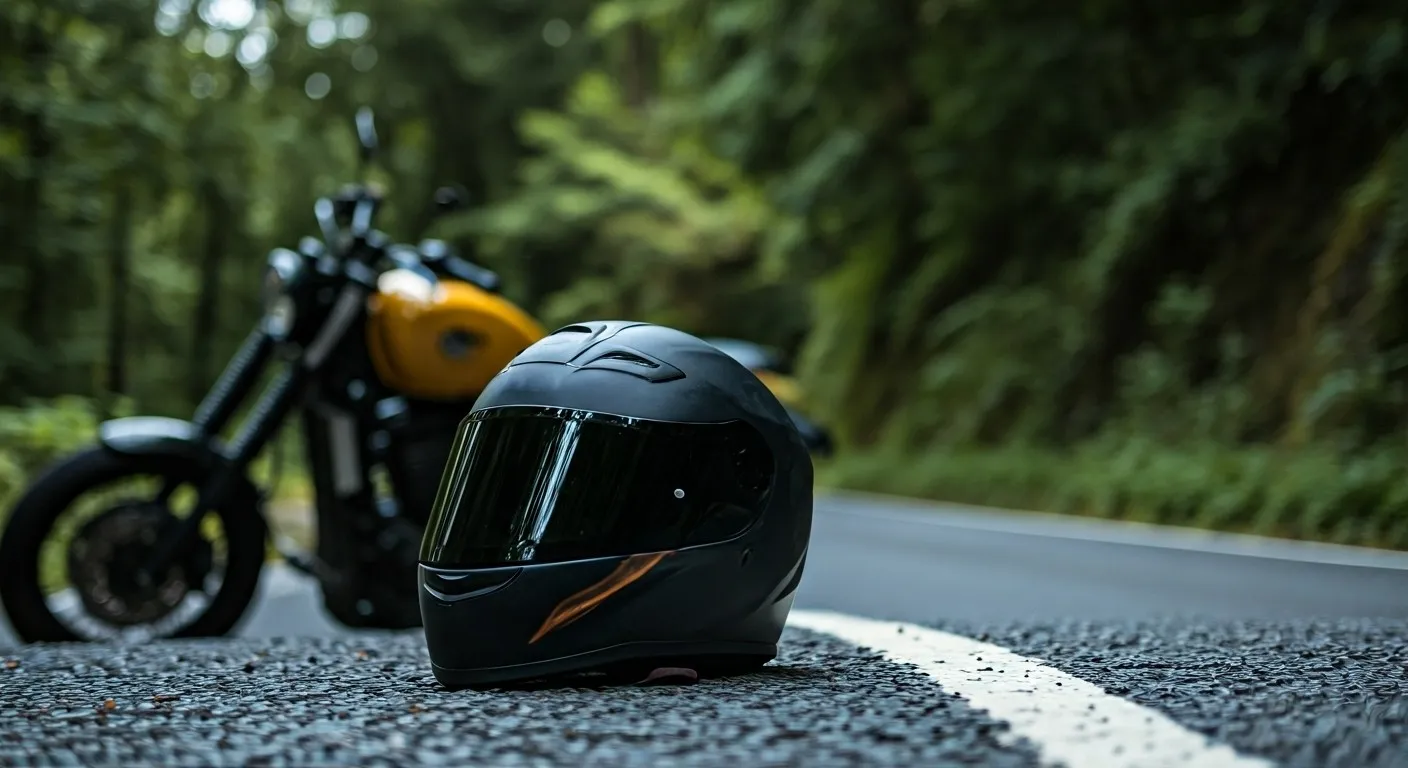
The helmet, jacket, gloves, boots, and the motorcycle itself are physical evidence. Scrapes and impact marks on that gear can show where the rider hit the ground and the angle of impact.
A Louisville motorcycle case file collects five kinds of records:
Insurance Policies That Can Pay
A serious motorcycle injury can cost more than the minimum policy on the car that caused it, so the case looks at every policy tied to the vehicle that hit you and to you. Kentucky sets these minimums:
| Vehicle That Hit You | Minimum Liability Coverage | Rule |
|---|---|---|
| Private car or pickup | $25,000 per person and $50,000 per accident | KRS 304.39-110 |
| Rideshare car, app on, before a ride is accepted | $50,000 per person and $100,000 per incident | KRS 281.655(12) |
| Rideshare car during a prearranged ride | $100,000 per person | KRS 281.655(12) |
| Interstate for-hire truck, 10,001 pounds or more, general freight | $750,000 | 49 CFR 387.9 |
Your own policy can add uninsured motorist coverage when the at-fault driver has none and underinsured motorist coverage when that driver’s limits run out. An accident with a commercial truck is covered on our Louisville truck accident lawyer page, and an accident with a rideshare driver on our rideshare accident page.
Key Takeaways
Injured While Riding in Jefferson County?
Motorcyclists were 19% of traffic fatalities and suspected serious injuries on Jefferson County surface streets in 2024, and the camera archives that can show how a rider was hit reach back only six months. Sam Aguiar Injury Lawyers puts a three-person team on your case, searches the DOT and TRIMARC archives, and deals with every insurance company. With our Bigger Share Guarantee®, you always get more. Call today for a free case review.
Frequently Asked Questions
1How Much Does a Louisville Motorcycle Accident Lawyer Cost?
Nothing out of pocket. Sam Aguiar Injury Lawyers charges no upfront costs and no retainers, and there are no fees unless the firm wins the case. Its flat contingency fee never increases if the case goes to trial, and every case is covered by the Bigger Share Guarantee®.
2Should I Hire a Lawyer After a Motorcycle Accident in Louisville?
When the accident caused an injury, a free case review is the first step: it costs nothing, and evidence such as traffic camera video does not last. Sam Aguiar Injury Lawyers has access to DOT and TRIMARC traffic camera archives that reach back six months, and most cases qualify in under 10 minutes.
3Does a Driver Turning Left Have to Yield to a Motorcycle in Kentucky?
Yes. KRS 189.330(9) requires a driver turning left within an intersection, or into an alley, private road, or driveway, to yield the right-of-way to any vehicle approaching from the opposite direction that is within the intersection or so close to it as to be an immediate hazard. A motorcycle is a vehicle under Kentucky’s traffic code.
4Can Traffic Camera Video Show How a Louisville Motorcycle Accident Happened?
Yes, when a camera recorded it. TRIMARC, the largest traffic operations center in Kentucky, monitors Louisville Metro traffic from its center in Louisville, and Sam Aguiar Injury Lawyers has access to DOT and TRIMARC traffic camera archives that reach back six months. Business cameras, doorbell cameras, and dashcams can cover surface streets.
5How Much Insurance Must a Rideshare Driver Carry in Kentucky?
At least $50,000 for one person’s injuries while the driver is logged in before accepting a ride, and at least $100,000 per person during a prearranged ride. KRS 281.655(12) sets the pre-trip minimum at $50,000 per person and $100,000 per incident and ties the prearranged-ride minimum to the passenger-vehicle limits in KRS 281.655(4).
6Do Motorcycles Need Headlights at Night in Kentucky?
Yes. KRS 189.040 requires every motorcycle to have one or two headlamps, and KRS 189.030 requires headlamps from one-half hour after sunset to one-half hour before sunrise and at other times when visibility is that low.
7How Many Louisville Traffic Deaths and Serious Injuries Involve Motorcyclists?
Motorcyclists were 19% of traffic fatalities and suspected serious injuries on Jefferson County surface streets in 2024. That figure excludes interstates, expressways, and parking lots.