

Ground Victims of Cargo Plane Accidents
One cargo flight can put the airline, the contractors that maintain its aircraft, and the manufacturers of the airframe, engines, and parts into the same case, and federal aviation regulations set the duties each one owes.
Kentucky Law for Harm on the Ground
Kentucky’s aviation statutes set no special rule for harm a falling aircraft causes on the ground. People injured, families who lose someone, and owners whose property is destroyed in a Kentucky cargo plane crash bring their cases under the general rules of Kentucky injury law, including negligence and product liability.
Cargo Airports in Kentucky
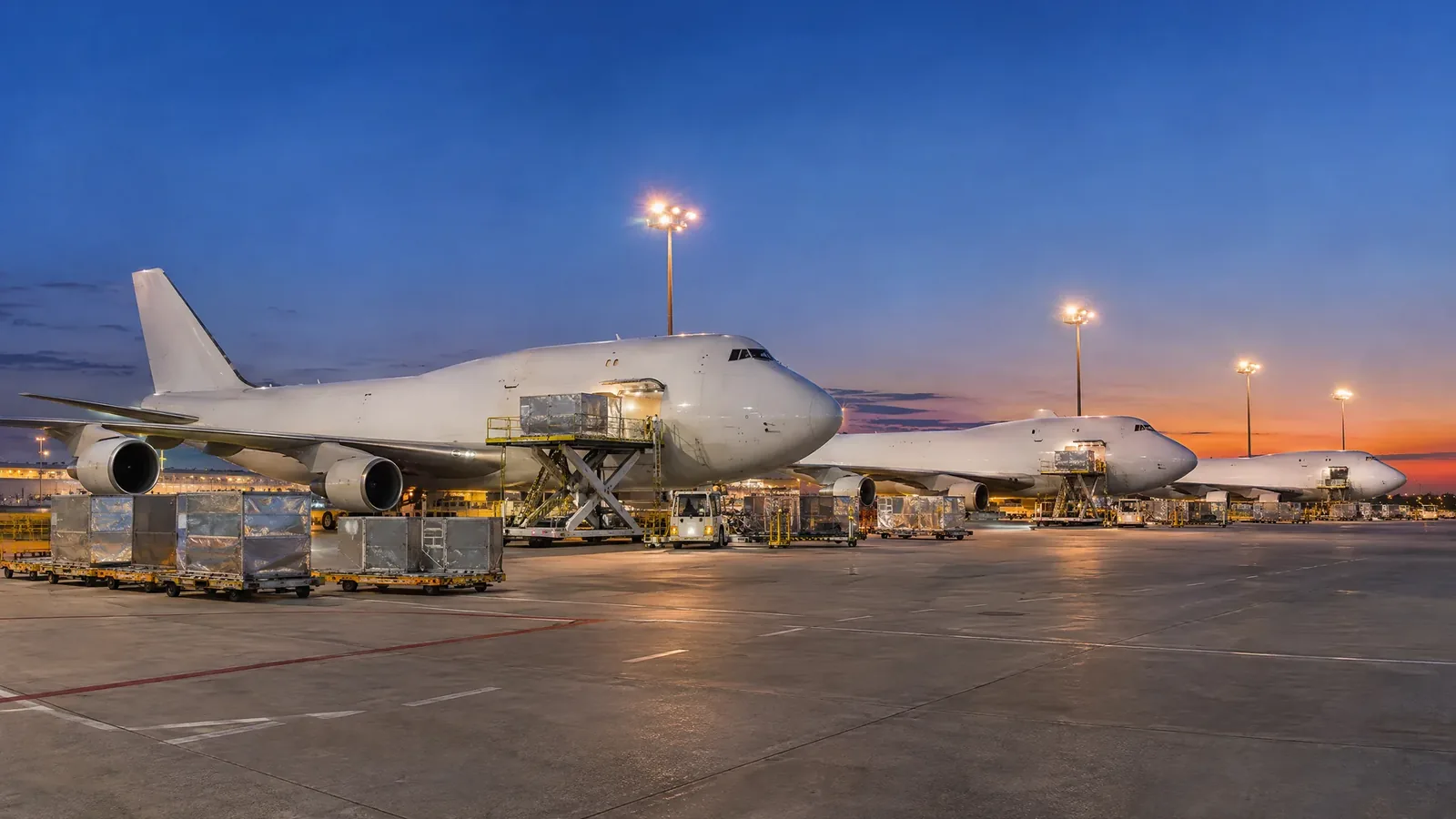
Louisville Muhammad Ali International Airport ranked second in the nation in all-cargo landed weight in 2025, and Cincinnati/Northern Kentucky International Airport in Hebron ranked fifth. The Louisville airport is home to UPS’s Worldport automated package-handling facility, and the Hebron airport houses Amazon’s primary U.S. air hub and DHL’s Global Super Hub for the Americas.
Ground Impact of UPS Flight 2976
On November 4, 2025, the left engine and pylon of UPS Flight 2976, an MD-11F cargo jet bound for Honolulu, separated from the wing shortly after its nose lifted for takeoff from Louisville. The airplane climbed no higher than about 30 feet above the ground. Its left main landing gear struck the roof of a UPS warehouse at the airport’s southern edge, and the airplane then hit a storage yard and two more buildings, including a petroleum recycling facility. Fire consumed most of the airplane.
Federal regulations define an all-cargo operation as a flight for compensation or hire that carries no passengers other than people the regulations list. At Louisville, every death and injury apart from the crew’s was on the ground.
| Casualty Group | Number |
|---|---|
| Ground Deaths on November 4, 2025 | 11 |
| Ground Injuries | 23 |
| Crew Deaths | 3 |
The flight carried no passengers. Source: National Transportation Safety Board.
Companies Responsible for an Aircraft’s Condition
UPS Flight 2976 flew under Part 121 of the federal aviation regulations, which governs air carrier operations and reaches every person a carrier employs or uses for maintenance. The airline holding the operating certificate is primarily responsible for the airworthiness of its aircraft and for maintenance done under its manual, and hiring another company to do the work does not relieve the airline of that responsibility.
A maintenance contractor must perform covered work, including regularly scheduled maintenance and required inspections, under the airline’s maintenance manual and under the airline’s supervision and control. The airline must have procedures to oversee that work. A contractor whose own inspection or repair falls short can face a negligence case alongside the airline.
Flight 2976 shows how those duties overlap. UPS’s maintenance program called for a detailed visual inspection of the left pylon’s aft mount every 72 months, and that inspection was last done on October 28, 2021. In a 2011 service letter, Boeing had told operators about four earlier failures of the bearing at that mount. The letter recommended a redesigned bearing to replace one found unserviceable but did not prohibit reusing the original design. As of January 2026, the NTSB was reviewing how UPS worked that letter into its maintenance program, along with Boeing’s correspondence with the FAA about it.
Kentucky’s product liability statute covers personal injury, death, and property damage caused by a product’s design, manufacture, testing, warnings, or instructions. That reaches the companies that built the airframe, the engines, and individual parts, along with the warnings and instructions in their service letters and manuals. When harm occurs more than five years after a product’s first sale or more than eight years after its manufacture, Kentucky presumes the product was not defective until a preponderance of the evidence shows otherwise. Records of earlier failures and later redesigns are the kind of evidence that can overcome that presumption.
In United States v. Varig Airlines, 467 U.S. 797 (1984), the Supreme Court held that the Federal Tort Claims Act’s discretionary function exception bars tort suits against the federal government based on the FAA’s certification of aircraft. Cases by people on the ground over an aircraft’s condition therefore run against the companies that operated, maintained, and built the aircraft.
Federal Insurance Requirements for Air Carriers
Federal regulations require each U.S. air carrier to keep insurance or a self-insurance plan. It must cover what the carrier becomes legally obligated to pay for bodily injury, death, and damage to the property of others caused by its operation or maintenance of aircraft. Third-party coverage, which protects people other than passengers and their property, must be at least $300,000 for any one person and $20,000,000 per aircraft for each occurrence. For aircraft of not more than 60 seats or 18,000 pounds maximum payload capacity, the minimum is $2,000,000 per aircraft for each occurrence.
An aircraft may not be operated unless that coverage is in force, and the carrier files evidence of it with the Department of Transportation. The amounts are insurance minimums, not a ceiling on what an airline can owe.
Property Damage on the Ground
A property owner’s case covers damage to real property, such as the building, and to personal property, such as contents, vehicles, and equipment. Kentucky law keeps a case for injury to real or personal property alive even if the owner dies before it ends.
Income a business loses because its facility was damaged is a business interruption loss. The owner’s own property policy may pay for the damage and the lost income under its terms. When it does, the policy’s subrogation clause lets the insurance company take legal action against the companies responsible to recover what it paid. The owner’s own case covers the losses the policy left unpaid.
Personal Injury Cases Near the Accident Site
A person injured on the ground has a personal injury case against the companies responsible. That case does not die with the injured person; the personal representative of the estate can bring or continue it. When the person dies from the injuries, the personal representative can recover in one action for both the wrongful death and the injuries the person suffered before death, including every element of damages available in each. At Louisville, one person seriously injured on the ground died 51 days after the accident.
A husband or wife of an injured person can also recover for loss of consortium, which Kentucky defines as the right to the services, assistance, aid, society, companionship, and conjugal relationship between spouses.
Wrongful Death Recovery for Families
When someone on the ground dies, the personal representative of the estate brings the wrongful death case. Kentucky’s wrongful death statute allows recovery from the company that caused the death or “whose agent or servant caused it,” so an airline answers for the acts of its own employees and agents, and punitive damages are available when the act was willful or the negligence gross.
The recovery follows the same Kentucky wrongful death statutes as any aviation death case: after funeral expenses, administration costs, and costs of recovery, the money goes to the family in the order the statute sets, starting with a surviving spouse and children. When the person who died was a minor child, the parents may also recover for the loss of the child’s affection and companionship during the child’s minority.
Workers Injured on the Job
A person injured at work when an aircraft comes down has two sources of recovery under Kentucky law. The worker can claim workers’ compensation and also sue the other companies whose conduct caused the injury, though the worker cannot collect twice for the same loss. The employer’s insurance company can then recover the compensation it paid from the companies responsible, less a share of the worker’s legal fees and expenses.
When an employer has secured workers’ compensation coverage, that coverage is the worker’s only remedy against the employer. A worker employed by the airline itself therefore brings a lawsuit against other companies, such as a maintenance contractor or a manufacturer.
Federal Accident Investigations in a Civil Case
The NTSB investigation establishes the facts and a probable cause and issues safety recommendations, and its regulations state that an investigation is not conducted to determine anyone’s rights, liabilities, or blame. Party status is limited to organizations whose employees, activities, or products were involved in the accident and that can supply qualified technical staff. People harmed on the ground and their families are therefore not parties, and no party representative may be a person who also represents “claimants or insurers.”
Federal law keeps the Board’s own report out of a civil case for damages, while the factual reports its investigators write face no statutory bar, and NTSB employees may testify only to facts, so each side brings its own experts. The airline’s own maintenance records show each aircraft’s inspection status, airworthiness directive status, and major alterations. A civil case after a cargo plane accident runs on those two kinds of records: the factual material the NTSB gathers and the records the companies kept themselves.
After a fatal accident involving an air carrier, federal law makes an NTSB director of family support services the government’s point of contact for families. The law’s definition of passenger includes any other person injured or killed in the accident, as the NTSB determines appropriate. That can bring people on the ground and their families into the program.
Status of the Flight 2976 Investigation
As of November 11, 2026, the NTSB has not issued a final report or a probable cause for Flight 2976, and its investigation remains open. Its two-day investigative hearing took place on May 19 and 20, 2026. Responsibility to the people on the ground is decided in civil court, on evidence the companies hold: maintenance and inspection records, manufacturers’ service letters and manuals, and testimony from the people who did the work.
Cargo Plane Accident Case Review
Sam Aguiar Injury Lawyers handles aviation accident cases for people hurt on the ground and for families who lost someone there, and represents families in the UPS Flight 2976 litigation in Jefferson Circuit Court. You pay $0 out-of-pocket forever. Start your free case review today.
Latest Articles
Airworthiness Directives and Service Bulletins
When an FAA airworthiness directive binds an operator and how a service bulletin differs.

Private Plane Accident Cases
How Part 91 duties, NTSB rules, and aircraft insurance limits shape a private plane accident case.

Medical Helicopter Accident Cases
How air ambulance rules and Kentucky law decide which case each person aboard a medical helicopter can bring.