

Montreal Convention Liability on International Flights
The Montreal Convention makes an airline liable for a passenger’s death or bodily injury caused by an accident on board or while boarding or leaving the aircraft, in two tiers of liability measured in special drawing rights.
When the Convention Applies
The Montreal Convention governs an injury or death on a flight when the flight is international carriage, which Article 1 defines by the places named in the agreement between the passenger and the carrier rather than by where the accident happened. The Convention is a treaty, formally titled the Convention for the Unification of Certain Rules for International Carriage by Air, that was done at Montreal on May 28, 1999.
Under Article 1(2), carriage is international when the place of departure and the place of destination are in the territories of two countries that are parties to the Convention, or in one party country when the agreement names an agreed stopping place in another country, even if that country is not a party. Carriage between two points in one party country with no agreed stopping place in another country is not international carriage.
Article 1(3) treats carriage by several successive carriers as one undivided carriage if the parties regarded it as a single operation, and that carriage does not lose its international character because one contract in the series is performed entirely within one country. A domestic leg on a single international itinerary can therefore fall under the Convention. Flights that are not international carriage are handled under other law, as described in how aviation accident lawsuits work.
Article 1(1) applies to international carriage of persons, baggage, or cargo for reward, and to gratuitous carriage by an air transport undertaking. The death and injury rule in Article 17 speaks of “a passenger.” Damage to cargo is governed separately by Article 18, so a cargo-only flight has no passengers to whom Article 17 applies.
What Article 17 Requires
Article 17(1) makes the carrier liable for damage sustained when a passenger dies or suffers bodily injury, on the condition that the accident that caused the death or injury took place on board the aircraft or during any of the operations of embarking or disembarking. A person seeking compensation has to establish four things:
- The injured or deceased person was a passenger in international carriage.
- An accident occurred.
- The accident caused the death or bodily injury.
- The accident took place on board the aircraft or during embarking or disembarking.
Article 17 imposes liability on the carrier. Responsibility of other companies involved in an accident, such as a manufacturer or a repair station, is a separate question addressed in aviation accident liability. The Convention also does not say who may bring a case for a passenger who died: Article 29 leaves aside the question of who has the right to bring suit and what each person’s rights are.
Accident and Bodily Injury in Court Decisions
Article 17 does not define “accident,” so U.S. courts look to Supreme Court opinions written under the Warsaw Convention, the 1929 treaty that the Montreal Convention modernized and consolidated. In Air France v. Saks, 470 U.S. 392 (1985), a Warsaw Convention case, the Court held that Article 17 liability arises only when a passenger’s injury is caused by an unexpected or unusual event or happening that is external to the passenger, and that an injury resulting from the passenger’s own internal reaction to the normal operation of the aircraft is not caused by an accident. The Ninth Circuit applied that reading to the Montreal Convention in Phifer v. Icelandair, 652 F.3d 1222 (9th Cir. 2011), explaining that differences between the two Article 17 texts were immaterial to the issue before it.
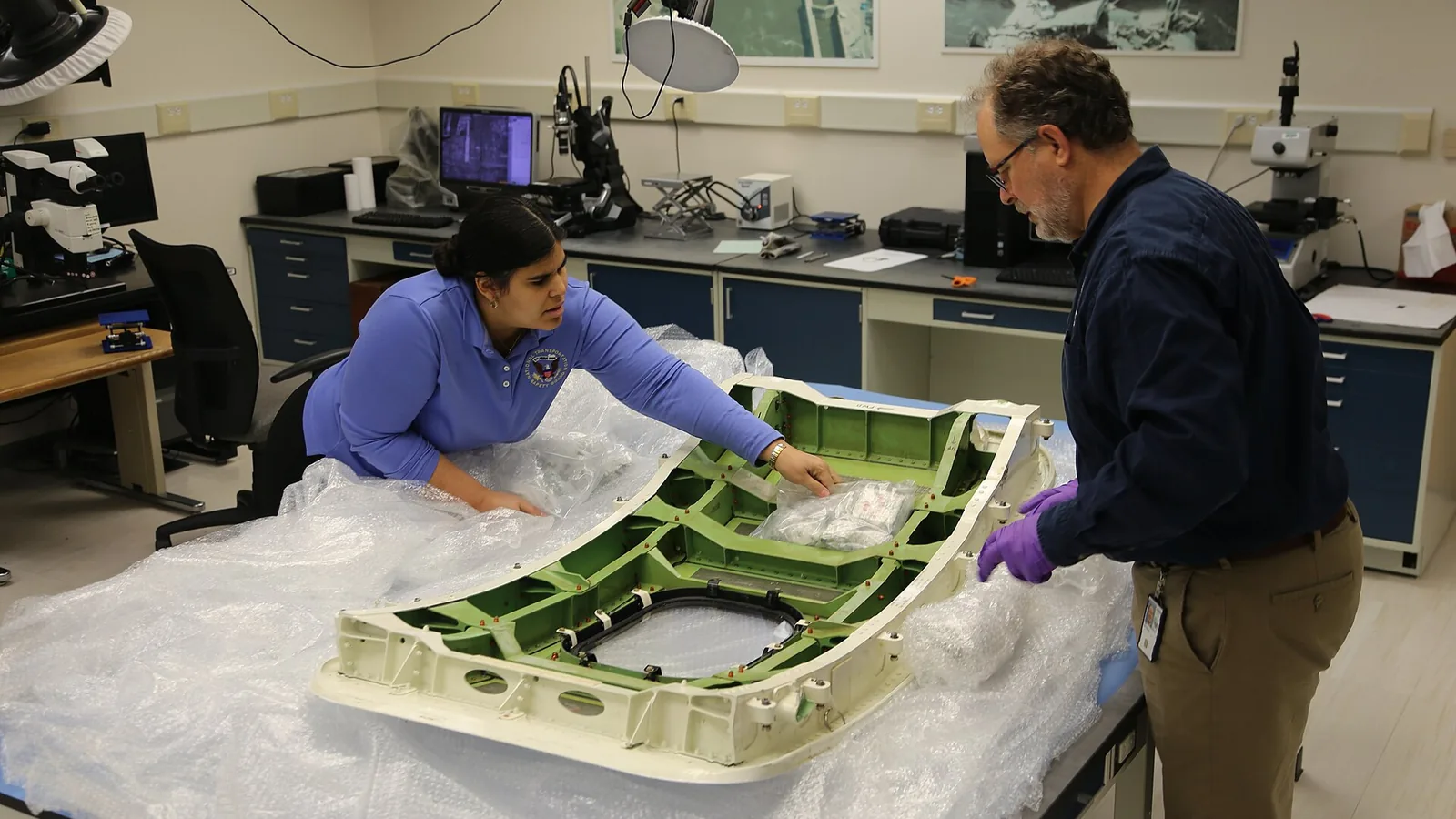
In Olympic Airways v. Husain, 540 U.S. 644 (2004), also a Warsaw Convention case, the Court held that a flight attendant’s refusal to move a passenger away from cigarette smoke, after which the passenger with asthma died, satisfied the accident requirement. It reasoned that an event can include a refusal to act and that a plaintiff need only show that some link in the chain of causation was an unusual or unexpected event. Facts about an unusual event on a flight are often documented in a government investigation, such as an NTSB investigation.
Emotional injury is treated differently. In Eastern Airlines, Inc. v. Floyd, 499 U.S. 530 (1991), the Court held that Article 17 of the Warsaw Convention does not allow recovery for purely mental injuries, reading the treaty’s French phrase as “bodily injury.” It did not decide whether mental injuries accompanied by physical injury are recoverable. Article 17 of the Montreal Convention uses the phrase “bodily injury.” Delegates to the 1999 conference considered adding an express reference to mental injury but left existing Warsaw precedents untouched.
Two Tiers of Liability
Article 21 sets two levels of carrier liability for death or bodily injury. For damages up to a threshold stated in special drawing rights, the carrier cannot exclude or limit its liability. Above the threshold, the carrier is liable unless it proves that the damage was not due to its negligence or wrongful act or omission, or that of its servants or agents, or was solely due to the negligence or wrongful act or omission of a third party. Article 21 does not set a ceiling on the damages above the first tier.
| Tier | Damages per passenger | Carrier’s position | Treaty text |
|---|---|---|---|
| First tier | Up to 151,880 special drawing rights | Cannot exclude or limit its liability | Article 21(1) |
| Second tier | Above 151,880 special drawing rights | Not liable for the excess only if it proves the damage was not due to its negligence or wrongful act or omission (or that of its servants or agents), or was solely due to a third party’s negligence or wrongful act or omission | Article 21(2) |
Sources: Montreal Convention (Senate Treaty Doc. 106-45); International Civil Aviation Organization, 2024 Revised Limits of Liability.
The threshold started at 100,000 special drawing rights in the 1999 text. Under Article 24, the depositary reviews the limits at five-year intervals by reference to an inflation factor, and a revision takes effect six months after notification unless a majority of States Parties disapprove. The limit rose to 128,821 special drawing rights effective December 28, 2019, and to 151,880 effective December 28, 2024.
A special drawing right is an international reserve asset created by the International Monetary Fund in 1969, not a currency, and its value comes from a basket of five currencies: the U.S. dollar, euro, Chinese renminbi, Japanese yen, and British pound sterling. Under Article 23, a court converts the sums into a national currency at the value of that currency in special drawing rights on the date of the judgment, so a dollar figure for the threshold changes with exchange rates. Article 25 allows a carrier to stipulate higher limits or none, and Article 26 makes void any contract term that relieves the carrier of liability or fixes a lower limit than the Convention.
Advance Payments to Families
Article 28 provides that in aircraft accidents resulting in death or injury of passengers, the carrier shall, if required by its national law, make advance payments without delay to the natural persons entitled to compensation, to meet their immediate economic needs. Those payments do not constitute recognition of liability and may be offset against damages paid later.
Whether a carrier owes an advance payment therefore depends on national law. European Union rules, in Regulation (EC) No 2027/97 as amended by Regulation (EC) No 889/2002, require a Community air carrier to pay not later than fifteen days after the person entitled to compensation is identified, and to pay at least the euro equivalent of 16,000 special drawing rights per passenger in the event of death.
Five Places to Bring a Case
Article 33 lets a plaintiff choose among courts. Article 33(1) allows suit in the territory of a State Party before the court of the carrier’s domicile or principal place of business, where it has a place of business through which the contract was made, or at the place of destination. For death or injury of a passenger, Article 33(2) adds a fifth option: the country where the passenger had a principal and permanent residence at the time of the accident, if the carrier operates passenger services to or from that country and conducts its business there from premises it or a partner carrier owns or leases.
| Place | Basis | Treaty text |
|---|---|---|
| 1. Carrier’s domicile | Court of the domicile of the carrier | Article 33(1) |
| 2. Carrier’s principal place of business | Court of the carrier’s principal place of business | Article 33(1) |
| 3. Place of business that made the contract | Court where the carrier has a place of business through which the contract was made | Article 33(1) |
| 4. Place of destination | Court at the place of destination | Article 33(1) |
| 5. Passenger’s principal and permanent residence | Country where the passenger lived at the time of the accident, if the carrier operates passenger services to or from it and does business there from its own or a partner carrier’s premises | Article 33(2), (3) |
Article 33(3) defines “principal and permanent residence” as the one fixed and permanent abode of the passenger at the time of the accident, and nationality is not the determining factor. Under Article 33(4), questions of procedure are governed by the law of the court hearing the case. Where a code-share or other arrangement involves more than one carrier, Article 40 subjects both the contracting carrier and the actual carrier to the Convention: the contracting carrier for the whole of the carriage, and the actual carrier for the carriage it performs.
Exclusive Remedy and Excluded Damages
Article 29 provides that any action for damages in the carriage of passengers, whether under the Convention or in contract or tort or otherwise, can only be brought subject to the conditions and limits of liability set out in the Convention. In any such action, punitive, exemplary, or any other non-compensatory damages are not recoverable. Article 30 allows a servant or agent of the carrier who proves they acted within the scope of their employment to use the same conditions and limits, except where the damage resulted from an act or omission done with intent to cause damage or recklessly and with knowledge that damage would probably result.
Warsaw Precedent and Open Questions
Article 55 provides that the Montreal Convention prevails over rules that apply to international carriage by air between States Parties by virtue of their common membership in the Warsaw Convention and its related instruments. A trip between countries that are not both parties to the Montreal Convention can remain under the older system, so the route and the countries involved decide which treaty applies.
The leading U.S. opinions on “accident” and on emotional injury were written under the Warsaw Convention, and courts such as the Ninth Circuit in Phifer apply them to the Montreal text. One question remains open in the sources reviewed: how far an emotional injury connected to a physical injury counts as “bodily injury.” Floyd left that question undecided, the Montreal Convention’s drafters left the Warsaw precedents in place, and the Court of Justice of the European Union reached a broader reading in BT v Laudamotion GmbH, Case C-111/21 (October 20, 2022), holding that a psychological injury not linked to a bodily injury must be compensated under Article 17(1) when it is serious enough to need medical treatment.
Questions About an International Flight Accident
Sam Aguiar Injury Lawyers reviews aviation accident cases for injured people and families, including accidents on international itineraries. The firm reviews the ticketed route, the carriers involved, and the courts that may hear the case. You pay $0 out-of-pocket forever. Start your free case review today.
Latest Articles

How Aviation Accident Lawsuits Work
How a civil case after an aviation accident moves through the courts.

Who Can Be Liable After an Aviation Accident
Which carriers, manufacturers, repair stations, and agencies can be responsible.
How an NTSB Investigation Works After an Aviation Accident
How the NTSB investigates, which reports it publishes, and what courts can use.