

Top Causes of Big Truck Accidents
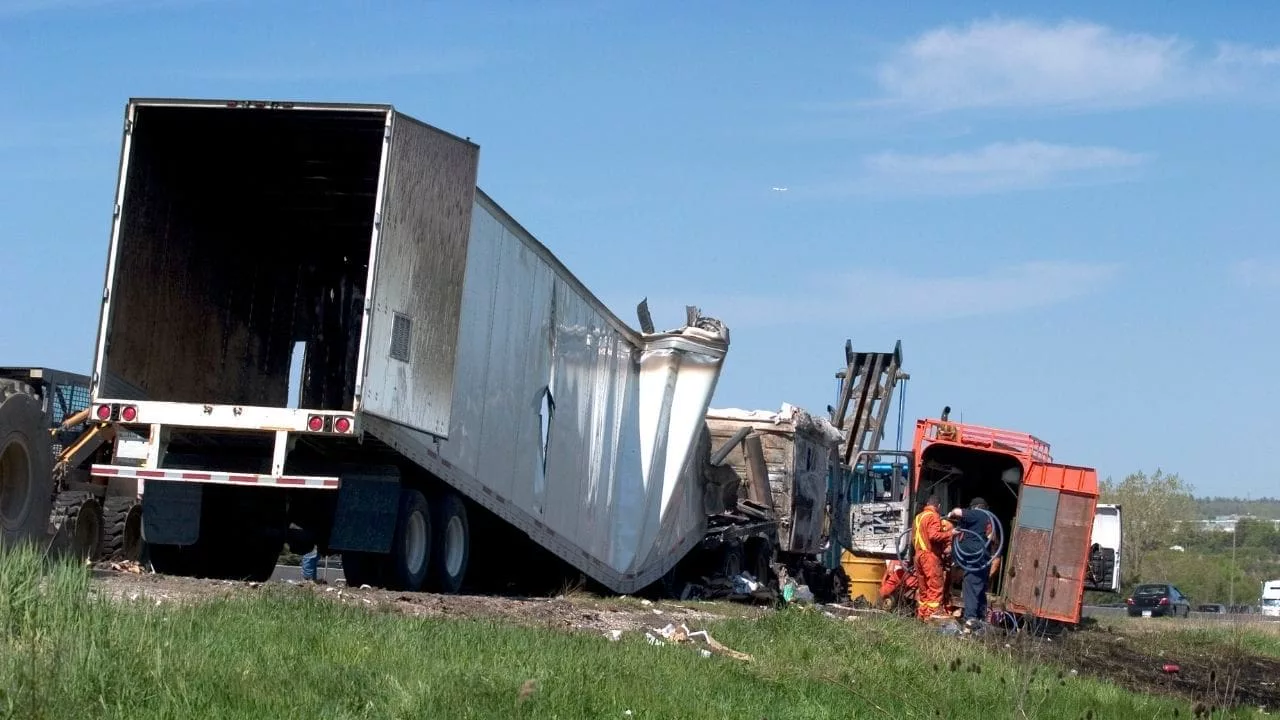
Kentucky sits where the I-65 north-south freight corridor crosses I-64 and I-71, so big trucks share the state’s interstates with heavy passenger traffic. The Kentucky Transportation Cabinet 2024 Traffic Collision Facts report counted 9,446 accidents involving trucks of at least 10,000 pounds registered weight, including 73 fatal accidents and 80 people killed. The causes of those accidents follow patterns documented in the federal Large Truck Crash Causation Study, and those patterns point at the driver, the carrier, and often both.
Kentucky Truck Accident Counts
KYTC’s truck figures are a slice of the statewide public-road file. In 2024, Kentucky recorded 117,661 public-road accidents, and trucks at or above 10,000 pounds registered weight were in 9,446 of them.
| 2024 Public-Road File | Accidents | Fatal Accidents | People Killed |
|---|---|---|---|
| 2024 public-road fileAll vehicles | Accidents117,661 | Fatal accidents659 | People killed707 |
| 2024 public-road fileTrucks 10,000 lb or more | Accidents9,446 | Fatal accidents73 | People killed80 |
Source: Kentucky Transportation Cabinet
Leading Causes of Big Truck Accidents
Driver error is the leading cause federal investigators assigned to trucks, followed by vehicle defects and environmental conditions. The Large Truck Crash Causation Study examined 967 injury and fatal accidents from 2001 to 2003. When the truck was assigned the critical reason, the driver accounted for 87.2% of those reasons, the vehicle for 10.1%, and the environment for 2.3%.
87.2%
Critical reasons assigned to the truck driver
10.1%
Critical reasons assigned to the truck itself
2.3%
Critical reasons assigned to the environment
Trucks assigned the critical reason, Large Truck Crash Causation Study. Source: Federal Motor Carrier Safety Administration.
Driver Inattention and Distraction
Recognition errors, where the driver was not paying attention, was distracted, or failed to observe the situation, made up 28.4% of the critical reasons assigned to trucks. Under 49 CFR 392.82, commercial drivers may not use a handheld mobile phone while driving, and 49 CFR 392.80 bans texting. Phone records can show whether a driver was using a phone at the moment of impact, as covered in the firm’s page on trucker cell phone rules.
Driver Fatigue and Hours-of-Service Violations
Fatigue was coded for 13.0% of truck drivers in the study, and 9.2% were coded as under work-related pressure. Hours-of-service violations, documented through electronic logging device data, create an objective record of whether the driver was within federal driving limits when the accident occurred.
Lane Departures and Failure to Yield
Among trucks assigned the critical reason, the most common critical event was crossing over a lane line or leaving the road, coded for 32.1% of those trucks. Another vehicle in the truck’s travel lane was coded for 21.7%, and turning at or crossing an intersection for 10.3%. A tractor-trailer that merges, changes lanes, or enters traffic without yielding brings 80,000 pounds of momentum into a space the other driver cannot escape.
Loss of Control
Loss of control, including traveling too fast for conditions, was the critical event for 28.6% of trucks assigned the critical reason. Jackknife accidents and rollovers often involve mechanical contributions such as improper load distribution, brakes out of adjustment, or tire defects. When a rollover or jackknife traces to a known defect the carrier failed to repair, or to a load that was not secured, the carrier faces direct liability independent of the driver.
Tire and Brake Failures
Brake problems were the most common vehicle factor, coded for 29.4% of trucks. The vehicle critical reasons assigned to trucks were concentrated in three areas: braking capacity, tire or wheel failure, and cargo shift. Truck tire blowout accidents cause sudden lane departures on high-speed interstates. Under 49 CFR Part 396, carriers must systematically inspect, repair, and maintain their vehicles, and Driver Vehicle Inspection Reports can show a defect that was flagged and never repaired.
Speed and Aggressive Driving
Traveling too fast for conditions was coded for 22.9% of truck drivers, and aggressive driving such as tailgating and weaving for 6.6%. Speeding includes driving over the posted limit and driving too fast for rain, fog, ice, or a construction zone. FMCSA and NHTSA withdrew their proposed rule requiring speed limiting devices on heavy trucks on July 24, 2025, so speed compliance rests with the carrier and the driver.
Impaired Driving
Commercial drivers face a stricter alcohol standard than other drivers. 49 CFR 392.5 bars a driver from having any measured alcohol concentration while on duty, and Part 382 treats an alcohol concentration of 0.04 or greater as a violation that removes the driver from safety-sensitive work. Part 382 also requires post-accident alcohol and drug testing after a fatal accident, and after certain injury or tow-away accidents when the driver is cited. When a carrier skips required post-accident testing, that failure is evidence against the carrier, as the page on commercial DUI truck accidents explains.
Weather-Related Accidents
Weather factors were present for 14.1% of trucks in the study. Ice, heavy rain, and fog make stopping distance critical. Carriers and dispatchers who push drivers to keep schedule in dangerous weather instead of letting them pull off share responsibility for the accidents that follow. Weather-related truck accident evidence includes dispatch logs, weather service data, and driver communications.
Multiple Causes in One Accident
Most truck accidents have more than one contributing factor. The study codes one critical reason per accident but also records every associated factor present, and FMCSA states that none of those variables alone should be considered the cause. A driver who was fatigued, driving a truck with deferred brake maintenance, and over the hours limit presents a case against both the driver and the carrier.
The cause of the accident decides who is liable and what evidence exists. A distraction case produces phone records. A fatigue case produces logging data and carrier scheduling records. A brake failure case produces maintenance records, inspection reports, and possible manufacturer liability. The categories of trucking evidence follow from that first question.
Find Out What Caused Your Truck Crash
Fatigue, distraction and brake failure each leave a different trail of records, and the cause of a truck crash decides which companies answer for it. Sam Aguiar Injury Lawyers has a dedicated trucking team that chases those records, from electronic logs to maintenance files. Sam Aguiar has been named a Forbes Best-In-State personal injury lawyer, and your fee never goes up if the case goes to litigation. A free case review is the first step.
Frequently Asked Questions
1What is the most common cause of big truck accidents?+
2Can the trucking company be sued when a mechanical failure caused the accident?+
3How many truck accidents happen in Kentucky each year?+
4What alcohol limit applies to commercial truck drivers?+
5Is there a federal speed limiter requirement for trucks?+
Latest Articles
Kentucky Diminished Value Claims
Kentucky drivers may pursue a repaired vehicle’s leftover market loss from the at-fault driver as part of a.
FMCSA Revoked ELDs: Fleet Compliance and Enforcement Deadlines
FMCSA removed five electronic logging devices from the registered list on August 6, 2026, and set an October.
FMCSA English Proficiency Rule and OOS Enforcement
FMCSA English Proficiency Rule Sam Aguiar Injury Lawyers August 11, 2026 7 minute read On This Page.