

Injury Guides
Car Accident Chest Injuries

Key Takeaways
Chest Injury Mechanics
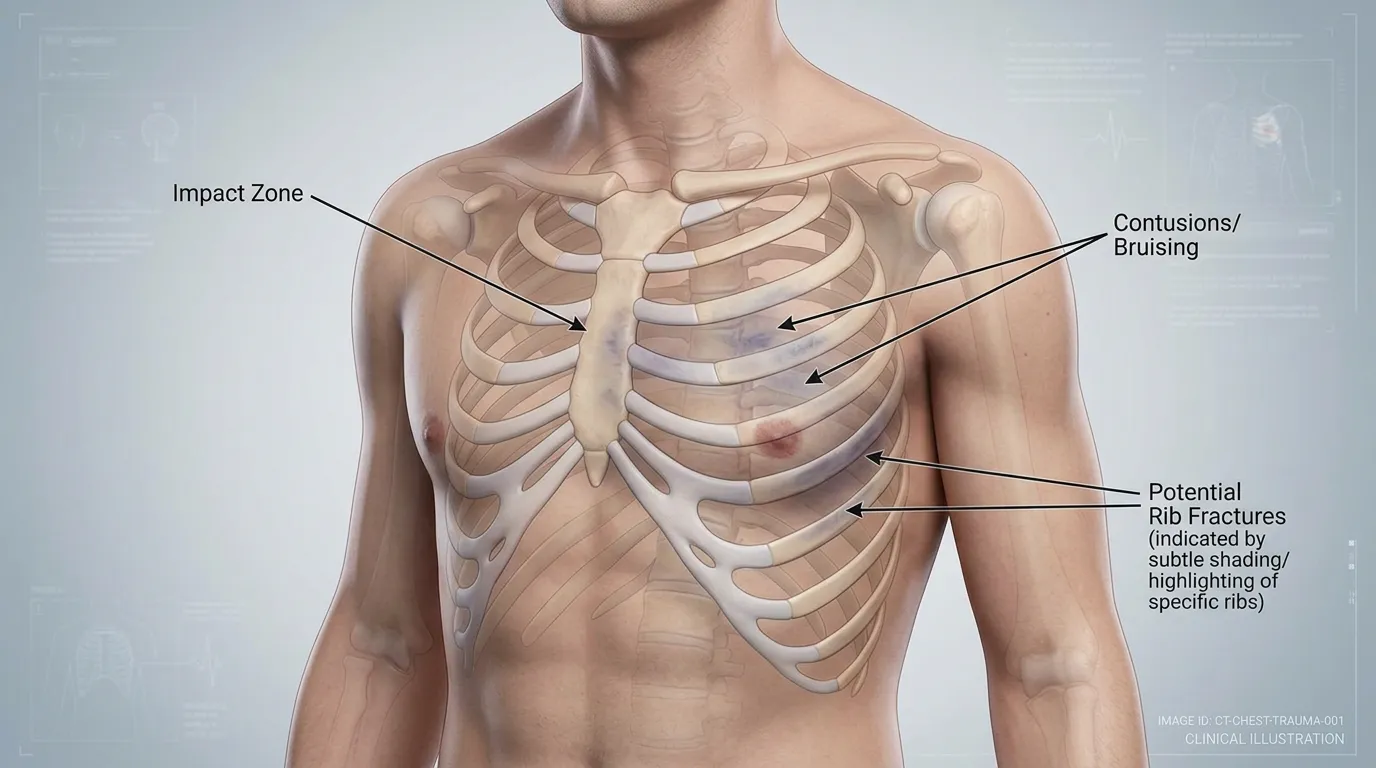
Car accident chest injuries can affect the chest wall, lungs, heart, and major blood vessels at the same time. A peer-reviewed CT review of blunt chest trauma describes the broad injury pattern and explains why imaging findings must be read with the examination, symptoms, and the rest of the trauma record.
The chest is not one structure. It includes the ribs, sternum, muscles, pleural space, lungs, heart, and major vessels. Direct impact can fracture the chest wall. Compression can injure the lung or pleural space. Rapid deceleration can create shearing forces around fixed structures. A peer-reviewed radiology review describes each of these mechanisms and notes that several types of thoracic injury can coexist in one patient.
That combination is why a chest injury cannot be reduced to a pain score or one line in a discharge summary. A rib fracture may appear with pulmonary contusion, pneumothorax, or hemothorax. A sternal fracture can prompt evaluation for deeper injury. The 2025 WSES-AAST guidelines separate immediately dangerous conditions from injuries that still require careful definition and monitoring.
The record also needs to show what changed for the person. Pain with breathing, coughing, lifting, sleep, or ordinary movement can affect work and daily routines even when the person is no longer in the hospital. Those details should appear in dated treatment notes and restrictions, not as a generic statement that the chest hurt.
This injury page adds the medical and evidentiary detail that the parent Car Accident Injuries page does not carry. It focuses on the structures involved, the tests used to identify them, and the records that distinguish a chest-wall injury from injury inside the chest.
Chest Injury Evidence
A useful chest-injury file explains four things: what force reached the chest, what clinicians found, how the condition was managed, and what limitations remained. The imaging does important work, but it is one part of that sequence. The blunt-chest-trauma imaging review explains that CT can reveal injuries not fully shown on an initial chest radiograph and can define the chest wall, pleural space, lungs, mediastinum, heart, and vessels in greater detail.
Mechanism And Onset
Emergency and trauma records should identify the direction of force, restraint use, chest tenderness, breathing complaints, and when symptoms began. A consistent early history gives later findings a reliable starting point.
Imaging Findings
Reports should name the structure, side, extent, and associated findings. The images and reports matter together because the written impression may summarize only the most urgent abnormality.
Monitoring And Procedures
Oxygen use, serial examinations, cardiac monitoring, chest-tube placement, repeat imaging, and specialist decisions show how clinicians assessed the injury over time.
Functional Change
Work restrictions and dated notes about breathing, lifting, sleep, and movement connect the diagnosis to daily consequences. Specific examples are more useful than broad descriptions.
Chest CT does not replace clinical judgment. The same radiology literature emphasizes that trauma findings must be interpreted systematically because a patient can have several injuries at once. A complete file keeps the radiology images, final reports, trauma notes, procedure records, and follow-up findings together.
Some injuries deserve a closer look of their own. The Car Accident Rib Fractures article covers rib-specific medical issues, while the Sternum Fracture page focuses on breastbone injury. Here, the focus stays on the broader chest pattern and how those findings fit together.
Building A Clear Injury Record
Chest injury claims are easier to evaluate when the medical and functional evidence follows one chronology. The sequence should identify the initial injury, later findings, clinical decisions, and the effect on the person without filling gaps with assumptions.
Initial Record
Collect the ambulance, emergency, trauma, and imaging records that document the first complaints and findings.
Injury Map
List each chest-wall, pleural, lung, cardiac, and vascular diagnosis by side and date. Keep suspected findings separate from confirmed diagnoses.
Clinical Decisions
Match monitoring, repeat imaging, procedures, referrals, and restrictions to the finding that prompted each decision.
Functional Record
Document the work, sleep, breathing, lifting, and household limits that appear in treatment notes and other reliable records.
Final Review
Resolve conflicting dates, missing reports, and unexplained changes before the file is presented to an insurer or another reviewer.
This structure avoids two common errors. It does not treat every chest diagnosis as equally severe, and it does not let one scan stand in for the full medical picture. The source record should show why each conclusion is there.
Our job isn’t done until clients say,‘Wow, that was an amazing experience.’
Why Clients Choose Sam Aguiar
1,000+ Five-Star Reviews
“Outstanding group of people. They made sure that I could heal with peace of mind.”
Imaging And Injury Scores
Modern CT can detect very small pockets of air in the pleural space. An August 2026 study, Clinical significance of small traumatic pneumothoraces, looked at 94 adult vehicle occupants in the Crash Injury Research and Engineering Network. Each had a pneumothorax or hemothorax and analyzable CT imaging. Fifty-four pneumothoraces measured less than 1 percent of the affected hemithorax.
The study did not conclude that a trace pneumothorax should be ignored. It found that overall Injury Severity Score was the strongest predictor of the composite adverse outcome and that removing very small pneumothoraces from the score did not reduce predictive performance in this selected sample. The narrow point is that a tiny CT finding and the person’s total injury burden describe different parts of the case.
Another August 2026 study, Comparison of clinician injury severity ratings with Abbreviated Injury Scale designations for thoracic injuries, asked 18 physicians to rate 21 CIREN thoracic injuries shown on radiographic images. Their ratings exactly matched the official AIS designation in 43 percent of responses and were within one severity level in 89 percent. Higher-severity pneumothorax and hemothorax were often rated below the AIS designation.
AIS is a standardized injury-classification framework, not a bedside treatment rule. The study shows why the chart may contain several valid descriptions of the same injury: a radiology finding, a clinician’s assessment, and a coded severity level. A careful claim review preserves each one and does not force them into a single label.
Imaging In Context
A chest image has to be read with the history, examination, oxygen status, monitoring, and later course. The WSES-AAST guidelines use different imaging approaches for stable and unstable patients and stress defining the type and extent of injury.
For a claim, that means preserving the images and the final report, then linking both to the clinical decisions they informed. Our Radiology Imaging page explains that evidence in more detail.

Rib, Lung, And Heart Injuries
Rib And Sternum Fractures
Rib and sternum fractures document injury to the chest wall, but their importance is not limited to the bone. A 2024 trauma study found higher rates of pneumothorax and hemothorax among patients with rib fractures than among patients without them. The finding supports a broader review of associated injury rather than treating the fracture as an isolated line item.
Location and pattern matter. Multiple fractures, displacement, and associated lung findings can change the clinical picture. The record should identify the side, rib levels, displacement, related pleural or lung injury, pain-control plan, and activity restrictions. A separate sternum fracture analysis can provide more detail when the breastbone is involved.
Pneumothorax And Hemothorax
A pneumothorax is air in the pleural space. A hemothorax is blood there. Either can appear with rib fractures or other blunt trauma, and they can occur together. The thoracic trauma guidelines address imaging and management according to the patient’s condition and the extent of injury. This page does not turn those recommendations into personal medical advice.
For documentation, the file should preserve laterality, estimated size, interval change, oxygen needs, procedures, and follow-up imaging. A trace CT finding, a chest tube, and a large collection are not interchangeable. The 2026 small-pneumothorax study is useful because it shows why size and total injury burden both deserve attention.
Pulmonary And Cardiac Contusions
A pulmonary contusion is injury to lung tissue after blunt force. CT may show contusion earlier or more clearly than a chest radiograph, according to the radiology review. The medical record may also include oxygenation, respiratory observations, repeat imaging, and the course of associated injuries.
Blunt cardiac injury covers a range of cardiac effects after chest trauma. The National Library of Medicine review discusses electrocardiography, cardiac biomarkers, monitoring, and imaging in the clinical evaluation. A claim should use the diagnosis and actual testing in the chart, not infer a cardiac contusion from chest pain alone.
Chest trauma can overlap with middle-back symptoms without being the same injury. The Thoracic Spine Injury page addresses vertebral and spinal structures. Keeping the two records distinct prevents a chest-wall diagnosis from obscuring a separate thoracic-spine condition.
For Kentucky clients, the injury record can be reviewed with the broader liability and damages evidence. The Louisville office page explains the local contact path, and the firm’s case results provide verified examples of prior work without predicting the outcome of another case.

Sternum Fracture
Breastbone injury, associated findings, and the records that show how the condition was evaluated.
Updated August 12, 2026
Radiology Imaging
How images, reports, and clinical findings work together in an injury record.
Updated August 17, 2026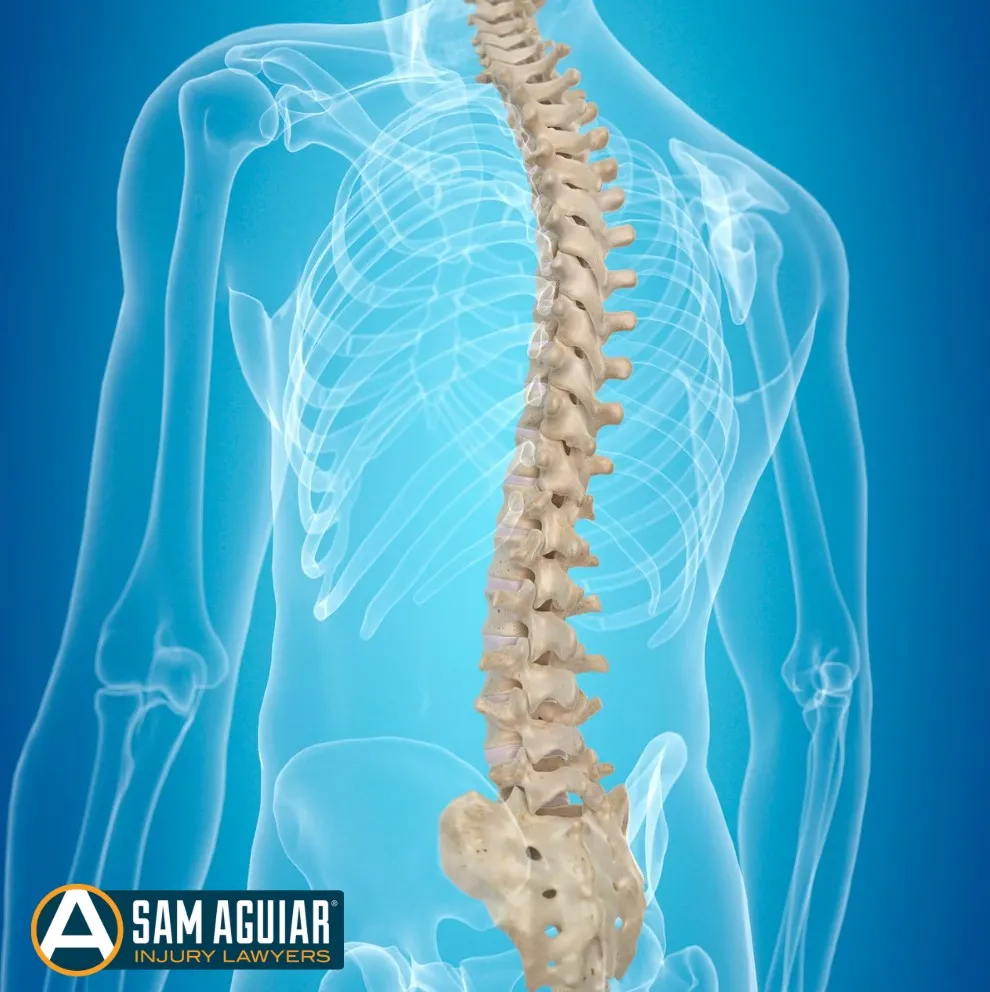
Thoracic Spine Injuries
How middle-back injuries differ from chest trauma and which records support each diagnosis.
Updated August 12, 2026Ready to Take Action on Your Case?
After a serious injury, medical bills pile up while the insurance company looks for ways to pay you less. Most law firms take their cut first and leave you with whatever is left. Sam Aguiar Injury Lawyers does things differently. With our exclusive Bigger Share Guarantee®, you always get more. Every client gets a dedicated three-person team: an attorney, a case manager, and a legal assistant. We never raise our fee rate if we have to go to court, and you pay $0 Out-Of-Pocket Forever.
Frequently Asked Questions
1What injuries can affect the chest after a car accident?
A car accident can injure the ribs, sternum, pleural space, lungs, heart, major vessels, diaphragm, or airways. The peer-reviewed CT review describes this spectrum and stresses that several findings may coexist. The actual diagnosis depends on the person’s examination, imaging, and clinical course.
2Can a chest X-ray miss an injury shown on CT?
Yes. Chest radiography remains useful, but CT can reveal additional chest-wall, pleural, lung, mediastinal, and vascular detail. The radiology literature reports greater CT sensitivity for several blunt-chest-trauma findings. Imaging choice still belongs to the treating clinicians.
3What is a traumatic pneumothorax?
A traumatic pneumothorax is air in the pleural space after an injury. Its clinical importance depends on the patient, size, associated injuries, symptoms, and change over time. The WSES-AAST guidelines address evaluation and management based on the full presentation rather than one label alone.
4What did the 2026 small-pneumothorax study find?
The 2026 CIREN study reviewed 94 adult vehicle occupants and found many CT-detected pneumothoraces measured less than 1 percent of the affected hemithorax. Overall Injury Severity Score was a stronger outcome predictor. The study did not create a rule to ignore or avoid treating a small pneumothorax.
5Why can a clinician rating differ from an AIS score?
A clinician’s impression and the Abbreviated Injury Scale serve different purposes. In the 2026 thoracic-injury study , physician ratings exactly matched the AIS designation in 43 percent of responses and were within one level in 89 percent. The chart, images, and code can each describe a different part of the injury.
6Which records help document a chest injury?
Useful records include ambulance and emergency notes, trauma assessments, the actual radiology images, final reports, oxygen and monitoring records, procedure notes, repeat imaging, specialist evaluations, work restrictions, and follow-up findings. The file should connect each conclusion to a dated source rather than rely on a diagnosis list alone.
7Does a rib fracture prove there is lung damage?
No. A rib fracture does not by itself prove a lung injury. It can occur with pneumothorax, hemothorax, or pulmonary contusion, which is why associated findings are evaluated separately. A 2024 trauma study found higher pneumothorax and hemothorax rates among patients with rib fractures, but an individual diagnosis still requires patient-specific evidence.
8Why should chest and thoracic-spine records stay separate?
Chest trauma involves the chest wall and structures inside the chest. Thoracic-spine injury involves the middle portion of the spine. The same accident can cause both, but the anatomy, testing, diagnoses, and restrictions differ. Separate records make each condition easier to evaluate and prevent one diagnosis from obscuring another.