

Injury Guides
Shoulder Injuries From a Car Accident

Key Takeaways
Shoulder Injuries in a Car Accident
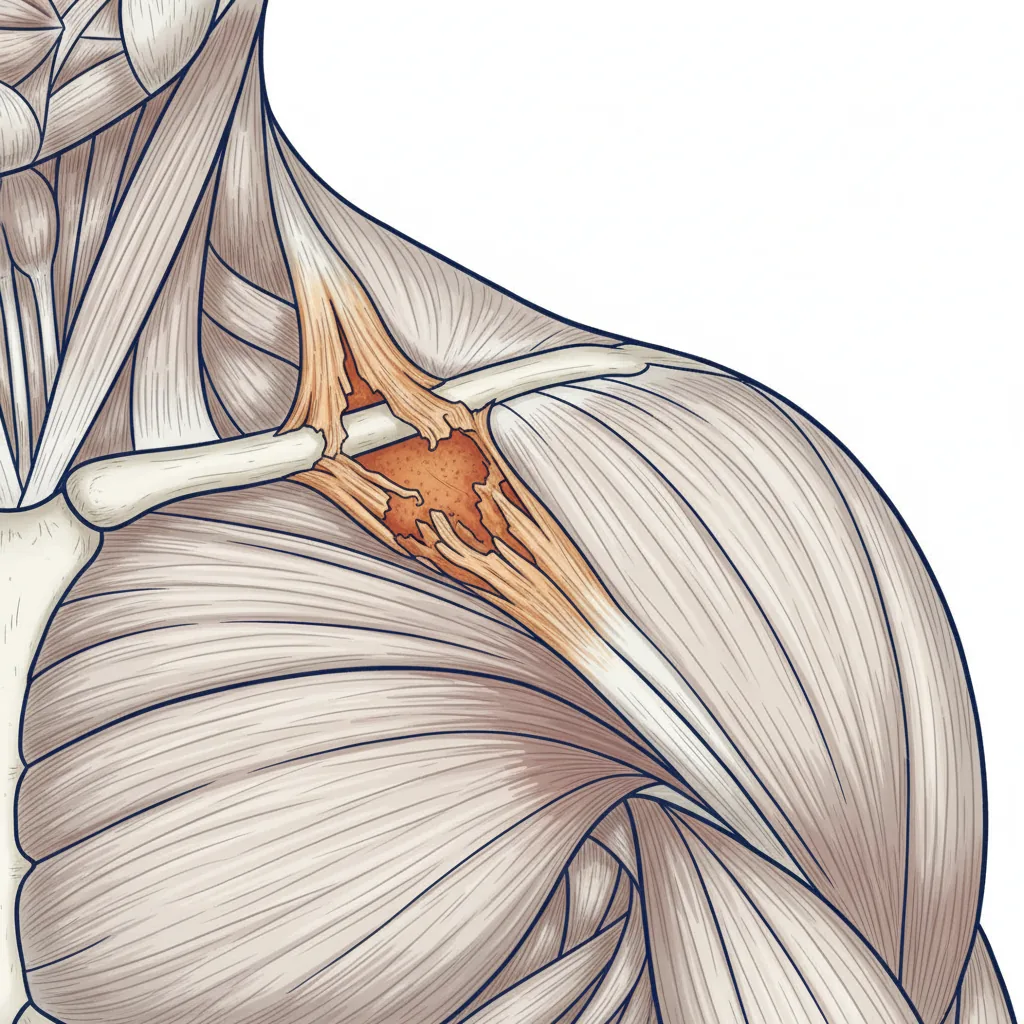
Shoulder injuries can limit lifting, reaching, sleep, and work. The shoulder joint is the most mobile joint in the body, which also makes it one of the most vulnerable when crash forces enter the picture. During a collision, the shoulder takes on force from multiple directions at once as the seatbelt locks across the torso and the arm braces against the wheel or door.
According to a force-mechanism analysis published in the American Journal of Roentgenology, clavicular fractures and shoulder girdle injuries most commonly result from direct lateral impact on the shoulder, where compressive force travels along the shoulder girdle. The result is a shoulder that looks intact on a plain X-ray but holds injuries that only surface on advanced imaging, a gap between what the ER films show and what an MRI arthrogram reveals that is one of the most common reasons insurers undervalue these claims.
Shoulder Injury Types From Car Accidents
Rotator cuff tears involve the four-tendon group holding the humeral head in the socket tearing partially or completely, with seatbelt force and bracing leading mechanisms in motor vehicle collisions; full-thickness tears typically require arthroscopic surgical repair. SLAP tears involve the cartilage rim at the top of the glenoid socket tearing where the biceps tendon anchors, and according to the Orthopaedic Journal of Sports Medicine, SLAP tears are present in 72.6 percent of cases involving acromioclavicular injuries from sudden shoulder loading. Bankart lesions, anterior labral tears, often accompany shoulder dislocation and require surgical repair to restore stability.
According to the American Academy of Orthopaedic Surgeons, clavicle fractures account for 35 to 45 percent of all shoulder girdle injuries and frequently result from motor vehicle collisions and direct lateral shoulder impact. Anterior shoulder dislocation, where the humeral head is forced out of the glenoid socket, commonly tears the anterior labrum in the process, creating instability that persists after the joint is reduced. Acromioclavicular joint separations occur when downward force strikes the acromion, tearing the AC and coracoclavicular ligaments, with high-grade separations typically requiring surgical repair.
Missed Shoulder Injuries
The emergency room after a car accident is built for triage, not detailed orthopedic diagnosis. Plain X-rays, standard in any ER, show bone fractures clearly but do not show rotator cuff tears, SLAP tears, labral injuries, or partial tendon disruption. This creates a documentation gap that insurers know well: without imaging showing soft-tissue injury, adjusters often classify the claim as a soft-tissue strain and set an internal reserve accordingly.
Early MRI Arthrograms
A standard MRI of the shoulder has limitations when it comes to labral pathology. Research published in the American Journal of Roentgenology found that MR arthrography is significantly more sensitive and specific than conventional MRI for detecting labral tears. When an orthopedic surgeon orders an MRI arthrogram, reviews the results, and documents a SLAP tear or partial rotator cuff tear requiring treatment, that imaging study changes the trajectory of the entire claim.
Insurance Reserves in Shoulder Cases
Every insurance claim has a reserve, an internal dollar amount the insurer sets aside from the moment the claim opens. Adjusters set initial reserves based on early information, which at the beginning of a shoulder claim typically means only an ER visit and initial X-ray. As a claim develops and medical evidence comes in, including a surgical recommendation or a confirmed labral tear, the adjuster is expected to update that reserve to reflect the actual documented injury.
Shoulder Surgery Recovery
Rotator Cuff Repair Timeline
Based on published medical literature, individual recovery varies, but this represents a documented recovery course for a large rotator cuff tear requiring arthroscopic repair. Initial rest, anti-inflammatories, and physical therapy are typically prescribed first, though conservative care does not repair a full-thickness tear, and persistent pain with overhead motion often leads to a surgical consultation. Outpatient arthroscopic repair follows, with anchors placed to reattach the tendon to the bone; according to the Hospital for Special Surgery, the non-healing rate even with surgery ranges from 20 to 94 percent depending on tear size and patient factors.
The shoulder is then immobilized in a sling with no active use of the arm, and passive range-of-motion exercises begin within the first week, with tendon-to-bone healing taking six to eight weeks per Hospital for Special Surgery. Active range-of-motion and progressive strengthening follow, with a traditional 22 to 26 week rehabilitation course standard per research in Clinics in Shoulder and Elbow. Full recovery from a large tear can take 6 to 12 months, and many patients reach a functional plateau with a permanent reduction in overhead strength, endurance, and range of motion, particularly for heavy lifting or repetitive overhead work.
Why Clients Choose Sam Aguiar
1,000+ Five-Star Reviews
“Outstanding group of people. They made sure that I could heal with peace of mind.”
Claiming Damages From a Shoulder Injury
A rotator cuff tear or SLAP tear affects daily life well beyond the imaging report. It shows up when lifting a young child becomes difficult, when reaching overhead produces a sharp ache, and when sleeping on the dominant side is no longer possible. For warehouse workers and construction workers, a shoulder injury is not a minor inconvenience; it can end a career path built on consistent overhead lifting and repetitive reaching. The injury does not have to require surgery to represent a real, documented loss. Even a partial tear that fails conservative treatment and produces chronic pain with overhead activities carries genuine, provable value.
Orthopedic Records for Shoulder Injuries
The orthopedic surgeon treating a shoulder injury after a car accident does more than provide care. Their documentation, imaging orders, and surgical decisions build the medical record that either supports or limits the strength of a claim. A labral tear diagnosis calls for orthopedic records that clearly explain trauma-related damage, the treatment path, functional limits, and future care needs, since that documentation is what changes how an insurance company evaluates the case.
What Damages Can I Recover After an Injury?
After an injury, damages come in two forms: economic and non-economic. They are designed to make a victim whole for out-of-pocket losses and to compensate them for the physical and emotional tolls that come with the injuries.
Ready to Take Action on Your Case?
After a serious injury, medical bills pile up while the insurance company looks for ways to pay you less. Most law firms take their cut first and leave you with whatever is left. Sam Aguiar Injury Lawyers does things differently. With our exclusive Bigger Share Guarantee®, you always get more. Every client gets a dedicated three-person team: an attorney, a case manager, and a legal assistant. We never raise our fee rate if we have to go to court, and you pay $0 Out-Of-Pocket Forever.
Frequently Asked Questions
1Can a shoulder injury be serious even if the X-ray looks normal?
Yes. Plain X-rays show fractures clearly but do not show rotator cuff tears, SLAP tears, labral injuries, or partial tendon disruption. A shoulder can look intact on the initial ER film while still carrying a soft-tissue injury that only appears on an MRI or MRI arthrogram.
2What shoulder injuries are common after a car accident?
Rotator cuff tears, SLAP tears where the labrum tears near the biceps tendon anchor, Bankart lesions from shoulder dislocation, clavicle fractures, and acromioclavicular joint separations are the most common shoulder injuries from motor vehicle collisions.
3Why do insurance companies undervalue shoulder injury claims?
Without imaging that shows soft-tissue injury, adjusters often classify the claim as a soft-tissue strain and assign a reserve accordingly. An MRI arthrogram ordered by an orthopedic surgeon that documents a SLAP tear or rotator cuff tear changes that classification and the reserve that follows it.
4How long does recovery take after rotator cuff surgery?
Based on published medical literature from the Hospital for Special Surgery, tendon-to-bone healing after arthroscopic repair takes six to eight weeks with the arm immobilized in a sling, followed by a traditional 22 to 26 week rehabilitation course. Full recovery from a large tear can take 6 to 12 months, and many patients reach a functional plateau with some permanent reduction in overhead strength.
5Do I need surgery for every shoulder injury from a car accident?
No. Not every shoulder injury requires surgery. Even a documented partial tear that fails conservative treatment and produces chronic pain with overhead activities represents a real, documented loss, regardless of whether surgery ultimately becomes necessary.
6What records matter most in a shoulder injury claim?
Orthopedic records that clearly explain trauma-related damage, the treatment path, functional limits, and future care needs matter most. The surgeon’s documentation, imaging orders, and treatment decisions build the medical record that either supports or limits the value of the claim.