

Car Accident Rotator Cuff Injuries

Key Takeaways
- Sudden tears from traumas cause immediate, intense shoulder pain and arm weakness, according to Cleveland Clinic, while Mayo Clinic notes that some rotator cuff injuries do not cause pain.
- Plain x-rays of a shoulder with rotator cuff pain are usually normal because x-rays do not show soft tissues like the cuff, the American Academy of Orthopaedic Surgeons explains, while an MRI or ultrasound shows the location and size of a tear.
- In a 2022 study in the Orthopaedic Journal of Sports Medicine of 31 patients aged 70 to 82 with traumatic rotator cuff tears, motor vehicle collisions were the mechanism of injury in 12.9%.
Four Tendons Around the Shoulder
Four muscles come together as tendons to form a covering around the head of the humerus, the upper arm bone, and the American Academy of Orthopaedic Surgeons (AAOS) identifies that covering as the rotator cuff. The cuff attaches the humerus to the shoulder blade and helps lift and rotate the arm, the AAOS explains, and a lubricating sac called a bursa sits between the cuff and the acromion, the bone on top of the shoulder.
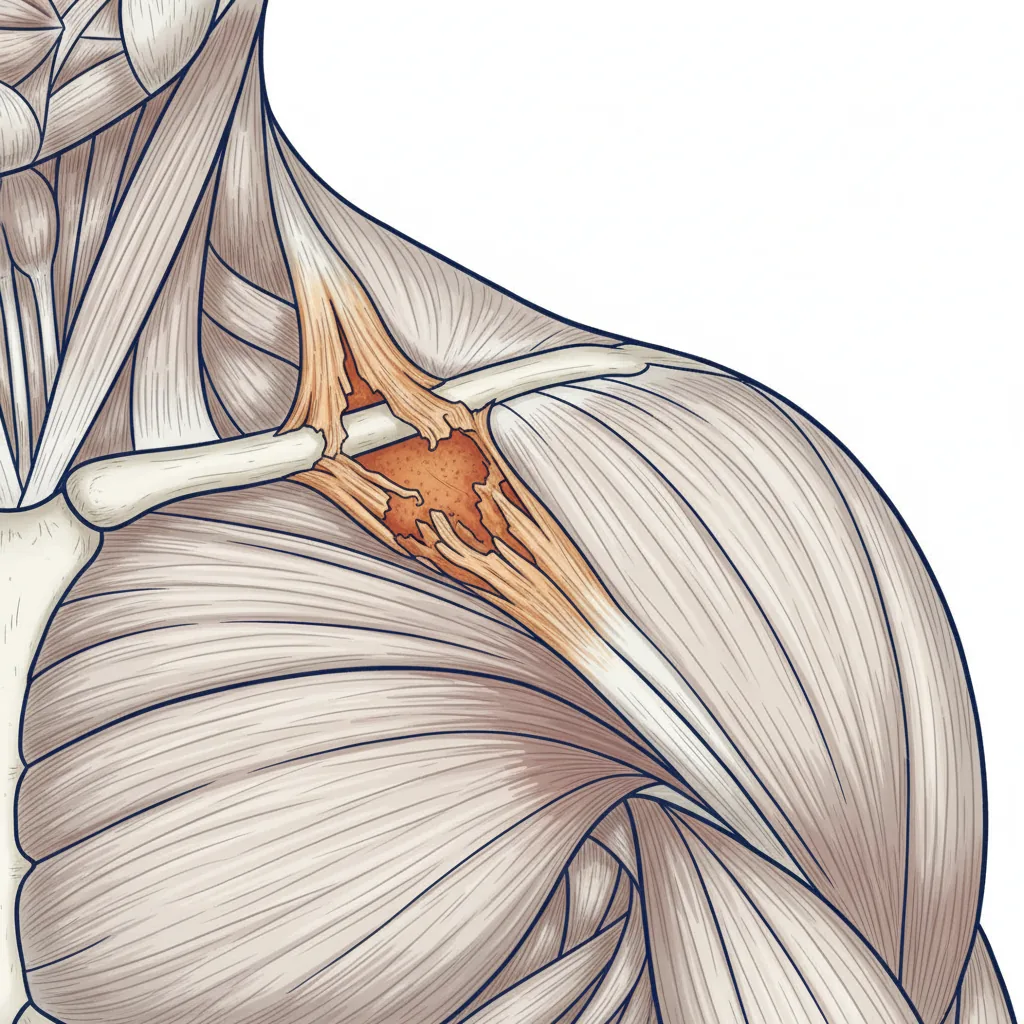
The supraspinatus rotates and lifts the arm, the infraspinatus helps rotate it, the teres minor also helps turn and rotate it, and the subscapularis holds the arm outstretched, away from the body, in Cleveland Clinic‘s description.
Working together, the muscles keep the ball of the upper arm bone firmly within the shallow socket of the shoulder, Mayo Clinic notes.
Crash Forces Acting on the Cuff
Progressive wear and tear of the tendon tissue over time is the most common cause of rotator cuff injuries, Mayo Clinic reports, but the cuff also can be injured in a single incident during falls or accidents.
Falling on an outstretched arm or lifting something too heavy with a jerking motion can tear the rotator cuff, the AAOS says.
In a 2022 study in the Orthopaedic Journal of Sports Medicine of 31 patients aged 70 to 82 who had traumatic tears repaired arthroscopically, the mechanisms of injury included low-energy falls in 87.1% and motor vehicle collisions in 12.9%. Every patient in that study was referred from the emergency department after a traumatic event, and the authors excluded anyone with shoulder symptoms before that event to keep acute-on-chronic rotator cuff pathology out of the results.
A crash can damage more than the cuff. The AAOS lists a motor vehicle collision among the causes of a SLAP tear, an injury to the top of the labrum, and its page on shoulder trauma names motor vehicle collisions as a cause of collarbone and upper arm fractures. The page on shoulder injuries covers those fractures and dislocations.
Partial and Full-Thickness Tears
A partial tear, as the AAOS defines it, does not completely detach the tendon from the bone. In a full-thickness tear, part of the tendon has detached from the bone, and when the tendon is completely detached, the AAOS calls it a full-thickness complete tear.
MedlinePlus separates a sudden acute tear, which may happen with a fall onto an outstretched arm, from a chronic tear of the tendon that occurs slowly over time.
Surgery to repair the tendon may be needed if the rotator cuff has a complete tear, MedlinePlus says.
Symptoms After Impact
Tears that happen suddenly, such as from a fall, usually cause intense pain, the AAOS reports, and Cleveland Clinic says sudden tears from traumas cause immediate, intense shoulder pain and arm weakness.
The pain of a rotator cuff injury may be a dull ache deep in the shoulder that disturbs sleep, makes it difficult to comb the hair or reach behind the back, and comes with arm weakness, Mayo Clinic notes.
Rotator cuff tendon tears often cause pain at night, MedlinePlus reports, and the AAOS lists pain at rest and at night, especially when lying on the affected shoulder, along with weakness when lifting or rotating the arm.
Some rotator cuff injuries do not cause pain, Mayo Clinic adds. Mayo Clinic advises seeing a care team right away for immediate arm weakness after an injury, Cleveland Clinic points to the emergency room when the shoulder cannot move or after trauma, and MedlinePlus advises contacting a provider when shoulder pain continues or does not improve with treatment.
Shoulder Red Flags After a Crash
- Immediate weakness in the arm after the injury
- Immediate, intense shoulder pain
- Inability to move the shoulder
- Shoulder pain that continues or does not improve with treatment
Why Kentucky Hires
Sam Aguiar Injury Lawyers
Other Causes of Shoulder Pain
Tendinitis is an inflammation of the rotator cuff tendons and bursitis is an inflammation of the bursa, the AAOS writes, and impingement happens because the space between the acromion and the cuff tendons becomes smaller when the arm is raised.
The labrum is the ring of cartilage that surrounds the socket of the shoulder joint, and a SLAP injury damages its top part, the AAOS explains. The symptoms it lists include a sensation of locking, popping, catching, or grinding.
Pain can also start in the neck. During the exam, the AAOS says, a doctor tests arm strength in different positions and motions and may examine the neck to make sure the pain is not coming from a pinched nerve. The page on cervical spine injuries covers that side of the picture.
Three Conditions Compared Side by Side
The table sets a rotator cuff tear beside a SLAP tear and impingement with tendinitis, drawing on the AAOS pages on rotator cuff tears, SLAP tears, and impingement and tendinitis.
| Feature | Rotator Cuff Tear | SLAP Tear | Impingement and Tendinitis |
|---|---|---|---|
| What is injured | One or more cuff tendons, partly or fully detached from the bone | The top part of the labrum, the cartilage ring around the socket | Inflamed cuff tendons or bursa, with less room for the tendons as the arm is raised |
| Typical symptoms | Pain at rest and at night; weakness lifting or rotating the arm | Locking, popping, catching, or grinding; pain with movement | Pain and stiffness reaching overhead; pain worst at night |
| Imaging | X-rays usually normal; MRI or ultrasound shows the tear | MRI, sometimes an MRI arthrogram | X-rays usually normal or a small bone spur; MRI shows the tendons |
| First treatment | Nonsurgical care relieves pain and improves function in about 80 to 85% of patients | Nonsurgical in most cases | Nonsurgical in most cases |
X-Rays, Ultrasound, and MRI Findings
Because x-rays do not show soft tissues like the rotator cuff, the AAOS says, plain x-rays of a shoulder with rotator cuff pain are usually normal. Mayo Clinic agrees that a tear will not show up on an x-ray, though the film can show bone spurs or other potential causes of pain, such as arthritis.
An MRI or ultrasound can show the cuff tendons, and these tests show the location and size of a tear, the AAOS says. RadiologyInfo.org says MRI gives clear views of rotator cuff tears, injuries to the biceps tendon, and damage to the glenoid labrum, and that it does not use radiation.
Magnetic resonance arthrography is a special form of MRI that involves injecting contrast material into the joint, RadiologyInfo.org explains, and the AAOS says this kind of MRI arthrogram is sometimes needed to see a SLAP tear.
RadiologyInfo.org lists tendon tears or tendinitis of the rotator cuff among the uses of ultrasound and notes that, because the images are captured in real time, it can show a soft tissue structure moving. The same page says ultrasound has difficulty penetrating bone and can only see the outer surface of bony structures. The page on reading an MRI report walks through the terms that appear in the findings.
Age, Degeneration, and Silent Tears
Because most rotator cuff tears are largely caused by the normal wear and tear that comes with aging, people over 40 are at greater risk, the AAOS says. Mayo Clinic says the risk increases with age and that rotator cuff tears are most common in people older than 50.
In a 2013 screening study in the Journal of Orthopaedics of 664 residents of one village, 22.1% had full-thickness rotator cuff tears. The study found a rate of 0% among people in their 20s to 40s, 10.7% in their 50s, 15.2% in their 60s, 26.5% in their 70s, and 36.6% in their 80s, and asymptomatic tears made up 65.3% of all tears.
Traumatic tears still happen later in life. The 2022 study in the Orthopaedic Journal of Sports Medicine cites an estimate that 2.3% to 17.7% of older patients sustain traumatic rather than degenerative rotator cuff tears and notes that most older people have chronic degenerative tears marked by insidious onset and gradual deterioration. The page on pre-existing conditions covers how an older finding sits alongside a new injury.
Nonsurgical Care and Physical Therapy
In about 80 to 85% of patients, nonsurgical treatment relieves pain and improves function in the shoulder, according to the AAOS. Conservative treatment such as rest, ice, and physical therapy sometimes is all that is needed to recover from a rotator cuff injury, Mayo Clinic says, and physical therapy is usually one of the first treatments suggested.
MedlinePlus describes resting the shoulder and avoiding activities that cause pain, ice packs, and physical therapy to stretch and strengthen the shoulder muscles. An injection into the shoulder joint might be helpful, Mayo Clinic adds.
Among the risks of nonsurgical treatment, the AAOS notes that the size of the tear may increase over time.
Arthroscopic and Open Tendon Repair
Continued pain is the main reason for having surgery, the AAOS writes. Its list of situations in which surgery may be offered includes symptoms that have lasted 6 to 12 months, a large tear of more than 3 cm with good quality tendon tissue around it, significant weakness and loss of function, and a tear caused by a recent, acute injury.
MedlinePlus names shoulder pain at rest or at night that has not improved with a physical therapy program over 3 to 4 months, a complete tear, and a tear caused by a recent injury as reasons for the operation.
Most rotator cuff tears are now repaired arthroscopically, the AAOS reports. In that procedure, as Mayo Clinic describes it, surgeons insert a tiny camera, called an arthroscope, and tools through small incisions. A traditional open repair uses an incision several centimeters long over the shoulder, and a smaller version is called a mini-open repair, the AAOS explains, adding that the open, mini-open, and arthroscopic techniques have similar results for pain relief, strength and function, and patient satisfaction.
If the torn tendon is too damaged to be reattached to the arm bone, Mayo Clinic says, surgeons may use a nearby tendon as a replacement, and massive rotator cuff injuries may require shoulder replacement surgery.
Sling Time, Rehab, and Recovery Ranges
After a repair, the AAOS says, a patient will most likely use a sling and avoid using the arm for the first 4 to 6 weeks, and in most cases passive exercise begins within that same window.
Active exercises without the therapist’s help follow after 4 to 6 weeks, and strengthening exercises are introduced at 8 to 12 weeks, the AAOS explains.
Most patients have a functional range of motion and adequate strength by 4 to 6 months after surgery, the AAOS says, while a complete recovery takes several months. MedlinePlus puts recovery at 4 to 6 months, depending on the size of the tear and other factors.
Timing of surgery has been studied in older patients with traumatic tears. Both early repair, before 6 months, and delayed repair, at 6 months or later, produced clinically and statistically significant improvement in the 2022 study in the Orthopaedic Journal of Sports Medicine, with no significant difference in outcomes between the two groups.
Stiffness, Retears, and Frozen Shoulder
The AAOS lists nerve injury, typically involving the nerve to the deltoid muscle, infection, deltoid detachment during an open repair, and stiffness among the complications of rotator cuff surgery. Early rehabilitation lessens the likelihood of permanent stiffness or loss of motion, the same page adds.
Re-tear is on the same AAOS list: there is a chance of it after all types of repair, and the larger the tear, the higher the risk. In the 2022 study in the Orthopaedic Journal of Sports Medicine, retears in 2 of 31 patients (6.5%) were the only complication found. Some rotator cuff tears may not fully heal, MedlinePlus notes.
Any shoulder injury or surgery that requires a sling, brace, or wrap to keep the shoulder from moving increases the risk of frozen shoulder, Cleveland Clinic explains, and a rotator cuff tear is one of the examples it gives. In frozen shoulder, the connective tissue around the joint, called the joint capsule, becomes thick, stiff, and inflamed, the same page says.
Cleveland Clinic describes a freezing stage lasting six weeks to nine months, a frozen stage of two to six months, and a thawing stage of six months to two years, with symptoms typically getting better within one to three years. Left untreated, rotator cuff problems may lead to permanent loss of motion or weakness, Mayo Clinic warns.
Medical Records That Follow the Injury
A rotator cuff injury after a crash can leave records in several offices. The emergency chart holds the first complaint of shoulder pain and any x-rays, and a primary care or orthopedic note records the strength testing and the order for an MRI or ultrasound.
The radiology report gives the size and location of the tear, physical therapy notes track range of motion from visit to visit, and an operative report describes what the surgeon found inside the joint if surgery follows.
A short weekly note on night pain, overhead reach, and the chores or work tasks that had to wait shows how the shoulder limited ordinary life between appointments. Kept in date order, those notes cover the weeks that clinic records leave blank.
Shoulder Still Weak After the Crash?
A normal x-ray from the emergency room, or the word degenerative on a later MRI, can give an insurer an opening to say the crash never touched your rotator cuff. Sam Aguiar Injury Lawyers lines up the emergency records, the imaging reports, and the orthopedic and therapy notes so the timeline of your symptoms is on paper. Under our Bigger Share Guarantee®, you always walk away with more than the firm after bills, liens, and case costs. Start with a free case review.