
Self-Driving Car Accidents in Kentucky
Autonomous systems now share Kentucky roads, and responsibility for an accident can reach the driver, the vehicle maker, and other parties.
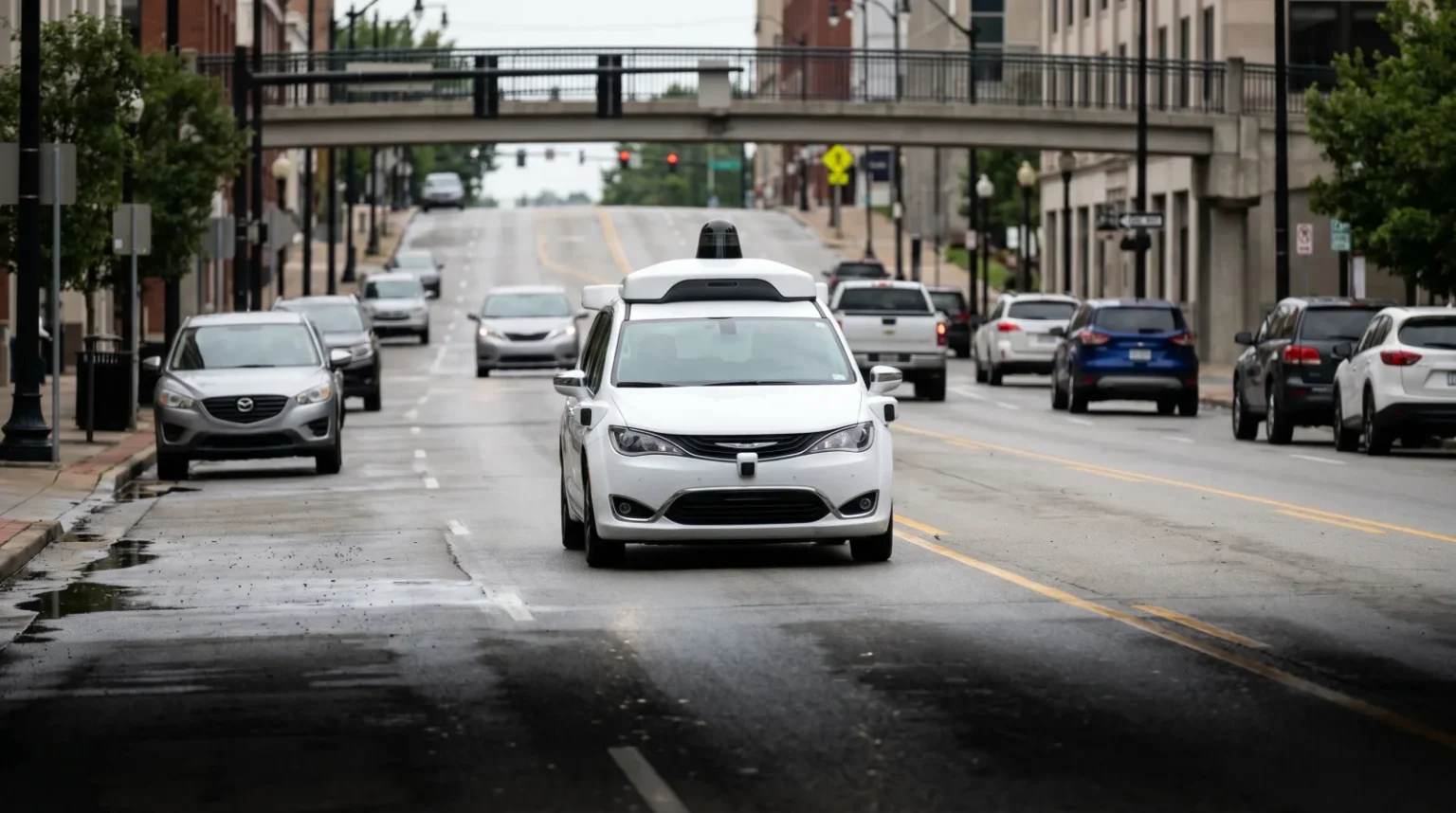
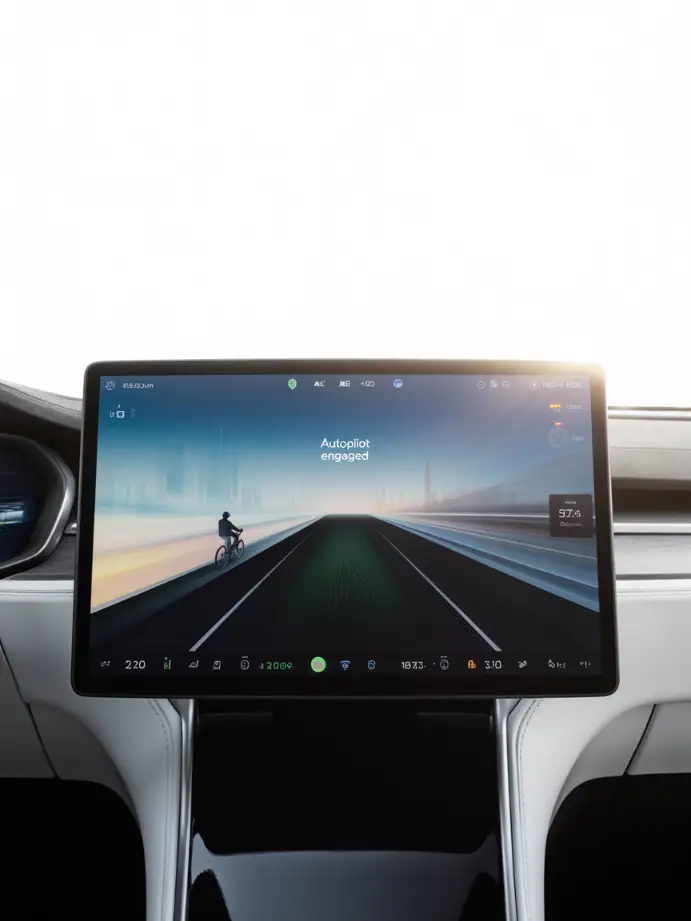
Cars that steer, brake and sometimes drive themselves now share public roads with everyone else. Some are driver support packages like Tesla’s Full Self-Driving software, where a person still has to watch the road. Others are fully driverless vehicles with no one behind the wheel. When one of these vehicles is involved in an accident, the question of who pays depends on how much of the driving the system was doing and what Kentucky’s autonomous vehicle statutes say.
Automation Levels and Crash Reporting
The National Highway Traffic Safety Administration (NHTSA) sorts driving automation into six levels. At Level 2, the system handles steering and speed together while the driver remains fully engaged and is responsible for driving the vehicle. Only at Levels 4 and 5 is the system fully responsible for the driving, with occupants riding as passengers. Even the highest level of driving automation available to consumers requires the full engagement and undivided attention of drivers.
| Level | What the System Does | Person in the Vehicle |
|---|---|---|
| Level 0 | Gives warnings, alerts or momentary emergency intervention | Driver does all the driving and stays fully engaged |
| Level 1 | Supports braking and speed or steering, not both | Driver stays fully engaged and attentive |
| Level 2 | Steers and controls speed at the same time | Driver stays fully engaged and is responsible for driving |
| Level 3 | Performs driving tasks in some conditions | Driver must stay available to take over |
| Level 4 | Drives itself within a limited service area | Occupants ride as passengers |
| Level 5 | Drives itself everywhere | Occupants ride as passengers |
The six levels run from momentary driver assistance to full automation.
Accidents involving these systems are reported to the federal government. Under NHTSA’s Standing General Order on crash reporting, identified manufacturers and operators must report certain accidents involving vehicles equipped with automated driving systems or Level 2 driver support systems. For a Level 2 vehicle, the order covers accidents where the system was in use within 30 seconds of impact and a vulnerable road user was struck, someone died, an air bag deployed or a person went to a hospital for treatment. The most severe reports are due within five days.
The reported totals are not normalized, because reporting companies do not have to say how many vehicles they operate or how far those vehicles travel. A count of reports alone does not show how often a given system is involved in an accident per mile.
Kentucky Law on Fully Autonomous Vehicles
Kentucky set its own rules in 2024. House Bill 7, titled an act relating to autonomous vehicles, became Acts Chapter 176 and created a set of new sections in KRS Chapter 186. Under the definitions in KRS 186.760, a fully autonomous vehicle is a motor vehicle equipped with an automated driving system designed to function without a human driver as a Level 4 or Level 5 system under the SAE J3016 standard.
KRS 186.763 allows a person to operate a fully autonomous vehicle on Kentucky highways without a human driver, as long as the automated driving system is engaged and the vehicle meets the statute’s conditions. The statute also sets these requirements:
- If the automated driving system fails and can no longer handle the driving, the vehicle must achieve a minimal risk condition, which KRS 186.760 defines as a condition that reduces the risk of an accident when a trip cannot or should not be completed.
- From the law’s July 15, 2024 effective date until July 31, 2026, a fully autonomous vehicle with a declared gross weight over 62,000 pounds had to carry a properly credentialed human driver to monitor the vehicle and step in if needed.
- Before running without a human driver, a person must file a law enforcement interaction plan with the Transportation Cabinet and the Kentucky State Police explaining how to reach fleet support staff, how to move and tow the vehicle, and how to tell whether the system is engaged.
Insurance requirements are much higher than for an ordinary car. Under KRS 186.766, a fully autonomous vehicle that is not a motor carrier must document financial responsibility to the Transportation Cabinet, with single-limit liability coverage of at least $1,000,000, before it runs on a Kentucky highway without a human driver. For comparison, KRS 304.39-110 lets an ordinary driver meet the tort liability requirement with split limits of $25,000 per person, $50,000 per accident and $25,000 for property damage.
A 2026 bill would have tightened those rules. House Bill 223 would have barred a school district from operating a fully autonomous vehicle as a school bus or for transporting students, and barred operating a fully autonomous vehicle that requires an operator with a commercial driver’s license. The House sent it to the Transportation Committee on January 14, 2026, the last action on its Legislative Research Commission record, and it did not become law.
Owner Treated as the Legal Operator
Kentucky answers the question of who counts as the driver of a driverless car. Under KRS 186.410, when an automated driving system is installed and engaged and the vehicle is operating as a fully autonomous vehicle, the owner of the vehicle is considered the operator. The owner must comply with traffic and motor vehicle laws whether or not the owner is physically inside the vehicle, and the automated driving system is treated as licensed to drive it.
The statute points to ownership, not to who happens to be riding. A passenger who hails a driverless ride does not own the vehicle, so the operator in that accident is whoever owns it, which may be the company running the service.
The same law changed accident reporting. Under KRS 189.635, an accident causing injury, death or a disabling vehicle must be reported right away to a law enforcement officer. When the accident involves a fully autonomous vehicle, that duty rests with the owner of the vehicle or a person acting for the owner.
Common Causes of Self-Driving Accidents
A self-driving accident can have more than one cause. The same accident can involve a software decision, a sensor that could not see, a driver who trusted the system too much and a road that gave the system poor information.
Software and System Failures
An automated driving system has to recognize a failure and respond to it. Kentucky writes that expectation into law: KRS 186.763 requires a fully autonomous vehicle to achieve a minimal risk condition if a system failure leaves it unable to perform the driving task. A vehicle that keeps moving in traffic after its system stops working properly raises a direct question about what the software was doing.
Sensor Limits in Poor Visibility
Cameras and other sensors can struggle when visibility drops. In an NHTSA defect investigation opened in October 2024, the agency identified four accidents in which a Tesla entered an area of reduced roadway visibility with Full Self-Driving engaged. The visibility problems came from sun glare, fog and airborne dust, and in one of those accidents the Tesla fatally struck a pedestrian. NHTSA later upgraded that probe to an engineering analysis covering nine accidents.
Overreliance on Driver Support Features
Level 2 systems still need a human watching the road. While investigating Tesla’s Autopilot, NHTSA’s Office of Defects Investigation identified at least 13 accidents involving one or more deaths, and many more involving serious injuries, in which foreseeable driver misuse of the system played an apparent role. In cases like these, the driver’s attention and the system’s own controls against misuse can both be at issue.
Road Conditions and Public Agencies
When a state agency’s negligence in maintaining a road plays a part in an accident, Kentucky routes the case to a special forum. KRS 49.060 gives the Board of Claims exclusive jurisdiction over damage claims against the Commonwealth and its cabinets and agencies, and KRS 49.040 sets a ceiling on a single award.
Parties Who May Share Fault
Depending on the facts, a self-driving accident case can reach several parties:
- The owner, which Kentucky treats as the operator of a fully autonomous vehicle with its system engaged.
- The vehicle manufacturer, which builds the vehicle platform, its sensors and its automated driving system.
- A separate software developer, when another company wrote the driving software.
- The human driver of a Level 2 or Level 3 vehicle who did not watch the road or take over when needed.
- A shop or service provider that altered or poorly maintained sensors and hardware.
- A public agency, when negligent road conditions contributed to the accident.
Tesla Autopilot Recall and Investigations
Tesla’s Autopilot has been the subject of a large federal recall. Tesla filed Recall 23V838 on December 12, 2023, for vehicles equipped with any version of Autopilot, a system Tesla itself described as a Level 2 driver support system. Tesla stated that the system’s controls may not be enough to prevent driver misuse. NHTSA estimated the affected population at 2,031,220 vehicles.
The recall did not end the federal review. NHTSA opened a recall query in April 2024 after post-remedy accidents and early agency tests of remedied vehicles raised concerns, and it noted Tesla’s own statement that part of the remedy requires the owner to opt in and lets a driver readily reverse it.
Full Self-Driving is under separate review. NHTSA treats Full Self-Driving as a partial automation system and is examining whether drivers in nine accidents may have been unaware that conditions had limited the system or that they were responsible for stepping in. The firm tracks that probe on its Tesla Full Self-Driving investigation page.
Withdrawn AV STEP Proposal
In January 2025, NHTSA published a notice of proposed rulemaking for the ADS-equipped Vehicle Safety, Transparency, and Evaluation Program, known as AV STEP, a proposed voluntary framework for the evaluation and oversight of vehicles equipped with automated driving systems. On June 26, 2026, NHTSA withdrew that proposal.
Vehicle Data After an Accident
Much of the evidence in a self-driving accident sits inside the vehicle. An event data recorder captures technical vehicle and occupant information for a brief period, seconds rather than minutes, before, during and after an accident. The data can include pre-accident vehicle dynamics and system status, driver inputs and restraint use. Accidents covered by the Standing General Order also produce reports that manufacturers and operators file with NHTSA.
That information sits with the owner, the manufacturer and any fleet operator, and a vehicle that is repaired, sold or returned to service can lose it. For trucking-specific data, the firm explains black box data in truck crash cases, and its page on liability for self-driving trucks covers heavier autonomous vehicles.
| Citation | Authority | Area |
|---|---|---|
| CitationKRS 186.760 | Authority Definitions Defines a fully autonomous vehicle as one designed to function without a human driver as a Level 4 or 5 system. | AreaScope |
| CitationKRS 186.763 | Authority Use of fully autonomous vehicles Allows driverless operation with conditions, required a human driver over 62,000 pounds until July 31, 2026, and requires a law enforcement interaction plan. | AreaOperation |
| CitationKRS 186.766 | Authority Insurance requirements Requires at least $1,000,000 in single-limit liability coverage for a non-carrier fully autonomous vehicle. | AreaInsurance |
| CitationKRS 186.410(6) | Authority Owner as operator Treats the owner as the operator when the automated driving system is engaged. | AreaOperator Status |
| CitationKRS 189.635 | Authority Accident reports Places the duty to notify police after a fully autonomous vehicle accident on the owner. | AreaReporting |
Source: the Kentucky Revised Statutes on the Kentucky General Assembly site.
Hurt in an Accident With a Self-Driving Car?
A self-driving accident can involve an owner, a fleet company, a carmaker and a software developer at once, and the vehicle data that shows what the system did needs to be preserved early. Sam Aguiar Injury Lawyers identifies every party that may share fault. Under the firm’s Bigger Share Guarantee®, clients always walk away with more than the firm after bills, liens, and case costs. A free case review is where that work begins.
Frequently Asked Questions
1Are self-driving cars legal in Kentucky?+
2Who is at fault when a self-driving car causes an accident?+
3Has Kentucky considered new limits on driverless vehicles?+
4Who reports an accident involving a fully autonomous vehicle?+
5What is the difference between Tesla Autopilot and Full Self-Driving?+
Latest Articles
Liability and Insurance for Self-Driving Trucks
Who can be responsible when an autonomous truck crashes, and how the insurance is layered.
Black Box Data in Truck Crash Cases
How a commercial truck’s electronic data is found, preserved and read after a crash.
Tesla Full Self-Driving Investigation
Where the federal review of Tesla Full Self-Driving stands and what it means for crash claims.