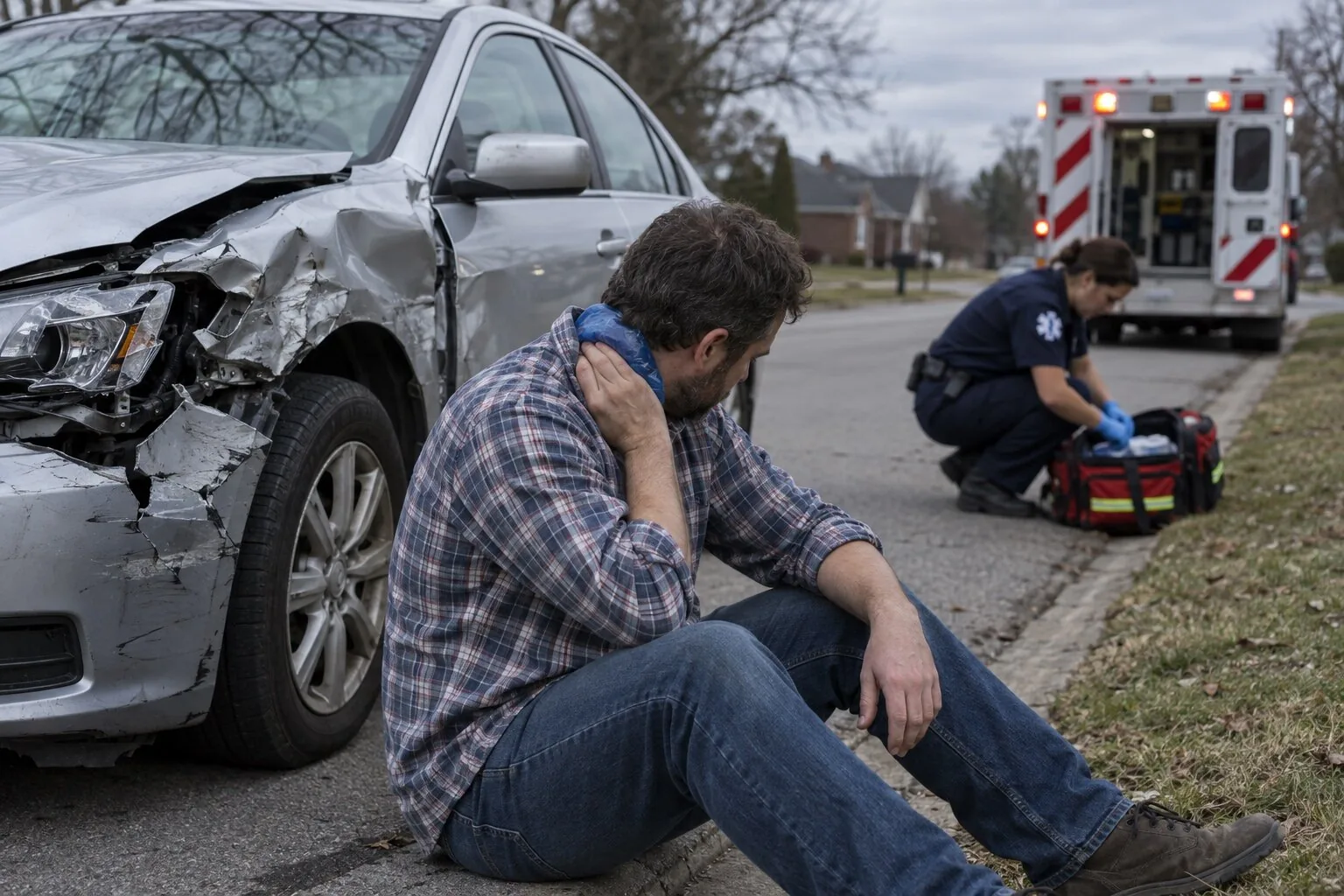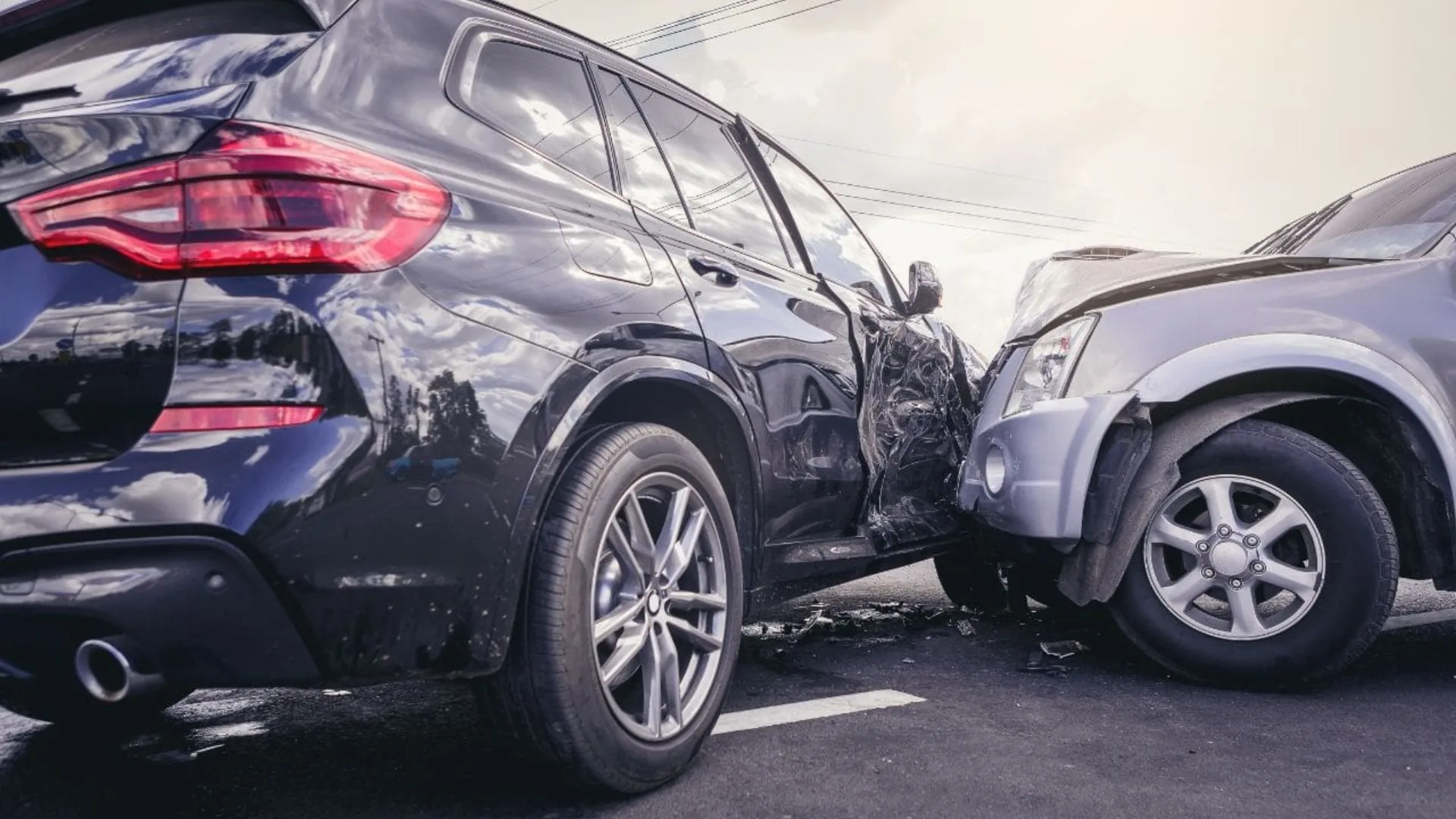
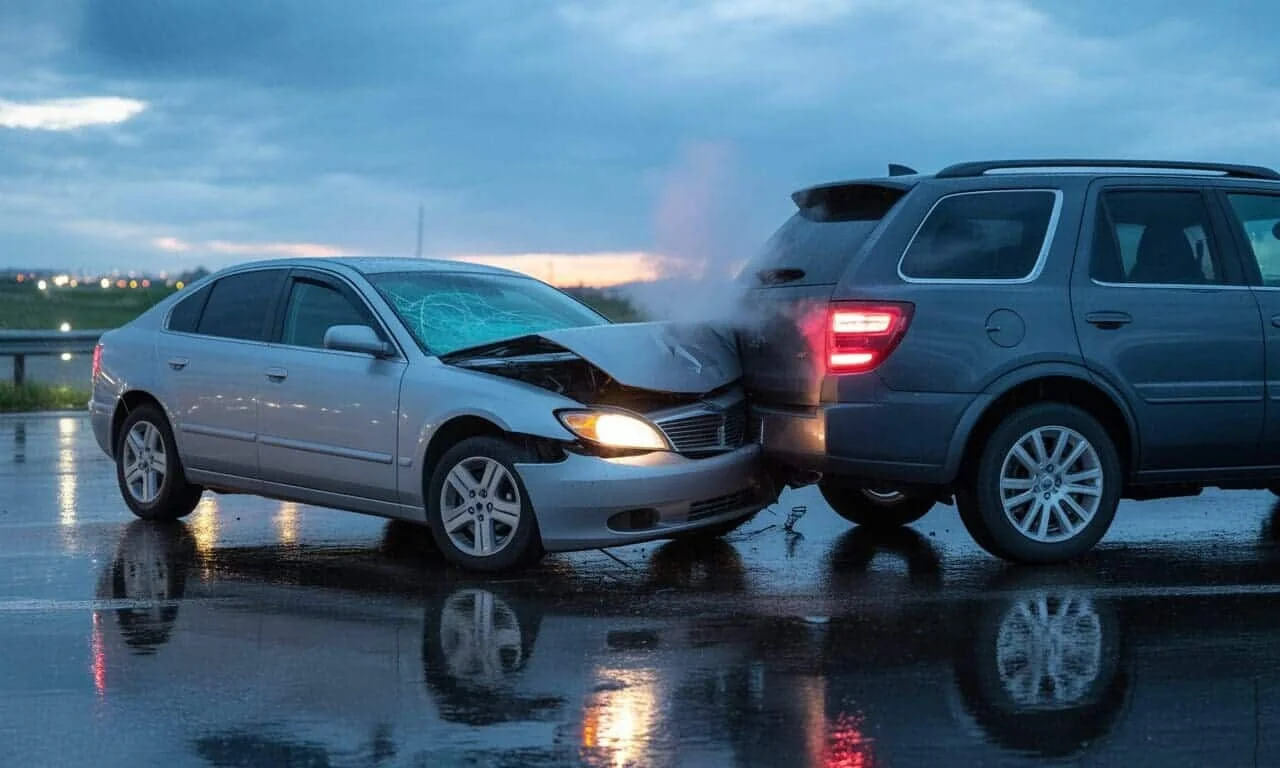
Crumple zone deformation on a vehicle after a frontal collision, illustrating crash force mechanics

How Crash Forces Produce Specific Injuries

Forbes Best-In-State Top Lawyer
Super Lawyers 2017–2026
Bigger Share Guarantee®
$0 Out-Of-Pocket Forever
On This Page

Car crash injury mechanics are governed by physics: when a vehicle decelerates abruptly, occupant bodies continue moving at pre-impact speed until restrained by belts, airbags, or vehicle structures. The direction, magnitude, and duration of those forces determine which anatomical structures fail first. Understanding crash biomechanics, delta-V, principal direction of force (PDOF), and occupant kinematics is essential for accurately diagnosing injuries, interpreting imaging, and countering insurance-defense arguments that minimize real trauma.

Crash Physics: Newton’s Laws and Occupant Kinematics

Every motor vehicle crash is a physics event. Newton’s First Law states that an object in motion continues in motion unless acted upon by an external force. In a collision, the vehicle’s velocity changes rapidly; the occupant’s body does not change velocity at the same rate unless restrained. That lag between vehicle deceleration and occupant deceleration is where injury happens.

Delta-V: The Core Crash Severity Metric

Delta-V (ΔV) is defined as the total change in vehicle velocity over the duration of the crash event. It is the single most widely used metric for predicting occupant injury probability in real-world crashes, used by NHTSA injury probability modeling and by reconstruction experts in litigation. Higher delta-V correlates directly with greater kinetic energy transferred to occupant tissue.

A 2001 study published in Annals of Advances in Automotive Medicine analyzed 191 real-world crash cases with Event Data Recorder kinematics matched to detailed injury data, confirming that delta-V is a reliable predictor of serious injury (MAIS 3+) for both belted and unbelted occupants. Critically, unbelted occupants sustain significantly higher injury risk at the same delta-V compared to belted occupants, because the restraint system modifies occupant kinematics.

Principal Direction of Force (PDOF)

Delta-V alone does not determine which body region is injured. The principal direction of force (PDOF) describes the primary vector along which crash energy is applied to the vehicle. PDOF is expressed in clock-face degrees: 12 o’clock is a straight frontal impact; 6 o’clock is a pure rear impact; 3 o’clock is a right-side impact. Most real-world crashes involve oblique forces that combine vectors, meaning the occupant sustains both axial and lateral loading simultaneously.

According to ASRI far-side occupant research, the most frequent PDOF for serious far-side injuries in side crashes is 60 degrees (60% of MAIS 3+ cases), followed by 90 degrees (24%). The direction of force determines occupant trajectory inside the vehicle and, consequently, which interior structures produce contact injuries.

Crush Deformation and Occupant Compartment Integrity

Vehicle crush deformation is energy absorption by design. Modern crumple zones are engineered to absorb kinetic energy through controlled deformation, extending crash pulse duration and reducing peak acceleration transmitted to the occupant compartment. The Insurance Institute for Highway Safety (IIHS) rates vehicle crashworthiness in part on how well the occupant compartment maintains its geometry under frontal, side, and overlap loading.

When compartment integrity fails, intrusion occurs, crushing the occupant space. This transforms a deceleration injury into a direct crush injury, dramatically changing the biomechanical load on the spine, pelvis, and lower extremities. Understanding the distinction between intrusion-driven and deceleration-driven injuries is critical both for diagnosis and for countering defense arguments that vehicle damage was minor.

Frontal Crash Injury Patterns

Frontal impacts account for the largest share of severe crash fatalities and serious injuries in the United States. The occupant kinematics in a frontal crash are well-documented: the vehicle’s front end decelerates rapidly as it contacts the barrier or other vehicle, while the occupant’s torso and head continue forward, loading the cervical spine, sternum, rib cage, and lower extremities sequentially.

Cervical Spine: Hyperflexion-Extension Whiplash

In moderate and severe frontal crashes, the head’s inertia drives it forward relative to the restrained torso. Research published in the Journal of Orthopaedic and Sports Physical Therapy describes how frontal-impact cervical loading combines hyperflexion of the upper spine with compression and shear at the C4-C7 levels. When the head strikes the windshield, steering wheel, or airbag, the loading pattern shifts from pure inertial to combined inertial-contact, increasing the risk of facet fracture, anterior longitudinal ligament (ALL) disruption, and vertebral endplate fracture.

This mechanism is explored in depth on our cervical spine injuries page, and for the specific soft-tissue manifestation, see our whiplash and WAD injuries guide.

Chest: Steering Wheel Contact and Restraint Loading

The unrestrained driver’s chest contacts the steering wheel at crash speed, producing sternal fractures, rib fractures, and pulmonary contusion. Even belted drivers sustain chest loading from the seatbelt restraint, with the shoulder belt transmitting deceleration forces to the clavicle, sternum, and upper ribs. A clavicle fracture is one of the most common belt-load injuries in frontal crashes. Pulmonary contusion, aortic injury, and pneumothorax are seen in higher-energy frontal impacts where the chest wall sustains significant deformation loads.

The airbag system is designed to spread the contact load over a larger surface area, but airbag-face-chest contact itself can produce orbital fractures, nasal fractures, and upper chest bruising. See our chest injuries page for the full injury spectrum.

Lower Extremities: Dashboard Knee and Pedal Foot Fractures

The unrestrained lower extremity continues forward during a frontal crash and contacts the dashboard, transmitting axial load up the tibia through the knee joint into the femur and acetabulum. This "dashboard knee" mechanism produces a characteristic injury triad: posterior knee ligament disruption (PCL), posterior hip dislocation, and acetabular fracture. The femur can sustain a mid-shaft fracture from direct contact or a femoral neck fracture from axial loading through the hip joint.

At the foot and ankle, the pedal foot sustains hyperplantar flexion under brake or accelerator pedal impact, producing Lisfranc ligament disruption, cuboid fractures, and metatarsal fractures. The driver’s right foot is especially vulnerable in braking impacts. These injuries are covered in detail on our foot and ankle injuries page and our upper leg injuries page.

Frontal Crash Injury Pattern Summary: Cervical hyperflexion-compression, chest contact (sternal/rib fractures, pulmonary contusion), dashboard knee (acetabular/femoral load), pedal foot fractures (Lisfranc, metatarsal, cuboid), and belt-load clavicle fractures. Each injury pattern corresponds to a specific biomechanical mechanism that can be reconstructed from crash data.

Rear-End Crash and Whiplash Mechanics

Rear-end collisions produce a fundamentally different occupant kinematics pattern from frontal crashes. When a vehicle is struck from behind, the seat and torso are pushed forward by the seatback, while the head lags behind due to inertia. This creates a relative extension of the cervical spine that has been captured in high-speed film: the lower cervical spine extends while the upper cervical spine simultaneously flexes, producing a transient S-shaped curvature that loads the facet joints, intervertebral discs, and anterior longitudinal ligament.

Whiplash-Associated Disorders: Quebec Task Force Classification

The Quebec Task Force on Whiplash-Associated Disorders established the classification system used clinically and in litigation today. Grades are assigned based on the combination of reported symptoms and objective physical findings:

  • Grade 0: No neck complaint, no physical signs.
  • Grade I: Neck pain, stiffness, or tenderness only; no physical signs.
  • Grade II: Neck complaint plus musculoskeletal signs (decreased range of motion, point tenderness).
  • Grade III: Neck complaint plus neurological signs (decreased or absent deep tendon reflexes, weakness, sensory deficit).
  • Grade IV: Neck complaint with fracture or dislocation.

According to peer-reviewed emergency medicine literature, WAD encompasses any "acceleration-deceleration mechanism of energy transfer to the neck" that may result in bony or soft-tissue injuries. The mechanism is not confined to rear-end impacts: side impacts and even frontal crashes with a rebound phase can produce whiplash kinematics. For a full clinical breakdown, see our dedicated whiplash and WAD injuries page.

Head Restraint Mismatch

NHTSA crash pulse research confirms that rear-impact AIS 1 neck injuries most frequently occur at delta-Vs below 30 km/h. The crash pulse duration matters as much as the magnitude: for a given delta-V, a longer pulse duration results in lower mean acceleration and lower risk of AIS 1 neck injury. Head restraint geometry relative to occupant head position is a critical moderating variable. A head restraint positioned too low or too far from the head allows greater relative head-to-torso excursion before contact, increasing ligamentous load.

IIHS evaluates head restraint geometry as part of its rear-impact testing protocol. Vehicles with "Good" head restraint ratings produce substantially lower cervical injury risk in low-speed rear-end crashes than those rated "Poor," even at the same delta-V, demonstrating that injury probability in rear-end impacts is not solely a function of crash severity.

Lumbar Loading in Rear-End Impacts

The rear-end kinematics also loads the lumbar spine. As the seatback pushes the torso forward and the pelvis rotates posteriorly against the seat, the lumbar spine experiences flexion-compression loading, followed by extension-tension loading in the rebound phase. This combined loading pattern can produce posterior annular tears, facet joint capsule disruption, and vertebral endplate microfractures that are not always visible on standard radiographs but are detectable on MRI. Our lumbar spine injuries page covers the full diagnostic workup for these presentations.

Side-Impact (T-Bone) Injury Patterns

Side impacts are particularly lethal because the structural protection available in a door panel is far less than in a front or rear crumple zone. The occupant on the struck side (near-side) has minimal distance between their body and the intruding door structure. NHTSA data consistently shows that occupants in side impacts account for a disproportionate share of crash fatalities relative to total exposure.

Near-Side Mechanics: Lateral Chest, Pelvis, and Head

In a near-side (struck-side) impact, the door panel intrudes laterally into the occupant space within milliseconds. The thoracic cage sustains direct lateral loading, producing rib fractures, pneumothorax, pulmonary laceration, and spleen or liver rupture depending on the crash side. The pelvis absorbs load through the iliac wing, producing acetabular fractures and hip dislocations. The shoulder absorbs door panel contact at the proximal humerus and glenoid. The head, if the window fails or the door intrudes sufficiently, contacts the door frame, producing temporal bone fractures, subdural hematoma, or diffuse axonal injury.

See our chest injuries and hip injuries pages for mechanism-specific clinical presentations.

Far-Side Mechanics: The Understudied Injury Pattern

The occupant on the non-struck side (far-side) faces a different threat: their restrained torso remains relatively stationary while their head and upper body are free to swing toward the struck side. AAMAM research on far-side crashes analyzed NASS/CDS data across a decade and found that 42% of all MAIS 3+ injuries in side crashes and rollovers occur in far-side events. For belted far-side occupants, head injuries account for 42% of all serious injury Harm, with the instrument panel, roof, door panel, and the other occupant being the four most frequent contact sources.

The median crash condition producing 50% of serious injuries in far-side planar crashes is a lateral delta-V of 28 km/h with a CDC damage extent of 3.6, meaning intrusion past the vehicle centerline. This context matters in litigation: a vehicle with moderate visible door damage can still produce serious far-side head and spine injuries, which directly refutes the "minor damage, minor injury" defense argument.

NEISS and CIREN Data on Side-Impact Injuries

The National Electronic Injury Surveillance System (NEISS) provides national estimates of emergency department visits from side-impact crashes. The Crash Injury Research and Engineering Network (CIREN) goes further, conducting in-depth investigations of actual crashes with detailed injury and biomechanical reconstruction. CIREN case data consistently shows that lateral thoracic loading in side impacts produces a specific injury signature: multiple ipsilateral rib fractures at different levels, indicating that the loading vector was not uniformly applied across the chest wall but rather distributed based on door panel geometry and the occupant’s position at the moment of impact.

Rollover Crash Mechanics

Rollover crashes represent one of the most biomechanically complex crash types. Unlike impact crashes, rollovers involve multiple sequential events as the vehicle rotates through one or more quarter-turns, each producing distinct occupant loading. The NHTSA rollover database categorizes rollovers as tripped (initiated by lateral tire contact with a curb, median, or soft shoulder) and untripped (initiated by a steering maneuver that exceeds tire friction capacity).

Ejection Physics

Ejection is the primary cause of rollover fatalities. As the vehicle rotates, an unbelted occupant is subject to centrifugal-like forces that press them toward the vehicle roof and side windows. Window glass failure or an open window provides the exit path. Once ejected, the occupant becomes a secondary projectile, often impacting the road surface at vehicle speed. Partial ejection, where a limb or head extends through a window while the body remains inside, is particularly devastating for upper extremity and cervical spine injuries.

Seatbelt pretensioner and load-limiter systems are specifically designed to maintain occupant seating position through rollover sequences, but these systems are only effective when the belt is worn. Seatbelt-related injuries themselves can occur during rollovers when the belt restrains the torso while the upper body rotates against it.

Neck Axial Loading and Roof Crush

As the vehicle inverts, the occupant’s head may contact the roof structure. Peer-reviewed neck injury research documents that head-roof interactions in rollovers produce cranially applied axial compressive loading on the cervical spine, which is the mechanism for burst fractures, facet fractures, and concomitant spinal cord injury. The CIREN dataset analysis published in Traffic Injury Prevention found that rollovers were associated with a significantly higher likelihood of facet fracture concomitant to cervical dislocation compared to other crash modes, confirming the role of cranially applied axial load.

Roof crush strength is regulated by NHTSA under FMVSS 216, with the standard requiring the roof to withstand a static force of 1.5 times the vehicle’s unloaded weight before crushing more than 5 inches. IIHS has advocated for stricter standards because real-world rollover crush forces can exceed the FMVSS 216 threshold substantially, particularly in higher-energy tripped rollovers.

Thoracic Injuries in Rollover

Rollover thoracic injuries occur through two principal mechanisms: (1) direct chest contact with the roof or door interior during rotation, and (2) belt-loading of the thorax during the anti-rotation phase when the vehicle’s angular velocity abruptly changes at wheel contact with the ground. Research from the Automotive Safety Research Institute identified the center console as a frequent chest-injury contact source in rollover events, particularly when the shoulder belt loses its restraining capability mid-roll due to the occupant’s lateral excursion.

Pedestrian and Cyclist Impact Mechanics

Pedestrian and cyclist impacts follow a consistent kinematic sequence that differs fundamentally from occupant mechanics. The struck person is not inside a protective shell; there is no crumple zone absorbing energy before body contact occurs. Energy transfer is direct and sequential across three discrete impact events.

Triple-Impact Sequence

The Cardiff classification of pedestrian impacts describes the three-phase kinematic sequence:

  1. Bumper Impact: The vehicle’s bumper strikes the lower extremity (typically the knee and tibia at adult height), producing the initial kinetic energy transfer. This produces lateral collateral ligament injury, tibial plateau fractures, and fibular fractures at the bumper contact point.
  2. Hood Impact: As the vehicle decelerates and the pedestrian is projected upward and forward, the torso contacts the hood and windshield. The hip and pelvis strike the hood leading edge; the head often contacts the windshield glass or A-pillar. Head contact with the windshield or A-pillar is the primary mechanism for skull fractures, epidural hematoma, and diffuse axonal injury in pedestrian crashes.
  3. Ground Impact: The pedestrian falls to the road surface, sustaining a second head impact against pavement, shoulder injuries, and additional fractures depending on the fall trajectory.

IRCOBI kinematic reconstruction research documents the characteristic contact order in pedestrian crashes: leg-hip-elbow-shoulder-head, confirming the sequential nature of energy transfer and explaining why pedestrian crash victims often sustain injuries across multiple body regions simultaneously.

Brain Injury Patterns in Pedestrian Impacts

Traumatic brain injury is the leading cause of pedestrian crash fatality. The pedestrian head impact sequence combines two biomechanical TBI mechanisms: (1) the primary windshield or A-pillar impact, which may produce focal contusion at the impact site, and (2) the secondary ground impact, which produces coup-contrecoup injury as the brain decelerates against the skull on the opposite side from the primary impact. Biomechanical research has further identified that traumatic lateral bending of the head causes particularly widespread axonal damage and consistent brain stem involvement, a finding relevant to T-bone and pedestrian impacts where lateral head acceleration is the dominant load vector.

Our comprehensive traumatic brain injury page covers the diagnostic workup, imaging findings, and long-term consequences of crash-related TBI in depth.

Vehicle Safety Systems and Crash Data

Modern vehicles contain an array of passive safety systems whose performance data becomes critical evidence in crash injury litigation. Understanding how these systems function, when they activate, and what data they record is essential for accurately reconstructing crash severity.

Airbag Deployment Thresholds

Frontal airbags are designed to deploy when the crash pulse exceeds a calibrated threshold, typically corresponding to a frontal delta-V of approximately 8-14 mph against a rigid barrier. However, the exact threshold varies by vehicle make, model, and software calibration. A crash that does not deploy the airbag is not necessarily a minor crash: airbags are calibrated to deploy in scenarios where deployment prevents contact-related head and chest injuries while avoiding unnecessary deployment in lower-energy events that do not require the airbag’s protection. Non-deployment does not establish that the crash was non-injurious.

Side curtain and thoracic airbags deploy based on lateral acceleration thresholds and door crush sensors. Pretensioner systems activate at lower thresholds than airbags, since their role is to take up slack in the belt during early crash dynamics before the occupant begins loading the belt.

Event Data Recorder (EDR) Data Extraction

The Event Data Recorder, sometimes called the vehicle’s "black box," is governed by 49 CFR Part 563, which sets federal standards for EDR data accuracy and availability. Under the 2024 final rule, EDRs in new vehicles must record pre-crash data for 20 seconds (up from 5 seconds) at a sample rate of 10 Hz (up from 2 Hz). The recorded data includes vehicle speed, delta-V, brake status, throttle position, steering input, seatbelt use, and airbag deployment timing.

EDR data is extracted using the Bosch Crash Data Retrieval (CDR) tool or manufacturer-specific software. The extraction requires physical access to the vehicle, and the vehicle must be preserved before repair or salvage. Courts have consistently admitted EDR data under Daubert and Frye standards, finding that EDR technology is well-established and that accuracy has been validated by independent SAE research. In Kentucky, EDR data is admissible evidence under KRE 702 when accompanied by expert foundation testimony.

NHTSA New Car Assessment Program (NCAP)

NHTSA’s New Car Assessment Program (NCAP) assigns safety ratings to vehicles based on standardized crash tests. The 5-Star Safety Ratings system tests frontal, side, and pole impact performance, as well as rollover resistance. NCAP ratings reflect how well the vehicle structure and restraint system protect an average-sized male occupant; smaller or larger occupants may experience different injury outcomes in identical crashes. IIHS operates a separate rating system using different test configurations, including small-overlap frontal testing and updated side-impact tests using a moving deformable barrier that better simulates SUV-to-car crashes.

Biomechanical Evidence in Kentucky Litigation

Crash biomechanics has become central to personal injury litigation in Kentucky. When insurance carriers dispute injury causation or severity, a biomechanical engineer can reconstruct the crash forces, occupant kinematics, and tissue-level loading to establish the physical link between the crash event and the diagnosed injuries.

What a Biomechanical Engineer Reconstructs

A qualified biomechanical expert reconstructs the following from crash data and medical records:

  • Delta-V magnitude and direction: Using EDR data, vehicle crush measurements, and PDOF analysis to quantify crash severity.
  • Occupant kinematics: Modeling the trajectory of the head, neck, torso, and extremities through the crash pulse using validated occupant simulation software (such as MADYMO or ATB).
  • Tissue loading and injury threshold analysis: Comparing the reconstructed forces at each anatomical region against published injury tolerance values from cadaveric and volunteer studies.
  • Restraint system performance: Evaluating whether seatbelt pretensioner deployment timing and airbag deployment were appropriate given the crash pulse, and whether any restraint system malfunction contributed to injury severity.

This analysis, when presented by a properly qualified expert, provides the jury with a quantified, physics-based explanation for how the specific crash produced the specific injuries documented in the medical records.

KRE 702 and Daubert Standards for Biomechanical Testimony

In Kentucky, expert testimony is governed by KRE 702, which requires that: (1) the testimony is based on sufficient facts or data; (2) the testimony is the product of reliable principles and methods; and (3) the expert has applied the principles and methods reliably to the facts of the case. This mirrors the federal Daubert standard adopted by the U.S. Supreme Court in Daubert v. Merrell Dow Pharmaceuticals (1993).

Biomechanical experts who rely on peer-reviewed crash data, validated reconstruction methods, and NHTSA or SAE published research generally satisfy the Daubert/KRE 702 reliability threshold. Defense biomechanical experts are subject to the same standards; their opinions must be grounded in validated methodology and cannot rest solely on general "low-energy crash" assumptions that are not supported by specific crash data from the subject crash.

Preserving the EDR

If you are involved in a crash, the vehicle’s Event Data Recorder must be preserved before the vehicle is repaired or sold to salvage. Once a vehicle is repaired, the EDR data may be overwritten by subsequent crash or near-crash events. Once sold to salvage, access to the vehicle is lost.

An attorney can send a preservation letter immediately after a crash, putting the at-fault driver’s insurance carrier and repair facility on legal notice not to repair or transfer the vehicle until the EDR data is extracted. Missing this window can mean losing the most objective evidence of crash severity.

Imaging-Mechanism Correlation

One of the most powerful tools in crash injury litigation is the correlation between the biomechanically predicted injury pattern and the MRI or CT findings. When the imaging findings match the mechanism precisely, the causal chain from crash force to tissue injury becomes far more difficult to dispute.

Frontal Crash MRI Signatures

A frontal crash that produces cervical hyperflexion-compression loading leaves a characteristic MRI signature. The anterior longitudinal ligament (ALL) sustains tensile loading at the ventral aspect of the disc, which appears on T2-weighted MRI as signal hyperintensity along the anterior disc border. The vertebral endplate at the inferior surface of the upper vertebra and the superior surface of the lower vertebra sustains compressive loading; endplate microcracking and subsequent Modic Type I signal change (edema, dark on T1, bright on T2) is characteristic of acute disc-endplate loading. At the C4-C7 levels where frontal-crash cervical load is concentrated, posterior element widening and interspinous ligament disruption may be visible as posterior soft-tissue edema on STIR sequences.

Our radiology and imaging for injury claims page provides detailed guidance on reading crash-related MRI findings and understanding what radiologists’ reports mean in the injury context.

Rear-End Whiplash MRI Findings

The rear-end hyperextension mechanism produces a different set of MRI findings than frontal hyperflexion. The disc-ligament complex posteriorly is compressed while the anterior structures are tensioned. Findings include: posterior annular fissures (bright on T2 within the posterior disc), facet joint capsule tears (edema surrounding the posterior facet complex on fat-suppressed sequences), and zygapophyseal joint effusion. On functional radiographs, motion-segment instability may be demonstrated at levels where ligamentous disruption has compromised the passive stabilization system.

The concept of Modic changes is particularly important for countering the "pre-existing degeneration" defense. Modic Type I changes represent active edema and hyperemia in the vertebral endplate and adjacent bone marrow; they evolve on a timeline of weeks to months following acute disc-endplate loading. When Modic Type I changes are present on an MRI taken after a crash at a level with no prior imaging findings, this represents imaging evidence of an acute injury, not chronic degeneration.

Side-Impact and TBI Imaging

Side-impact head injuries often produce extra-axial collections (epidural or subdural hematoma) at the ipsilateral temporal region, visible on CT as hyperdense (bright) collections overlying the temporal lobe. Diffuse axonal injury (DAI), which occurs when rotational acceleration causes shearing of axonal fibers at gray-white matter junctions, is best identified on susceptibility-weighted MRI (SWI) sequences as small hypointense (dark) foci representing microhemorrhages. Because standard CT can miss DAI entirely, the absence of CT abnormality does not exclude serious brain injury in a side-impact or rollover crash. For the full TBI diagnostic framework, see our traumatic brain injury page.

Insurance Defense Playbook

Insurance carriers use a consistent set of strategies to minimize crash injury claims. Understanding these tactics in advance allows injured people to preserve the evidence that refutes them.

Named Defense Tactics and Counters

  • “Low-Velocity Impact” (LVI) Defense: The carrier argues that the crash was minor and therefore the injury cannot be serious. Counter: Extract the EDR delta-V and pretensioner deployment record. Pretensioner systems fire at thresholds as low as 5-8 mph delta-V; if the pretensioner deployed, the vehicle’s own safety system recorded the crash as a credible injury event. IIHS bumper testing further demonstrates that low-speed impacts can produce 10+ cm of bumper crush, generating meaningful spinal loading even without dramatic vehicle damage.
  • “Minor Property Damage = Minor Injury” Fallacy: High-strength steel bumpers and modern stiffener bars are designed to protect vehicle structure at low speeds, absorbing energy with minimal visible damage while transmitting crash pulse to the occupant compartment with greater efficiency. IIHS 5-mph and 10-mph bumper tests confirm that vehicles with minimal damage can still produce significant occupant loading. The absence of vehicle damage does not establish the absence of occupant injury.
  • Defense Biomechanical Expert: The carrier retains a biomechanical expert to testify that the crash forces were below the threshold for injury. Counter: Demand disclosure of the exact methodology and software used. Peer-reviewed research, including the AAMAM delta-V injury probability study, demonstrates that there is no universal injury threshold: injury probability is probabilistic, not binary. Even at low delta-Vs, a non-trivial percentage of occupants sustain AIS 2+ injuries. Defense experts who apply fixed thresholds without statistical context are applying a methodology that is not consistent with the peer-reviewed crash biomechanics literature.
  • “Pre-Existing Degenerative Changes”: The carrier argues that MRI findings reflect pre-existing arthritis or degeneration unrelated to the crash. Counter: Modic Type I signal changes represent acute edema in the vertebral endplate, not chronic degeneration (which produces Modic Type II or III changes). If a pre-crash MRI is available and shows no Modic changes at the affected level, the post-crash Modic Type I findings represent new, acute injury. Even without a pre-crash comparator, the progression from acute (Modic I) to chronic (Modic II/III) can be tracked on serial imaging to establish the injury timeline relative to the crash date.
  • Surveillance and Social Media Mining: Defense investigators may conduct physical surveillance or review the injured person’s social media activity to find images or posts inconsistent with reported limitations. Brief periods of activity during a good day do not characterize the full injury burden. Your attorney should advise you on appropriate social media conduct after a crash injury claim is filed, including privacy settings and the significance of timestamped activity records.

Kentucky’s tort threshold under KRS 304.39-060 requires that a personal injury claim exceed specific monetary or injury-severity thresholds before it can be brought outside the PIP system. Meeting the tort threshold requires documentation of injury severity that is grounded in the biomechanical evidence described on this page. Cases that involve fractures, permanent disfigurement, permanent injury, or medical expenses exceeding $1,000 above PIP benefits automatically satisfy the threshold, making the biomechanical documentation of injury cause and severity critical to preserving the right to a full tort claim.

The pre-existing conditions page addresses the "eggshell plaintiff" doctrine, which establishes that a defendant takes a plaintiff as they find them, meaning that a crash that aggravates a pre-existing condition is still fully compensable. The crash does not need to be the sole cause of the injury; it only needs to be a substantial contributing cause.

Injury Pages Covered in This Hub: The crash mechanics described on this page produce specific injury patterns addressed in detail across our car accident injury library. Use these links to go deeper on any specific injury:

Frequently Asked Questions

How does a frontal crash produce whiplash?

In a frontal impact, the vehicle decelerates rapidly while the occupant’s head continues forward due to inertia. The cervical spine loads in combined hyperflexion and compression, with the greatest stress concentrated at C4-C7. In the rebound phase, as the torso snaps back against the seat, the head whips into extension. This bidirectional loading injures facet joint capsules, intervertebral discs, and posterior ligaments, producing the pain and limited motion pattern characteristic of whiplash-associated disorder (WAD).

What is delta-V and why does it matter in a crash injury claim?

Delta-V is the total change in vehicle velocity during the crash event. It is the most validated predictor of occupant injury probability in real-world crashes, used by NHTSA in its injury risk modeling. In a claim, delta-V extracted from the vehicle’s Event Data Recorder provides objective, physics-based evidence of crash severity, directly countering insurance defense arguments that the crash was too minor to cause serious injury.

Can a low-speed crash cause a serious injury?

Yes. NHTSA rear-impact research confirms that AIS 1 neck injuries most frequently occur at delta-Vs below 30 km/h (approximately 18 mph). Individual factors including pre-existing disc degeneration, occupant size, head restraint position, and crash pulse shape all affect whether a given delta-V produces injury. Injury probability is a continuum, not a binary threshold, and peer-reviewed crash biomechanics literature does not support the existence of a universal "safe" crash speed.

What does an Event Data Recorder record?

Under 49 CFR Part 563, EDRs must record vehicle speed, delta-V, brake status, throttle input, steering angle, seatbelt use, airbag deployment timing, and pre-crash occupant sensing data. The 2024 NHTSA rulemaking extends the pre-crash recording window to 20 seconds and increases the sampling rate to 10 Hz. This data is extracted using the Bosch CDR tool or manufacturer-specific software and has been consistently admitted as evidence under Daubert and Frye standards in courts across the country.

Do I need a biomechanical expert for my car accident case?

Not every case requires a biomechanical expert. Cases involving high-energy crashes with clear imaging evidence may not need additional physics reconstruction. However, when an insurance carrier disputes causation, argues that crash forces were too low to cause injury, or retains its own biomechanical expert to minimize the claim, having a qualified biomechanical engineer who can reconstruct delta-V, PDOF, and occupant kinematics from EDR and crash data significantly strengthens the evidentiary basis of the claim under Kentucky’s KRE 702 expert standard.

What is principal direction of force (PDOF) and why does it matter?

PDOF describes the primary vector of crash energy applied to the vehicle, expressed in clock-face degrees. A 12 o’clock PDOF is a straight frontal impact; 3 o’clock is a right-side impact. PDOF determines occupant trajectory inside the vehicle and which anatomical structures bear the primary load. The same delta-V applied at different PDOFs produces entirely different injury patterns: a 30-degree offset PDOF in a frontal crash loads the cervical spine obliquely, producing asymmetric facet loading, while a 90-degree PDOF side impact loads the thorax and pelvis laterally.

What is the Quebec Task Force classification for whiplash?

The Quebec Task Force (QTF) established a five-grade classification for whiplash-associated disorders (WAD): Grade 0 has no complaints and no signs; Grade I has neck pain only; Grade II adds musculoskeletal signs (limited range of motion, point tenderness); Grade III adds neurological signs (reflex loss, weakness, sensory deficit); Grade IV involves fracture or dislocation. The classification guides treatment decisions and documents injury severity in medical records that are later reviewed in litigation.

How can I tell if my MRI findings are from the crash versus pre-existing degeneration?

Modic Type I signal changes in the vertebral endplate represent acute bone marrow edema and hyperemia, which occur after acute disc-endplate loading such as a crash impact. They differ from Modic Type II (fatty degeneration, chronic) and Type III (sclerosis, end-stage) changes. When Modic Type I findings appear at a previously asymptomatic level after a crash, they represent imaging evidence of acute injury, not pre-existing pathology. A radiologist or neuroradiologist experienced in crash-related MRI interpretation can provide the formal opinion needed to establish this distinction.

Does Kentucky law allow claims for crashes that worsen a pre-existing condition?

Yes. Under the "eggshell plaintiff" doctrine applied in Kentucky courts, a defendant is liable for the full extent of harm caused to the plaintiff, even if the plaintiff was more vulnerable to injury due to a pre-existing condition. A crash that aggravates a pre-existing cervical disc degeneration, herniated disc, or spinal stenosis is compensable to the full extent of the aggravation and its consequences, provided the crash was a substantial contributing cause of the worsened condition.

HURT IN A CAR? CALL SAM AGUIAR!

You focus on getting better. We’ll handle everything else.