

Pedestrian Accident
Injury Lawyers
How a Pedestrian Accident Lawyer Can Help
If you or a loved one has been struck in a pedestrian accident in Louisville, the road to recovery can be daunting and filled with uncertainty. At Sam Aguiar Injury Lawyers, we understand the physical, emotional, and financial toll these accidents take on victims and their families. Our dedicated pedestrian accident lawyers are committed to ensuring you receive the top compensation you are owed.
With a deep understanding of Kentucky’s pedestrian laws and a track record of successful settlements and verdicts, our team is ready to work through the complexities of your case and fight tirelessly on your behalf. Let our Louisville personal injury lawyers take care of everything for you.
A pedestrian accident attorney will handle the process to avoid the pitfalls that come up when dealing with insurance companies on your own. Our car accident lawyers in Louisville are highly respected in the local legal community and can effectively counter the strategies employed by insurance companies to reduce compensation.
By taking over the demanding tasks of evidence gathering, claim filing, and relentless negotiation, our lawyers allow you to concentrate on your recovery. We will draw on our experience to obtain every dollar you are owed.
Common Types of Pedestrian Accidents
Pedestrian accidents can occur in various situations, often leading to serious injuries or fatalities. Here are some frequently encountered scenarios we have seen at Sam Aguiar Injury Lawyers:
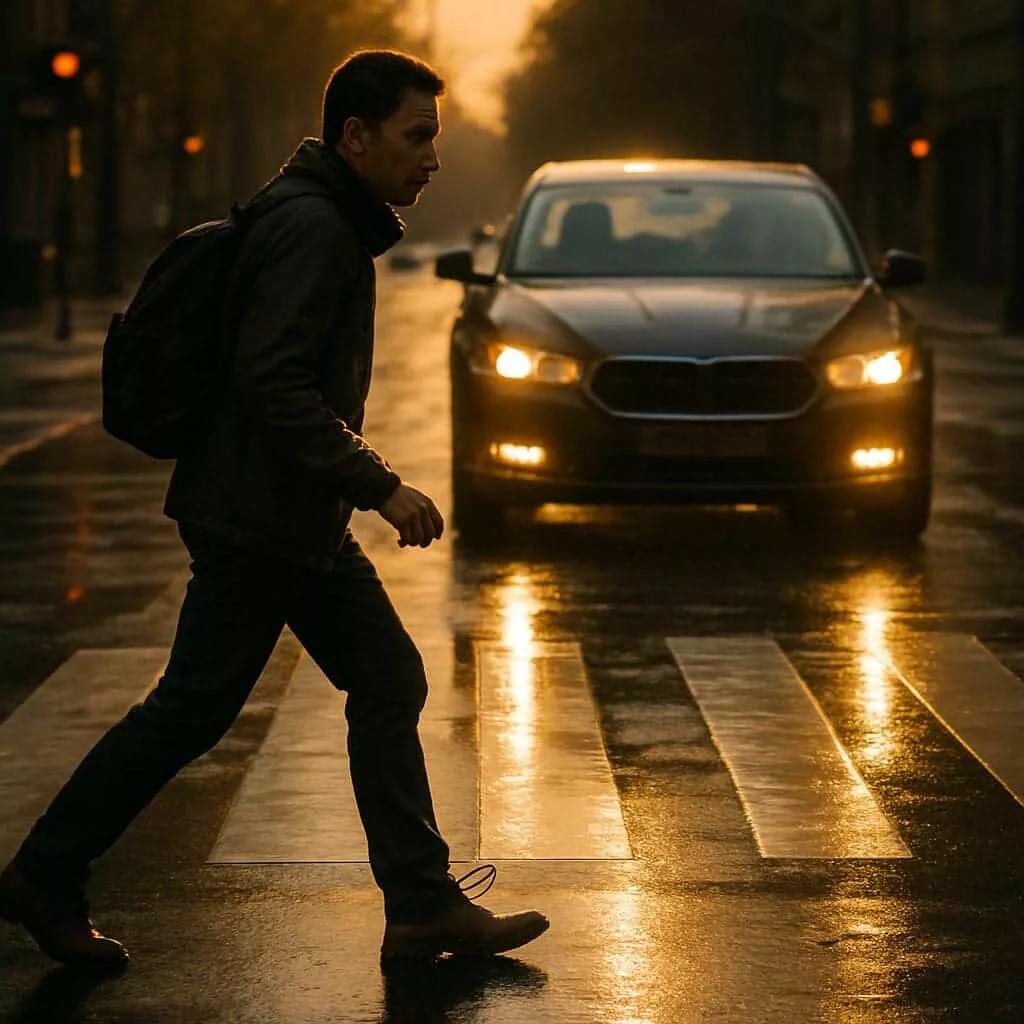
Crosswalks
Pedestrians crossing streets within marked or unmarked crosswalks are sometimes struck by vehicles whose drivers fail to yield the right of way, often due to inattention or misjudgment of the pedestrian’s speed.
Hit-and-Runs
These accidents involve drivers striking pedestrians and leaving the scene without providing aid or identifying themselves, complicating the victim’s ability to seek compensation.
Turning Vehicles
Pedestrians are at risk when drivers make turns at intersections without properly checking for pedestrians crossing the road, especially when the vehicle is turning right and the pedestrian has the signal to cross.
Parking Lots
Many pedestrian accidents occur in parking lots where drivers are reversing or maneuvering their vehicles and may not notice pedestrians walking behind or around them.
School Zones and Residential Areas
Children are particularly vulnerable to pedestrian accidents in school zones and residential areas, where drivers may not anticipate the presence of young pedestrians or may disregard speed limits and other safety measures.
Sidewalks
Although sidewalks are designed as safe spaces for pedestrians, accidents can still occur here, often due to vehicles losing control and encroaching onto the sidewalk or through sidewalk defects and obstructions.
Distracted Driving and Walking
Both drivers and pedestrians distracted by mobile devices or other factors contribute to accidents, as their attention is diverted from the road and their surroundings.
Impaired Driving
Accidents involving drivers under the influence of alcohol or drugs are hazardous, as impairment significantly reduces a driver’s reaction time and ability to make safe decisions.
Right-of-Way Laws
In Louisville, pedestrian right-of-way laws require motorists to yield to pedestrians crossing within any marked or unmarked crosswalk at intersections, particularly in high-traffic areas such as schools, parks, and commercial districts.
At intersections equipped with pedestrian signals, when the signal indicates it is safe to cross, pedestrians have the right of way, obligating all vehicles to yield. In contrast, pedestrians must respect “Do Not Walk” signals, acknowledging the right-of-way of cars.
Pedestrians on sidewalks have the right-of-way over vehicles entering or exiting driveways or alleys, ensuring pedestrian safety on sidewalks. However, pedestrians must yield to vehicles when crossing roadways at points other than designated crosswalks.
Kentucky law further stipulates that drivers exercise due care to avoid colliding with pedestrians under all circumstances, requiring heightened caution in areas frequented by children and at stop lights.
Negligence in Pedestrian Accidents
Establishing negligence is required in all personal injury cases where strict liability does not apply, including those involving pedestrian accidents.
Proving negligence in a pedestrian accident involves establishing several key elements: that the defendant owed a duty of care to the plaintiff, that this duty was breached through an act or omission, and that this breach directly caused the injuries.
Some examples of negligence in Louisville pedestrian accidents include failing to yield the right of way in crosswalks, speeding in residential areas, and distracted driving that compromises pedestrian safety.
When these actions result in an accident that causes injury or death to a pedestrian, they can serve as grounds for a negligence claim. Successfully proving these elements can be complex, requiring the collection of evidence, witness statements, and experienced opinions.
If there was a death related to a pedestrian accident, please reach out to our Louisville wrongful death attorneys to discuss your case.
Evidence in Pedestrian Accident Cases
When pursuing a pedestrian accident claim, gathering comprehensive evidence to substantiate the case and ensure a favorable outcome is crucial. Common types of evidence include:
EyeWitness Testimony
Eye-witness testimony plays a pivotal role in pedestrian accident claims, as it offers firsthand accounts of the incident. Witnesses can provide crucial details about the pedestrian’s and driver’s actions, the surrounding environment, and the sequence of events leading up to the accident. Their unbiased observations can help establish the facts and enhance the credibility of the claim.
Surveillance Footage
Surveillance footage, whether from traffic cameras, nearby businesses, or private residences, is invaluable in reconstructing the circumstances of a pedestrian accident. Video evidence can capture the precise moment of the incident, highlighting crucial factors such as traffic signals, vehicle speed, and any potential negligence. This type of evidence is often irrefutable and can significantly strengthen a claim.
Medical Records
Medical records document the extent of injuries sustained by the pedestrian and are essential for substantiating claims for damages. These records include information from initial emergency room visits, ongoing treatments, and any long-term rehabilitation required. Detailed medical documentation helps quantify the impact of the accident on the victim’s life and supports the compensation case.
Accident Reconstruction
Accident reconstruction plays a pivotal role in understanding the dynamics of a pedestrian accident. This scientific approach involves experts who analyze various factors such as vehicle speed, angles of impact, road conditions, and environmental circumstances at the time of the incident. These specialists utilize advanced technology and software to create detailed simulations and models that can accurately depict how the accident occurred.
This analysis provides a clearer picture of the events leading up to and during the accident, enabling a thorough examination of fault and liability. The findings from accident reconstruction are often critical in court proceedings and insurance settlements, offering a well-substantiated perspective that supports the claims made by the involved parties.
A combination of evidence types provides a comprehensive foundation for pedestrian accident claims. This ensures a thorough and credible reconstruction of events, bolstering the likelihood of a successful claim.
Who Could Be Liable?
Pedestrian accidents often involve multiple parties, and determining liability requires a thorough examination of the circumstances surrounding the incident.
Drivers
Drivers who act negligently or recklessly, speeding, failing to yield, or driving under the influence, can be held liable for pedestrian accidents. Establishing driver liability typically requires proving that the driver breached their duty of care and that this breach directly resulted in the pedestrian’s injuries.
Municipalities
Municipalities responsible for maintaining roadways, sidewalks, and crosswalks can be held liable for pedestrian accidents if poor maintenance, improper signage, or defective design contributed to the incident. Claims against municipalities often involve navigating specific procedures and timelines, making legal experience with these matters crucial.
Vehicle Manufacturers
In some instances, a pedestrian accident may be caused by a defect in the vehicle, such as brake failure or faulty lights. In such cases, the vehicle manufacturer could be held liable for producing a malfunctioning product. Demonstrating this liability typically requires expert analysis to establish the defect and its connection to the accident.
Property Owners
Owners of commercial or residential properties adjacent to public walkways may be held liable if they fail to maintain their property, creating a pedestrian hazard. This could include unaddressed snow and ice accumulation or untrimmed vegetation obstructing visibility or pathways.
Other Third Parties
Third parties, such as construction companies working near roadways, could also be liable if their activities create dangerous pedestrian conditions. If temporary hazards like debris or inadequate warning signs are present due to construction work, the responsible party may be held accountable for resulting accidents.
Recoverable Damages
Victims of pedestrian accidents may be entitled to various types of damages to compensate for the losses they incur. These damages can be classified into several categories:
Economic Damages
Economic damages refer to quantifiable financial losses incurred as a result of the accident. They may include:
- Medical Expenses: Costs for emergency care, hospital stays, surgeries, medications, physical therapy, and any other necessary medical treatments.
- Lost Wages: Compensation for income lost due to the injury, including future earnings if the victim cannot return to work.
- Property Damage: Reimbursement for personal property damaged or destroyed in the accident, such as electronic devices or clothing.
Non-Economic Damages
Non-economic damages cover the more subjective, non-monetary aspects of the victim’s suffering. These may include:
- Pain and Suffering: Compensation for the physical pain and emotional distress experienced as a result of the accident.
- Loss of Consortium: Damages awarded to the victim’s spouse or family member for the loss of companionship and support due to the injury.
- Loss of Enjoyment of Life: Compensation for limitations on the victim’s ability to enjoy hobbies, recreational activities, and other pursuits that were significant to their quality of life.
Punitive Damages
In some instances, punitive damages may also be awarded. These are not meant to compensate the victim but to punish the defendant and deter similar behavior in the future. Punitive damages are available in cases where the at-fault party’s actions involved oppression, fraud, or malice.
A plaintiff shall recover punitive damages only upon proving, by clear and convincing evidence, that the defendant from whom such damages are sought acted toward the plaintiff with oppression, fraud or malice.
Why Sam Aguiar Injury Lawyers?
Our proven results, including securing a recent $6.2 million settlement for a pedestrian in an injury accident, reflect our relentless pursuit of top compensation for our clients. By choosing our firm, you’re selecting a committed team of lawyers who will tirelessly work to ensure the best possible outcome for your case.
Contact Our Lawyers Today
If you or a loved one has been involved in a pedestrian accident in Louisville, don’t work through the complex legal landscape alone. Our Sam Aguiar Injury Lawyers team is ready to stand by your side, offering top legal representation at every step.
Our experienced Louisville pedestrian accident lawyers are dedicated to securing all the compensation you are entitled to. From investigating the incident to negotiating with insurance companies and representing you in court, we’re here to handle it all. Contact us today for a free case review.