

Box Truck Accident Lawyers
Injured in a Box Truck Accident?
 ★★★★★
Over 1,000 Five-Star Reviews
•
Available 24/7. $0 Out-Of-Pocket Forever.
★★★★★
Over 1,000 Five-Star Reviews
•
Available 24/7. $0 Out-Of-Pocket Forever.
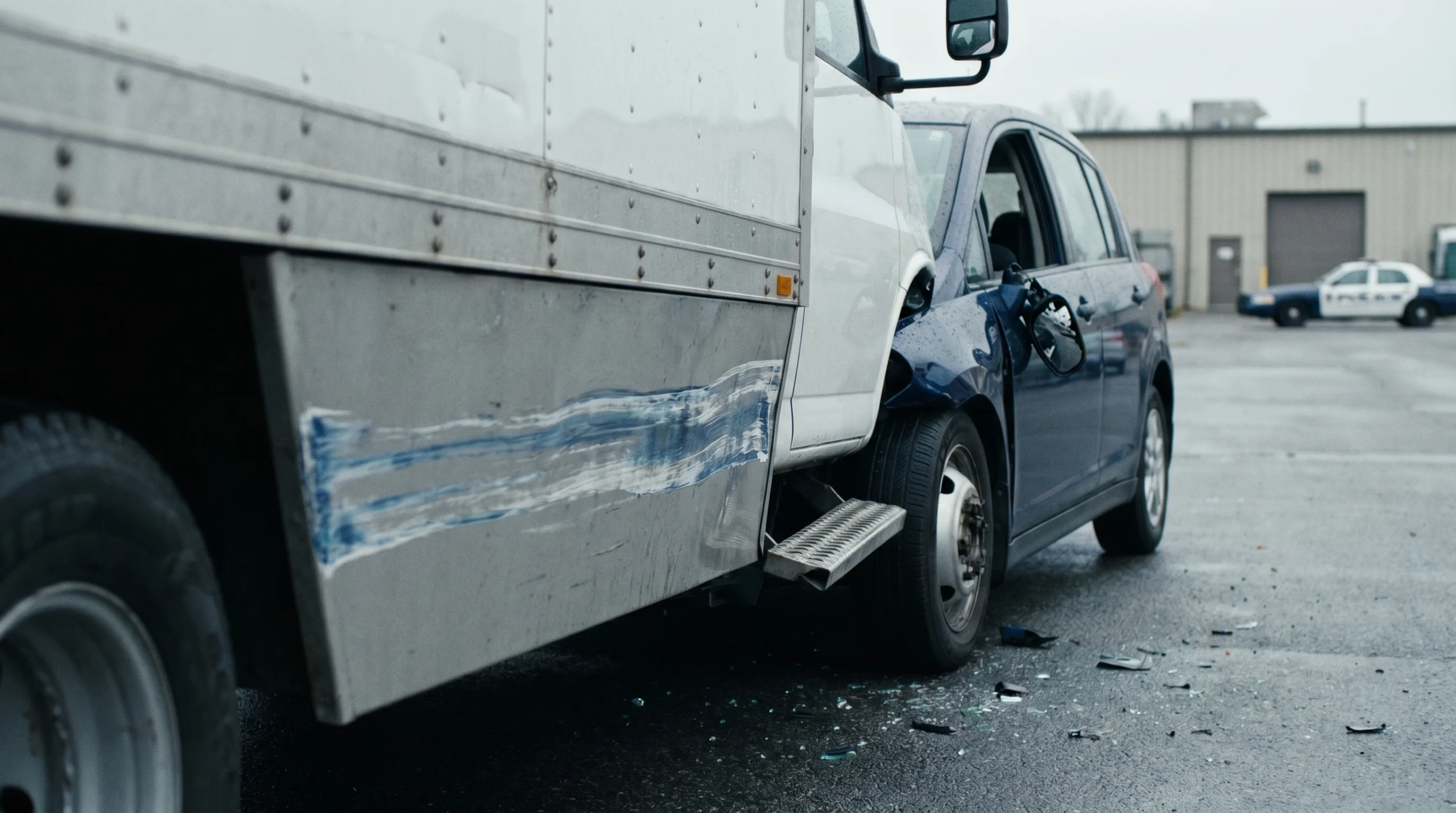
Box Trucks on Kentucky Roads
A box truck is a straight truck: the cab and the enclosed cargo box ride on one frame. Rental moving trucks, household-goods movers, furniture and appliance delivery routes, and local distributors run them on Kentucky roads.
A box truck rated from 10,001 to 26,000 pounds sits in a legal middle zone. It is heavy enough to fall under federal motor carrier safety rules and light enough that its driver needs no commercial driver’s license. Each of those lines decides which rules, records, and insurance apply after an accident. Tractor-trailers and other heavy trucks are covered on the truck accident hub.
The weight gap shows up in the injuries. The Insurance Institute for Highway Safety counts any truck rated over 10,000 pounds as a large truck. Of the 5,340 people who died in large truck accidents in 2024, 62% were riding in passenger vehicles.
Federal Safety Rules at 10,001 Pounds
Under 49 CFR 390.5, a truck used in interstate commerce is a commercial motor vehicle when its weight rating or actual weight, whichever is greater, is 10,001 pounds or more. A box truck rated at 10,001 pounds or more meets that weight test whether it is loaded or empty.
A route that starts and ends in Kentucky can still be interstate commerce. The same section includes transportation between two places in one state when it is part of trade, traffic, or transportation that began or will end outside the state, such as the last leg of an out-of-state parcel delivered by a delivery truck.
Kentucky applies the same rules to trucks that never leave the state. 601 KAR 1:005 makes these federal regulations govern every commercial motor vehicle that meets the 390.5 definition, for-hire or private, interstate or intrastate:
The same regulation requires a carrier that operates only inside Kentucky to apply for an intrastate USDOT number and display it with the letters “KY” after it.
KRS 281.600(4) removes two pieces for a Kentucky-registered truck rated 26,000 pounds or less that stays in intrastate commerce, carries no placarded hazardous materials, and is not built to carry 16 or more passengers: the driver medical standards in 49 CFR 391.41 to 391.49 and the hours-of-service rules in Part 395. The cargo, inspection, and maintenance rules still apply to that truck.
Commercial Driver’s License Threshold
49 CFR 383.91 puts a single truck with a gross vehicle weight rating of 26,001 pounds or more in Group B, the heavy straight vehicle class, and its driver needs a commercial license. A box truck rated at 26,000 pounds or less needs one only when it is built to carry 16 or more passengers or hauls hazardous materials that require placards.
Below that line, two sets of records can be missing. The drug and alcohol testing rules in 49 CFR Part 382, including testing after a fatal accident, cover drivers who are subject to the commercial license rules. A box truck driver without a commercial license falls outside them.
Logbooks follow the same split. Under 49 CFR 395.1(e)(2), the driver of a property-carrying truck that needs no commercial license is exempt from logbooks when the driver stays within 150 air miles of the work reporting location and returns there at the end of each duty tour. That driver may not drive after the 14th hour on duty on 5 days, or after the 16th hour on 2 days, of any 7 consecutive days, and the carrier must keep 6 months of time records.
Rental Company Liability Under the Graves Amendment
A rental company is not liable under state law simply because it owns the box truck that caused the accident. That rule comes from 49 U.S.C. § 30106, known as the Graves Amendment, and it reaches harm that arises from the use of a rented or leased vehicle during the rental period.
Graves Amendment Conditions
The owner keeps that protection only when both conditions in the statute hold:
The second condition keeps the rental company’s own conduct open to a negligence case. Renting out a truck with a known brake or tire defect, or handing the keys to a renter the company had reason to know could not drive it safely, is negligence the statute does not cover.
The Graves Amendment protects the owner only. It does not shield the renter who drove the truck or a business that sent the renter out on a job. Section 30106(b) also leaves state insurance and financial responsibility laws in place. Passenger rentals raise their own coverage questions, covered on the rental car accident page.
Cargo Securement Inside a Box Truck
The federal cargo rules in 49 CFR Part 393, Subpart I apply to trucks. Cargo must be contained, immobilized, or secured so it cannot shift enough to affect the truck’s stability or maneuverability, and it must not leak, spill, blow, or fall from the truck.
Tiedowns and other securement devices must hold 0.8 g of forward deceleration and 0.5 g of sideways acceleration without exceeding their breaking strength, under 49 CFR 393.102.
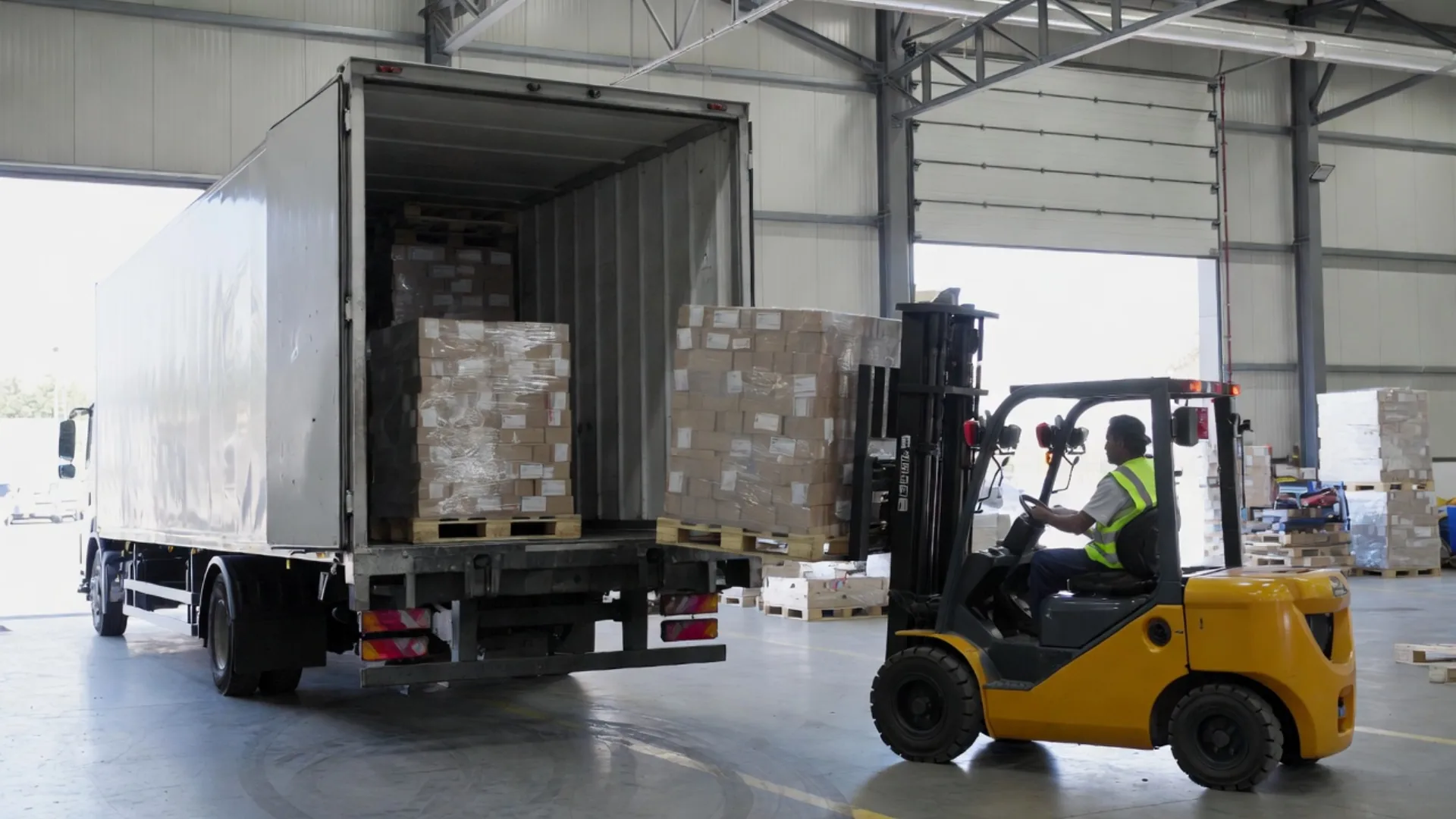
Before driving, the driver must confirm the cargo is distributed and secured and that the doors, tailgate, and tarps are fastened. Under 49 CFR 392.9, the driver must inspect the cargo and its securement within the first 50 miles, then again at each change of duty status, after 3 hours of driving, or after 150 miles, whichever comes first. The en-route inspections do not apply to a sealed load the driver was ordered not to open or a load packed so that inspection is impracticable.
Insurance Coverage After a Box Truck Accident
The insurance behind a box truck depends on who was running it. A for-hire carrier hauling property in interstate commerce in a truck rated 10,001 pounds or more must carry at least $750,000 in public liability coverage under 49 CFR 387.9. The 601 KAR 1:005 list does not include Part 387, so that federal minimum attaches to interstate for-hire work. Under 49 CFR 390.5, a carrier paid to deliver another company’s goods is a for-hire motor carrier, because it transports goods for compensation.
A rental truck or a private business truck can carry far less. In Kentucky, KRS 304.39-110 sets minimum liability security at $25,000 per person and $50,000 per accident for bodily injury, plus $25,000 for property damage, or a $60,000 single limit. The rental agreement and any supplemental liability coverage the renter bought show what followed the truck.
When the at-fault coverage is less than the harm, the injured person’s own policy can pay the difference. Under KRS 304.39-320, underinsured motorist coverage pays its own insured the damages that exceed the at-fault vehicle’s liability limits, up to the underinsured limits on the injured person’s vehicle. Before accepting a settlement that would not cover the full injury, the injured person must send written notice of it by certified or registered mail to every underinsured motorist insurer, which then has 30 days to consent or keep its subrogation rights.
The underinsured motorist coverage page and the post on coverage after a company vehicle accident cover how those policies work.
Evidence in a Box Truck Case
The records that decide a box truck case sit with the rental company, the carrier, and the shipper. Federal rules set how long some of them must be kept:
- Maintenance records: under 49 CFR 396.3, a carrier must systematically inspect, repair, and maintain its trucks and keep the records for 1 year, and for 6 months after a truck leaves its control.
- Accident register: under 49 CFR 390.15, a carrier must keep a register of its accidents for 3 years.
- Time records: a carrier using the short-haul exemption for drivers without a commercial license must keep 6 months of time records under 49 CFR 395.1(e)(2).
- Rental paperwork: the rental agreement, the checkout record, and the truck’s rental history show who had the truck and what the company knew about it.
Sam Aguiar Injury Lawyers has a dedicated trucking team for truck and commercial vehicle accident cases and six months of real-time access to DOT and TriMarc camera footage archives. Sam Aguiar and Jon Hollan are members of the Trucking Trial Lawyers Association Top 10. Data from the truck itself is covered on the trucking case evidence page.
Key Takeaways
Hit by a Rental or Delivery Box Truck?
A box truck accident can involve the renter, the rental company, a delivery contractor, and the business that loaded the cargo, each with its own insurance. Sam Aguiar Injury Lawyers puts a dedicated trucking team on the rental contract, the maintenance file, and the camera footage. With our Bigger Share Guarantee®, you always get more. Call today for a free case review.