

What to Do After a Car Accident in Kentucky

Kentucky’s car accident laws have specific rules that affect what you are entitled to and how you pursue it. Your own insurer pays your medical bills first, regardless of fault. To sue the at-fault driver, you must meet a tort threshold. And everything depends on documentation: what you do at the scene, which doctors you see, and how quickly you act. What you do at the scene, and in the days after, shapes what your case is worth. Follow this checklist to protect yourself from the start.
At the Scene, Do These First
Move to Safety and Call 911
If you can safely move your vehicle, get it out of traffic and switch on your hazard lights. Call 911 immediately, even for crashes that seem minor. Under KRS 189.580, the operator of a vehicle in a crash that injures someone or damages attended property must immediately stop, determine the extent of the injury or damage, and render aid, including arranging medical treatment when treatment is apparently needed. KRS 189.635 requires immediate notice to a law enforcement officer when anyone is injured or a vehicle cannot be driven away. The police report becomes a critical piece of evidence documenting fault, conditions, and witness statements. Don’t leave until an officer releases you.
Check Yourself and Everyone Else for Injuries
Adrenaline can mask pain for hours. Even if you feel fine, you may have a concussion, soft-tissue injury, or internal trauma that won’t become apparent until later. Tell the responding officer about any pain or discomfort, even if it seems minor, because those statements are part of the official record. Request EMS at the scene if anyone appears injured or complains of pain.
Document the Scene With Photos and Video
Before vehicles are moved, take photos and video of:
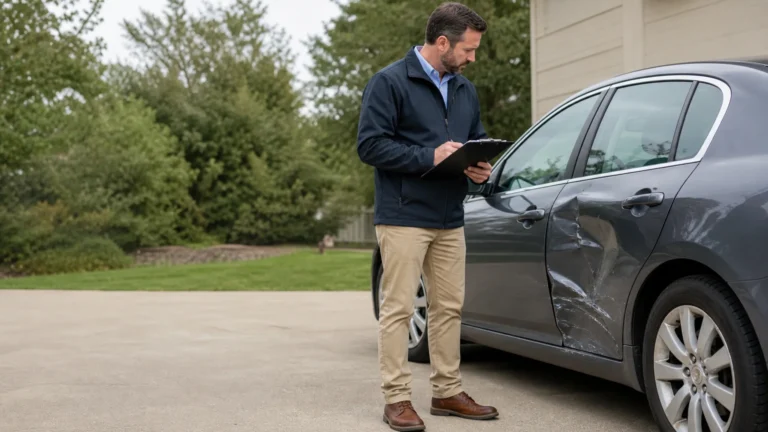
- All vehicles involved, from every angle, with close-ups of the damage
- The road surface, skid marks, debris, and weather conditions
- Traffic signs, signals, and lane markings near the crash
- Any visible injuries on yourself or your passengers
- The other driver’s license plate, insurance card, and driver’s license
If the other driver has open containers, damaged tires, a cracked windshield, or other contributing factors in view, photograph those too.
Collect Driver and Witness Information
Get the following from every driver involved:
- Full name, address, and phone number
- Driver’s license number and state
- Insurance company name, policy number, and claims phone number
- Vehicle registration and license plate
Collect names and contact information from all witnesses before they leave. Witnesses often don’t come back, and their accounts can determine who is at fault.
Do Not Admit Fault or Apologize
Keep your comments at the scene to a minimum. Don’t say “I’m sorry,” “I didn’t see you,” or anything that could be taken as an admission. Cooperate with the police report and answer factual questions about what happened, but don’t speculate or accept blame. Under Kentucky’s fault allocation statute (KRS 411.182), statements attributed to you can reduce your recovery.
Within 24 Hours, Critical Steps
Get Medical Attention Today
This is the single most important step after calling 911. Go to an emergency room, urgent care, or your primary care doctor the same day, even if you feel okay. Concussions, internal bleeding, disc injuries, and soft-tissue damage often show up after you have already told the officer you were fine. Insurance companies use delayed treatment to deny or reduce injury claims, arguing that if you were really hurt, you would have sought care immediately.
Tell the doctor it was a crash and describe every symptom, including the ones that feel minor. That dated record is what ties the injury to the wreck, and a gap of days or weeks is one of the first arguments an insurer raises. If you already missed that first day, go now and be honest about when the crash happened and when the symptoms started. Do not wait for the pain to become unbearable.
Report the Crash to Your Own Insurance Company
You are required to report accidents to your own insurer, so do it promptly. Report the facts of the crash, but don’t give a recorded statement to the other driver’s insurer before talking to an attorney. Your own insurer will open your PIP claim, which pays up to $10,000 in basic reparation benefits for medical bills and lost wages under KRS 304.39-020, regardless of who caused the crash. File that PIP claim. It is your coverage, and you have paid for it.
Preserve Evidence Before It Disappears
Business security cameras and private surveillance systems overwrite in 30 to 90 days, and some sooner. Dashcam footage is lost once the card loops or the vehicle goes in for repair. Your attorney can send preservation letters to businesses near the crash site and request government camera data while the recording still exists.
Also write down everything you remember about the crash while it is fresh: the exact location, the time, what the other driver did, and what you heard and saw.
In the Weeks After, Protect Your Case
Keep Every Medical Appointment
Insurance companies use gaps in treatment to argue that you recovered or that your injuries aren’t as serious as claimed. Attend every follow-up appointment, complete every prescribed course of treatment, and fill every prescription. If your doctor recommends imaging, physical therapy, or a referral to another physician, don’t delay. Missed physical therapy and unfilled prescriptions read as recovery in the claims file even when you were still hurting. Your medical records are the foundation of your damages case.
Keep a Pain and Symptom Journal
Write down how you feel each day: pain levels, sleep, the tasks you could not do, and what changed from your ordinary routine. Specific notes kept over weeks are evidence of non-economic loss. Vague memory months later is not.
Track Your Losses and Document Everything
Keep a written record of every expense and impact related to the crash:
- All medical bills and out-of-pocket expenses
- Days of work missed and income lost
- Tasks you can no longer perform, such as household chores, personal care, and childcare
- How your injuries affect your daily life, sleep, mood, and relationships
Save every document in one place: medical bills, explanation of benefits forms, pharmacy receipts, discharge papers, imaging reports, work notes, repair estimates, rental receipts, pay records, and every letter, email, or text from an insurance company. Review our complete list of documents to gather after an accident for everything you will need to build your case.
Stay Off Social Media
Insurance defense investigators monitor social media for posts that contradict injury claims. Any photo or post, even something innocent, can be taken out of context and used to undermine your case. Stay off all platforms until your case is resolved. See how insurance companies use social media surveillance.
What Not to Do After a Crash
- Do not give a recorded statement to the at-fault driver’s insurance company. Nothing in Kentucky law requires it, and adjusters often ask for one while you are still in pain or on medication, then use those words later to cut the case.
- Do not authorize a broad medical release that opens your entire history to any insurer, and do not sign a medical authorization until the lawyers handling the case have reviewed it.
- Do not accept an early settlement before the injuries are fully documented.
- Do not post about the crash, the injuries, or what you are doing while you recover. Keep case details inside the family and with the lawyers handling the case.
- Do not guess about fault out loud, in writing, or online.
Kentucky fault allocation under KRS 411.182 can reduce a recovery by the share of fault assigned to the injured person. Scene photos, the police report, and a clean medical timeline are what keep that share from being inflated. An apology at the scene, a recorded statement, or a social post that looks like a full recovery can all be used to move that percentage. The checklist exists to keep those unforced errors out of the file.
Witnesses, Cameras, and the Crash Vehicle
Names on a police report are a start. Phone numbers and emails are what let you reach a witness after they leave the shoulder, so follow up the same week. Memories fade, and people move. If a nearby store, gas station, or traffic camera faced the intersection, note the business name and the approximate camera angle while you are still there. A preservation letter sent before the overwrite cycle completes is what secures a copy of the footage.
Ask for the police report number before you leave, or get it from the agency the next business day. Body-camera footage from the responding officer is another record with a short retention window.
Many passenger cars now store a short event data recorder snapshot: speed, brake, throttle, and seat-belt status around the impact. That module can be overwritten once the car is driven or repaired. If the vehicle is drivable, photograph the damage before any repair. If it is not, tell the tow yard the car is evidence and should not be parted out. Keep the repair estimate, the rental agreement, and the out-of-pocket receipts with the medical file, not in a text thread that gets deleted.
Evidence Clock Versus Filing Deadline
Kentucky gives most crash victims two years from the date of the accident, or the date of the last PIP payment, whichever is later, to file a personal injury lawsuit under KRS 304.39-230. Wrongful death claims run one year from the qualification of the estate’s personal representative under KRS 413.180. Missing these deadlines permanently bars your case. Review the full rules on our Kentucky statute of limitations page, and read why having legal representation is vital to your case’s outcome.
The filing deadline is the last date to file. It is not the date the evidence lasts. Store cameras overwrite in 30 to 90 days. Nearby businesses recycle footage. Witnesses move. Skid marks fade. Under KRS 189.635, a driver must file a written report with the Kentucky State Police within 10 days when property damage tops $500 and no law enforcement officer investigated the crash. A police report, and any body-camera footage from the scene, is easier to obtain in the first days than after the file has gone cold.
If a commercial truck was involved, photograph the DOT number, the carrier name, and the plate, then see the Truck Talk episode on what to do after a truck crash for carrier preservation steps. Truck-only records, driver logs, and black box downloads do not belong on this car checklist. They have their own clock.
Insurance Contacts After a Kentucky Crash
Your own insurer opens the PIP claim. That is required coverage on a Kentucky auto policy unless you rejected it in writing. The at-fault driver’s insurer is a different company with a different job. You do not have to give that company a recorded statement, and you do not have to sign a medical release that reaches back years before the crash. If the at-fault driver carried no insurance, uninsured motorist coverage on your own policy may apply. If the limits are too low, underinsured motorist coverage is the next layer, and stacking uninsured and underinsured coverage can put more than one vehicle’s limits in play.
Health insurance may pay medical bills while the injury case is open, then assert a subrogation interest against the recovery. Keep the explanation of benefits. Do not assume a hospital bill that went to health insurance has disappeared; it is still part of the economic-loss file. Property damage, rental, and diminished value are separate from the injury case and should not be traded away in an early injury release. If a passenger was in the car, that person may have a separate PIP claim through the car’s coverage and a separate injury claim against the at-fault driver. Do not assume one release covers everyone in the vehicle.
Kentucky No-Fault Coverage and the Tort Threshold
Kentucky’s PIP system means your own insurer pays your first $10,000 in medical bills and lost wages, regardless of fault. This is automatic as long as you haven’t rejected no-fault coverage in writing. PIP is only the beginning. Once your medical expenses exceed $1,000, or you suffer a bone fracture, permanent injury, or disfigurement, you can pursue a full tort case against the at-fault driver for all your remaining damages, including pain and suffering. Your checklist isn’t complete until you have evaluated both paths.
Kentucky Damages After a Car Crash
The checklist protects the file. The value of the case still falls into three buckets under Kentucky law: economic losses, non-economic losses, and, in the right case, punitive damages. Economic losses are the bills, the lost wages, and the future care that can be proved with records. Non-economic losses are the pain, the sleep disruption, and the ordinary life the injury took away. Punitive damages require proof of a different kind of conduct, not a routine fender-bender.
For a full breakdown of those categories, see types of damages in a Kentucky injury case. A PIP file pays the first medical bills and a slice of lost wages. It does not measure the rest of the case. Once medical expenses cross Kentucky’s tort threshold, or the injury includes a fracture, permanent impairment, or disfigurement, the at-fault driver’s liability coverage comes into play for the remaining loss.
What to Gather and Preserve
These records document the loss and answer the questions an adjuster asks. Collect and keep each one:
- Police report and crash report number
- Medical records and bills from every provider
- Prescription receipts and receipts for any medical equipment
- Pay stubs and an employer letter documenting lost wages
- Photos and video of the crash scene, damage, and injuries
- Witness contact information and statements
- Insurance correspondence and settlement offers, kept in writing
- Dashcam or traffic camera footage
- Journal entries documenting your pain, limitations, and recovery
For the complete breakdown, see our page on documents needed after a car accident.
Your Crash File Starts With a Free Case Review
Camera footage, the event data recorder snapshot, and the first medical records all have short shelf lives, and the insurer starts building its version of the crash right away. Sam Aguiar Injury Lawyers sends the preservation letters and gathers the records while they still exist, and a dedicated three-person case team keeps the file moving from there. If you were hurt in a Kentucky car crash, a free case review is where that work begins.
Frequently Asked Questions
1Does my own insurance pay my medical bills after a Kentucky crash?+
2Can I sue the at-fault driver after a Kentucky car accident?+
3How soon should I see a doctor after a Kentucky car accident?+
4How long do I have to file a lawsuit after a Kentucky car accident?+
Latest Articles
Kentucky Diminished Value Claims
Kentucky drivers may pursue a repaired vehicle’s leftover market loss from the at-fault driver as part of a.

FMCSA Revoked ELDs: Fleet Compliance and Enforcement Deadlines
FMCSA removed five electronic logging devices from the registered list on August 6, 2026, and set an October.

FMCSA English Proficiency Rule and OOS Enforcement
FMCSA English Proficiency Rule Sam Aguiar Injury Lawyers August 11, 2026 7 minute read On This Page.