

Car Accident Clavicle Fractures

Key Takeaways
- A clavicle fracture accounts for about 5 percent of all adult fractures, and in side impact accidents the clavicle was the most common upper extremity fracture location.
- Many broken collarbones, especially in the shaft, heal without surgery, while in completely displaced midshaft fractures the bone united in a mean of 16.4 weeks after plate fixation against 28.4 weeks in a sling.
- The collarbone lies above several important nerves and blood vessels that are sometimes injured with it, so the examination includes checks for both.
Collarbone Anatomy
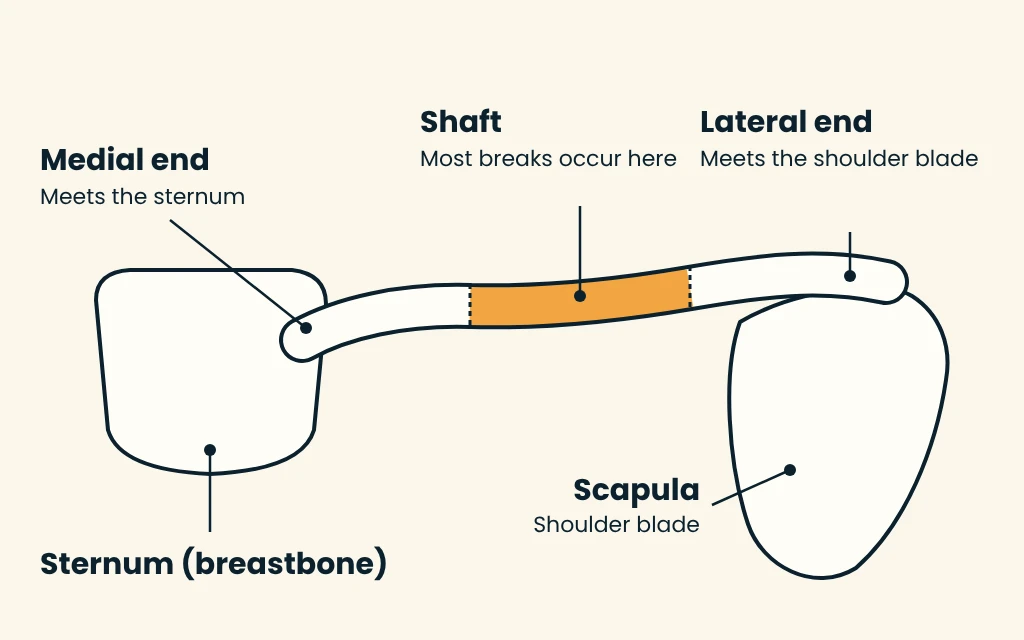
The clavicle is the bone that connects the arm to the body, running between the sternum at the ribcage and the scapula, or shoulder blade. It is one of the main bones in the shoulder girdle and chest, and a break in it accounts for about 5 percent of all adult fractures.
The bone lies above several important nerves and blood vessels, and these structures are sometimes injured when a fracture occurs. For that reason the doctor also performs tests to make sure no nerves or blood vessels were damaged when examining the bone.
Impact Forces on the Shoulder
Clavicle fractures are most often caused by a direct blow to the shoulder, from a fall onto the shoulder or an accident such as a motor vehicle collision. A fall onto an outstretched arm can also cause a clavicle fracture.
Direction of impact changes the odds: occupants in side impacts had 5.05 times the odds of a clavicle fracture, even after controlling for driver or passenger seat and safety belt use.
A separate analysis of side impact accidents counted 89 clavicle fractures among 903 upper extremity injuries in 408 occupants, with contact with the door as the leading cause of upper extremity injury, at 34.2 percent.
Fracture Locations
Most clavicle fractures occur in the middle portion, or shaft, of the bone. Occasionally the bone breaks where it attaches at the ribcage or the shoulder blade.
Breaks also vary in pattern. A clavicle can crack slightly or break into many pieces, which is called a comminuted fracture, and the pieces may line up straight or sit far out of place, which is called a displaced fracture. How far the ends have moved is the detail that separates a sling from surgery in the treatment sections below.
Signs of a Broken Collarbone
A clavicle fracture can be very painful and can make it hard to move the arm. Other signs include the shoulder sagging downward and forward, a grinding sensation when the arm is raised, a deformity or bump over the break, and bruising, swelling, or tenderness over the collarbone.
It is rare for a bone fragment to break through the skin, but the fragments may push on the skin, which doctors sometimes call tenting.
Symptoms Needing Prompt Attention
- Skin pushed up into a tent over the break
- Numbness or weakness in the arm or hand
- A hand that turns pale, cold, or blue
- A shoulder that sags down and forward
- Pain that makes lifting the arm impossible
Imaging After the Injury
Doctors order an X-ray to identify the location of the fracture and to learn how severe the break is, and X-rays of the entire shoulder may check for additional injuries. When other bones are broken, a CT scan shows the fractures in better detail.
Those images are the record of how far the bone ends sat apart on the day of the accident, which is why radiology records carry weight in an injury case.
Why Kentucky Hires
Sam Aguiar Injury Lawyers
Sling Treatment
When the broken ends have not shifted much, many broken collarbones, especially in the shaft, heal without surgery. Care usually includes a simple arm sling for comfort while the injury heals, pain medication, and motion work: patients often begin hand, wrist, and elbow exercises immediately to prevent shoulder and elbow stiffness.
Once the bone begins to heal, gentle shoulder exercises follow, with strenuous exercises added gradually after the fracture is completely healed. Regular visits include X-rays to make sure the bone is healing in a good position, because a clavicle fracture can move out of place before it heals.
Plate and Screw Surgery
When the broken ends are very displaced, the doctor may recommend surgery. Open reduction and internal fixation is the procedure most often used: the surgeon repositions the fragments and holds them with metal hardware, either plates and screws attached to the outer surface of the bone or pins or screws, which use smaller incisions than plates.
Surgery carries risks specific to this bone: difficulty with bone healing, lung injury, numbness below the clavicle, and hardware irritation. Patients who smoke or use tobacco, have diabetes, or are elderly have a higher risk of complications during and after surgery.
Randomized Trial Results
A multicenter randomized trial assigned 132 patients with a displaced midshaft clavicle fracture to plate fixation or a sling. Shoulder scores were significantly better in the plate fixation group at every time point, and at one year those patients were more likely to be satisfied with the appearance of the shoulder and with the shoulder in general.
| Measure | Sling | Plate Fixation |
|---|---|---|
| Mean time to radiographic union | 28.4 weeks | 16.4 weeks |
| Nonunion | 7 patients | 2 patients |
| Symptomatic malunion | 9 patients | 0 patients |
Primary plate fixation is supported for completely displaced midshaft clavicular fractures in active adult patients. Fractures that have not shifted far out of place are a different group, and many of them heal in a sling.
Healing Complications
A fracture that does not heal is called a nonunion. In some nonunions the patient has very little pain and good use of the arm, so no further treatment is needed, while in others the nonunion causes pain and arm dysfunction and may need an operation.
When the fragments move and the bone heals in that position, the result is a malunion. Surgical treatment for a malunion is very rare, and the decision depends on how far out of place the bones are and how much the displacement affects arm movement. A large bump may develop over the fracture site as it heals; it usually gets smaller over time, but a small bump often remains permanently.
Hardware Irritation
Because the clavicle lies directly under the skin, the plate may be felt through it, and some patients find that seatbelts and backpacks irritate the collarbone area. Plates and screws are not usually removed after the bone has healed unless they cause discomfort. A small patch of numb skin below the incision may follow surgery and becomes less noticeable with time.
In the randomized trial, five plate patients had local irritation or prominence of the hardware, three had a wound infection, and one had mechanical failure, and hardware removal was the most common reason for repeat intervention.
Recovery Timeline
Whether or not treatment involves surgery, it can take several months for a collarbone to heal, and healing may take longer in people with diabetes or in people who smoke or use tobacco. Most people return to regular activities within 3 months of the injury.
The doctor sets the timing, and returning to regular activity or lifting before the doctor advises may cause the fragments to move or the hardware to break, which can mean starting treatment over.
Records for Car Accident Clavicle Fractures
A clavicle fracture is documented in records that fit together. The emergency note records how the injury happened, the examination findings, and the nerve and blood vessel checks. The X-ray and CT reports show where the bone broke and how far the ends sat apart, and the follow-up films show whether the bone stayed in position.
A collarbone fracture and a rotator cuff tear can occur in the same shoulder, and each needs its own imaging. A long wait between the first visit and the follow-up films leaves a gap in treatment that an insurer can point to.
Photos of the bruising and the shape of the shoulder in the first days, the sling and pharmacy receipts, and a short weekly note on what the arm could not do, such as lifting a coffee cup or reaching across for a seat belt, fill the space between medical visits. Those everyday details fade first.
Collarbone Still Painful After the Accident?
Car accident clavicle fractures can be charted as a bruised shoulder at the first visit and turn into a displaced fracture that needs plates and screws, and an insurer may still value the injury by that first note. You focus on getting better. We handle everything else. With our Bigger Share Guarantee®, you always get more, and you pay $0 out-of-pocket forever. Start with a free case review.