

Deer Collisions in Kentucky Fall Under Comprehensive Coverage
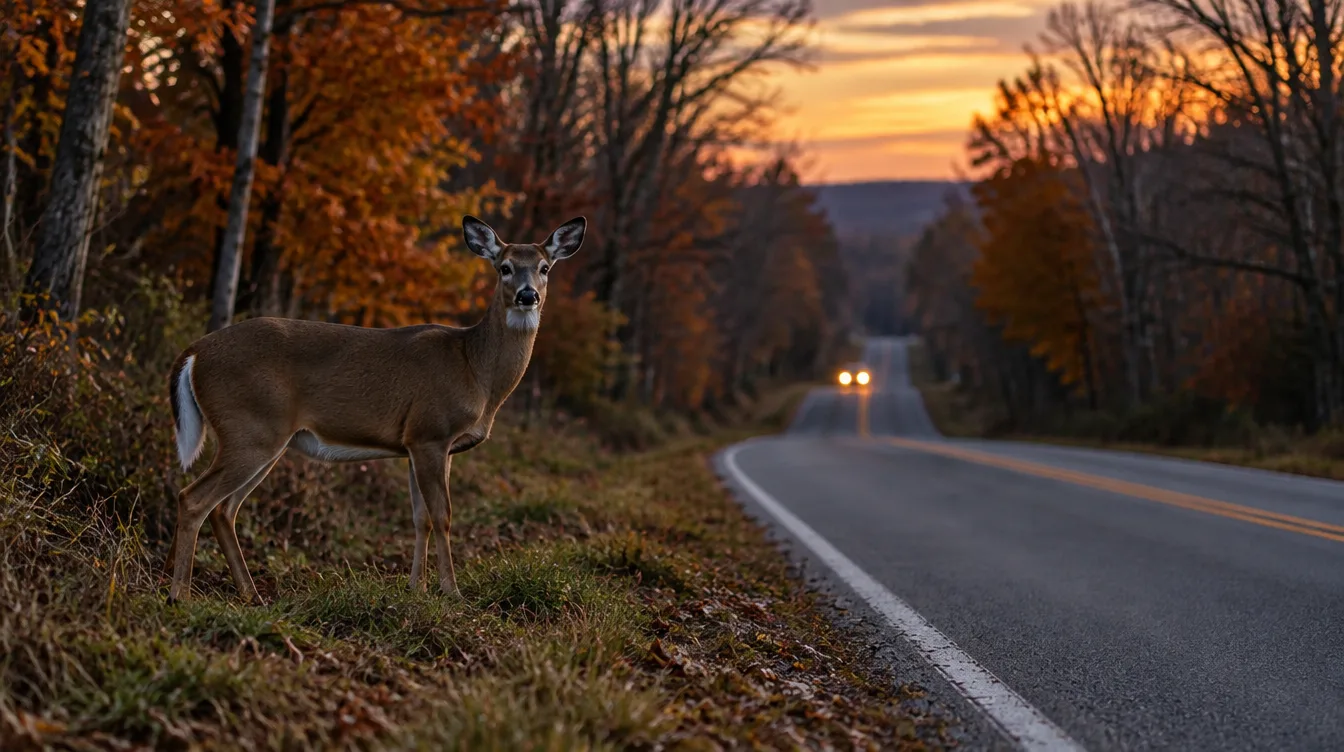
Deer collision insurance in Kentucky is comprehensive coverage, not collision coverage. If a policy carries only collision or liability coverage, the insurer will not pay for damage to the vehicle from hitting an animal. A deer accident becomes a negligence case only when another driver’s conduct is part of what happened.
Comprehensive Coverage for Deer Accidents
Comprehensive coverage is the optional part of an auto policy that responds to an animal strike. For a covered loss, the policyholder pays the deductible first, and the insurer pays the cost of the loss up to the policy limits.
An ordinary deer accident involves no other driver, so there is no liability insurer to pursue and the policy is the only source of payment for the vehicle.
The phrase full coverage is not a defined insurance term, so the declarations page, not the label, shows whether comprehensive coverage is on the policy.
Deer Accident Data in Kentucky
Nearly half of wildlife collisions in Kentucky occur from October through December, and November 2024 had more than 700, the most of any month. Deer move more in the fall. The rut begins at the end of October and continues through December, and harvested crops and fallen leaves send deer farther in search of food and shelter.
Kentucky recorded 3,406 highway crashes in which a vehicle struck a deer in 2024, up nearly 180 from the year before and the highest total in five years. Six people died and 22 were seriously injured, and Hopkins County had the most crashes at 133.
Insurance claim data peaks in the same month. Kentucky ranked fifth among the states for November animal-strike claim frequency from 2013 to 2022, at 27.6 claims per 1,000 insured vehicle years against 7.1 in August.
Near Louisville, the Transportation Cabinet studied the US 60 and Interstate 64 corridor in Jefferson, Shelby, and Franklin counties, where white-tailed deer are involved in a high number of collisions. A $1.2 million federal grant funded the study, and fencing, vegetation management, and lighting expansion are among the countermeasures under consideration.
Third-Party Liability in a Deer Accident
A deer accident becomes a negligence case when another driver’s conduct is part of what happened. The deer explains why a vehicle braked or swerved. The other driver’s speed, distance, and lane position before and after that moment are what the case examines.
One pattern is a driver who brakes for a deer and is struck from behind. Under KRS 189.340(9)(a), the operator of a motor vehicle may not follow another vehicle more closely than is reasonable and prudent, having regard for the speed of the vehicle and the traffic upon and condition of the highway. The speeds, the gap, and the moment the front driver braked are the same measurements used in any rear-end accident case.
A second pattern starts with a swerve. Drivers are told not to swerve for a deer because swerving can cause a more serious accident with an oncoming vehicle or a roadside object. When a swerve ends in contact with another vehicle, the case examines what the swerving driver could see, how fast the vehicle was moving, and what space was available.
Payment for damage and injuries in a two-vehicle accident is a liability question, so the other driver’s insurance, not comprehensive coverage, is the policy in question.
Evidence in a Deer Accident Case
Video settles what statements leave open. Consumer dashcams write over their own footage. Business and traffic camera systems can also record over old video on a short cycle. A second driver’s dashcam, a business camera, and a traffic camera are the first records to locate.
The position of each vehicle after the impact and the damage pattern show how the vehicles met. Those are the facts a following-distance or lane-position case is built from, and they change once the vehicles are repaired.
| Citation | Authority | Area |
|---|---|---|
| CitationInsurance alert | Authority Wildlife Collision Alert Animal-strike damage falls under optional comprehensive coverage. Collision-only and liability-only policies do not pay, and the deductible applies. | AreaCoverage |
| Citation2025 Antler Alert | Authority Kentucky Transportation Cabinet Records 3,406 deer crashes in 2024, six deaths, 22 serious injuries, and the October through December peak. | AreaCrash data |
| CitationClaim frequency table | Authority Animal Strike Claims, 2013 to 2022 November claim rate is more than twice the yearly average. Kentucky: 27.6 per 1,000 insured vehicle years in November, 7.1 in August. | AreaClaim rates |
| CitationKRS 189.340 | Authority Following Distance Subsection (9)(a) bars following another vehicle more closely than is reasonable and prudent. | AreaStatute |
Sources opened and read 2026-10-09: Kentucky Department of Insurance wildlife collision alert; Kentucky Transportation Cabinet 2025 Antler Alert; IIHS and HLDI animal-strike analysis (HLDI Bulletin Vol. 40, No. 5); KRS 189.340 (id=55539).
Deer Accident Case Review
When a second vehicle is involved, the camera footage and the damage to each vehicle decide the case, and both disappear: footage is overwritten and vehicles are repaired. A free case review from Sam Aguiar Injury Lawyers starts with those records.
Frequently Asked Questions
Does insurance cover hitting a deer in Kentucky?
When are deer accidents most common in Kentucky?
How many deer accidents happen in Kentucky each year?
Can another driver be responsible for a deer accident?
Latest Articles
Dashcam Evidence in a Kentucky Car Accident Case
Is dashcam evidence admissible after a Kentucky car accident? Courts accept video once it is authenticated, but unsaved clips can be overwritten fast.
Car Accident Footage Sources and Preservation
Where crash footage comes from, how fast it disappears, how preservation letters and open records requests work, and what courts do when it is destroyed.

How Insurance Companies Determine Fault
How adjusters use police reports, scene evidence, witnesses, camera footage, event data recorders, and reconstruction to assign car accident fault.