{ “@context”: “https://schema.org”, “@type”: “FAQPage”, “mainEntity”: [ { “@type”: “Question”, “name”: “Why did the ER only take an X-ray after my car accident?”, “acceptedAnswer”: { “@type”: “Answer”, “text”: “Emergency rooms use X-rays as a fast, first-line screening tool to rule out obvious fractures and life-threatening injuries. X-rays are not designed to detect soft tissue damage. If your symptoms persist after the ER visit, your treating physician can order advanced imaging like an MRI or CT scan to look for injuries the X-ray missed.” } }, { “@type”: “Question”, “name”: “Can a normal X-ray mean I still have a serious injury?”, “acceptedAnswer”: { “@type”: “Answer”, “text”: “Yes. X-rays show bones but miss soft tissue injuries entirely. Disc herniations, ligament tears, labral tears, cartilage damage, and brain injuries all produce normal X-ray results. Research on musculoskeletal injuries shows X-ray misses diagnoses that CT and MRI catch reliably.” } }, { “@type”: “Question”, “name”: “When should I get an MRI after a car accident?”, “acceptedAnswer”: { “@type”: “Answer”, “text”: “If you have persistent pain, numbness, tingling, weakness, or limited range of motion after a car accident and your X-rays are normal, talk to your treating physician about advanced imaging. MRI is particularly important for suspected disc injuries, ligament tears, joint injuries, and neurological symptoms.” } }, { “@type”: “Question”, “name”: “Does imaging affect the value of my car accident claim?”, “acceptedAnswer”: { “@type”: “Answer”, “text”: “Significantly. Objective imaging findings documented in a radiology report provide evidence that is difficult for insurance adjusters to dispute. A claim supported by MRI or CT confirmation of the diagnosed injury is fundamentally stronger than one based on subjective complaints and normal X-rays alone.” } }, { “@type”: “Question”, “name”: “What is an MRI arthrogram?”, “acceptedAnswer”: { “@type”: “Answer”, “text”: “An MRI arthrogram involves injecting contrast dye into a joint before the MRI scan. The dye highlights tears and damage that a standard MRI might miss. It is the gold standard for detecting shoulder labral tears (SLAP tears) and wrist TFCC tears, both common car accident injuries.” } }, { “@type”: “Question”, “name”: “What is DTI and why does it matter for brain injury claims?”, “acceptedAnswer”: { “@type”: “Answer”, “text”: “Diffusion tensor imaging (DTI) maps the white matter tracts in the brain. Standard CT and MRI scans may appear normal after a concussion or mild traumatic brain injury, but DTI can detect disruption in the brainu2019s wiring that explains ongoing symptoms like memory problems, difficulty concentrating, and personality changes.” } }, { “@type”: “Question”, “name”: “Will insurance pay for my MRI after a car accident?”, “acceptedAnswer”: { “@type”: “Answer”, “text”: “If you have optional PIP coverage in Kentucky, it may cover a portion of diagnostic imaging costs. Your health insurance can also cover MRI and CT scans ordered by your treating physician. The cost of the imaging study itself is included in the medical documentation that supports your injury claim against the at-fault driver.” } } ] } .sa-page-wrapper * { font-family: ‘Poppins’, sans-serif !important; box-sizing: border-box !important; } .sa-page-wrapper { max-width: 100% !important; margin: 0 auto !important; padding: 0 !important; color: #0b212d !important; line-height: 1.5 !important; font-size: 17px !important; font-weight: 500 !important; background: #fff !important; } /* Hero */ .sa-hero { position: relative !important; width: 100% !important; min-height: 420px !important; overflow: hidden !important; display: flex !important; align-items: flex-end !important; } .sa-hero img { position: absolute !important; top: 0 !important; left: 0 !important; width: 100% !important; height: 100% !important; object-fit: cover !important; object-position: center !important; z-index: 1 !important; } .sa-hero-overlay { position: absolute !important; top: 0 !important; left: 0 !important; width: 100% !important; height: 100% !important; background: linear-gradient(to top, rgba(0,61,84,.92) 0, rgba(0,61,84,.6) 50%, rgba(0,61,84,.25) 100%) !important; z-index: 2 !important; } .sa-hero-content { position: relative !important; z-index: 3 !important; padding: 60px 40px 44px !important; max-width: 900px !important; width: 100% !important; } .sa-hero h1 { font-family: ‘Poppins’, sans-serif !important; font-size: 42px !important; font-weight: 700 !important; line-height: 1.25 !important; color: #fff !important; margin: 0 0 16px !important; text-shadow: 0 2px 8px rgba(0,0,0,.3) !important; } .sa-hero-sub { font-size: 22px !important; font-weight: 500 !important; color: #fff !important; line-height: 1.5 !important; margin: 0 !important; } /* Trust Bar */ .sa-trust-bar { background: #fff !important; padding: 14px 40px !important; display: flex !important; flex-wrap: wrap !important; gap: 24px !important; align-items: center !important; justify-content: center !important; } .sa-trust-bar span { color: #f89c22 !important; font-size: 16px !important; font-weight: 600 !important; letter-spacing: .03em !important; white-space: nowrap !important; } .sa-trust-bar .sa-trust-divider { width: 1px !important; height: 16px !important; background: #0b212d !important; } /* Content Grid */ .sa-content-grid { display: grid !important; grid-template-columns: 1fr 340px !important; gap: 48px !important; max-width: 1200px !important; margin: 0 auto !important; padding: 48px 40px !important; } /* Main Content */ .sa-main-content h2 { font-size: 28px !important; font-weight: 700 !important; color: #0b212d !important; margin: 40px 0 16px !important; line-height: 1.25 !important; text-align: center !important; } .sa-main-content h3 { font-size: 22px !important; font-weight: 600 !important; color: #0b212d !important; margin: 32px 0 12px !important; line-height: 1.3 !important; text-align: center !important; } .sa-main-content p { font-size: 17px !important; line-height: 1.75 !important; color: #0b212d !important; margin: 0 0 18px !important; } .sa-main-content a { color: #0b212d !important; text-decoration: underline !important; font-weight: 500 !important; } .sa-main-content a:hover { color: #f89c22 !important; } /* Snippet */ .sa-snippet { background: #f7f9fa !important; border-left: 4px solid #f89c22 !important; padding: 20px 24px !important; margin: 0 0 32px !important; border-radius: 0 8px 8px 0 !important; font-size: 17px !important; line-height: 1.7 !important; color: #0b212d !important; } /* Compare Table */ .sa-compare-table { width: 100% !important; border-collapse: collapse !important; margin: 28px 0 !important; border-radius: 10px !important; overflow: hidden !important; border: 1px solid #e5e9ec !important; } .sa-compare-table thead th { background: #0b212d !important; color: #fff !important; font-size: 15px !important; font-weight: 600 !important; padding: 14px 16px !important; text-align: left !important; } .sa-compare-table tbody td { padding: 12px 16px !important; font-size: 15px !important; color: #0b212d !important; border-bottom: 1px solid #e5e9ec !important; line-height: 1.5 !important; } .sa-compare-table tbody tr:nth-child(even) { background: #f7f9fa !important; } .sa-compare-table tbody td:first-child { font-weight: 600 !important; color: #0b212d !important; } /* Stat Row */ .sa-stat-row { display: grid !important; grid-template-columns: repeat(auto-fit, minmax(200px, 1fr)) !important; gap: 16px !important; margin: 28px 0 !important; } .sa-stat-card { background: #fff !important; border-radius: 10px !important; padding: 24px !important; text-align: center !important; border: 2px solid #0b212d !important; } .sa-stat-number { font-size: 22px !important; font-weight: 700 !important; color: #0b212d !important; display: block !important; line-height: 1.1 !important; margin-bottom: 6px !important; } .sa-stat-label { font-size: 16px !important; font-weight: 600 !important; color: #0b212d !important; line-height: 1.4 !important; } .sa-stat-card a { color: #0b212d !important; text-decoration: underline !important; } /* Callout */ .sa-callout { background: #fff !important; border: 2px solid #0b212d !important; border-radius: 12px !important; padding: 28px 32px !important; margin: 32px 0 !important; color: #0b212d !important; } .sa-callout h3 { color: #0b212d !important; font-size: 20px !important; font-weight: 700 !important; margin: 0 0 12px !important; text-align: center !important; } .sa-callout p { color: #0b212d !important; font-size: 18px !important; line-height: 1.65 !important; margin: 0 0 12px !important; } .sa-callout p:last-child { margin-bottom: 0 !important; } .sa-callout a { color: #0b212d !important; text-decoration: underline !important; font-weight: 600 !important; } .sa-callout a:hover { color: #f89c22 !important; } /* Highlight Box */ .sa-highlight-box { background: #0b212d !important; border-radius: 10px !important; padding: 22px 26px !important; margin: 28px 0 !important; } .sa-highlight-box p { font-size: 18px !important; color: #fff !important; line-height: 1.7 !important; margin: 0 !important; } .sa-highlight-box strong { color: #fff !important; } .sa-highlight-box a { color: #f89c22 !important; text-decoration: underline !important; } /* FAQ */ .sa-faq-section { margin: 40px 0 !important; } .sa-faq-item { border: 1px solid #e5e9ec !important; border-radius: 10px !important; margin-bottom: 12px !important; overflow: hidden !important; } .sa-faq-question { background: #fff !important; padding: 18px 52px 18px 20px !important; cursor: pointer !important; font-size: 17px !important; font-weight: 600 !important; color: #0b212d !important; position: relative !important; list-style: none !important; } .sa-faq-question::-webkit-details-marker { display: none !important; } .sa-faq-question::after { content: ‘+’ !important; position: absolute !important; right: 20px !important; top: 50% !important; transform: translateY(-50%) !important; font-size: 20px !important; color: #f89c22 !important; font-weight: 700 !important; } details[open] .sa-faq-question::after { content: ‘2212’ !important; } .sa-faq-answer { padding: 16px 20px 20px !important; font-size: 18px !important; line-height: 1.7 !important; color: #0b212d !important; } /* Sidebar */ .sa-sidebar-cta { background: #0b212d !important; border-radius: 14px !important; padding: 32px 28px !important; margin-bottom: 24px !important; text-align: center !important; } .sa-sidebar-cta h3 { color: #fff !important; font-size: 22px !important; font-weight: 700 !important; margin: 0 0 8px !important; line-height: 1.25 !important; } .sa-sidebar-cta p { color: #fff !important; font-size: 17px !important; line-height: 1.55 !important; margin: 0 0 20px !important; } .sa-phone-label { font-size: 18px !important; color: #fff !important; display: block !important; font-weight: 600 !important; margin-bottom: 6px !important; letter-spacing: .03em !important; } .sa-phone-link { display: block !important; background: #fff !important; color: #0b212d !important; font-size: 18px !important; font-weight: 700 !important; padding: 14px 20px !important; border-radius: 8px !important; text-decoration: underline !important; text-underline-offset: 4px !important; margin-bottom: 12px !important; border: 2px solid #f89c22 !important; box-shadow: 0 4px 16px rgba(248,156,34,.18), 0 2px 6px rgba(0,0,0,.1) !important; } .sa-phone-link:hover { color: #f89c22 !important; } .sa-sidebar-guarantee { background: #fff !important; border: 2px solid #0b212d !important; border-radius: 14px !important; padding: 24px !important; text-align: center !important; margin-bottom: 24px !important; box-shadow: 0 4px 16px rgba(248,156,34,.18), 0 2px 6px rgba(0,0,0,.1) !important; } .sa-bsg-logo { display: block !important; margin: 0 auto 12px !important; max-width: 120px !important; } .sa-sidebar-guarantee h4 { color: #f89c22 !important; font-size: 20px !important; font-weight: 700 !important; margin: 0 0 8px !important; } .sa-sidebar-guarantee p { color: #0b212d !important; font-size: 18px !important; line-height: 1.55 !important; margin: 0 !important; font-weight: 500 !important; } .sa-sidebar-trust { background: #f7f9fa !important; border: 1px solid #e5e9ec !important; border-radius: 14px !important; padding: 24px !important; } .sa-sidebar-trust h4 { color: #0b212d !important; font-size: 20px !important; font-weight: 700 !important; margin: 0 0 14px !important; text-align: center !important; } .sa-sidebar-trust ul { list-style: none !important; padding: 0 !important; margin: 0 !important; } .sa-sidebar-trust li { font-size: 18px !important; color: #0b212d !important; padding: 8px 0 !important; border-bottom: 1px solid #e5e9ec !important; font-weight: 500 !important; display: flex !important; align-items: center !important; gap: 8px !important; } .sa-sidebar-trust li:last-child { border-bottom: none !important; } .sa-sidebar-trust li::before { content: ‘✓’ !important; color: #f89c22 !important; font-weight: 700 !important; font-size: 16px !important; } /* CTA Banner */ .sa-cta-banner { background: linear-gradient(135deg, #0b212d 0%, #142130 100%) !important; padding: 48px 40px !important; text-align: center !important; margin-top: 8px !important; position: relative !important; overflow: hidden !important; } .sa-cta-banner h2 { color: #fff !important; font-size: 32px !important; font-weight: 700 !important; margin: 0 0 12px !important; } .sa-cta-banner p { color: #d0d9df !important; font-size: 18px !important; margin: 0 0 28px !important; max-width: 600px !important; margin-left: auto !important; margin-right: auto !important; line-height: 1.6 !important; } .sa-cta-banner .sa-cta-phones { display: flex !important; justify-content: center !important; gap: 20px !important; flex-wrap: wrap !important; margin-bottom: 20px !important; } .sa-cta-banner .sa-cta-phone { display: inline-block !important; background: #fff !important; color: #0b212d !important; font-size: 22px !important; font-weight: 700 !important; padding: 16px 32px !important; border-radius: 8px !important; text-decoration: none !important; } .sa-cta-banner .sa-cta-phone:hover { color: #f89c22 !important; } .sa-cta-banner .sa-cta-sublabel { display: block !important; font-size: 18px !important; font-weight: 600 !important; margin-top: 8px !important; } .sa-cta-banner .sa-cta-subtext { color: #f89c22 !important; font-size: 18px !important; font-weight: 600 !important; margin: 0 !important; } /* Form Section */ .sa-form-section { background: #0b212d !important; padding: 48px 40px !important; text-align: center !important; } .sa-form-section h2 { color: #fff !important; } .sa-form-container { max-width: 640px !important; margin: 0 auto !important; } /* Mobile */ @media (max-width: 768px) { .sa-hero { min-height: 320px !important; } .sa-hero h1 { font-size: 24px !important; margin-bottom: 12px !important; } .sa-hero-content { padding: 36px 20px 32px !important; } .sa-hero-sub { font-size: 18px !important; } .sa-trust-bar { display: grid !important; grid-template-columns: 1fr 1fr !important; gap: 12px !important; padding: 12px 20px !important; text-align: center !important; } .sa-trust-bar span { font-size: 14px !important; } .sa-trust-bar .sa-trust-divider { display: none !important; } .sa-content-grid { display: block !important; padding: 32px 20px !important; } .sa-sidebar { width: 100% !important; margin-top: 32px !important; } .sa-compare-table { font-size: 13px !important; } .sa-compare-table thead th { padding: 10px 8px !important; font-size: 13px !important; } .sa-compare-table tbody td { padding: 8px !important; font-size: 13px !important; } .sa-cta-banner { padding: 36px 20px !important; } .sa-cta-banner h2 { font-size: 26px !important; } .sa-form-section { display: none !important; } } @media (max-width: 400px) { .sa-hero h1 { font-size: 24px !important; } }
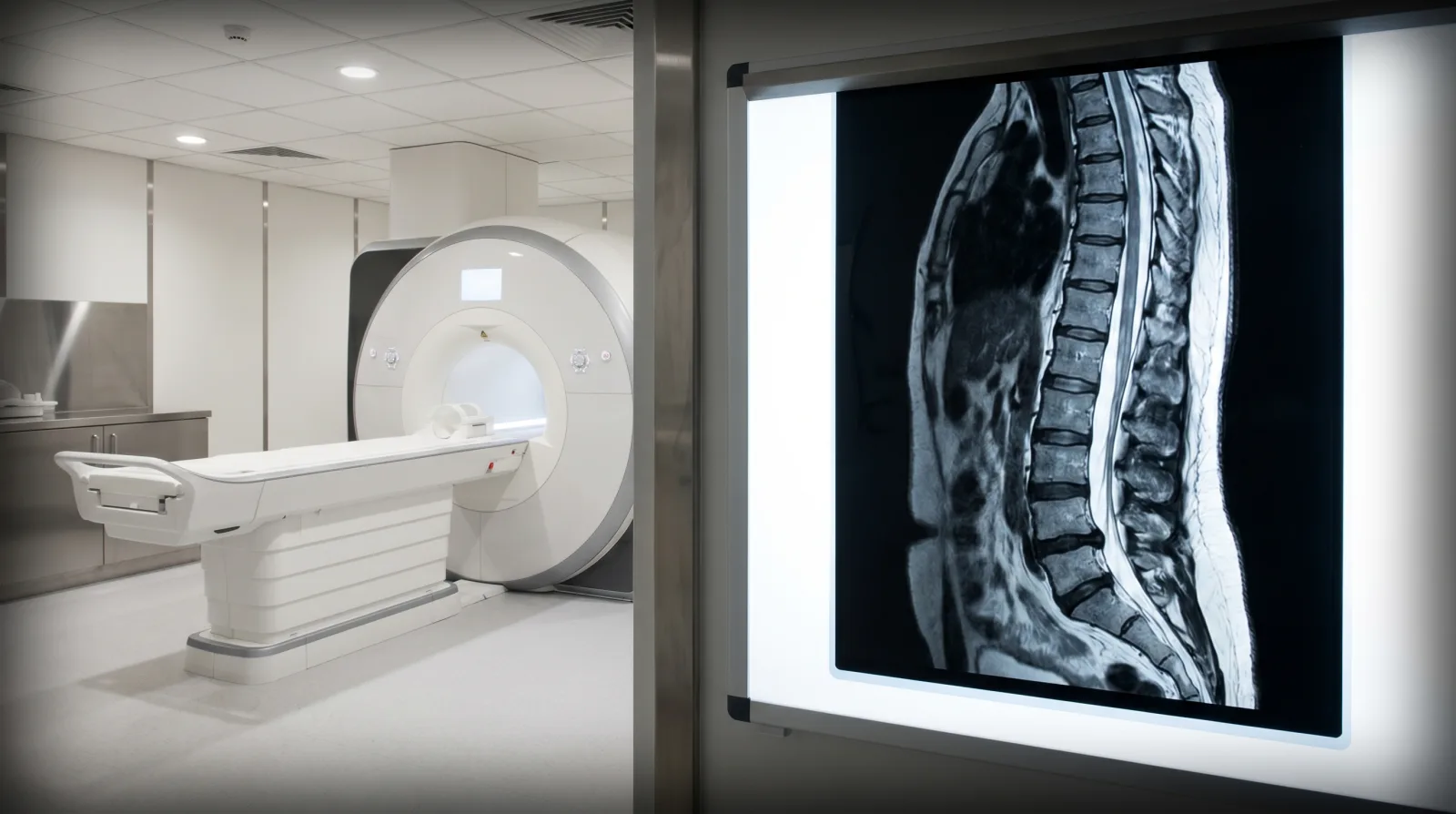
Mri scan showing soft tissue injury from a car accident

How Radiology Imaging Builds Your Injury Case

The right imaging study can be the difference between an insurance company’s lowball offer and full compensation for your injuries.

Forbes Best-In-State 2025
Super Lawyers 2017–2026
1,000+ Five-Star Google Reviews — 4.9/5
$0 Out-Of-Pocket Forever

X-rays miss soft tissue injuries, many fractures, and nearly all brain injuries. Advanced imaging like MRI and CT scans reveals what X-rays cannot: disc herniations, ligament tears, occult fractures, and brain microhemorrhages. In car accident claims, objective imaging findings are the strongest evidence against insurance company denials. Proper imaging leads to proper diagnosis, proper treatment, and accurate documentation of your injuries.

Why Imaging Matters for Your Claim

Insurance adjusters rely on medical records to evaluate a claim. When those records show a clean X-ray report, the adjuster uses it to argue the injuries are not significant. The problem is that X-rays only show bones. They miss the soft tissue damage that causes most of the pain and disability after a car accident.

An MRI or CT scan changes the conversation. When the imaging shows a disc herniation, a torn ligament, or a fracture that the X-ray missed, the adjuster can no longer dismiss the claim. Objective imaging findings documented in a radiology report are much harder to dispute than subjective pain complaints.

X-Ray vs. CT vs. MRI: What Each Shows

Feature X-Ray CT Scan MRI
Best for Obvious fractures, alignment Complex fractures, acute trauma, bone detail Soft tissue: discs, ligaments, tendons, brain
Misses Soft tissue, hairline fractures, brain injuries Subtle ligament tears, early disc pathology Some acute fractures (CT is better for bone)
Radiation Low Moderate None
Scan time Minutes 5–10 minutes 30–60 minutes
ER standard Yes (first-line) Yes (trauma protocol) Rarely (ordered later by treating physician)

According to research on Lisfranc injury diagnosis, X-ray correctly identified the injury only 48.4% of the time, CT improved accuracy to 87.1%, and MRI reached 96.8%. The pattern is consistent across injury types: advanced imaging catches what X-rays miss.

Injuries That X-Rays Routinely Miss

Emergency rooms use X-rays as a first-line screening tool. They are fast, inexpensive, and good at finding obvious fractures. But they miss a significant number of injuries that car accident victims commonly suffer:

Scaphoid Wrist fractures invisible on initial X-ray in up to 20% of cases
Disc Herniations and bulges only visible on MRI, not X-ray
Brain Concussion and mild TBI often show normal on CT and standard MRI

Other commonly missed injuries include: shoulder labral tears (requires MRI arthrogram), non-displaced rib fractures (missed on up to 50% of initial X-rays), Lisfranc midfoot injuries, and cervical disc herniations causing radiculopathy.

Specialized Imaging Studies

Beyond standard MRI and CT, certain injuries require specialized imaging to be properly documented:

MRI arthrogram injects contrast dye into the joint before scanning. It is the gold standard for detecting shoulder labral tears and wrist TFCC tears. DTI (diffusion tensor imaging) maps white matter tracts in the brain and can detect damage from traumatic brain injury that standard MRI misses. CT angiography identifies vascular injuries. EMG/NCS (not imaging, but complementary) tests nerve function and documents radiculopathy from disc herniations.

How Imaging Documentation Strengthens Your Case

An insurance adjuster reviewing a claim with only X-ray results and subjective pain complaints will calculate a lower value. The same claim with MRI findings showing a confirmed disc herniation, a radiology report documenting the exact location and grade of the injury, and a treating physician’s correlation between the imaging and the treatment plan is a fundamentally different case.

Imaging findings do three things for your claim. They confirm the diagnosis objectively. They document the specific injury in a format that is admissible as evidence. And they tie the injury to the treatment plan, making it harder for the insurance company to argue the treatment was unnecessary.

The Right Imaging at the Right Time

If your treating physician has not ordered advanced imaging for a soft tissue complaint or neurological symptoms after a car accident, it may be worth discussing. The goal is proper diagnosis and proper treatment. Accurate documentation of your injuries in the radiology record is what builds the strongest possible case. At Sam Aguiar Injury Lawyers, we review our clients’ imaging records and coordinate with treating physicians to ensure the medical documentation tells the full story.

This is not about ordering tests to build a lawsuit. It is about making sure the injuries the crash caused are properly identified, properly treated, and properly documented. The imaging record becomes the foundation of the demand.

Frequently Asked Questions

Why did the ER only take an X-ray after my car accident?

Emergency rooms use X-rays as a fast, first-line screening tool to rule out obvious fractures and life-threatening injuries. X-rays are not designed to detect soft tissue damage. If your symptoms persist after the ER visit, your treating physician can order advanced imaging like an MRI or CT scan to look for injuries the X-ray missed.

Can a normal X-ray mean I still have a serious injury?

Yes. X-rays show bones but miss soft tissue injuries entirely. Disc herniations, ligament tears, labral tears, cartilage damage, and brain injuries all produce normal X-ray results. Research on musculoskeletal injuries shows X-ray misses diagnoses that CT and MRI catch reliably.

When should I get an MRI after a car accident?

If you have persistent pain, numbness, tingling, weakness, or limited range of motion after a car accident and your X-rays are normal, talk to your treating physician about advanced imaging. MRI is particularly important for suspected disc injuries, ligament tears, joint injuries, and neurological symptoms.

Does imaging affect the value of my car accident claim?

Significantly. Objective imaging findings documented in a radiology report provide evidence that is difficult for insurance adjusters to dispute. A claim supported by MRI or CT confirmation of the diagnosed injury is fundamentally stronger than one based on subjective complaints and normal X-rays alone.

What is an MRI arthrogram?

An MRI arthrogram involves injecting contrast dye into a joint before the MRI scan. The dye highlights tears and damage that a standard MRI might miss. It is the gold standard for detecting shoulder labral tears (SLAP tears) and wrist TFCC tears, both common car accident injuries.

What is DTI and why does it matter for brain injury claims?

Diffusion tensor imaging (DTI) maps the white matter tracts in the brain. Standard CT and MRI scans may appear normal after a concussion or mild traumatic brain injury, but DTI can detect disruption in the brain’s wiring that explains ongoing symptoms like memory problems, difficulty concentrating, and personality changes.

Will insurance pay for my MRI after a car accident?

If you have optional PIP coverage in Kentucky, it may cover a portion of diagnostic imaging costs. Your health insurance can also cover MRI and CT scans ordered by your treating physician. The cost of the imaging study itself is included in the medical documentation that supports your injury claim against the at-fault driver.

The Right Imaging Changes Everything.

Insurance companies count on incomplete medical records. We make sure yours tell the full story. Average case resolution under 7 months.

Get more. Get it faster. Get it with Sam Aguiar.

Free Case Review