

Dump Truck Accident Lawyers
Injured in a Dump Truck Accident?
 ★★★★★
Over 1,000 Five-Star Reviews
•
Available 24/7. $0 Out-Of-Pocket Forever.
★★★★★
Over 1,000 Five-Star Reviews
•
Available 24/7. $0 Out-Of-Pocket Forever.
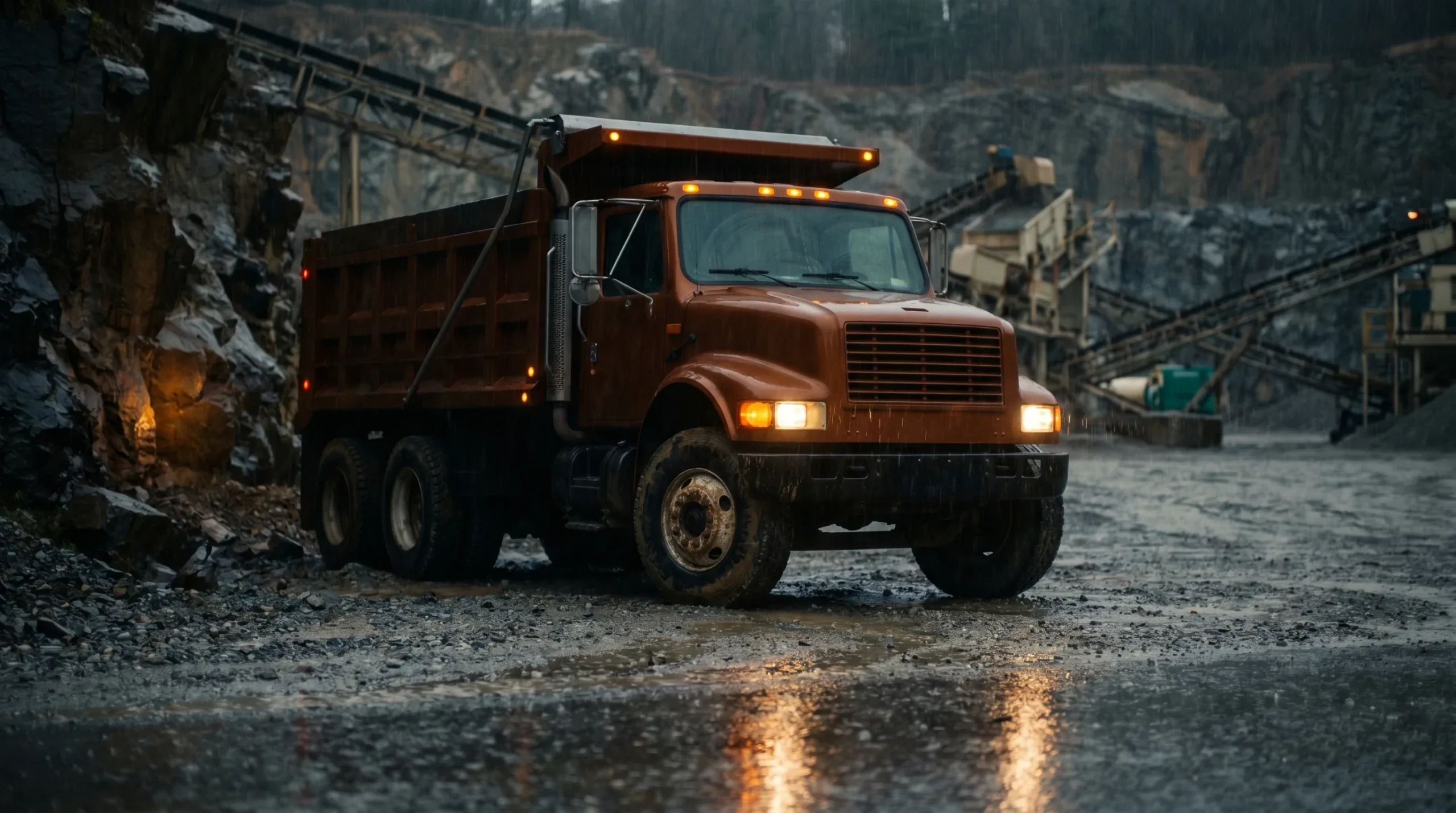
Dump Trucks on Kentucky Highways
Dump trucks carry crushed stone, asphalt, fill dirt, and coal between quarries, plants, job sites, and loadouts. A dump truck is a single-unit truck: the dump body sits on the same frame as the cab. According to the Insurance Institute for Highway Safety, accidents involving single-unit trucks killed 1,957 people in 2024, 37% of all large truck deaths.
A dump truck rated at 26,001 pounds or more is a Group B heavy straight vehicle under 49 CFR 383.91, so its driver needs a commercial driver’s license. That license brings the driver under federal drug and alcohol testing, and Kentucky applies the federal safety regulations to dump trucks that never leave the state. Tractor-trailers and other heavy trucks are covered on the truck accident hub.
Kentucky Weight Limits for Dump Trucks
KRS 189.221 sets the base limits on highways the secretary of transportation has not designated for heavier vehicles. The statute lists these trucks and limits:
The sixth item reaches dump trucks hauling stone, asphalt, and fill. KRS 189.2226 defines building materials to include asphalt, concrete, crushed stone, and fill dirt and rock headed to a home being built, remodeled, or maintained. A hauler delivering to a home may take the most direct route, but no road on it may be more than 15 miles from a state road classified for the truck’s registered weight. The truck must stay within posted bridge weight limits and width limits, and the driver must carry a bill of lading.
Road projects have a separate rule. Under KRS 189.222(9), the secretary of transportation may raise weight and height limits for vehicles operating only on roads being built, rebuilt, or repaired under a Transportation Cabinet contract.
On designated highways, KRS 189.222(1)(c) caps gross weight at 80,000 pounds, with 20,000 pounds on a single axle, 34,000 pounds on two axles in tandem, and 48,000 pounds on three axles. Off the interstate system, trucks hauling only crushed stone, fill dirt and rock, soil, bulk sand, coal, asphalt, or concrete get a 10% tolerance on those axle limits. Ready-mixed concrete trucks are held only to gross weight, except on interstates.
Weight violations reach past the driver. An officer may weigh a truck and order the excess unloaded under KRS 189.223. KRS 189.224 makes it unlawful for an owner, or anyone employing or directing the driver, to require or knowingly permit operation contrary to law. KRS 189.226 reaches anyone who causes, permits, or directs another to violate the weight statutes.
KRS 446.070 lets a person injured by the violation of a statute recover the damages that violation caused, the basis of a negligence per se case.
Construction Zone Accidents
Road work puts loaded dump trucks, flaggers, and passing traffic in the same lanes. KRS 189.2327 sets the fine for a covered traffic violation in a highway work zone at $500, and at $500 to $10,000 when the violation injures or kills someone.
The higher fine applies only when signs warn drivers of the work zone and the increased fines, and at least one worker is present. Work-zone accidents involving every kind of vehicle are covered on the construction zone accident page.
Coal Haul Road Weight Limits
Coal trucks run under a separate weight system. KRS 177.9771 creates the extended weight coal or coal by-products haul road system, which the secretary of transportation certifies by official order each year.
A truck registered at 80,000 pounds and hauling coal on that system can pay an annual decal fee and run heavier: up to 90,000 pounds for a single-unit truck with a steering axle and two axles in tandem, and up to 100,000 pounds with three axles in tridem, each with a 5% tolerance. Tractor-semitrailers with five or more axles can reach 120,000 pounds. Coal truck cases are covered on the coal truck accident page.
Falling Gravel From Dump Trucks
Kentucky’s spilled-load statute applies to every dump truck on a public road. KRS 189.150 requires a vehicle to be built to keep its contents from escaping, and it states: “No vehicle shall be operated upon any public highway for a distance of over one (1) mile whose load is susceptible to shifting or spillage unless said load is covered with a device suitable for prevention of spillage.”
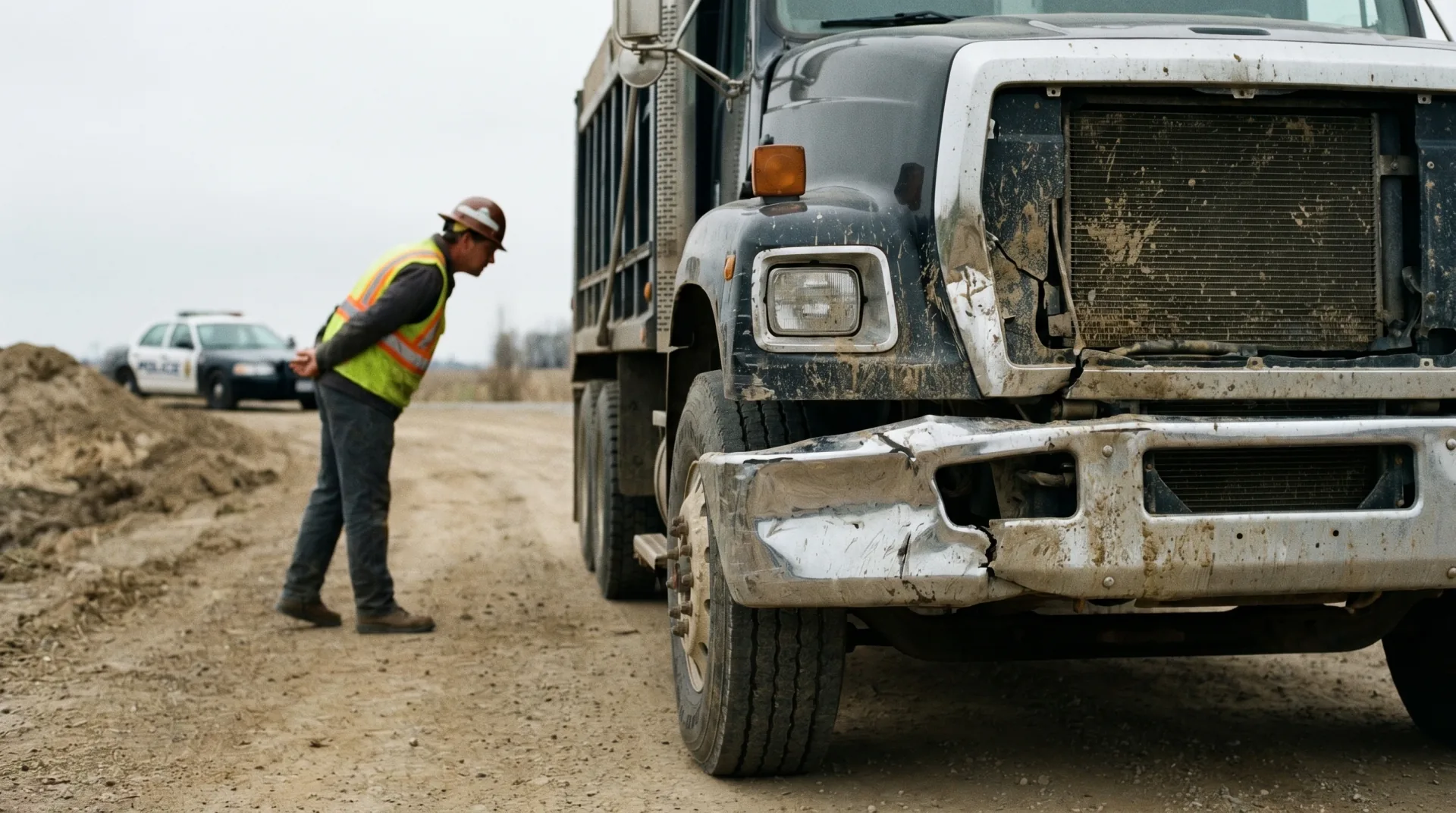
Federal rules add a second duty. 49 CFR 393.100 requires each truck’s cargo to be secured so it does not leak, spill, blow, or fall from the vehicle. The article tiedown rules in 49 CFR 393.106 exclude loose bulk loads such as sand, gravel, and aggregates carried in a box built into the truck, so a dump truck’s load answers to the spill standard in 393.100.
49 CFR 392.9 bars driving until the tailgate, tailboard, and tarps are secured. Cargo falling from other trucks is covered on the unsecured load accident page.
Federal Safety Rules for Dump Truck Carriers
601 KAR 1:005 applies the federal motor carrier safety regulations to Kentucky dump trucks whether they cross a state line or not. Under 49 CFR 395.3, a driver must have 10 consecutive hours off duty before driving, may drive 11 hours, and may not drive after the 14th hour on duty.
A dump truck driver who works within 150 air miles of the work reporting location and is released within 14 hours can use the short-haul exception in 49 CFR 395.1(e)(1). That driver keeps no logbook, but the carrier must keep 6 months of time records showing when the driver reported, the hours on duty, and the release time.
Other federal rules create records after an accident. 49 CFR 382.303 requires the employer to test a surviving driver for alcohol and controlled substances after a fatal accident. After an injury accident with treatment away from the scene, or a tow-away accident, testing is required when the driver is cited for a moving violation, within 8 hours for alcohol and 32 hours for controlled substances. 49 CFR 396.3 requires systematic inspection, repair, and maintenance, with records kept for 1 year, and 49 CFR 390.15 requires a 3-year accident register.
Hauler Records in a Dump Truck Case
The paperwork for a load starts at the scale and ends at the job site:
- Scale tickets and the bill of lading show what the truck weighed and where the load was going. KRS 189.2226 requires a building-material hauler to carry a bill of lading.
- Special overweight permits under KRS 189.270 are limited to nondivisible loads, and coal haul decals under KRS 177.9771 apply only on the certified coal haul road system.
- Time records, maintenance files, post-accident test results, and the accident register show how the carrier ran the truck and the driver.
Sam Aguiar Injury Lawyers handles dump truck cases with a dedicated trucking team for truck and commercial vehicle accident cases, and the firm has six months of real-time access to DOT and TriMarc camera footage archives. Sam Aguiar and Jon Hollan are members of the Trucking Trial Lawyers Association Top 10.
Key Takeaways
Was the Dump Truck Overloaded or Uncovered?
Dump truck accidents can trace back to a scale ticket, an uncovered load, or a tailgate left unlatched. Sam Aguiar Injury Lawyers puts a dedicated trucking team on the weight records, the permits, and the hauler’s maintenance file. Our flat contingency fee never increases if your case goes to trial, and you pay $0 Out-Of-Pocket Forever. Call today for a free case review.