

Construction Zone Accident Attorneys
Construction Zone Accidents
 ★★★★★
Over 1,000 Five-Star Reviews
•
Available 24/7. $0 Out-Of-Pocket Forever.
★★★★★
Over 1,000 Five-Star Reviews
•
Available 24/7. $0 Out-Of-Pocket Forever.
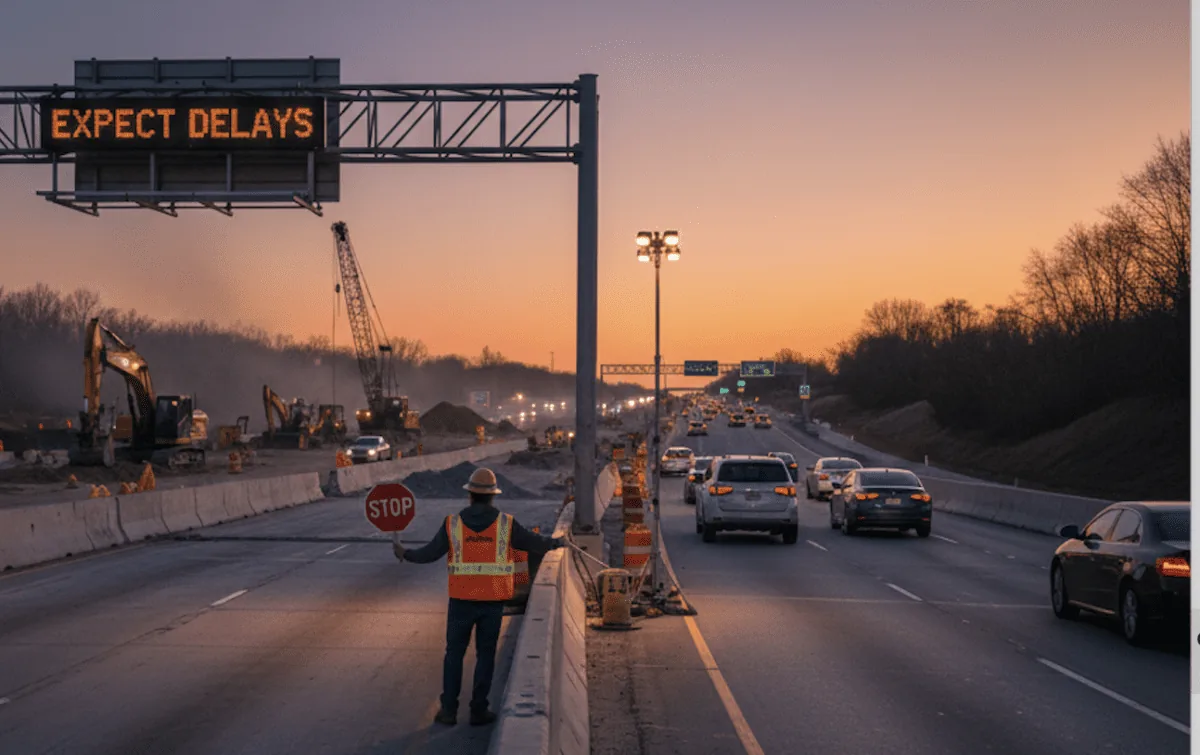
Construction Zone Crash Risks
Work zones compress traffic into unfamiliar patterns: shifted lanes, reduced widths, sudden speed changes, and heavy machinery operating feet from moving vehicles. Lane shifts, reduced speed limits, narrow barriers, and heavy equipment turn a moment of inattention into a catastrophic collision, and the responsible party is not always limited to the other driver.
In 2023, Kentucky recorded 1,251 crashes in highway work zones, injuring 247 people and killing 17. Nationally, 905 people died in work zone crashes in 2023 and 850 in 2024.
Common Causes of Work Zone Crashes
- Distracted driving was a factor in nearly 42% of Kentucky work zone crashes in 2023. Sending or reading a text takes your eyes off the road for 5 seconds, which at 55 mph is the length of an entire football field.
- Speeding through the work zone means failing to slow to posted construction speed limits, and speeding was a factor in 34% of work zone fatalities in 2022, up from 32% in 2021.
- Following too closely leaves no room to stop when traffic suddenly halts, which makes rear-end crashes inevitable.
- Lane merging conflicts produce aggressive lane changes and sideswipes in narrowed merge areas.
- Inadequate work zone signage or traffic control occurs when the construction company, contractor, or government agency fails to properly warn, mark, or control the work zone.
- Worker or equipment encroachment puts heavy equipment into or too close to active travel lanes.
Roadway Defects in Kentucky Crashes
Kentucky crashes also follow potholes, pavement breakups, unmarked drop-offs, missing or damaged signs, faded markings, shoulder drop-offs, and temporary traffic-control failures. Freeze-thaw cycles open holes in winter, and karst ground can drop a travel lane into a sinkhole. The Kentucky Transportation Cabinet maintains the state system, and cities and counties maintain the rest.
A pothole on a Louisville street can be reported through Louisville Metro 311. State-route hazards are reported through the Kentucky Transportation Cabinet pothole form. Prior complaints about the same defect show the agency had a chance to fix it.
Liable Parties in a Construction Zone Crash
Construction zone crashes often involve more liable parties than a typical car accident. A dump truck accident in a work zone also brings in Kentucky’s truck weight and covered-load statutes.
- 1
Construction Company or Contractor
If the work zone was improperly set up, with missing warning signs, confusing lane shifts, inadequate barriers, or equipment too close to traffic, the construction company or general contractor may share liability. Federal Manual on Uniform Traffic Control Devices (MUTCD) standards govern how work zones must be signed, marked, and managed.
- 2
Government Agencies
The Kentucky Transportation Cabinet (KYTC), a county, or a city may be liable if it failed to maintain proper traffic control, ignored known hazards, or approved a work zone plan that created a dangerous and preventable risk. Government liability cases require early notice and have specific procedural requirements.
- 3
Trucking Companies
A commercial truck in a work zone crash adds another layer of liability. An 80,000-pound semi-truck needs far more stopping distance than a passenger car, and a distracted or speeding truck driver in a work zone can cause catastrophic harm.
Evidence in Work Zone and Roadway Defect Cases
Work zone evidence disappears quickly because work zones are temporary. Once the project advances or concludes, the lane configuration, signage, barrier placement, and traffic control setup change or disappear entirely, so evidence of an inadequate work zone design must be preserved immediately. Traffic camera footage from KYTC and TRIMARC systems overwrites within days.
- 1
Photos of the Defect
Multiple angles with a reference object for scale, such as a quarter or a soda can, plus wide shots of the surrounding roadway and signage.
- 2
Vehicle Damage and Crash Scene Photos
Tire impacts, undercarriage damage, and skid marks show how the defect caused the crash.
- 3
311 Complaint History
Prior complaints to the city or county about that exact pothole or defect are strong evidence of notice. Louisville reports go through Metro 311.
- 4
Maintenance and Inspection Logs
Most agencies inspect on a schedule. The records show when the defect was first noticed and what, if anything, was done.
- 5
Work Orders and Repair Receipts
Work orders and maintenance records from before the crash show when the agency knew about the defect. A repair made after the crash is not admissible to prove negligence under KRE 407, though it can come in for another purpose, such as proving who controlled the road, when that is disputed.
- 6
Witness Statements
Other drivers who hit the same pothole, residents on the street, and bus drivers who report defects to dispatch can confirm the condition.
- 7
Police Report
The officer often notes the road condition, and the agency’s own records can be compared against that note.
- 8
DOT and TRIMARC Footage
A crash near a major Kentucky interstate may be on camera. TRIMARC is the KYTC camera and sensor system, and Sam Aguiar Injury Lawyers uses the DOT database to find crash footage.
- 9
Engineering Analysis
A civil engineer or roadway maintenance expert can give an opinion on whether the defect met the agency’s own standards.
Injuries in Construction Zone Crashes
Work zone crashes tend to produce more severe injuries because of rear-end impacts into stopped traffic, collisions with concrete barriers, and rollovers from sudden lane departures:
- Traumatic brain injuries, especially from high-speed rear-end impacts where the head snaps forward
- Spinal cord injuries, including compression fractures and disc herniations from sudden deceleration
- Broken bones and crush injuries from barrier collisions and multi-vehicle crashes
- Seatbelt injuries, including deep bruising, rib fractures, and internal injuries from restraint forces during a sudden stop
- Post-traumatic stress after being trapped in a work zone crash with traffic still moving around you
How Sam Aguiar Injury Lawyers Handles Construction Zone Cases
Sam Aguiar Injury Lawyers takes pothole, roadway defect, and work zone cases, including claims against a state agency before the Kentucky Board of Claims. Negligence claims against a state agency are filed with the Office of Claims and Appeals through its negligence claim portal.
Bigger Share Guarantee®: You always walk away with more than us. If your share is ever less, we cut our fee.
- Dedicated three-person team: a top-rated attorney, an experienced case manager, and a skilled legal assistant.
- Flat contingency fee that never increases if your case goes to trial.
- $0 Out-Of-Pocket Forever.
- Most cases qualify in under 10 minutes.
A construction zone case can reach the contractor and the road agency as well as the other driver, but the lane shifts, signs, and barriers that prove it are gone once the project moves on, and TRIMARC footage overwrites within days. After an accident, the insurance company doesn’t waste time. Neither should you. Arrange a free case review of your work zone or roadway defect crash.
Key Takeaways
Hurt in a Kentucky Work Zone?
Lane shifts, missing signs and uneven pavement in a work zone can bring road contractors and government agencies into your case alongside the driver who hit you. Sam Aguiar Injury Lawyers goes after the traffic control plans, crew records and crash evidence. A dedicated three-person case team runs your file, and you pay $0 Out-Of-Pocket Forever. Call today for a free case review.
Frequently Asked Questions
1Can I sue the construction company if the work zone was poorly set up?+
Yes. If the construction company or contractor failed to follow MUTCD standards for signage, lane marking, barrier placement, or traffic control, and that failure contributed to your crash, it may be liable, along with any government agency responsible for work zone design.
2Are penalties higher for speeding in a Kentucky construction zone?+
Yes. Under KRS 189.2327, a traffic violation in a highway work zone carries a $500 fine when no one is hurt, and a fine of $500 to $10,000 when someone is injured or killed, if signs announce the higher fines and at least one worker is present. For the injury case, speeding through a work zone significantly increases the at-fault driver’s liability and may support a case for punitive damages if the conduct was grossly reckless.
3How often are construction zone crashes rear-end collisions?+
Rear-end collisions caused nearly one-quarter of all fatal work zone crashes in 2024, and they often happen when traffic suddenly slows or stops in the approach area.
4Who can be held liable for a construction zone crash?+
Other drivers who were speeding, distracted, or tailgating are frequent sources of liability. The construction company, a government agency, or a trucking company can also bear responsibility when its conduct contributed to the crash.
5Why does evidence disappear quickly in work zone cases?+
Work zones are temporary by design. Once a project advances or concludes, the lane configuration, signage, barrier placement, and traffic control setup can change or disappear entirely, and camera footage from KYTC and TRIMARC systems overwrites within days.