

Parking Lot Accident Lawyers
Parking Lot Car Accident Cases in Kentucky
 ★★★★★
Over 1,000 Five-Star Reviews
•
Available 24/7. $0 Out-Of-Pocket Forever.
★★★★★
Over 1,000 Five-Star Reviews
•
Available 24/7. $0 Out-Of-Pocket Forever.
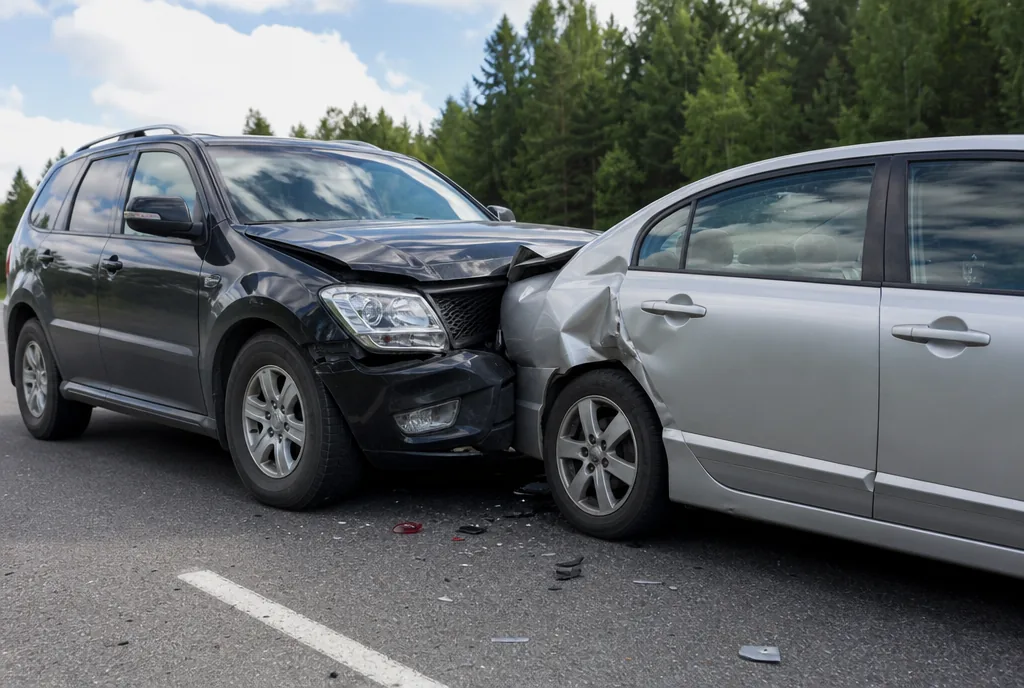
Parking Lot Crashes Are Real Crashes
A parking lot car accident in Kentucky is a motor vehicle accident under state law. You can file an injury case, your auto coverage applies, and fault is assigned by the same rules that govern any crash: right-of-way, driver behavior, and available evidence. Under KRS §411.182, Kentucky uses pure comparative negligence, so fault can be divided between drivers and you can still recover even if you were partially responsible.
Say you are pulling into a lot at Oxmoor Center when a driver backs out of a space without looking. The collision is not highway-speed. Your airbags do not deploy. The other driver is already saying, “It’s just a parking lot, no big deal.” The next morning, an insurance adjuster agrees. They call it a minor impact and offer $800 to close the case.
That call is not customer service. It is a tactic. The insurance company is already working against you, and the “it’s just a parking lot” framing is the opening move in their playbook. The goal is to get you to sign a release before you know how badly you are hurt.
The Kentucky Transportation Cabinet has recorded nearly 24,000 motor vehicle collisions in Kentucky parking lots in a single year. These are not close calls. They are documented crashes with real injuries, real medical bills, and real lost time from work.
Low Speed Does Not Mean Low Risk
Low speed does not mean low impact on your body. The National Highway Traffic Safety Administration estimates that non-traffic crashes, which include parking lot and private road collisions, account for up to 1,900 deaths and many thousands of injuries in the United States each year. Backing crashes alone cause more than 7,000 injuries per year nationally. Neck and back injuries do not require highway speed to be real or serious.
Biomechanics research published through NHTSA’s research programs has documented cervical disc injuries occurring in collisions at speeds well below what most people consider dangerous. The force does not have to be dramatic to cause a real injury.
Common car accident injuries from parking lot crashes include whiplash, cervical and lumbar strain, herniated discs, shoulder injuries (especially when a driver is gripping the wheel at impact), concussions, and wrist fractures from bracing. When a pedestrian is struck in a parking lot, injuries are often severe: there are no crumple zones between a person and a moving vehicle, and stopping distance is almost zero.
How Kentucky Law Assigns Fault in a Parking Lot
Kentucky law does not create a separate legal category for crashes that happen in private parking lots. These collisions are still governed by how fault works in Kentucky car accidents, including the same right-of-way principles that apply on any public road.
Parking lots follow a traffic hierarchy. Vehicles in the main driving lane (the thoroughfare) have the right of way over vehicles in feeder lanes. Feeder-lane drivers have priority over vehicles backing out of spaces. A driver backing out carries the highest duty to yield. That said, all drivers have a general duty to watch for others, and fault can be shared.
| Scenario | Who Has Right of Way | Typical Fault Result |
|---|---|---|
| Driver backing out hits a car in the feeder lane | Car in feeder lane | Backing driver often majority at fault |
| Two cars backing into each other simultaneously | Neither has clear priority | Often split 50/50 without evidence |
| Feeder-lane car fails to yield to thoroughfare | Thoroughfare driver | Feeder-lane driver likely at fault |
| Driver runs a stop sign at a lot exit | Driver with right of way on travel lane | Sign violator at fault |
| Pedestrian struck in a marked walkway | Pedestrian in crosswalk | Driver at fault for failure to yield |
Under KRS §411.182, even if you are found 30% at fault, you can still recover 70% of your damages. The problem is this: without solid evidence, insurance adjusters assign fault to whichever driver complains least. In a “he said, she said” parking lot dispute, the person who calls a lawyer first almost always wins the evidence battle.
Parking Lot Camera Retention Window
Most retail stores, shopping centers, and commercial properties in Louisville and Lexington have camera systems covering their lots. That footage overwrites itself on a rolling schedule, typically every 7 to 30 days. Some systems delete footage in as little as 48 to 72 hours. Once it is overwritten, it is gone permanently.
Parking lot surveillance footage is often the single piece of evidence that resolves a dispute about fault completely. Sam Aguiar Injury Lawyers moves quickly to access surveillance footage from crash scenes and sends written preservation letters to property owners immediately after a crash. A preservation letter creates a legal obligation to retain the footage. Without one, the business has no duty to save it.
Insurance Adjusters Do Not Preserve Evidence for You
Most insurance adjusters do not send preservation letters. They do not have a financial reason to preserve evidence that proves their insured was at fault. Sam Aguiar Injury Lawyers does.
Other critical evidence in parking lot cases: dashcam footage from either vehicle, cell phone records if distraction is suspected, photos of vehicle damage taken before the cars are moved, and witness statements collected at the scene. Vehicle damage patterns can tell a clear story about which car was stationary and which was moving.
What the Insurance Company Will Do
Insurance companies are not on your side. They are about profits, and parking lot cases are where adjusters are trained to close cases fast, for as little money as possible, before you understand the full extent of your injuries.
Their standard play: call within 24 hours, use the word “minor” early and often, offer a fast settlement that sounds solid, and ask for a signed release. That release closes your case permanently. If you need surgery eight weeks later because of that “minor” crash, the release means you collect nothing more.
If the driver who hit you was a delivery driver working at the time, a commercial driver, or operating any vehicle on behalf of an employer, the liability picture changes. Delivery driver accident cases can involve employer liability and higher commercial policy limits. Sam Aguiar Injury Lawyers identifies those situations on day one.
Hurt in a Kentucky Parking Lot?
A parking lot crash follows the same fault rules as any other Kentucky collision, and the surveillance footage that settles fault can be overwritten within days. Sam Aguiar Injury Lawyers sends preservation letters, gathers the footage and witness statements, and builds the fault case before the insurer can label the crash minor. You pay $0 Out-Of-Pocket Forever. Call today for a free case review.