

Rain Car Accident Lawyers
Rain and Wet-Road Crash Cases in Louisville
 ★★★★★
Over 1,000 Five-Star Reviews
•
Available 24/7. $0 Out-Of-Pocket Forever.
★★★★★
Over 1,000 Five-Star Reviews
•
Available 24/7. $0 Out-Of-Pocket Forever.
Other Driver’s Rain Defense
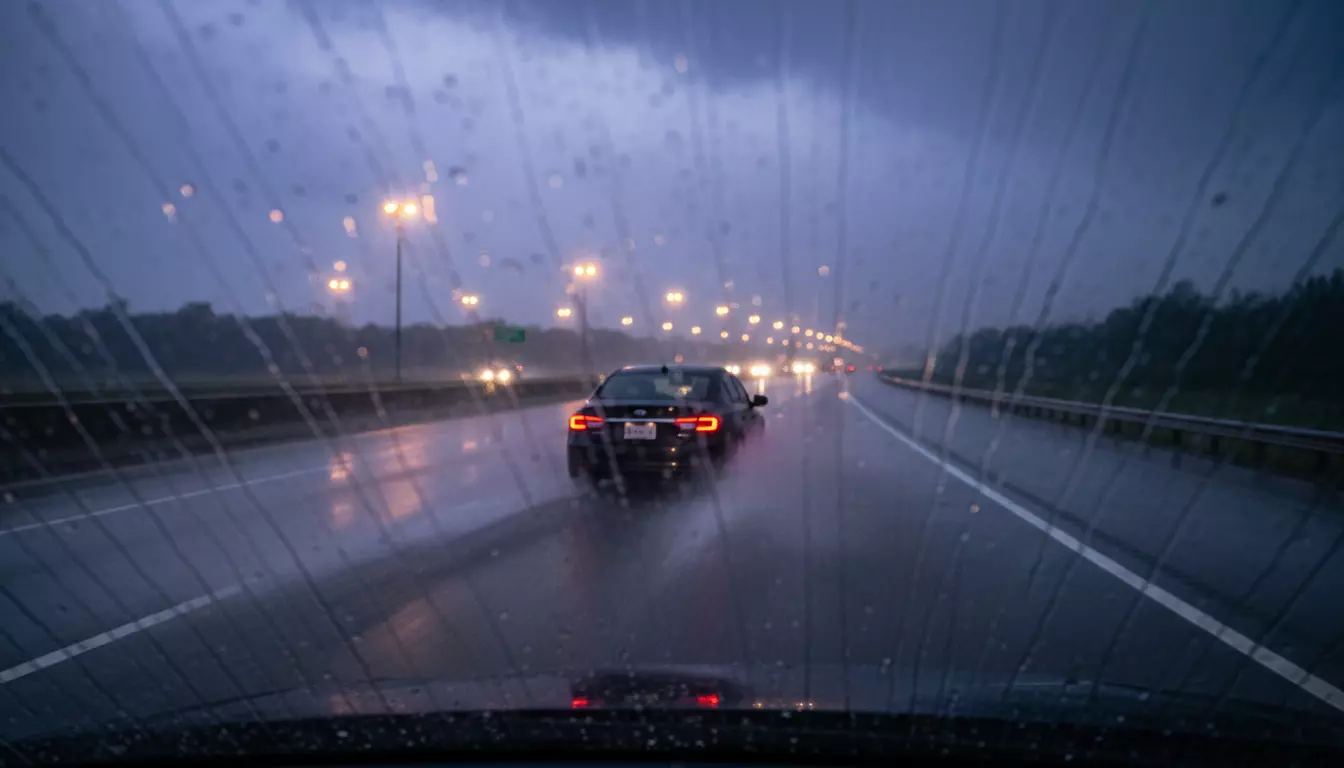
Say you’re driving south on Dixie Highway when a driver runs a red light and hits your driver’s side door. It’s raining. The other driver tells police, “I couldn’t stop in time. The road was slick.” Their insurance adjuster calls you three days later and offers a fraction of what you’re owed, citing the weather as a shared factor.
That is a tactic. Drivers have a legal duty to operate their vehicle safely for the conditions that exist. Running a red light is negligence. Following too closely on a wet road is negligence. Speeding in rain is negligence. The weather is context. The other driver’s choices are what matter.
Insurance Companies Minimize Your Pain
When an adjuster blames the rain, they are building a case to pay you less. Having a team in your corner changes that conversation from day one.
Rain Is One of the Biggest Crash Risks on Kentucky Roads
According to the Federal Highway Administration, weather-related crashes account for approximately 21% of all motor vehicle accidents in the United States each year. Rain and wet pavement are by far the most common weather contributors: wet roads are involved in 70% of weather-related crashes, and rain itself is a factor in nearly half of all weather-related accidents.
Every year in the United States, rain-related crashes kill more than 3,400 people and injure over 357,000 more. Kentucky is no exception. The state averages significant rainfall year-round, and Jefferson County, which includes Louisville, consistently ranks among the state’s highest-volume crash counties in the Kentucky State Police Traffic Collision Facts report.
Wet Roads Do Not Erase Responsibility
Every driver in Kentucky is legally required to operate their vehicle with ordinary care, which includes adjusting for current road and weather conditions. That obligation comes from Kentucky’s traffic code and the common law duty of care that every driver owes every other person on the road.
In practical terms: a driver who travels at the posted speed limit when that speed is unsafe for conditions can still be found negligent. If someone tailgates you on a wet I-64 and can’t stop in time when you brake, they are likely at fault regardless of the rain. If a driver has bald tires that cause them to lose control on a wet road, they may be liable for failing to maintain their vehicle.
How Hydroplaning Works in a Liability Analysis
Hydroplaning happens when a tire’s tread cannot channel standing water fast enough, causing the vehicle to skate on a thin film of water. Drivers often use hydroplaning as a defense: “I wasn’t speeding. The car just lost control.” But hydroplaning is more likely at higher speeds and on tires with worn tread. The NHTSA recommends replacing tires at 2/32 inch tread depth. Driving too fast for wet conditions or failing to replace worn tires can both support a negligence case under Kentucky law.
Duty to Adjust Speed for Rain
A driver can be found fully responsible for a rain-related crash even when weather was a factor. The legal question is always: did the driver adjust their behavior for the conditions? If not, the rain is irrelevant.
What Insurance Covers After a Rain Crash
Kentucky is a “choice no-fault” state, which means drivers choose whether to carry personal injury protection (PIP). If you selected PIP coverage, it applies to your medical bills and a portion of lost wages regardless of fault, up to your policy limits. But PIP is limited, and it does not cover pain and suffering.
If the other driver caused the crash, their liability insurance is responsible for your full damages. That includes medical bills, lost wages, and pain and suffering. If the at-fault driver carried minimum limits ($25,000 per person in Kentucky) and your injuries exceed that, your own underinsured motorist coverage can fill the gap.
Why Insurance Companies Push Back on Rain Cases
Weather gives adjusters a built-in talking point. They will argue shared fault, claim the weather was unforeseeable, or push you to settle before your injuries are fully diagnosed. The insurance company is already working against you the moment they open the file. They are looking for reasons to reduce what they pay, and rain gives them one.
Sam Aguiar Injury Lawyers knows that playbook. The firm builds rain-crash cases with evidence that shows the at-fault driver’s behavior caused the crash. That means preserving traffic camera footage, pulling the crash report, documenting road conditions, reviewing cell phone records, and calculating your complete damages before any settlement number is put on the table.
Why Rain Crash Evidence Cannot Wait
Evidence in rain crashes disappears fast. Skid marks wash away. Road surface conditions change within hours. Witnesses leave. The first 48 hours after a rain crash matter more than most people realize.
| Evidence Type | What It Shows | Time Sensitivity |
|---|---|---|
| Traffic camera footage | Shows pre-impact speed, lane position, and driver behavior | Overwritten in 24–72 hours |
| Tire tread condition | Worn tread increases hydroplaning risk, supporting negligent maintenance | Vehicle may be repaired or sold |
| Weather records | Confirm precipitation, visibility, and road temps at time of crash | Available indefinitely from NOAA |
| Skid marks | Reveal braking force and pre-impact speed for reconstruction | Gone within hours in rain |
| Cell phone records | Reveal if the at-fault driver was distracted during the crash | Requires legal demand to preserve |
Sam Aguiar Injury Lawyers sends preservation letters immediately. The firm tracks which Louisville-area intersections have camera coverage and which KYTC corridors have monitoring systems on the most common crash routes in Kentucky, and it moves fast because the evidence window closes fast.
More Accident Resources
- Car Accidents: Louisville car accident cases
- Accident Causes: Common causes of Kentucky crashes
- Car Accident Injuries: Whiplash, TBI, spinal injuries
- UIM Coverage: When their insurance isn’t enough
- Truck Accidents: Semi, commercial, 18-wheeler crashes
- Pedestrian Accidents: Hit-and-run and crosswalk collisions
- Whiplash Injuries: Rear-end crash neck injuries
- Case Results: 50+ seven- and eight-figure results
Injured in a Crash on a Wet Road?
Rain gives the other driver’s insurer an easy excuse, but wet roads do not erase fault. Sam Aguiar Injury Lawyers preserves camera footage, crash reports, and weather records before they disappear, then builds the case around the choices the at-fault driver made. You pay $0 Out-Of-Pocket Forever. Call today for a free case review.