
Warning Signs of Insurance Bad Faith in Kentucky
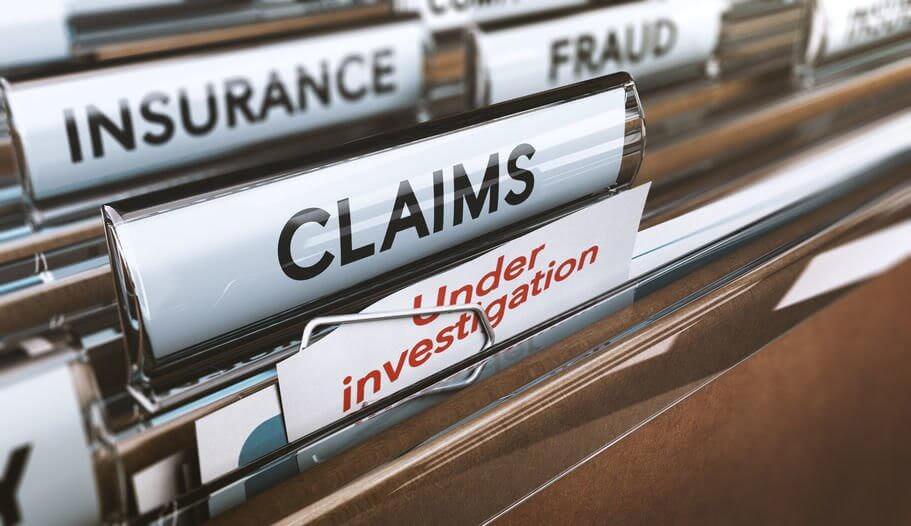
Auto insurance bad faith rarely announces itself. It shows up as a claim that should be moving and is not: letters that go unanswered, offers that ignore the medical bills, and denials with no reason attached. Kentucky law sets claim-handling rules and deadlines for every auto insurer, and when a carrier breaks them without a real basis, the record it leaves behind becomes the evidence. This article covers those warning signs and the records that prove them. The legal standard and what a bad faith case can recover come after these signs.
Definition of Auto Insurance Bad Faith
Insurance bad faith is an insurer refusing, stalling, or lowballing a claim it owes when it knows it has no proper basis, or does not care whether it has one. A dispute over value is different. An insurer may contest a claim that is honestly debatable on the facts or the law, but even then “an insurer must debate the matter fairly.”
A crash victim in Kentucky usually deals with two insurers. The first is the victim’s own carrier, which owes PIP benefits and any uninsured motorist or underinsured motorist coverage. The second is the at-fault driver’s liability carrier. Kentucky recognizes bad faith claims against both, and the same three-part test applies to each.
Three Elements of a Bad Faith Case
Under Wittmer v. Jones, 864 S.W.2d 885 (Ky. 1993), a bad faith claim must prove three things:
- The insurer was obligated to pay the claim under the policy.
- The insurer lacked “a reasonable basis in law or fact” for denying or stalling it.
- The insurer knew it had no basis, or acted with reckless disregard for whether one existed.
The third element, what the insurer knew, is why the warning signs below matter. Each one is a piece of evidence about the insurer’s state of mind.
Common Warning Signs of Bad Faith
Bad faith usually shows up as a pattern that tracks the acts prohibited by KRS 304.12-230, Kentucky’s Unfair Claims Settlement Practices Act:
- Unexplained delays: weeks pass with no update, no denial letter, and no coverage decision.
- Lowball offers: the insurer offers far less than the documented losses and will not negotiate. Subsection (7) prohibits forcing a policyholder to sue by offering substantially less than what is later recovered.
- Denial without investigation: the insurer denies the claim before it reviews the medical records, crash report, or witness statements.
- Misstated coverage: the adjuster says something is not covered when the policy says otherwise, the first practice the statute lists.
- Recorded statement pressure: the adjuster pushes for a recorded statement and then uses it to build a case against the claim instead of investigating it.
- Duplicate paperwork: subsection (12) bars requiring a preliminary claim report and then a formal proof of loss that contain substantially the same information.
- Holding one coverage hostage: refusing to settle one part of a claim, such as property damage, to pressure the claimant on the injury claim, which subsection (13) prohibits.
- No written reason: subsection (14) requires a prompt explanation of the policy basis for a denial or a compromise offer.
Eight UCSPA Violations Common in Auto Injury Claims
Selected subsections of KRS 304.12-230, summarized
Misrepresenting pertinent facts or policy provisions relating to the coverages at issue, subsection (1)
Failing to acknowledge and act promptly on communications about a claim, subsection (2)
Refusing to pay a claim without an investigation based on all available information, subsection (4)
Failing to affirm or deny coverage within the required time after proof of loss statements are completed, subsection (5)
Not attempting in good faith to reach prompt settlements of claims where liability has become clear, subsection (6)
Compelling insureds to sue by offering substantially less than the amounts ultimately recovered, subsection (7)
Delaying one portion of a claim where liability is clear to influence settlement under another portion of the coverage, subsection (13)
Failing to promptly explain the policy basis, in relation to the facts or law, for a denial or a compromise offer, subsection (14)
Deadlines Kentucky Auto Insurers Must Meet
Kentucky’s claims regulation, 806 KAR 12:095, and the PIP statute set clocks an auto insurer has to meet. A file that keeps running past them is one of the clearest warning signs.
Kentucky Claim-Handling Clocks
Deadlines from 806 KAR 12:095 and KRS 304.39-210
15 days to acknowledge a claim after notice, unless the insurer pays within that time.
15 days to reply to a claimant’s communication that calls for a response.
30 calendar days after proof of loss to offer any payment due. When several coverages are involved, undisputed amounts are due within the same 30 days.
For your own policy, 30 calendar days after proof of loss to tell you why more time is needed, then a letter every 45 days while the investigation stays open.
PIP benefits are overdue if not paid within 30 days after the insurer receives “reasonable proof of the fact and amount of loss.”
A PIP carrier that rejects a claim must give prompt written notice stating the reason.
Source: 806 KAR 12:095; KRS 304.39-210
A missed deadline is a warning sign, not proof. Insurers miss dates for ordinary reasons, and those ordinary payment delays are a different problem from bad faith. The difference is whether the insurer had a real basis for the delay and knew it did not. Overdue PIP payments carry 12 percent interest, or 18 percent when the delay was “without reasonable foundation”, so even an ordinary delay costs the insurer something.
Documenting a Bad Faith Claim
Documentation decides most bad faith claims, and the record starts the moment a policyholder or claimant suspects the claim is being mishandled:
- Save everything in writing. Keep every letter, email, denial notice, and explanation of benefits, and follow each adjuster phone call with an email summarizing what was said.
- Log every communication. The date, time, name of the person contacted, and substance of each call create a timeline that can show a pattern of delay.
- Track the clocks. Note the date notice was given, the date proof of loss was sent, and the date each answer came back. Those dates measure the insurer against the deadlines above.
- Get the denial in writing. Subsection (14) of KRS 304.12-230 requires a prompt explanation of the policy basis for any denial or compromise offer.
- Back up every number. In Wittmer, the insurer won in part because the demand letter gave loss figures with no supporting documents. Bills, estimates, and wage records belong with every demand.
The Insurer’s Own Claim File
Every insurer must keep enough documentation in each claim file to reconstruct its activities on the claim, and must date each document as received, processed, or mailed. In a bad faith lawsuit, that file is a primary target. Adjuster notes, reserve settings, and supervisor messages can show when the insurer knew the claim was valid.
The duty does not stop when the injury lawsuit is filed. KRS 304.12-230 applies both before and during litigation. The insurer’s settlement offers during the lawsuit can be admitted as evidence of bad faith after the court weighs their value against unfair prejudice, but its lawyers’ litigation tactics cannot.
Kentucky Department of Insurance Complaints
The Kentucky Department of Insurance takes consumer complaints about insurers. When the Department sends an insurer an inquiry about a claim, the insurer must answer it within 15 days. The complaint, the insurer’s written answer, and the dates of each become part of the record.
Warning Signs by Auto Coverage
Auto Liability Claims After a Crash
The at-fault driver’s carrier owes no contract duty to the injured person, but it still has to follow KRS 304.12-230. Warning signs include refusing to settle a clear-liability claim until the claimant files suit, an early push for a recorded statement the insurer does not need to accept coverage, and offers that ignore treatment already in the file.
Uninsured and Underinsured Motorist Claims
These claims put a policyholder against the policyholder’s own insurer. Watch for a carrier that treats its own customer like a stranger’s claim: disputing an injury its own records document, or stalling an underinsured motorist payment after the at-fault driver’s limits are exhausted.
Our firm served as class counsel in Davis v. State Farm (W.D. Ky., No. 3:19-cv-00466-CRS), a certified bad faith class action concerning disclosure and payment of uninsured and underinsured motorist benefits to Kentucky policyholders.
PIP Benefit Disputes
Kentucky PIP pays up to $10,000 in basic reparation benefits per person per accident for medical expense, work loss, and other economic loss. Warning signs include bills that sit past the 30-day overdue line, denials based on a records review that ignores the treating doctors, a rejection with no written reason, and repeated requests for paperwork already sent.
When the warning signs add up, the next questions are legal: whether the facts meet the three-part test, what a claim can recover, and when it has to be filed. The answers decide whether a bad faith lawsuit is worth filing.
Is Your Insurer Stalling Payment on Purpose?
Repeated document requests, lowball offers with no explanation, and PIP payments that never seem to arrive can all point toward bad faith by a Kentucky insurer. Sam Aguiar Injury Lawyers builds a dated record of that conduct while pressing the underlying injury case forward. You pay $0 Out-Of-Pocket Forever, and founder Sam Aguiar has been named a Forbes Best-In-State personal injury lawyer. A free case review will show whether the insurer’s handling of your case crosses the line.
Frequently Asked Questions
1What are the warning signs of insurance bad faith in Kentucky?+
2How long does a Kentucky auto insurer have to respond to a claim?+
3Can I bring a bad faith claim against the at-fault driver’s insurance company?+
4What is the “fairly debatable” defense in a Kentucky bad faith case?+
5Should I give a recorded statement to an insurance adjuster?+
Latest Articles
Kentucky Diminished Value Claims
Kentucky drivers may pursue a repaired vehicle’s leftover market loss from the at-fault driver as part of a.
FMCSA Revoked ELDs: Fleet Compliance and Enforcement Deadlines
FMCSA removed five electronic logging devices from the registered list on August 6, 2026, and set an October.

FMCSA English Proficiency Rule and OOS Enforcement
FMCSA English Proficiency Rule Sam Aguiar Injury Lawyers August 11, 2026 7 minute read On This Page.