

Largest Trucking Companies in the US
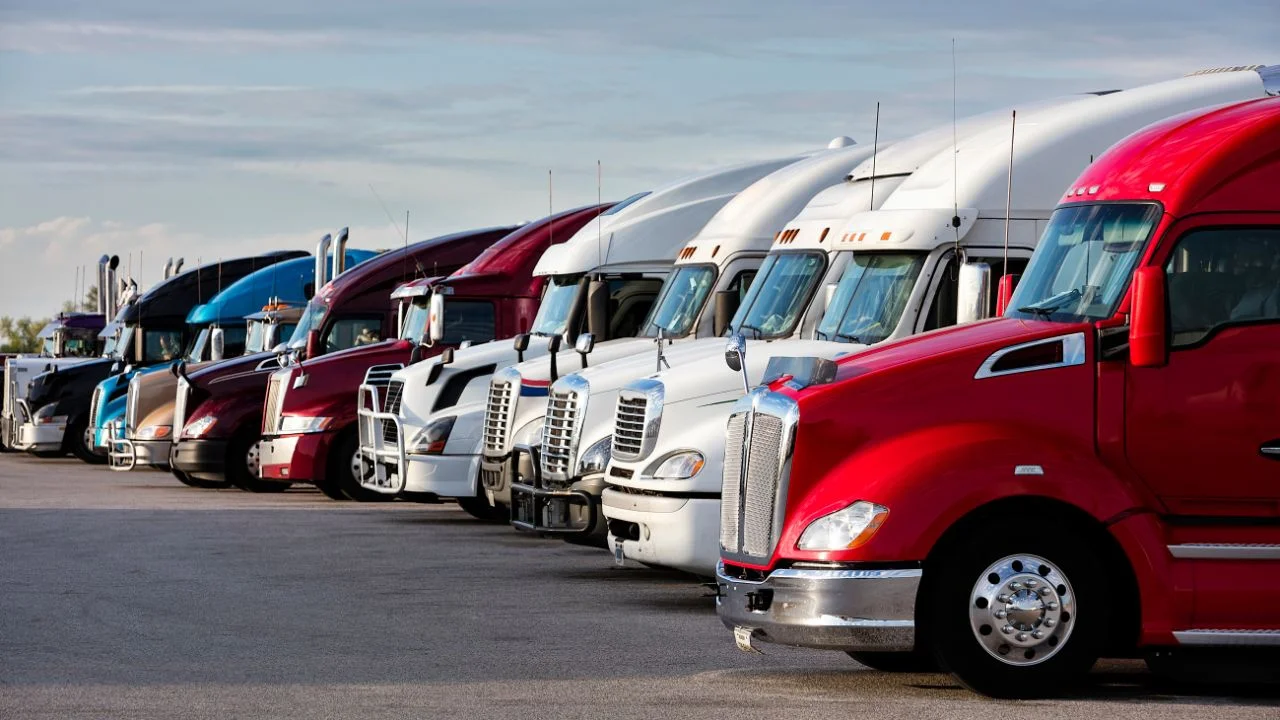
Rankings below reflect 2024 fiscal-year revenue as reported in the Transport Topics Top 100 For-Hire Carriers (2025 edition), supplemented by Logistics Management’s Top 50 trucking companies and the carriers’ own filings. Revenue covers all reported segments, including parcel, logistics, and dedicated operations, which is why the two parcel giants sit so far above every pure trucking operation.
20 Largest US Trucking Companies
| Rank | Company | 2024 Revenue | Notes |
|---|---|---|---|
| Rank1 | CompanyUPS Inc. | 2024 Revenue$91.1 billion | NotesParcel and freight giant, Worldport global air hub |
| Rank2 | CompanyFedEx Corp. | 2024 Revenue$87.8 billion | NotesParcel network, FedEx Freight LTL spinoff set for June 2026 |
| Rank3 | CompanyJ.B. Hunt Transport | 2024 Revenue$12.1 billion | NotesIntermodal and dedicated truckload leader |
| Rank4 | CompanyTFI International | 2024 Revenue$8.4 billion | NotesParent of TForce Freight, the former UPS Freight |
| Rank5 | CompanyXPO Inc. | 2024 Revenue$8.1 billion | NotesNational less-than-truckload network |
| Rank6 | CompanyRyder System | 2024 Revenue$7.7 billion | NotesFleet leasing and dedicated transportation |
| Rank7 | CompanyKnight-Swift | 2024 Revenue$7.4 billion | NotesLargest US truckload carrier, growing LTL arm |
| Rank8 | CompanyEstes Express Lines | 2024 Revenue$5.9 billion | NotesFamily-owned LTL carrier |
| Rank9 | CompanyOld Dominion Freight Line | 2024 Revenue$5.8 billion | NotesLTL carrier known for on-time service |
| Rank10 | CompanySchneider National | 2024 Revenue$5.3 billion | NotesTruckload, intermodal, and dedicated fleets |
| Rank11 | CompanyLandstar System | 2024 Revenue$4.8 billion | NotesAsset-light network built on owner-operators |
| Rank12 | CompanyPenske Logistics | 2024 Revenue$4.3 billion | NotesDedicated contract carriage and logistics |
| Rank13 | CompanyArcBest | 2024 Revenue$4.2 billion | NotesParent of ABF Freight LTL |
| Rank14 | CompanyHub Group | 2024 Revenue$3.9 billion | NotesIntermodal and logistics |
| Rank15 | CompanyR+L Carriers | 2024 Revenue$3.8 billion | NotesRegional LTL based just across the Ohio River corridor |
| Rank16 | CompanyNFI | 2024 Revenue$3.6 billion | NotesDedicated fleets and warehousing |
| Rank17 | CompanySaia | 2024 Revenue$3.2 billion | NotesGrowing national LTL network |
| Rank18 | CompanyWerner Enterprises | 2024 Revenue$3.0 billion | NotesTruckload and logistics |
| Rank19 | CompanyPrime Inc. | 2024 Revenue$2.5 billion | NotesRefrigerated and tanker freight |
| Rank20 | CompanyKenan Advantage Group | 2024 Revenue$2.4 billion | NotesBulk liquid transport |
Source: Transport Topics Top 100 For-Hire Carriers, 2025 edition
Number one on the list is also one of the country’s most visible freight operators. UPS runs its Worldport global air hub: 5.2 million square feet, 300 daily flights, 20,000 employees, and sorting capacity above 400,000 packages an hour. That one facility keeps a steady stream of feeder trucks and tractor-trailers moving through the surrounding freight network day and night.
Freight Volume and Crash Numbers
According to the American Trucking Associations, the industry billed $906 billion in gross freight revenue in 2024 and moved 11.27 billion tons of freight, 72.7% of all domestic tonnage. The country employed 3.58 million truck drivers in 2024, and 14.89 million single-unit and combination trucks were registered as of 2023.
The carrier base is far more fragmented than the top-20 list suggests. Per the same ATA data, almost 580,000 active motor carriers are registered with the Federal Motor Carrier Safety Administration, and 91.5% of them operate 10 or fewer trucks. The household names above haul a huge share of the freight; small fleets carry everything else.
Large Truck Crash Data
NHTSA’s 2024 traffic crash data counted a 2.5% drop in people killed in crashes involving large trucks compared to 2023. Injuries moved the other way: the estimated number of people injured in large-truck crashes rose 5%, and injuries to occupants of other vehicles jumped 8.2%, an increase of 8,809 people in a single year.
In 2023, NHTSA reported that 70% of the people killed in large-truck crashes were occupants of the other vehicles. The injured skew the same way: 107,636 people hurt in large-truck crashes that year, 70% of the total, were riding in the other vehicles. The FMCSA logged 156,553 reportable crashes involving at least one large truck in 2023.
Federal Trucking Rules
Every motor carrier in interstate commerce answers to the same federal safety rules, whether it runs 19,000 tractors or two. The hours-of-service limits in 49 CFR Part 395 cap driving at 11 hours inside a 14-hour on-duty window, require electronic logging devices for most drivers, and force carriers to keep the records that prove compliance. The broader FMCSA regulations add drug and alcohol testing programs, vehicle inspection and maintenance duties, and driver qualification files. When a carrier breaks these rules and someone gets hurt, the violations become evidence of negligence:
- Hours-of-service violations that put a fatigued driver behind the wheel
- Driver qualification failures in hiring, licensing, or medical certification
- Skipped inspections and deferred maintenance documented in the carrier’s own files
Control and Insurance Coverage
A case against a major carrier starts with a basic question: who controls the truck? Some carriers employ their drivers directly. Others, Landstar being the clearest example, build the entire network on owner-operators who own their tractors and run under the carrier’s federal operating authority. After a crash, the carrier may argue the driver was an independent contractor. Trucking companies lean on a familiar set of tactics to put distance between the corporate name and the driver, and federal safety regulations still hold the company responsible for trucks operating under its authority.
Control is rarely hard to show once the records come out. Carriers assign loads through dispatch systems, set delivery windows, monitor trucks through telematics, and discipline drivers who fall behind. Those records live on the carrier’s servers, which is one more reason the case has to reach the company itself.
Coverage works in layers. The biggest companies stack excess policies above the federal floor or self-insure the first layer through reserves, so the funds behind a serious case exist.
Federal Coverage Minimums
Under the FMCSA’s insurance filing requirements, most for-hire interstate carriers must show at least $750,000 in liability coverage, and the minimum climbs to $5,000,000 for certain hazardous loads. The MCS-90 endorsement backstops that federal floor even when an insurer disputes its own policy.
Above the primary layer, each excess insurer brings its own adjusters and its own defense counsel, and nobody volunteers the tower’s full structure. Claimants usually learn what coverage exists through formal discovery after suit is filed. Mapping the tower early changes how the case is staffed and negotiated.
Large carriers send investigators quickly after a serious crash. Investigators, adjusters, and defense attorneys can be working the scene within hours, collecting the same evidence an injured person will need months later. Preserving trucking crash evidence early is the counterweight: the sooner preservation demands reach the carrier, the harder it becomes for records to go missing.
Three Kinds of Carriers
Carrier type decides who is liable and what evidence exists. The industry breaks into three broad models.
Truckload Carriers
Truckload carriers such as Knight-Swift, Werner, and Prime move one shipper’s freight in one trailer from origin to destination. The liability chain is usually short, and the case depends on the driver’s logs, the dispatch records, and the carrier’s hiring file. Dedicated contracts blur the picture: Ryder, Penske, and NFI run trucks painted in their customers’ colors, so the brand on the trailer door may be a retailer while the carrier responsible for the driver is a different company entirely.
Less-Than-Truckload Carriers
LTL carriers like Old Dominion, XPO, and Saia combine freight from many customers into a single trailer and move it through terminal networks. More handling means more securement risk, and improperly loaded freight causes serious highway crashes. The 2023 bankruptcy of Yellow Corporation then pushed enormous LTL volume onto the surviving networks.
Owner-Operators and Small Fleets
Per the ATA, 91.5% of registered carriers run 10 or fewer trucks. Small fleets often carry coverage at or near the federal minimum, so a serious injury case has to look past the truck itself, at the freight broker that hired the carrier, the shipper that loaded it, and every other business connected to the haul. Truck crash cases against small carriers rise or fall on that early investigation.
Major Freight Corridors
Large carriers concentrate trucks around interstates, ports, rail intermodal yards, warehouses, and air-freight hubs. That makes the company behind the truck as important as the driver behind the wheel. A serious collision may involve dispatch records, route planning, maintenance schedules, broker contracts, leased equipment, and layered insurance coverage.
National carrier size also changes how quickly the defense moves. The same companies that can move freight coast to coast can deploy claims teams, investigators, and data systems fast. Preserving ELD data, camera footage, maintenance records, and internal safety files early keeps the case from being shaped entirely by the carrier’s version of events.
Industry Shakeup in 2025 and 2026
Trucking spent the last several years in what the trade press calls the Great Freight Recession, a downturn spanning more than 13 consecutive quarters of weak freight demand. Early 2026 brought a flicker of recovery, with the ATA Truck Tonnage Index rising 2.6% in February.
The downturn redrew the top-20 list. Yellow Corporation’s bankruptcy took one of the country’s biggest LTL networks off the road, and its freight shifted to the carriers that survived. FedEx is spinning off FedEx Freight as a standalone public company on June 1, 2026, trading on the New York Stock Exchange as FDXF and becoming the largest North American less-than-truckload carrier on its own. Schneider acquired Cowan Systems, and Knight-Swift bought Dependable Highway Express to extend its own LTL network. TForce Freight, the LTL arm that put TFI International fourth on the list, is itself the former UPS Freight. The corporate family trees behind these brands keep shifting.
The churn changes who can be sued. The company painted on the trailer may have been bought, spun off, merged, or shut down by the time the case resolves. Identifying the right corporate defendant, and the right policies, at the start keeps a case from chasing a name that no longer exists.
When a Major Carrier Causes a Crash
A case against a top-20 carrier moves differently from an ordinary car case, and the differences between car and truck crash cases show up immediately. Federal safety rules add duties an ordinary driver never carries, so a violation buried in the carrier’s own compliance files can become the strongest evidence in the case.
More than one defendant usually belongs in the case. The driver, the motor carrier, the trailer owner, the shipper, the freight broker, and a maintenance contractor can each hold separate insurance and separate records, and each holds separate records of the haul.
Most of the evidence in these cases exists because federal rules force it to exist. The driver qualification file shows who the carrier hired and what it knew at the time. Inspection and maintenance reports show how the equipment was kept. Electronic logging data shows the hours behind the wheel. A carrier that follows the rules produces a clean paper trail. A carrier that cuts corners leaves gaps and violations in those same files.
Short Evidence Windows
Black box data can be overwritten in the normal course of operations within weeks. Federal rules in 49 CFR Part 395 require carriers to keep driver duty records for only six months. A preservation demand sent early locks down what the case will need later.
Hit by a Big-Name Freight Carrier?
Large national carriers arrive at a crash with insurance teams, defense lawyers, and records systems that decide what gets kept and what gets overwritten. Sam Aguiar Injury Lawyers puts a dedicated trucking team on the carrier’s records. Founder Sam Aguiar was named a Forbes Best-In-State personal injury lawyer. If a major carrier’s truck caused your crash, request a free case review while black box data and duty records still exist.
Frequently Asked Questions
1What is the largest trucking company in the United States?+
2How many trucking companies operate in the US?+
3Do large trucking companies carry more insurance than small carriers?+
4Can I pursue the trucking company itself after a crash?+
5What happened to Yellow Corporation?+
6Are owner-operators covered by the trucking company’s insurance?+
7How long do trucking companies keep driver logs?+
Latest Articles
Kentucky Diminished Value Claims
Kentucky drivers may pursue a repaired vehicle’s leftover market loss from the at-fault driver as part of a.
FMCSA Revoked ELDs: Fleet Compliance and Enforcement Deadlines
FMCSA removed five electronic logging devices from the registered list on August 6, 2026, and set an October.
FMCSA English Proficiency Rule and OOS Enforcement
FMCSA English Proficiency Rule Sam Aguiar Injury Lawyers August 11, 2026 7 minute read On This Page.