

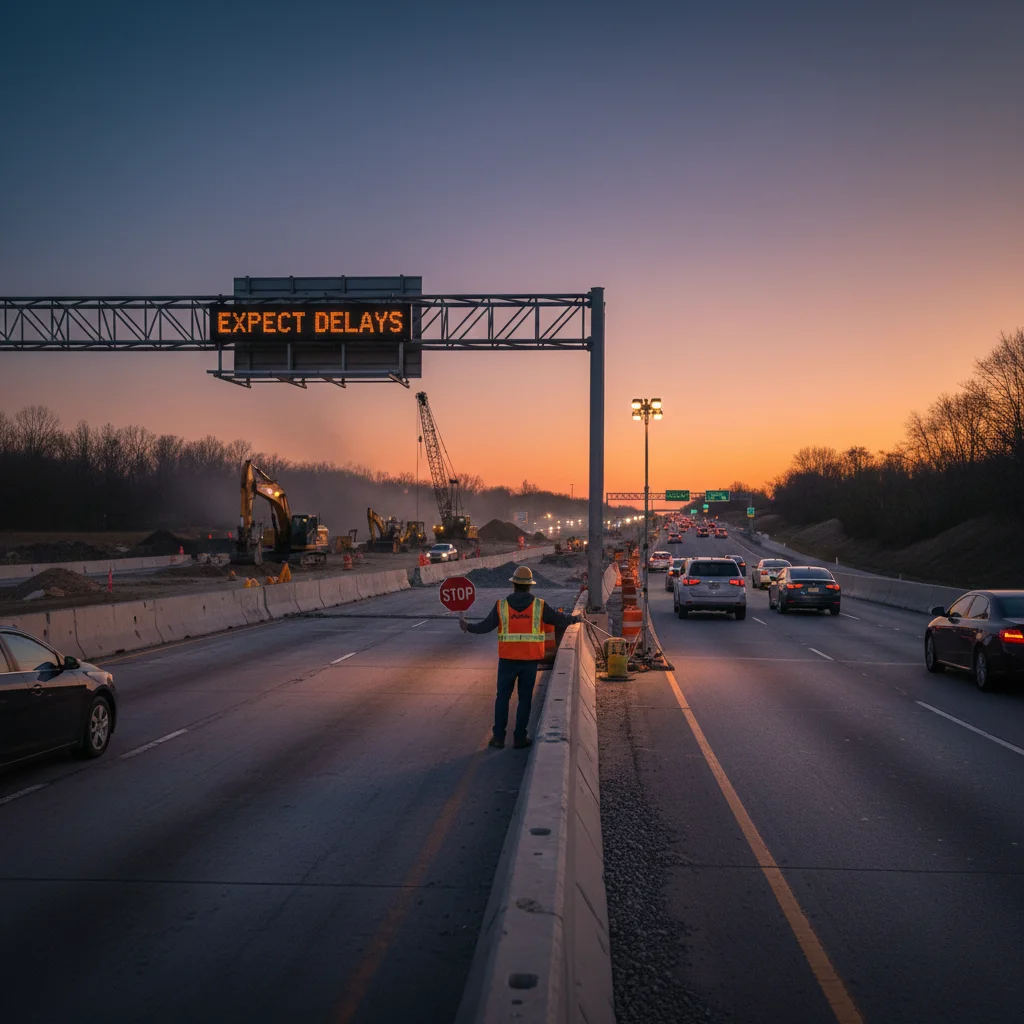
Construction Zone Accident Attorneys
When lane shifts, poor signage, or distracted drivers cause a construction zone crash, multiple parties may be liable.
In 2023, Kentucky recorded 1,251 crashes in highway work zones — injuring 247 people and killing 17. Nationally, work zone fatalities have increased 50% since 2013, with over 898 deaths recorded in 2023 according to FHWA work zone data. Construction zone crashes are uniquely dangerous: lane shifts, reduced speed limits, narrow barriers, and heavy equipment create conditions that turn a moment of inattention into a catastrophic collision.
Why Construction Zone Crashes Are So Dangerous
Work zones compress traffic into unfamiliar patterns — shifted lanes, reduced widths, sudden speed changes, and heavy machinery operating feet from moving vehicles. The most common construction zone crash type is the rear-end collision, caused by sudden slowdowns in traffic queuing behind the work area.
(KY Transportation Center)
(FHWA/NHTSA FARS)
(FHWA Case Study)
According to an FHWA case study of Kentucky work zones, 90% of work zone crashes in the state occurred on interstate routes. The study also found that Kentucky work zones experienced an average of 401 crashes per year from 2019 to 2021, with fewer patrolling hours, increased speeding, and interchange construction contributing to higher crash counts in 2020.
Common Causes of Work Zone Crashes
- Distracted driving — the leading cause. Taking your eyes off the road for even five seconds at 55 mph covers the length of a football field.
- Speeding through the work zone — failing to slow to posted construction speed limits. FHWA data shows speeding-related fatal work zone crashes have been increasing.
- Following too closely — tight following distances make rear-end crashes inevitable when traffic suddenly stops
- Lane merging conflicts — aggressive lane changes and sideswipes in narrowed merge areas
- Inadequate work zone signage or traffic control — when the construction company, contractor, or government agency fails to properly warn, mark, or control the work zone
- Worker or equipment encroachment — heavy equipment extending into or too close to active travel lanes
Who Can Be Held Liable for a Construction Zone Crash?
Construction zone crashes often involve more potentially liable parties than a typical car accident:
Other Drivers
The most common scenario — another driver was speeding, distracted, or tailgating through the work zone. Under Kentucky’s pure comparative fault rule (KRS 411.182), each driver’s share of fault is determined by the evidence.
The Construction Company or Contractor
If the work zone was improperly set up — missing warning signs, confusing lane shifts, inadequate barriers, or equipment too close to traffic — the construction company or general contractor may share liability. Federal Manual on Uniform Traffic Control Devices (MUTCD) standards govern how work zones must be signed, marked, and managed.
Government Agencies
The Kentucky Transportation Cabinet (KYTC), a county, or a city may be liable if they failed to maintain proper traffic control, ignored known hazards, or approved a work zone plan that created a dangerous and preventable risk. Government liability claims require early notice and have specific procedural requirements.
Trucking Companies
Commercial trucks involved in work zone crashes add an additional layer of liability. An 80,000-pound semi-truck needs far more stopping distance than a passenger car — and a distracted or speeding trucker in a work zone is catastrophic.
Evidence Disappears Quickly in Work Zone Cases
Work zones are temporary — that’s the whole point. Once the construction project advances or concludes, the lane configuration, signage, barrier placement, and traffic control setup changes or disappears entirely. If inadequate work zone design contributed to your crash, the evidence proving that must be preserved immediately. Traffic camera footage from KYTC and TRIMARC systems overwrites within days. Acting fast is not optional in these cases.
Injuries Common in Construction Zone Crashes
Work zone crashes tend to produce more severe injuries because of the crash dynamics involved — rear-end impacts into stopped traffic, collisions with concrete barriers, and rollovers from sudden lane departures:
- Traumatic brain injuries — especially from high-speed rear-end impacts where the head snaps forward
- Spinal cord injuries — compression fractures and disc herniations from sudden deceleration
- Broken bones and crush injuries — from barrier collisions and multi-vehicle involvement
- Seatbelt injuries — deep bruising, rib fractures, and internal injuries from restraint forces during a sudden stop
- Post-traumatic stress — the terror of being trapped in a work zone crash with traffic still moving around you
Your Rights After a Kentucky Work Zone Crash
Kentucky’s no-cap compensation system means there is no state-imposed ceiling on what you can recover. Under KRS 304.39-060, your PIP benefits cover the first $10,000 in medical bills and lost wages. Once you cross the tort threshold, you can pursue a full claim for all remaining damages — including pain and suffering, long-term care costs, and punitive damages if the at-fault driver was reckless.
Work zone crashes demand fast action. Signage, lane configurations, and camera footage disappear with the project. Call Sam Aguiar Injury Lawyers today — average call about 10 minutes. Bigger Share Guarantee®. No increased litigation fees. $0 Out-Of-Pocket Forever.
Frequently Asked Questions
Can I sue the construction company if the work zone was poorly set up?
Yes. If the construction company or contractor failed to follow MUTCD standards for signage, lane marking, barrier placement, or traffic control — and that failure contributed to your crash — they may be liable. This applies to both private contractors and government agencies responsible for work zone design and maintenance.
Are penalties higher for speeding in a Kentucky construction zone?
Yes. Under Kentucky law, traffic fines are doubled in active work zones when workers are present. More importantly for injury claims, speeding through a work zone significantly increases the at-fault driver’s liability and may support a claim for punitive damages if the conduct was grossly reckless.
What is the most common type of construction zone crash?
Rear-end collisions are the most common work zone crash type, caused by traffic suddenly slowing or stopping in the approach area. Distracted and speeding drivers who fail to slow in time are the primary cause. Sideswipes from lane merging conflicts are the second most common type.
Real Clients. Real Success.
“They were nothing short of amazing! They handled everything regarding my case, and I did not have to worry at all.”
Start Your Free Case Review
Fill out the form below and our team will reach out to discuss your options.