
Whose Insurance to Use on a Property Damage Claim
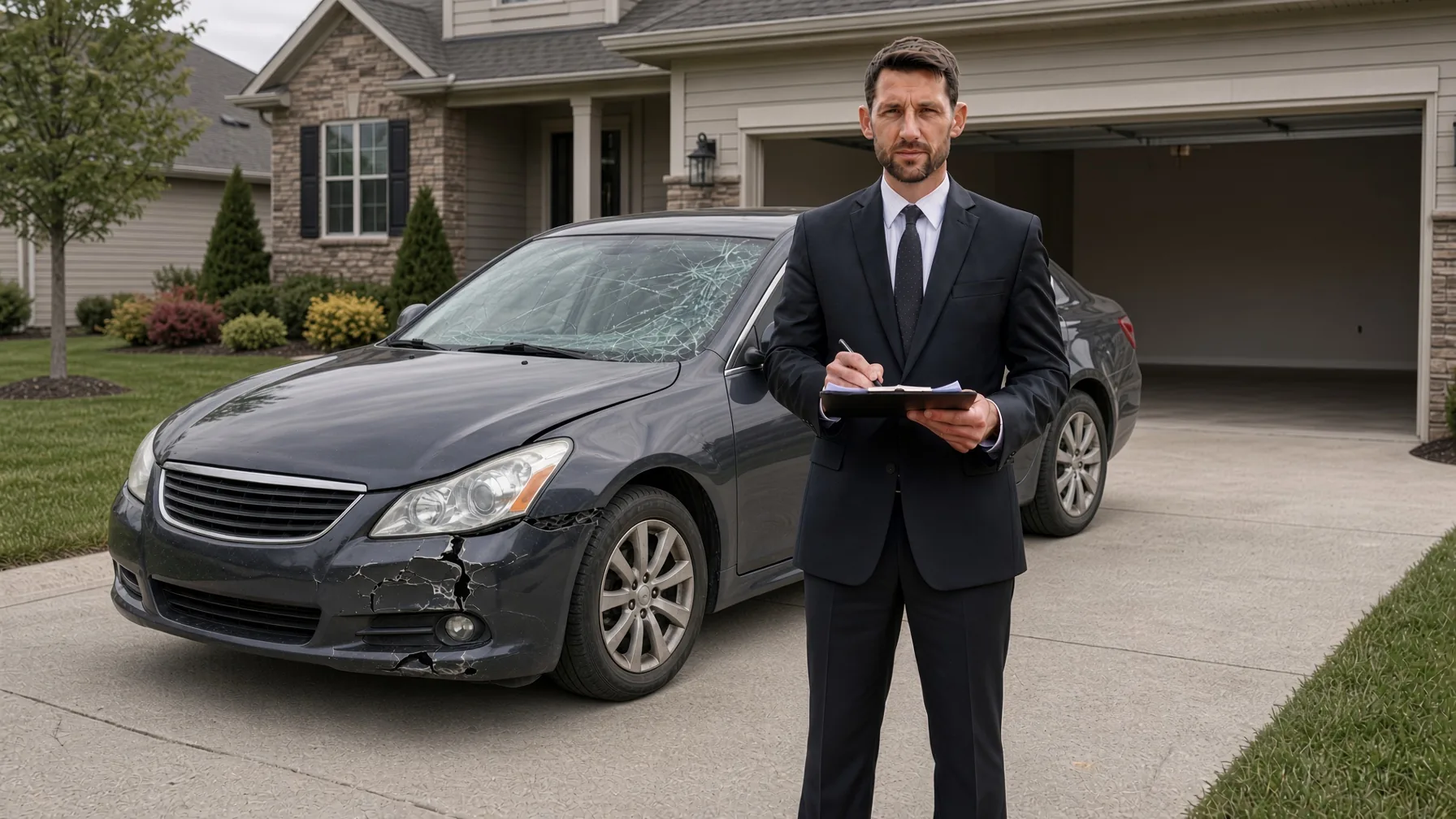
After a car accident in Kentucky, there are two ways to get a damaged vehicle repaired: file through the owner’s own collision coverage, or file a property damage claim against the at-fault driver’s liability insurance. A collision claim is filed through the owner’s own auto policy. It uses collision coverage to pay for repairs regardless of who caused the accident. The policyholder pays the deductible (typically $500 or $1,000), and the insurer covers the rest up to the vehicle’s value.
Collision Cases and Liability Cases Compared
A liability claim (also called a “third-party claim”) is filed against the at-fault driver’s property damage liability insurance. Under Kentucky law, every driver must carry at least $25,000 in property damage liability coverage. With this type of case, the at-fault driver’s insurer pays for the repairs, and no deductible is owed.
Kentucky’s no-fault system applies only to bodily injury claims through PIP insurance. Property damage is always fault-based. The person who caused the accident is responsible for the damage to the other vehicle. How added PIP coverage works in Kentucky is a separate consideration for medical bills, not the car.
$25,000
Kentucky minimum property damage liability coverage
75%
Kentucky total loss threshold, as a share of actual cash value
$4,730
Average U.S. collision repair cost at the end of 2024
Sources: Kentucky Transportation Cabinet, Total Loss Appraisals, and CCC Intelligent Solutions.
When Collision Coverage Is the Better Route
Filing through the owner’s own collision coverage makes sense when speed counts. If the car is not drivable and needs repairs quickly, the owner’s insurer will typically assign an adjuster and start the process within days. According to the J.D. Power 2025 U.S. Auto Cases Satisfaction Study, overall satisfaction with auto cases sits at 700 out of 1,000 points, with speed of settlement being a major factor.
An insurer has a contractual duty to its own policyholder. The at-fault driver’s insurer does not. That means the policyholder’s insurer must process the claim in good faith under Kentucky law, while the other driver’s insurer has no such obligation to the claimant.
Filing through collision also makes sense when fault is disputed. If the other driver’s insurance company is dragging its feet, denying fault, or making lowball offers, the owner can bypass that entire process by using collision coverage and letting the insurer handle the subrogation process. The injury side of a case runs on its own track, covered in the overview of car accidents that were not the driver’s fault.
The average total cost of collision repair in the United States reached more than $4,730 by the end of 2024, according to CCC Intelligent Solutions. With repair costs this high, getting the case moving quickly counts. Many drivers also misread what their policy covers, which is the subject of the “full coverage” insurance myth.
Collision coverage is the better choice when the car needs to be fixed fast or when fault is disputed and the other insurer is slow to accept liability. A case against the at-fault driver’s insurance is the better choice when there is no collision coverage, when avoiding the deductible is the priority, or when a diminished value claim is on the table. Both routes can work together: file through the owner’s insurer to get moving, and let that insurer pursue the at-fault insurer through subrogation.
Third-Party Claims Against the At-Fault Insurer
Filing a third-party property damage claim against the at-fault driver’s liability insurance is the right move when the owner does not carry collision coverage. Many Kentucky drivers, especially those with older or paid-off vehicles, drop collision coverage to save on premiums. For those drivers, a liability case against the other driver is the only path to getting the vehicle repaired.
Even with collision coverage, there are good reasons to file against the at-fault driver. The owner avoids paying a deductible. The owner is entitled to loss-of-use compensation, which typically means a rental car for the time needed to repair or replace the vehicle. And the owner can pursue a diminished value claim, which is the difference between what the car was worth before the accident and what it is worth after repairs. Kentucky case law, including Muncie v. Wiesemann (2018), supports diminished value claims against at-fault parties.
The downside is time. The at-fault driver’s insurer needs to complete its own investigation before accepting liability. That can take weeks. Meanwhile, the car sits. This delay is especially common in rain-related accidents in Louisville where fault is sometimes disputed, or in accidents involving commercial vehicles where a truck accident brings multiple insurers into the case.
Subrogation and Deductible Recovery
Subrogation is the process an insurance company uses to recover money from the at-fault driver’s insurer after it has already paid its policyholder’s case. With a collision case, the insurer pays for repairs minus the deductible. Then the insurer “steps into the shoes” of its policyholder and goes after the at-fault driver’s insurance to get reimbursed, according to State Farm.
If subrogation is successful, the insurer recovers what it paid out, and the policyholder gets the deductible back. This process typically takes a few months but can take longer if fault is disputed. The car gets fixed quickly, and the deductible comes back later.
Total Loss Vehicles in Kentucky
A vehicle is declared a total loss in Kentucky when the cost of repairs plus the salvage value equals or exceeds 75% of the vehicle’s actual cash value. When that happens, the insurer pays the actual cash value of the vehicle and does not pay for repairs.
The same collision-versus-liability decision applies here. Through collision coverage, the payout comes faster but is reduced by the deductible. Through the at-fault driver’s liability insurance, the owner receives the full actual cash value with no deductible, but the timeline is longer.
Kentucky recently passed SB 136, which directs the Kentucky Department of Insurance to identify nationally accepted car valuation sources for determining actual cash value. The approved sources are Kelley Blue Book and J.D. Power. An owner who believes the insurer’s total loss offer is too low can request documentation of how the value was calculated and challenge it with independent evidence.
Rental Car Coverage During Repairs
In a case against the at-fault driver’s insurance, that insurer owes “loss of use” compensation. In Kentucky, this means the at-fault driver’s insurer must provide a rental car or reimburse transportation costs for the time needed to repair or replace the vehicle. The same questions come up in rental car accident situations in Louisville, where multiple policies may be involved.
There is an important detail here. If the car is not drivable after the accident, or not street-legal, the owner is entitled to a rental right away because the use of the vehicle is already lost. But if the car is still drivable, the at-fault insurer generally does not owe a rental until the car goes into the shop for repairs.
Through collision coverage, a rental is only covered if the policy includes rental reimbursement coverage. This is an optional add-on that many drivers carry but some do not. Typical limits run around $30 to $50 per day for up to 30 days. The declarations page shows whether a policy includes it.
Common Property Damage Claim Mistakes
Waiting Too Long to Get Repairs Started
Many people wait for the at-fault driver’s insurance to “handle everything” and end up without a car for weeks or months. Drivers with collision coverage can use it, get the car into the shop, and let the insurance companies sort out who owes whom.
Accepting the First Total Loss Offer Without Checking
Insurance companies often undervalue vehicles on total loss cases. Before accepting, owners can check Kelley Blue Book and J.D. Power for comparable vehicles in the area. Kentucky’s SB 136 relies on these same valuation sources.
Overlooking Diminished Value
Even after a perfect repair, a car is worth less because of the accident history. Kentucky law allows recovery of this “diminished value” from the at-fault driver. Diminished value cannot be recovered from the owner’s own insurer in a first-party claim. It is a third-party claim only.
Forgetting About Storage Fees
If a car is towed to a lot after the accident, storage fees pile up every day. Moving the vehicle to a body shop or the owner’s own property as quickly as possible limits that cost. The at-fault insurer may not cover excessive storage fees if the car sits without reason.
Is Your Property Damage Tied to an Injury?
Choosing between collision coverage and the at-fault insurer settles the car, while an injury from the same crash follows its own rules and its own timeline. Sam Aguiar Injury Lawyers watches the release language so a property damage check does not close out the injury side early. Most cases qualify in under 10 minutes, and $0 Out-Of-Pocket Forever means no cost to you along the way. If you were hurt in the wreck, set up a free case review.
Frequently Asked Questions
1Will my rates go up if I file a collision case when the accident was not my fault?+
2How long does a property damage claim take through the at-fault driver’s insurance?+
3What if the at-fault driver only has the Kentucky minimum of $25,000 in property damage coverage?+
4Can I file through both my own insurance and the at-fault driver’s insurance?+
5What is a diminished value claim and can I file one in Kentucky?+
6What if the at-fault driver is uninsured?+
Latest Articles
Kentucky Diminished Value Claims
Kentucky drivers may pursue a repaired vehicle’s leftover market loss from the at-fault driver as part of a.
FMCSA Revoked ELDs: Fleet Compliance and Enforcement Deadlines
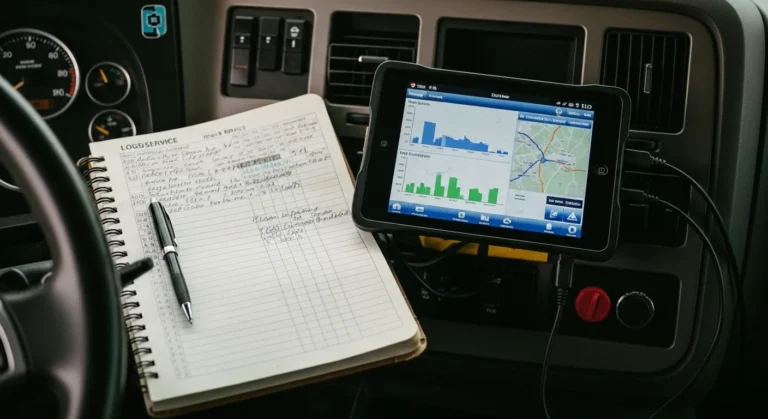
FMCSA removed five electronic logging devices from the registered list on August 6, 2026, and set an October.

FMCSA English Proficiency Rule and OOS Enforcement
FMCSA English Proficiency Rule Sam Aguiar Injury Lawyers August 11, 2026 7 minute read On This Page.