

Truck Accident Lawyers
Kentucky Truck Accident Lawyers
Key Takeaways
Kentucky Truck Accident Claims
Truck accidents can cause serious injuries and bring complicated insurance questions. A case may involve the truck driver, trucking company, vehicle owner, maintenance records, driver records, commercial insurance, and other businesses connected to the trip. While you focus on medical care, the trucking company’s insurer may already be reviewing what happened.
Sam Aguiar Injury Lawyers has a dedicated trucking team for truck and commercial vehicle accident cases. We handle the case details, organize the records, communicate with the insurance companies, and build the claim around your injuries, lost income, medical costs, and the changes the crash caused in your life.
Our attorneys have access to top investigators, crash reconstructionists, life care planners, economists, and medical professionals when a case requires additional resources. You also receive $0 Out-Of-Pocket Forever, a flat contingency fee that does not increase if the case goes to trial, and our exclusive Bigger Share Guarantee®, where you always get more. You focus on getting better. We handle everything else.
Looking for our dedicated Louisville truck practice page? See Louisville truck accident lawyer for carrier-records and interstate crash focus. Lexington I-75 and I-64 wrecks are on the Lexington truck accident page. Coal-haul wrecks are on coal truck accidents. Tow-truck strikes are on tow-truck crashes. Cause and record pages cover what causes truck accidents and trucking evidence.
Related trucking articles cover left-lane rules for semis, federal truck-safety rules used as crash evidence, what to do after a commercial-vehicle crash, reefer-truck crashes, and carrier tactics after a wreck.
Companies Behind A Single Load
One company may own the tractor, another may lease it, and a carrier may dispatch the driver. A shipper may load the trailer, while several insurers provide coverage. A standard accident report usually does not show how all those pieces fit together.
Federal motor carrier rules give those records added importance. Under 49 CFR 395.3, property-carrying drivers generally may drive for no more than 11 hours after 10 consecutive hours off duty and must stay within a 14-hour on-duty window. The records used to track those limits can reveal driver fatigue, dispatch pressure, or hours-of-service violations.
A thorough workup identifies every company involved in the trip, preserves the electronic and paper records those companies control, documents the injured person’s actual medical and financial losses, and runs discovery that can reach the root causes. That workup is built to put every responsible company and every available policy on the table so the claim covers the full loss.
Building The Trucking Case
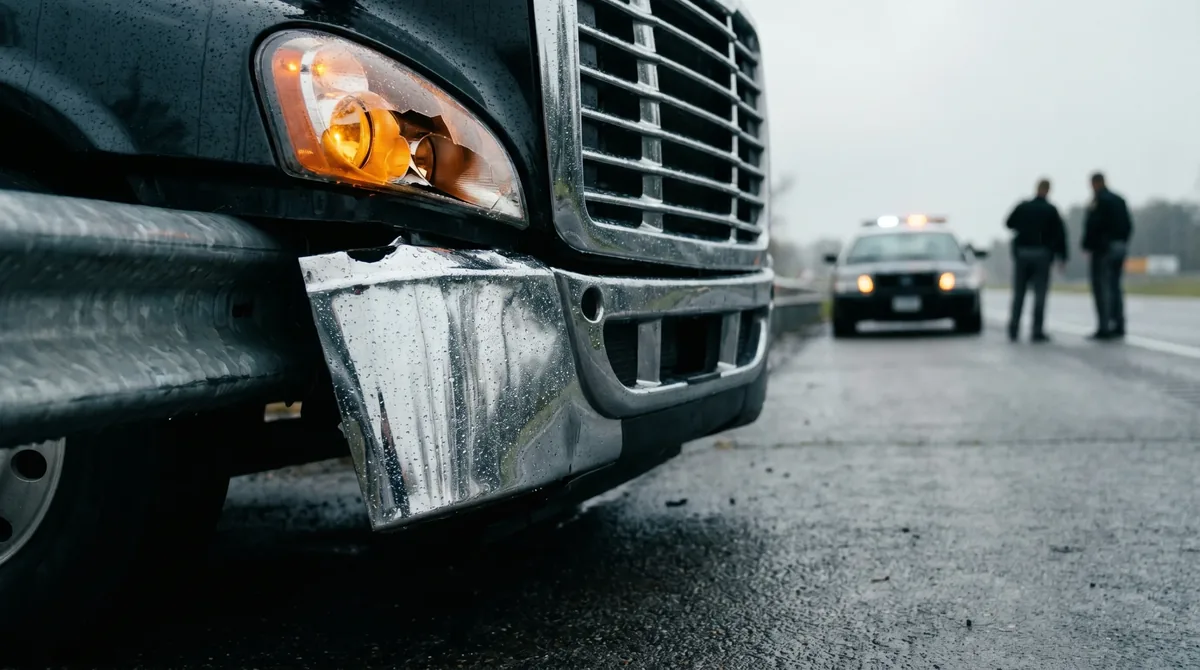
After a truck accident, the company must promptly preserve and produce operational records, including dispatch logs, maintenance records, driver qualification files, and fleet management software data. A spoliation letter should lock in that duty, but records can still be overwritten, purged on retention cycles, or narrowed in scope. ELD data in particular has short windows before it cycles off the device or the carrier’s server.
Driver qualification files show who the carrier put behind the wheel and whether that person should have been there, including license status, medical certification, and hiring paperwork under 49 CFR Part 391. Hours and dispatch records address fatigue and route pressure. Inspection and maintenance files under 49 CFR Part 396 address whether the truck was safe to operate.
Trip and cargo documents address loading, securement, and who directed the movement. Insurance and authority files address responsibility and what coverage applies. Scene and reconstruction materials address the physics of what happened. Acting quickly on these categories keeps the full picture available.
Federal Motor Carrier Safety Regulations
The Federal Motor Carrier Safety Regulations, or FMCSRs, are federal safety rules for many commercial drivers and trucking companies. They cover areas such as driver qualifications, medical exams, work hours, vehicle inspections, maintenance, cargo securement, and drug and alcohol testing. The rules are designed to reduce the risks that come with large commercial vehicles.
In a trucking accident case, the FMCSRs provide a set of standards for reviewing what happened before the accident. Records may show whether a company hired a qualified driver, followed inspection requirements, kept accurate hours-of-service logs, or put pressure on a driver to meet an unsafe delivery schedule. These details can reveal problems that are not clear from the accident scene alone.
Cargo rules show how this works. Under 49 CFR 393.100, cargo must be secured so it cannot leak, spill, blow, or fall from the truck, and so it cannot shift far enough to hurt the truck’s stability or handling. When a load shifts before a rollover or spills across a lane, those rules point the case toward whoever loaded and secured it.
A violation of an FMCSR does not automatically prove who caused an accident. It can, however, provide important evidence when it connects to the driver’s conduct, the company’s decisions, or the condition of the truck. Lawyers may compare the regulations with company records, electronic data, witness statements, and physical evidence to build a clearer picture of how the accident occurred.
Duties Under Part 396
Part 396 sets a chain of obligations that runs from routine upkeep to the paperwork a case team later asks for. Each link is a separate duty, and each one leaves a record.
At-Fault Parties In Truck Accidents
A truck accident rarely comes down to one person’s mistake. Multiple entities touch every load, and each one’s decisions can contribute to what happened.
Jon Hollan walks through that chain, from the driver through the broker and the shipper, in our Truck Talk episode on crash responsibility.
The driver carries personal liability for negligent driving. The motor carrier is responsible for the driver’s actions under federal rules while the driver is on duty, and for its own hiring, training, supervision, and maintenance decisions.
Calling a driver an independent contractor does not end the carrier’s responsibility. When a carrier leases a truck from an owner-operator, 49 CFR 376.12 requires the lease to say the carrier will “assume complete responsibility for the operation of the equipment for the duration of the lease.” That lease is one of the first documents a case team asks for.
The broker who arranged the load and the shipper who loaded the truck can share liability if they chose an unsafe carrier or loaded the truck improperly. A shifted load can bring in the loader’s insurance. Brake failures and tire blowouts can reach the shop that performed the last work, or the manufacturer of a failed part. Delivery vehicle crashes raise the same layered questions on a smaller scale.
Inspection And Maintenance Records
Pre-trip inspection and maintenance records can show whether a known equipment problem was left on the road.
Federal inspection, repair, and maintenance rules require motor carriers to systematically inspect, repair, and maintain the commercial vehicles they control. Required records include the date and nature of inspections, repairs, and maintenance.
Driver inspection reports may identify problems with brakes, steering, lights, tires, wheels, coupling devices, and other safety equipment. Comparing those reports with repair records can show whether a reported defect was corrected before the truck returned to service.

Reportable Inspection Points
49 CFR 396.11 requires a written report at the completion of each day’s work on each vehicle operated. The report must cover at least the following parts and accessories.
Layered Coverage After A Commercial Crash
Trucking companies must carry insurance that meets state and federal requirements. Federal rules require at least $750,000 in liability coverage for ordinary freight, while hazardous loads need $1 million or $5 million, depending on the material. The policy must include an MCS-90 form, which requires the insurance company to pay a judgment on behalf of the motor carrier even if the policy would otherwise deny the claim.
Trucking insurance often comes from multiple sources. A motor carrier may have excess or umbrella coverage. When a truck is leased to another company, when trailers are swapped between carriers, or when an owner-operator carries separate insurance, coverage can often stack. When damages are severe, the attorney has to identify all of these coverages.
Coverage usually reads in layers: a primary liability policy, excess coverage above it, umbrella coverage above that, and other policies that may respond. Those policies can sit with the motor carrier, the driver, the trailer owner, the broker or shipper, a maintenance vendor, or the cargo company. A claim that stops at the first policy it finds can leave the rest of the tower untouched.
Damages After A Truck Accident
After an injury, damages come in two forms: economic and non-economic. They are designed to make a victim whole for out-of-pocket losses and to compensate them for the physical and emotional tolls that come with the injuries.
A loaded tractor-trailer on the interstate can legally weigh up to 80,000 pounds under 23 CFR 658.17, many times the weight of a passenger car. NHTSA counted 5,936 people killed in crashes involving large trucks in 2022, and 70 percent of them were riding in other vehicles. When the injuries include brain trauma, spinal cord damage, or amputation, the damages in a truck case rest on projections of future medical costs and lost earning ability from life care planners, economists, and vocational rehabilitation professionals.
Economic Losses
Emergency care, hospital stays, surgery, and imaging. Prescriptions, physical therapy, and follow-up care. Future medical care the evidence supports. Lost wages documented through pay and tax records. Reduced future earning ability. Vehicle repair or replacement.
Non-Economic Losses
Physical pain during and after recovery. Lost activities, hobbies, and independence. Strain on marriage and close relationships. Emotional and psychological harm. Where a crash takes a life, a wrongful death claim follows a separate set of rules.
Why Hire Sam Aguiar?
(1 Of 16 Nationwide In PI)
Footage Access
For Litigation
More Personal Attention
Google Reviews
Steps After A Crash
Preserve The Evidence
Electronic logs, video, dispatch records, and onboard data may need early preservation.
Collect The Records
Driver files, company policies, inspection records, and cargo documents identify the people and companies involved.
Review The Safety Regulations
The records can be compared with federal trucking rules, company policies, and the driver’s account.
Build The Case
From there, we pursue the responsible companies and available insurance coverage while using the evidence to show how the crash affected your life.
Truck Talk
Jon Hollan covers one trucking topic per episode. The episodes below deal most directly with the records and rules that decide fault after a commercial truck crash.
Why Choose Sam Aguiar Injury Lawyers
Insurance companies will try to minimize your claim. We don’t let that happen. Records the carrier controls decide a trucking case, and the firm’s dedicated trucking team knows which ones to demand and how quickly they disappear.
You focus on getting better. We handle everything else.
We’ll Handle the Trucking Company So You Can Focus on Recovering
The carrier’s lawyers and insurers start working the file the day of the crash, and the records that decide fault cycle off on short schedules. We move first: preservation letters, electronic logs, driver files, maintenance orders, and the reconstruction work that puts the whole trip on the table. Call (502) 888-8888 in Louisville or (859) 888-8000 in Lexington for a free case review, and you talk with us, not the trucking company.