

FMCSR Violations in Truck Crashes

Federal Motor Carrier Safety Regulations (FMCSRs) set the safety rules for commercial trucks because a loaded truck is dangerous by design. When trucking companies and their drivers break these rules by pushing past hours-of-service limits, skipping required maintenance, or putting unqualified drivers behind the wheel, the result is deadly crashes. In 2023, NHTSA reported 5,472 people killed in large-truck crashes nationally.
Federal Motor Carrier Safety Regulations
The FMCSRs, codified in Title 49 of the Code of Federal Regulations, are the body of safety rules for commercial motor vehicles (CMVs) operating in interstate commerce. The Federal Motor Carrier Safety Administration (FMCSA) administers and enforces them. Six parts come up most often in truck crash cases.
Six FMCSR Parts Govern Most Truck Crash Cases
Title 49 CFR parts and the conduct each one controls
Driver qualifications (Part 391): who may legally drive a CMV, including medical requirements and licensing standards.
Hours of service (Part 395): how long a driver may operate before mandatory rest, and how those hours are recorded.
Vehicle inspection, repair, and maintenance (Part 396): what maintenance is required and how it must be documented.
Equipment and parts standards (Part 393): minimum standards for brakes, tires, lighting, and other safety components.
Driver disqualification rules (Part 383): the circumstances that disqualify a CDL holder from operating a CMV.
Drug and alcohol testing (Part 382): mandatory testing requirements for CDL holders.
Safety Violations Behind Truck Crashes
Federal truck safety requirements address driver conduct, vehicle condition, and carrier oversight. The records described below show whether a relevant requirement was followed before a crash.
Driving Too Many Hours
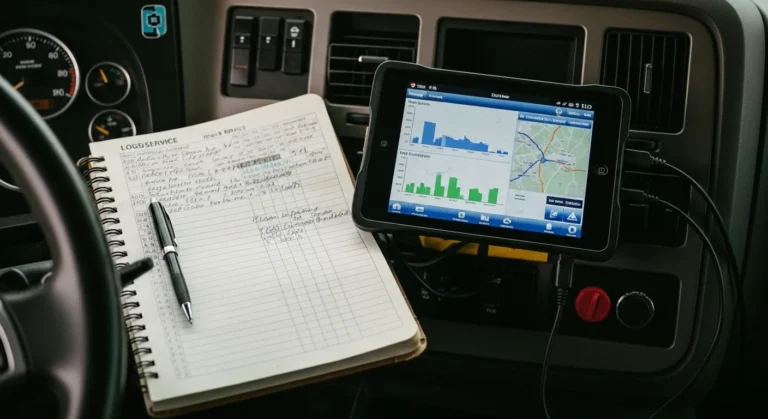
Hours-of-service (HOS) regulations exist because fatigued driving is one of the deadliest behaviors on the road. Under 49 CFR Part 395, drivers are limited to 11 hours of driving after 10 consecutive hours off duty, may not drive beyond the 14th hour after coming on duty, and must take a 30-minute break after 8 cumulative hours of driving. Weekly limits cap on-duty time at 60 hours in 7 days or 70 hours in 8 days. Carriers that pressure drivers to exceed these limits, and drivers who falsify their electronic logging device (ELD) records, create a direct path to fatigue-related crashes.
Maintenance and Inspection Failures
Part 396 requires systematic inspection, repair, and maintenance of commercial vehicles. Under 49 CFR 396.11(a)(2)(i), a driver vehicle inspection report lists safety-related defects or deficiencies discovered by or reported to the driver. A report is not required when none is discovered or reported, and the rule contains specified operational exceptions. Ignored tire, brake, or steering defects become evidence in a crash investigation.
Driver Qualification Failures
Part 391 requires carriers to verify that every driver meets physical, mental, and licensing standards before placing that driver behind the wheel. This includes medical examinations, driving record checks, and road tests. Driver qualification violations, such as allowing a driver with a suspended CDL or a failed drug test to operate, expose carriers to significant liability. The truck driver shortage has pushed some companies to cut corners on these requirements, putting unqualified drivers on Kentucky highways through negligent hiring practices.
Unsafe Cargo Loading
Part 393 sets detailed standards for how cargo must be loaded and secured. Unsecured loads can shift during transit, changing the truck’s center of gravity and causing rollovers or jackknife crashes. Cargo that falls from a truck creates sudden road hazards for other vehicles.
CSA Scores and Carrier Safety Records
FMCSA’s Compliance, Safety, Accountability (CSA) program scores motor carrier safety performance in seven Behavior Analysis and Safety Improvement Categories (BASICs): unsafe driving, crash indicator, HOS compliance, vehicle maintenance, driver fitness, controlled substances and alcohol, and hazardous materials compliance.
CSA scores range from 0 to 100, and a higher score means worse safety performance. Carriers that exceed intervention thresholds (65% for unsafe driving and HOS compliance, 80% for vehicle maintenance and driver fitness) face FMCSA investigations and potential operating restrictions. In a truck accident lawsuit, poor CSA scores are evidence of a pattern of safety violations, and inspection histories, maintenance records, and driver qualification files add to that trucking evidence. Documented violations can shift liability to the trucking company and open the door to punitive damages.
Evidence of an FMCSR Violation
FMCSR violations are established through specific categories of records:
- Electronic logging device (ELD) data, which compares actual driving hours with the legal limits
- Driver vehicle inspection reports, which reveal whether known defects were reported and corrected
- Driver qualification files, which contain medical certificates, driving records, drug test results, and employment history
- Maintenance records, which document scheduled and unscheduled repairs and expose gaps in required maintenance
- ECM (black box) data, which records speed, braking, and engine performance in the moments before a crash
- Roadside inspection reports, where prior violations documented during DOT inspections demonstrate a pattern of noncompliance
Federal regulations require carriers to retain some records for as little as six months. Without a prompt spoliation notice, that evidence may be legally destroyed before an attorney can obtain it. An FMCSR violation is evidence of negligence in a truck accident case.
What Broke Down Before the Truck Hit You?
Bad brakes, too many hours behind the wheel, and a poor CSA record often show up in a carrier’s files long before a truck crash. Sam Aguiar Injury Lawyers has a dedicated trucking team that reads roadside inspection history and carrier files for those patterns. Sam Aguiar has been named a Forbes Best-In-State personal injury lawyer, and the firm has more than 1,000 five-star Google reviews. Book a free case review.
Frequently Asked Questions
1What federal rules govern how long truck drivers can be on the road?+
2What do CSA scores show about a trucking company?+
3What records show a trucking company violated the FMCSRs?+
4How long do trucking companies keep safety records?+
5Is a driver vehicle inspection report required when no defect is found?+
Latest Articles

Kentucky Diminished Value Claims
Kentucky drivers may pursue a repaired vehicle’s leftover market loss from the at-fault driver as part of a.
FMCSA Revoked ELDs: Fleet Compliance and Enforcement Deadlines
FMCSA removed five electronic logging devices from the registered list on August 6, 2026, and set an October.

FMCSA English Proficiency Rule and OOS Enforcement
FMCSA English Proficiency Rule Sam Aguiar Injury Lawyers August 11, 2026 7 minute read On This Page.