
Kentucky Truck Accident Attorneys
Sam Aguiar Injury Lawyers is a Louisville truck accident attorney team with a dedicated trucking practice built for high-stakes cases across the state.
Call (502) 888-8888Truck Accident Team Built for High-Stakes Cases
The trucking practice at Sam Aguiar Injury Lawyers was built because truck accident cases are different from every other type of personal injury claim. The size of the vehicles, the severity of injuries, the complexity of federal regulations, and the resources deployed by trucking company defense teams all demand a different kind of preparation.
The team is led by Sam Aguiar, a Kentucky trial lawyer with more than a decade of results in catastrophic injury and wrongful death cases, including commercial truck accidents across Kentucky, and Jon Hollan, the firm’s managing partner and trucking team lead, who is a member of the Trucking Trial Lawyers Association (TTLA) Top 10 and the Academy of Truck Accident Attorneys (ATAA). Together with their team of investigators, paralegals, and support staff, they have recovered more than 40 seven- and eight-figure case results for clients across the state.
The team’s approach to truck accident cases is built on thorough investigation, rapid evidence preservation, and a deep understanding of the Federal Motor Carrier Safety Regulations (FMCSRs) that govern every carrier, driver, and vehicle on the road.
Kentucky Truck Crash Cases Are Different From Car Accidents
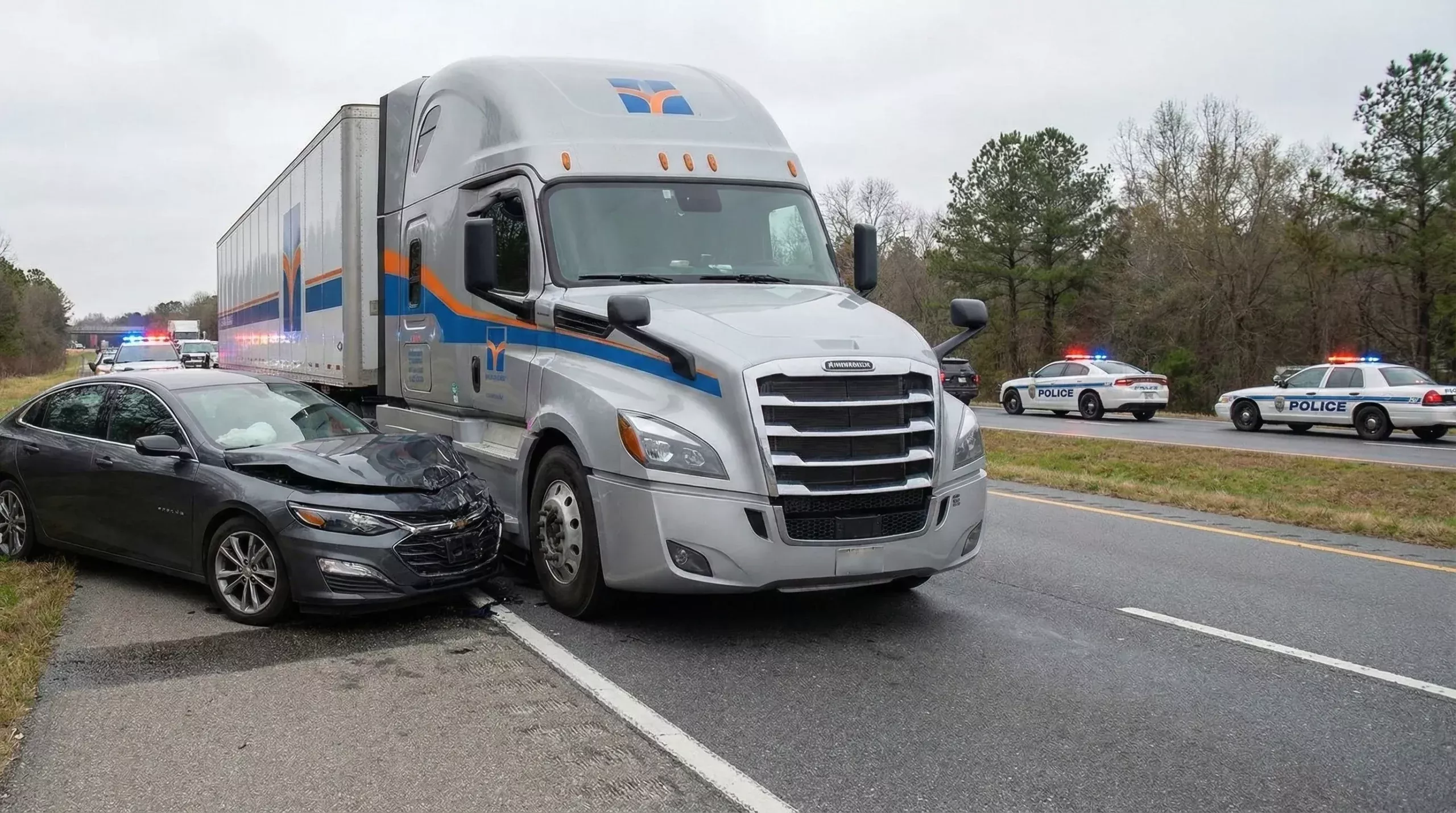
A fully loaded tractor-trailer can weigh up to 80,000 pounds. A passenger vehicle weighs roughly 4,000 pounds. When these two collide, the physics are devastating. The injuries are more severe, the medical costs are higher, the lost wages last longer, and the emotional toll is deeper.
But the differences extend well beyond impact force. Truck accident cases involve federal regulations that do not apply to standard car crash claims. Commercial drivers must hold a valid CDL. Carriers must maintain detailed inspection records, driver qualification files, and insurance policies that meet minimum federal requirements. Electronic Logging Devices (ELDs) must track every hour of every shift.
When a crash occurs, this data becomes critical evidence. But it can disappear quickly if it is not preserved. Trucking companies and their insurers have rapid-response teams that deploy within hours. Without a legal team that understands what to collect and how to preserve it, key evidence can be lost or destroyed.
Kentucky State Police data: According to the Kentucky State Police 2024 crash facts report, Kentucky recorded 9,736 truck collisions and 99 fatal truck collisions statewide. Kentucky sits at the crossroads of the nation’s busiest freight corridors, making it one of the heaviest regions for commercial truck traffic in the country.
Kentucky’s High-Risk Truck Corridors
Kentucky sits at the crossroads of some of the busiest truck corridors in the country. I-65 and I-75 carry freight traffic through Louisville and Lexington. I-64 connects the state east to west. I-71 links Louisville to Cincinnati. I-24 runs through Western Kentucky. The Gene Snyder Freeway, Watterson Expressway, Mountain Parkway, and Western Kentucky Parkway see heavy commercial truck traffic daily. Our team handles crashes across all of these routes.
These cases also involve multiple potentially liable parties: the driver, the carrier, the broker, the maintenance provider, the cargo loader, and sometimes the vehicle or parts manufacturer. Each party has its own insurer, its own legal team, and its own strategy for minimizing exposure. A trucking attorney who understands this landscape is essential.
Federal Motor Carrier Safety Regulations: How They Build Your Case
The Federal Motor Carrier Safety Regulations (FMCSRs) are the foundation of every trucking case. These rules, enforced by the Federal Motor Carrier Safety Administration (FMCSA), govern how carriers operate, how drivers are qualified, how vehicles are maintained, and how cargo is secured.
When a carrier or driver violates these regulations and that violation contributes to a crash, the violation itself becomes powerful evidence of negligence. Our trucking team investigates every case against the full scope of the FMCSRs, including:
- Driver qualification files (49 CFR Part 391): These files must document the driver’s medical fitness, driving history, road test certification, and employment background. Missing or incomplete DQ files are a red flag for negligent hiring.
- Vehicle inspection, repair, and maintenance (49 CFR Part 396): Carriers must conduct systematic inspections and maintain detailed records. When crashes are caused by brake failure, tire blowouts, or lighting defects, these records reveal whether the carrier kept the vehicle in safe operating condition.
- Hours of service (49 CFR Part 395): HOS regulations limit how long a driver can operate before mandatory rest. Violations are a direct indicator of fatigue, and ELD data is the primary tool for proving them.
- Drug and alcohol testing (49 CFR Part 382): Drivers are subject to pre-employment, random, post-accident, and cause-based suspicion testing. A failure to test, or a failure to act on a positive result, creates carrier liability.
- Cargo securement (49 CFR Part 393): Improperly loaded or unsecured cargo can shift during transit, causing rollovers, spills, or loss-of-load incidents.
Hours of Service and Driver Fatigue
Driver fatigue is one of the leading causes of catastrophic truck crashes. The FMCSA’s hours of service regulations exist to prevent it, but violations remain widespread because of carrier pressure, per-mile pay structures, and unrealistic delivery schedules. For a detailed breakdown of the current HOS rules, read our guide on navigating the FMCSRs.
The current HOS rules for property-carrying commercial drivers set these limits:
| Rule | Requirement |
|---|---|
| 11-Hour Driving Limit | A driver may not drive more than 11 hours after 10 consecutive hours off duty. |
| 14-Hour On-Duty Window | A driver may not drive beyond the 14th consecutive hour after coming on duty. Non-driving work counts toward this limit. |
| 30-Minute Rest Break | After 8 consecutive hours of driving, the driver must take at least 30 minutes off duty before continuing. |
| 60/70-Hour Weekly Limit | Drivers cannot drive after 60 on-duty hours in 7 days, or 70 hours in 8 days. |
| 34-Hour Restart | Drivers may reset their weekly clock with at least 34 consecutive hours off duty. |
| Sleeper Berth Split | Drivers using a sleeper berth may split the 10-hour off-duty period: at least 7 hours in the berth, plus at least 2 hours off duty or in the berth. |
After a crash, ELD data is the most direct evidence of HOS violations. Our team sends preservation letters on day one to ensure this data is not overwritten when the truck returns to service. We also examine the carrier’s dispatch records, load assignments, and scheduling patterns to determine whether HOS violations were a one-time event or a systemic problem that the company tolerated or encouraged.
Research from the NHTSA shows that being awake for 18 consecutive hours produces impairment comparable to a blood alcohol level of 0.05%. At 24 hours without sleep, impairment matches 0.10% BAC, which is above the legal limit for any driver. When a carrier sends a fatigued driver onto the road, the company bears responsibility for every crash that results. The rising rate of truck accidents across the country underscores how widespread this problem remains.
MCS-90 Endorsement: Why Trucking Insurance Works Differently
Most people understand that all drivers need auto insurance. What most people do not know is that commercial trucking insurance operates under a completely different framework, one that provides critical protections for crash victims.
The MCS-90 endorsement is a federal requirement that applies to all for-hire motor carriers operating in interstate commerce. It guarantees that a minimum level of insurance coverage ($750,000 for most carriers, $5,000,000 for hazmat haulers) is available to pay claims by members of the public who are injured in crashes, regardless of any policy exclusions, lapses, or disputes between the carrier and its insurer.
What the MCS-90 means for your case: Even if the trucking company’s insurance policy has lapsed, been cancelled, or contains exclusions that the insurer claims should bar coverage, the MCS-90 endorsement requires the insurer to pay valid claims up to the policy minimum. The insurer can then seek reimbursement from the carrier, but the injured person gets paid first. This is a unique protection that does not exist in standard auto insurance.
Our trucking team routinely identifies and pursues MCS-90 coverage, particularly in cases involving smaller carriers, independent owner-operators, or companies that have attempted to reduce their insurance obligations. In many of our cases, discovering the full scope of available coverage has been the difference between an inadequate settlement and a seven-figure recovery.
What a Louisville Truck Accident Attorney Does in the First 72 Hours
The first 72 hours after a truck crash are the most critical window for preserving evidence. Trucking companies and their insurers deploy rapid-response teams immediately. If your legal team is not moving just as quickly, key evidence can be altered, overwritten, or destroyed. Here is what our trucking team does from the moment we take your call:
Send Spoliation and Preservation Letters
Within hours, we send written demands to the carrier, the driver, the insurer, and all known third parties requiring them to preserve all evidence: ELD data, GPS records, dash camera footage, inspection reports, driver qualification files, dispatch logs, and communications. Failure to preserve this data after receiving our letter can result in sanctions and adverse inference instructions at trial.
Dispatch Investigators to the Scene
Our team coordinates with accident reconstruction professionals and independent investigators to document the crash scene before road repairs, weather, or cleanup alter the physical evidence. Skid marks, debris patterns, gouge marks, fluid trails, and final rest positions all tell the story of what happened and who is responsible.
Secure the Truck and Its Data Systems
Commercial trucks contain Electronic Control Modules (ECMs), ELDs, GPS units, telematics systems, and sometimes multiple cameras. Our team moves to ensure the truck is not repaired, returned to service, or scrapped before this data is downloaded and preserved. In some cases, we seek emergency court orders to prevent destruction of the vehicle.
Request the Carrier’s Complete Safety File
We demand the carrier’s FMCSA safety ratings, prior DOT inspection results, out-of-service records, CSA scores, and the driver’s complete qualification file. This allows us to determine whether the carrier had a pattern of violations before the crash and whether the driver should have been on the road at all.
Identify All Liable Parties and Insurance Coverage
Truck accident claims frequently involve multiple defendants: the driver, the carrier, the broker, the maintenance provider, the cargo loader, and sometimes the vehicle manufacturer. We run a full liability analysis within the first 72 hours to ensure no potential source of recovery is missed, and we identify all applicable insurance policies, including MCS-90 endorsements and excess or umbrella coverage.
Serious and Catastrophic Injuries
The weight disparity between a commercial truck and a passenger vehicle means that truck accident injuries are often catastrophic. Our trucking team works with medical professionals across Kentucky to document the full extent of our clients’ injuries, current treatment needs, and long-term prognosis. According to the National Highway Traffic Safety Administration (NHTSA), occupants of passenger vehicles account for the vast majority of fatalities in truck-involved crashes. Common injuries in truck accident cases include:
In catastrophic injury cases, the stakes are measured in millions of dollars of lifetime medical care, lost earning capacity, and diminished quality of life. Our team brings in life care planners, vocational economists, and treating physicians to build a comprehensive damages model that accounts for every dollar our clients will need.
Trucking Companies Have Big Resources.
So Do We.
TTLA Top 10 Trucking Lawyers. Forbes 2025 Best-In-State. Dedicated truck accident team. Bigger Share Guarantee®.
We handle everything so you can focus on getting better.
Types of Truck Cases We Handle
Our trucking team handles every type of commercial vehicle accident case in Kentucky. Each case type presents distinct liability questions and requires a different investigative approach.
We also handle cases involving coal trucks, garbage trucks, delivery vans (Amazon, FedEx, UPS), refrigerated (reefer) trucks, tanker trucks, flatbed trucks, logging trucks, and all other commercial motor vehicles operating on Kentucky roads. Regardless of the vehicle type, the same principles apply: preserve the evidence, identify the violations, and build the strongest possible case.
Companies We’ve Battled and Won Against
Our trucking team regularly handles cases against the largest carriers in the country. These companies have well-funded legal departments and experienced defense firms on retainer. We study their CSA (Compliance, Safety, Accountability) scores, inspection histories, and prior litigation records before we ever file a claim. For a deeper look at the carriers that dominate American highways, read our breakdown of the country’s largest trucking companies. Some of the carriers we have taken on include:
Every carrier has a safety record maintained by the FMCSA. We pull CSA scores, Inspection Selection System (ISS) data, and SAFER System reports for every carrier involved in our cases. A carrier’s history of violations, out-of-service orders, and prior crashes can be powerful evidence of a pattern of negligence.
Tactics Trucking Companies Use After a Crash
Within hours of a serious crash, the trucking company’s insurer will have a team on the ground. Their goal is not to find the truth. Their goal is to limit the company’s exposure. Understanding their tactics is the first step in defeating them.
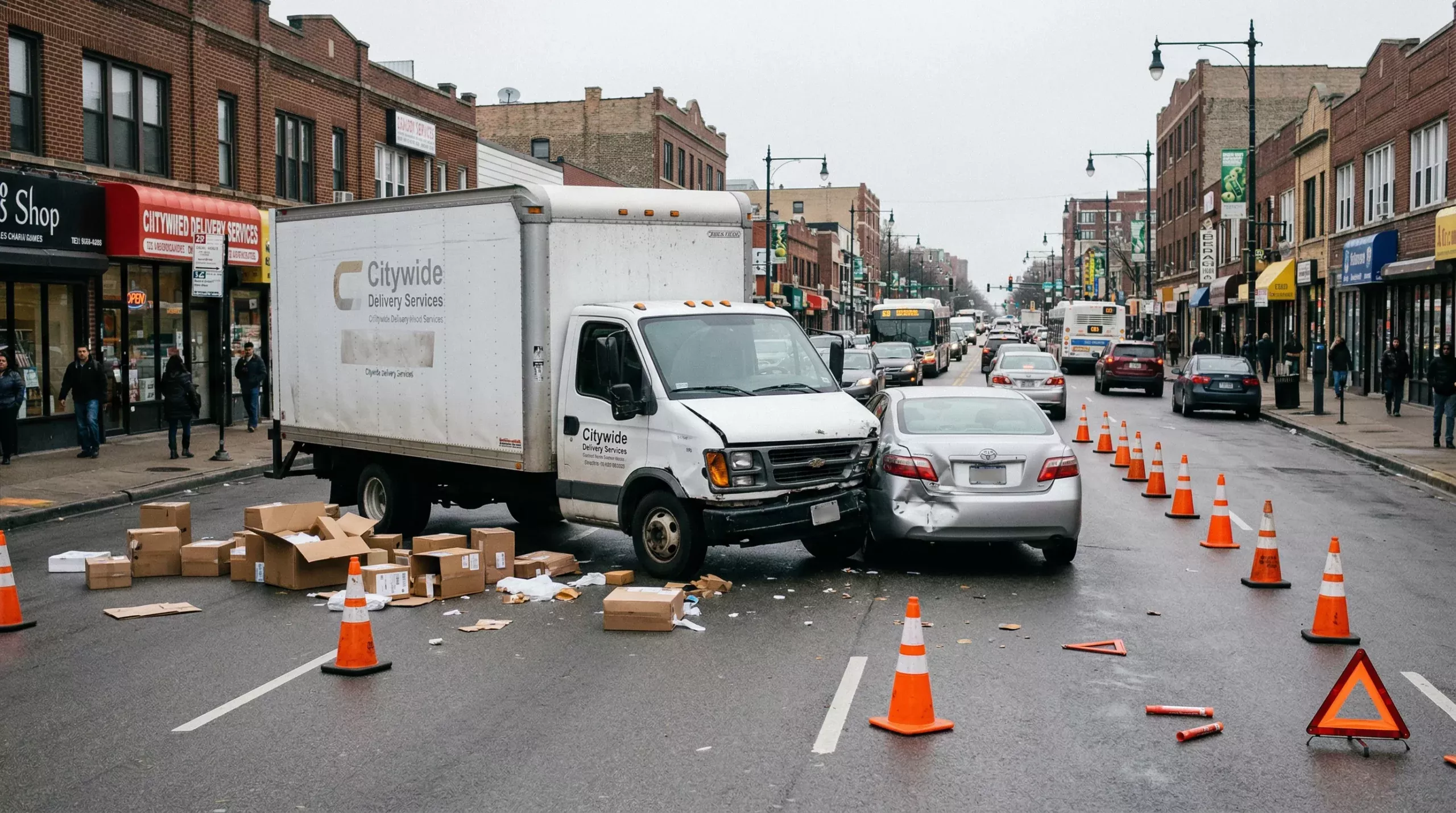
Rapid-response teams. Major carriers and their insurers deploy adjusters, defense attorneys, and sometimes private investigators to the crash scene within hours. They photograph the scene from angles favorable to the carrier, interview witnesses before the injured person has representation, and begin building a defense before the victim even leaves the hospital.
Recorded statements. Insurance adjusters will contact injured people quickly, often while they are still medicated and in pain, and ask for recorded statements. These statements are then used to undermine the claim. Our advice: do not give a recorded statement to any insurance company without your attorney present.
Evidence destruction. ELD data can be overwritten when a truck returns to service. Dash camera footage may be recorded on a loop. Inspection reports may conveniently disappear. Without a spoliation letter sent immediately, critical evidence can vanish.
Lowball offers. Insurers know that injured people are facing mounting medical bills and lost income. They use this pressure to offer quick settlements that are a fraction of the case’s true value. Once a settlement is accepted, the case is closed permanently.
Blame-shifting. Defense teams will scrutinize every aspect of the injured person’s driving, medical history, and even social media to shift blame. Kentucky’s pure comparative fault system (KRS 411.182) means that any percentage of fault assigned to the injured person directly reduces their recovery.
Truck Talk and Trucking Resources
In-depth analysis from our trucking team on the issues that shape your case
Frequently Asked Questions
How much does it cost to hire a truck accident attorney at Sam Aguiar Injury Lawyers?
There is no upfront cost, and there never will be. We work on a contingency fee basis with a flat contingency fee that never increases, regardless of whether your case settles or goes to trial. Many firms raise their percentage if a case goes to litigation or trial. Ours stays the same. You pay $0 out of pocket, and with our Bigger Share Guarantee®, you are guaranteed to take home a larger share of your recovery.
What makes truck accident cases different from car accident cases?
Truck accident cases involve federal regulations (the FMCSRs) that do not apply to car crashes. They also involve multiple potentially liable parties: the driver, the carrier, the broker, the maintenance provider, and the cargo loader. The evidence is more complex (ELD data, ECM downloads, driver qualification files), the injuries are typically more severe, and the defense teams are better funded. A trucking practice built for these cases makes a significant difference in the outcome.
How soon after a truck accident should I contact an attorney?
Immediately. The first 72 hours are critical for preserving evidence. ELD data can be overwritten when a truck returns to service. Dash camera footage may be recorded on a loop. Inspection reports can disappear. Our team sends preservation letters within hours of your call to ensure that the carrier, the driver, and the insurer do not destroy or alter any evidence.
What is the MCS-90 endorsement and why does it matter?
The MCS-90 is a federal insurance endorsement that guarantees a minimum level of coverage ($750,000 for most carriers; $5,000,000 for hazmat haulers) is available to pay claims by injured members of the public, regardless of any policy exclusions or lapses. It means that even if the carrier’s insurance has been cancelled or contains exclusions, the insurer must still pay valid claims. Our trucking team routinely identifies and pursues MCS-90 coverage to maximize our clients’ recoveries.
What types of evidence are collected in a truck accident case?
Our team collects ELD data (hours of service records), Electronic Control Module (ECM) downloads (speed, braking, engine data), GPS records, dash camera footage, driver qualification files, vehicle inspection and maintenance records, dispatch logs, carrier communications, drug and alcohol testing results, CSA scores, and FMCSA safety ratings. We also coordinate with accident reconstruction professionals to document the crash scene and determine the root cause.
Can I still recover damages if I was partially at fault for the truck accident?
Yes. Kentucky follows a pure comparative fault system under KRS 411.182. This means you can recover damages even if you were partially at fault. However, your recovery is reduced by your percentage of fault. For example, if your damages total $1,000,000 and you are found 20% at fault, your recovery would be $800,000. Our team works to minimize any fault attributed to our clients through thorough investigation and evidence presentation.
What damages can I recover in a Kentucky truck accident case?
Kentucky truck accident victims can seek compensation for: past and future medical expenses, lost wages and lost earning capacity, pain and suffering (past and future), emotional distress, loss of consortium, property damage, and in cases involving reckless or grossly negligent conduct, punitive damages. Our team works with life care planners and vocational economists to ensure that every element of damages is fully documented and maximized.
How long do I have to file a truck accident lawsuit in Kentucky?
Under KRS 304.39-230(6), motor vehicle tort claims in Kentucky must be filed within two years from the date of injury or the date of the last PIP payment, whichever is later. The general personal injury statute (KRS 413.140) also provides a two-year window. For wrongful death claims, the statute is one year from the appointment of the personal representative of the estate (KRS 413.180). These deadlines are strict. If you miss the filing deadline, you lose the right to bring a claim. Contact our trucking team as soon as possible to ensure your rights are protected and critical evidence is preserved.
Where do you handle truck accident cases?
Our trucking team handles cases in every county in Kentucky, from our offices in Louisville and Lexington to courthouses across the state. Kentucky’s interstate system carries some of the heaviest commercial truck traffic in the eastern United States. We regularly handle crashes along I-65, I-75, I-64, I-71, and I-24, as well as the Western Kentucky Parkway, Gene Snyder Expressway, Watterson Expressway, and Mountain Parkway. We also handle coal truck accident cases on the narrow highways of eastern Kentucky. Wherever the crash happened in Kentucky, our team is built to cover it. Visit our locations hub for more details.
What is the Bigger Share Guarantee®?
The Bigger Share Guarantee® means that you will always take home more money than the firm does. Our flat contingency fee never increases, and it is structured so that after fees and costs, you receive the larger share of your recovery. Many firms charge 40% or more if a case goes to trial. Ours stays the same, always.
Real Clients. Real Success.
“This was my first experience with a lawyer. Let me tell you, these guys really are amazing!”